Special List #25: How We Talk Ourselves Out of Treatment with Dr. Josh Austin


Put an image of your patient's cracked molar up on a 50-inch screen, stay quiet, and watch them diagnose it themselves. When Dr. Josh Austin started scanning every patient at every visit, it transformed how he presented restorative, ortho, and implant work.
The scanner earns its keep by selling without feeling like selling. Josh explains why its value isn't the crown scan — it's getting the patient to say yes to the crown, and how showing people their own recession, cracks, and simulations gets them diagnosing their own mouths.
The last thread is the one most GPs skip: clear aligners as a restorative tool, making the case that a few months of alignment before veneers or a crown can save you from bigger, more invasive dentistry down the road.
From the mental health of dentists, to the intraoral scanner as a case-acceptance engine, to using clear aligners to make restorative dentistry easier, Josh lays out why our profession is 2.5x more likely to die by suicide, how dental school quietly trains bad habits, and why his answer, after years of giving the talk, comes down to one word.
Plus: 6 dentists travel to Paris together, 37 pounds of trafficked French butter, and crashing a 13-course Michelin dinner.
Guest
Dr. Joshua Austin runs a full-time restorative practice in San Antonio, Texas, and in early 2025 moved from a solo operatory into an eight-op, three-doctor office. He writes the "Pearls for Your Practice" column for Dental Economics, serves as global faculty for Align Technology and resident faculty at Spear Education, and in 2024 won the American Academy of Cosmetic Dentistry and Seattle Study Club "Case of the Year."
A graduate of the UT Health San Antonio School of Dentistry, he lectures across the country on dental technology, ortho-restorative treatment, and mental health, including his signature talk, "The Mental Dental Connection: The Secret to Being a Better Clinician and Better Leader."
Learn more or book Josh to speak: austindentalseminars.com
Connect with Josh on LinkedIn
Questions answered by this episode:
- Why are dentists more likely to struggle with anxiety, depression, and suicide?
- How does dental school create bad habits around alcohol and perfectionism?
- Can therapy actually help dentists manage the stress of practice ownership?
- How do I use an intraoral scanner to improve case acceptance?
- Why do patients say yes to treatment when they can see their own scan?
- What is the best way to present a cracked tooth or failing filling to a patient?
- How does SSRI (antidepressant) use affect dental implant success?
- Should general dentists offer clear aligners in a restorative practice?
- How can ortho with clear aligners make restorative dentistry easier?
- Why don't dentists look at occlusion, and how do I start?
About The Special Lists
The Special Lists, presented by Referral Lab, is the podcast for dentists and dental specialists. Running a dental practice isn't easy, and if you're in private practice, it can sometimes feel like you're on an island. That's why finding your people—those who've been in your shoes and can share real, lived experience—changes the game.
Referral Lab was built specifically for dental specialists, helping you track, manage, and convert every referral. It's about improving case acceptance, boosting team performance, and strengthening relationships with referring providers so your whole practice runs smarter.
This spirit of connection fuels The Special Lists podcast. Hosted by the team behind Referral Lab, we bring you wisdom from practice owners and dental professionals, sharing the wins, mistakes, and lessons that shape how they run their businesses today.
Got a question for us? Send us a message at speciallists.com (with two L's)
Transform your referral workflow with Referral Lab, the purpose-built platform for dental specialists to track, manage and convert every referral. Request a demo at referrallab.io
Hosts
Cameron Full
Co-Founder of Referral Lab
Cameron Full, co-founder of Referral Lab, is a strategic problem-solver with expertise in business management and digital solutions. He combines leadership, creativity, and technology to drive success across various industries.
Connect with Cameron on LinkedIn
Jason Souyias, DDS
Periodontist and Co-Founder of Referral Lab
Dr. Jason Souyias is a periodontist, educator, and co-founder of Referral Lab software. He teaches dentists and hygienists, including as a Pikos Institute faculty member. In his Port Huron private practice, he's known for excellent patient communication and experience. He's passionate about his work and dedicated to helping other dentists.
More about Port Huron, Michigan periodontist Dr. Jason Souyias
Michael Seda, DMD, MS
Periodontist and Co-Developer of Referral Lab
A clinician and entrepreneur, Dr. Seda brings 19 years of private practice experience to his periodontal and implant surgery practice in the San Francisco Bay Area. Dr. Seda's education spans several disciplines, including a degree in Psychobiology from the University of California, Los Angeles, a Doctorate degree from Harvard University (DMD), and a Master's degree in Periodontics and Oral Medicine from Columbia University.
More about Bay Area periodontist Dr. Michael Seda
Follow Dr. Seda on Instagram @sedaperio
Co-hosts: Cameron Full, Jason Souyias, DDS & Michael Seda, DDS
Producer: Eva Sheie @ The Axis
Assistant Producer: Mary Ellen Clarkson
Engineering: Cameron Laird
Theme music: Papa Funk, spring gang
Cover Art: Dan Childs
The Special Lists is a production of The Axis.
Dr. Austin (00:00):
At that point, I believe it's called muling it home. When you bring back 37 pounds of anything, you're now trafficking.
Cameron Full (00:09):
It's trafficking butter.
Dr. Austin (00:10):
It is trafficking French butter.
Dr. Souyias (00:12):
Thanks for listening to The Special Lists presented by Referral Lab, the podcast for dentists and dental specialists. Welcome to another episode of The Special Lists. I have here with me my co-hosts in crime as always, Dr. Michael Seda.
Dr. Seda (00:29):
Good afternoon.
Dr. Souyias (00:31):
Dr. Cameron Full.
Dr. Seda (00:33):
No, no, no. Try again.
Dr. Souyias (00:35):
The non-clinician, Dr. Cameron Full.
Cameron Full (00:37):
No, one more time. The infamous, we got to get the
Dr. Souyias (00:40):
The Infamous.
Cameron Full (00:41):
There we go.
Dr. Souyias (00:41):
Dr. Cameron Full. Is that what we got to stick with? Oh boy. We're going to stick with it.
Cameron Full (00:46):
No, the infamous.
Dr. Souyias (00:48):
The infamous Cameron Full, PhD in business administration.
Cameron Full (00:55):
Jesus.
Dr. Souyias (00:55):
And we are proud to have with us a very capable man, Dr. Josh Austin.
Dr. Austin (01:03):
The only non-specialist on here. When you go on a show called The Specialist as someone who's not a specialist, it's big Houston film. A
Cameron Full (01:11):
Very capable man.
Dr. Seda (01:14):
You're still special to us, Josh.
Dr. Souyias (01:16):
Yeah, that's right. That's right.
Dr. Austin (01:18):
And my mother says I'm special, so I got that going for me. And capable.
Dr. Souyias (01:24):
Special and capable. That's right. Well, Dr. Austin is in private practice in San Antonio, Texas and is a monthly columnist for Dental Economics Magazine. He graduated from the University of Texas in 2006, started a solo for op private practice in 2009. And in January of 2025, moved up to an eight op three doctor facility. So success has found you to all of the hard work that we get to talk about. He is global faculty for Aligned Technology, resident faculty for spear education, and still struggles daily with anxiety and depression. I have seen your mental health lecture. I think it is one of the best lectures I've ever seen. Yeah. I concur. Absolutely. I love that presentation that you give and I love that you talk about it so openly because it's so true in dentistry. I know we're going to spend a little time on that tonight.And I mean, maybe that's a great place to start.
Cameron Full (02:27):
Yeah, for sure.
Dr. Souyias (02:27):
Let's talk about that.
Dr. Austin (02:28):
Thanks, man. I appreciate that. Yeah, I don't know. It's one of those things like when I get to talk about it, it's weird. It's easier for me to talk about it with strangers than it is to talk about with my wife. I don't know why that is. It's just like when it's an audience of dentists out there, it's way easier to talk about that stuff. So I don't know why I'm so comfortable talking about it with dentists, but I think it's probably because I see a lot of the stuff online from dentists' social medias that is almost the opposite. It's all the wins. It's all the highlight reel of social media and no one can ever show weakness. And it's like, I know that in those dentists, in the back of their minds, there's the imposter syndrome. There's all those anxiety feelings. There's like sitting in the car when you have a tough delivery day or a heart surgery day or whatever.
(03:17):
I know that that's something that's kind of universal throughout. And I'd much rather put my worst foot forward in front of other people than my best foot forward. I don't know why that is. I've always found some kind of solace in that.
Dr. Souyias (03:31):
I think that it helps people connect with you. It makes it feel real because it's the stuff that we don't share on social media. It's the stuff that we all feel every day that really binds us together. And it's those things, but sometimes people aren't really willing to talk about those things very often. And that's why when we need those outlets, we need those groups of people that we can talk to. And hearing a lecture like what you give, it's just like, man, you want to make sure because we all know people in this profession that have struggled with that, if not ourselves. And it's really important to have that group of people that you can count on.
Dr. Austin (04:17):
Absolutely.
Cameron Full (04:19):
Joshua, isn't it a greater, in your talk, you give that percentage of dentists that struggle with this versus other. Give us that math, please.
Dr. Austin (04:31):
Yeah. So being a dentist increases, this is just like pure OSHA data, being a dentist increases your risk of suicide by 250%. So dentists are two and a half times more likely to die by suicide than the general population. And then dentists are at least twice as likely to have anxiety and depression than the general population. That study was done by the ADA and it was done in 2019, so it was pre - COVID, and it was done by self-report. So basically they just sent a survey out. And I don't know if you guys have ever been to an ADA meeting, but your typical ADA meeting is like your 58 year old white male dentist. That's just like every age, every single ADA meeting is like that. So it's like a group of people who aren't super comfortable talking about that. And they get this questionnaire in the mail like, "Do you have depression?" And they're like, "No, of course not." So it's at least twice as many of them, probably way more.
(05:21):
What's interesting is I started doing this lecture a couple years ago and I'm open to give the name of my therapist to any dentist that asks me. And what's weird is now my therapist, about 50 to 60% of her client book are all dentists, which is a weird career turn for her that I'm sure she never imagined. But now she ends up like she treats all these dentists.
Cameron Full (05:47):
And the question is, is how is that affecting her?
Dr. Austin (05:50):
I'm sure it's made her mental health go way down. She's having to deal with these maniacs. It's kind of like working with a dental accountant. Somebody who understands the cashflow of a dental business. It's nice to not have to explain to them about AR and stuff like that because all their clients are dentists. That's what Holly is now, is the dental therapist. At some point she's going to say, "Please don't give my name anymore because I'm tired of all the dentists."
Dr. Souyias (06:20):
What do you think are some of the biggest things that. I mean, has there been research into that, the biggest things that lead to the anxiety and depression within our profession?
Dr. Austin (06:29):
Yeah. So a lot of it has to do with obviously financial stuff. Unlike our medical colleagues who tend to work in either groups or settings where they're not the business owner. And we're seeing more and more of that in dentistry, obviously. But for the most part, for the long history of dentistry, dentistry has been a game of owning a business or working in a very small group. Small family owned business. So there's a lot of financial issues that go into that. Obviously a lot of debt that goes into it, whether you talk about just the debt to finish out an office, rising student debt, all of that stuff, insurance control. And then the fact that what makes a good dentist personality type-wise, the person who's really detail oriented, the person who has this really fastidious attention to detail, they're really systematic people who do things the same way every single time and want the same instrument in the same place on the tray every single time. All of those detail oriented stuff.
Dr. Seda (07:22):
I don't know what you're talking about. No idea.
Dr. Austin (07:27):
Seda wants his very particular blade faced just the right way. It's got to be faced at 227 degrees north, northwest.
Dr. Seda (07:35):
It was very soothing to hear you talk like that, Josh. I'm so sure that's just what you wanted to hear.
Cameron Full (07:41):
As he's itching his neck. Yeah.
Dr. Austin (07:44):
Thinking about the time on the third procedure today where it was just a fraction off and his one suture had just a little touch more bite to it than the other one did. We're all detail oriented. So we want things to be our way. And that's just a very specific dental thing. And what's weird is that is kind of the same for periodontists, for endodontists, for GPs, for oral surgeons. All dentists kind of have that little bit into them. And I don't know if that bit got taught in dental school and it brings that out of us. Th's how you survive dental school. Or if that's what attracts us to dentistry, it's probably a little column A and a little column B. But you mix all those things together. And then the second thing you mix together is, and I tell the story in the lecture.
(08:31):
So I think back to dental school and dental school teaches horrific habits, really bad habits. One of them is like a poor relationship with alcohol. So you guys remember gross anatomy, everyone here except for Cameron. Cameron, did they make you take gross anatomy in your MBA? Was that part of the deal?
Cameron Full (08:47):
I stopped. True story. For 30 seconds. I was pre-dent, right? You didn't know this, Josh. I was pre-dent.
Dr. Austin (08:56):
I didn't know this at all.
Cameron Full (09:00):
I started dissecting this rat or whatever the hell it was. My lab partner, who's now Nate, he's Nate Eberle, he's an OMS down in Miami Beach and plastic surgeon. And I started cutting. I'm like, "I'm not doing this shit, dude." And he's like, "I got it." So he opens it up and I drew the most beautiful picture of this dissection. And we turned it in. He's like, "Yeah, dude, you're not supposed to be here."
Dr. Austin (09:29):
At least you found out then, right? At least you knew then?
Cameron Full (09:32):
I was like, "I'm not tearing into this thing, dude."
Dr. Austin (09:36):
Yeah. It's good to find out then before you took out 120 grand in loans to figure it out. So gross anatomy is like, it's your big course freshman year. It's the big deal. And it's kind of the first big test that always comes up. So we all prep for it for a long time. And you're studying for a couple of weeks for it, night at the lab with your netters guide, which I think I have somewhere on my bookshelf somewhere covered in some corpses juices. And you study and you work and you work and you work and you work. And then you finish the gross test. And what did you guys do after your gross test?
Dr. Souyias (10:11):
Partied.
Dr. Austin (10:12):
Huge party, right? Right. Huge party. And so you party really hard that night. And then you're 20, 21, so like 22. So you recover from a night of drinking like that in 12 hours.
Dr. Souyias (10:28):
No time.
Dr. Austin (10:28):
Go to school the next day. And then you got a histology test coming up. So you work for a few days for that. And then you have the exam and then you have another crazy party. And that's just like how you learn how to function through school is you work really hard and then you binge drink. And you work really hard and you binge drink. But there's always this exam. There's always this kind of bumper in the middle that keeps you from just parting hard all the time. Then you get out of school and you get out of residency and all that stuff and you don't have any of those bumpers anymore. You don't have anything that kind of brings you back down. So what starts is like maybe one drink when you get home from work turns into two because you don't have a test to study for or anything like that.
(11:07):
Turns into three, turns into four. Next thing you know, you're drinking like half of a bottle of scotch or six beers or whatever every single night. And so I think dental school starts a lot of those bad habits. And you just hear about drug and alcohol abuse all the time. Drug abuse specifically in oral surgeons, and there's no mystery why oral surgeons have the most drug abuse is because they have the most access to drugs. And so it's just one of those things where like dental school doesn't help. Dental school also teaches perfection. And then we get out into private practice and you realize there isn't such thing as perfection. And now you have to track patients over years. So when you're in perio residency and you're in peri-residency for three years, every implant you did is a success because you only had to deal with it for three years.
(11:50):
You never got to see any failures. Then you get out of practice and you have this longitudinal assessment of patients and you start realizing that even in the best case scenarios, things don't always go as well. And it just is one of those things that it just never ends. It just never ends. I don't remember. I say this also, I never remember like the last easy day I had in my office. Every day it's something. Today it was like I couldn't get my design software to load. The login wouldn't work. And then I tried to reset my password and it wouldn't send me to reset email for the passwords.This was like eight up 90 minutes of my time. And it was like, I didn't expect that to be an issue today. It wasn't on my to-do list of things. It's just like crap that pops up.
(12:30):
Every day it's like that. Every day it's something. It never ends. It's never an easy day. And I think that just piles on.
Cameron Full (12:38):
Joshua, I think that also too, I think there's a disrespect of the industry. And I'm not saying this because most of my friends are dentists, but the reality is like, and Sue has helped me grasp this a number of years ago. Like you go in to see a cardiac surgeon and you're like, "Yes, sir. No problem. Whatever we need to do." And you go in to see a gum surgeon or whatever and you're like, "Yeah, but do I really-"
Dr. Austin (13:13):
Do I need to?
Cameron Full (13:15):
I need a bag. I really want this new YSL bag.That's the cost of your surgery. And so I think there's like this, I shouldn't say blatant disrespect, but I think there's a fair amount of non-respecting of the field. And so you mix the non -
Dr. Austin (13:32):
Cardiovascular surgeon has never heard, "Oh, you need to make a bow payment, don't you?" Where it's like that's something that dentists hear all the time.
Cameron Full (13:40):
And so I think you got the mix of the hyperneuroticism in the clinicians mixed with the lack of the respect of the hyperneuroticism. And I think that's the mixology that creates this perfect catalysm for anxiety, depression, addiction, behavioral tendencies.
Dr. Austin (14:02):
Sure. We were watching this new Larry David show.
Cameron Full (14:06):
Oh God.
Dr. Austin (14:06):
This historical, he reenacts historic stuff that came out around July 4th. And Larry David's hilarious, obviously. We watch it. And I'm laughing through the whole first episode and my wife isn't laughing at all. And we get to the end, I'm like, "You didn't think that was funny?" And she's like, "That's my life every day.This is what I deal with every day when I deal with you. This is how you are." And I'm like, "I'm a lot like that. You're exactly right. That neurotic. It just is. It's just so intertwined in dentistry. And it's so multifactorial that it's not even funny. It really is. It's such a problem."
Dr. Souyias (14:50):
It's also like the other half of what I told Cam about that story was you get tired of delivering things to people that they don't really want. You know what I mean? In dentistry, nobody really wants dentistry done. Maybe when you're doing aligners or cosmetic dentistry, that kind of stuff, that part of it, which I don't do much of that.
Dr. Austin (15:15):
No one's ever come in and asked me, "Can I get a free gingival graph? That sounds awesome."
Dr. Souyias (15:21):
It's like you hear all the time like, "Oh, my day was going well until I had to come here." And you just get, I mean, to the point, it's water on a duck's back, but to the point where you're just like, "Okay, I get it, but I don't have to hear it 15 times every single day." And especially the new patients.
Dr. Austin (15:42):
But it's only one time to them.
Dr. Souyias (15:45):
But it's one time for that patient.
Dr. Austin (15:50):
No offense, but I hate coming to the doctor.
Dr. Souyias (15:53):
I hate being here or I hate coming to the, all the time. Multiple times on a day. And it's even gotten worse since I've stacked my consult schedule all into one day because it's always the new. Once the patients get done with treatment, they're like, "Well, that wasn't so bad." They have good experiences. It's that expectation of what it's supposed to be at the dental office that drives that. I mean, we talk about that all the time. Imagine walking into a restaurant and telling the waitress, "I was having a good day until you came here. She's here to take your order and deliver you something you want." It does. It wears on your mental health to hear that all the time.
Dr. Austin (16:34):
Seda you're a periodontist, right?
Dr. Seda (16:36):
Yeah, periodontist. And I hear it probably more than anyone. I have a few ways to kind of deflect the energy. I mean, look at me.
Cameron Full (16:47):
I love that he just was like, "But I hear it the most.
Dr. Souyias (16:49):
I hear it the most."
Dr. Seda (16:50):
I mean, not only am I a periodontist, but look at me. Now you got to look at this too.
Dr. Souyias (16:56):
And he lives in California.
Dr. Seda (16:57):
The reality is I have a couple ways to diffuse the energy and kind of shift it because I think a lot of times in those moments, how you shift the energy makes a difference. So the other day, I watch my assistants as they observe how I shift energy. And it also becomes a little bit of a fun game for me to see how well I can entertain the assistants because they think they've heard it all. So the other day, a lady comes in and same thing. She's like, "Just want to let you know I don't want to be here and I don't like dentists." And it's funny because immediately right out of the gate, I go, "I'll be honest. I don't want to be here with you either, but let's make the best of it." All of a sudden she's looking at me and then she starts to laugh. And I think at that moment, sometimes I say, "It's interesting you say that to a guy that's about to-"
Dr. Souyias (17:50):
Balls baby. Balls. That's what that is, is that's balls.
Dr. Seda (17:54):
Yeah. But the reality is, as often as I hear that, the thing that I look for first before anything else now, when they come to tell me about the next new patient, I'm looking for clues to hear about how grateful the patient is to be there and how much they care about their health. Because those two clues, I would spend an hour and a half with a person and invest in them knowing that that's going to be a patient for life or whatever needs to be done, we're going to get it done.
Dr. Austin (18:24):
Yeah. They value what you do.
Dr. Seda (18:26):
Yeah. And unfortunately, there are fewer of those than the, I don't want to see your face group.
Dr. Austin (18:34):
Part of the problem is that there's a person that comes before you that sets the table, and that's the GP who's making the referral. And if the GP making the referral tells them like, "Oh, they're going to cut some gums from the roof of your mouth and they're going to stitch it down here." They're not setting you up for success. I think what they need, like a GP needs to be saying like, "Hey, this is not going to be a big deal. They're going to do this quick and easy procedure, blah, blah, blah." They're already coming to you with expectations that were maybe unfair from a GP who weren't even thinking that they were doing you a disservice or trying to explain to the patient what it is, but maybe not using the best words. And so now the patient's been ruminating on this for three and a half weeks while they've been waiting to hear about all the surgeries you're going to do and the harvest sites and blah, blah, blah, blah, blah.
(19:24):
The cadaver tissue that you're going to put in and all this. And so you guys are kind of having to deal with that from there. The stuff that happens to us, we talked about it just before we went on, is what people read about on Reddit. They read about it on Reddit or Instagram, whatever. But some people are always a little bit. There's a grain of salt if you read something on the internet that it may not be true. But if their GP who they've seen for 25 years in Port Huron, Michigan sends them to Jason and was like, "Oh, they're going to do a couple incisions and tell this in just kind of a blunt way." They're going to trust that implicitly and they're going to come in like, "Oh my God, this is going to be some major surgery." Meanwhile, it's like a two millimeter tissue graft on 24 or whatever.
Dr. Souyias (20:06):
Right. Yeah. It's an interesting thing when people come in with expectations, Seda. I loved your response to that patient of like, "Well, I'm not really wanting to be with you here at the moment." That to me, it's good that you guys could laugh about that and take that because it sets the tone then in a polite kind of fun way of like, "Please don't disrespect me either." And a lot of times it's hard because you don't, especially when you're meeting someone for the first time, you don't know them yet. You don't know where to draw the line. But I also feel like what you talked about of those patients, at least here in my practice, I'm finding people care less and less about their over. They're like, "Oh, I'm on 12 meds." And I'm like, "Oh, what do you take? I don't know. What are you taking them for?
(21:00):
I don't know." People are caring less and less about their overall health. And at least I'm starting to see this in my practice. I feel like it's definitely had this shift over the last few years.
Dr. Austin (21:11):
It's Medical docs because all EMR has been so good at integrating stuff together. If a doc is on Epic, which is like a big EMR -
Dr. Souyias (21:20):
Big one. Yeah.
Dr. Austin (21:22):
The Epic integrates the CVS or the Walgreens or whatever. And so if their endocrinologist gives them a GLP-1, it automatically populates. And so when they're taking their medical history, they don't even need to know about it. But we haven't figured that out yet really for anything.
Dr. Souyias (21:38):
In dentistry. Yeah.
Dr. Austin (21:39):
And they come in and they haven't had to know what meds they take because everything speaks to each other on the medical side, but it doesn't for us. And that's a big thing that we talk about in the program is that all of these drugs that people take for depression, anxiety, stimulants for people who are ADD, ADHD, all of those drugs have significant, significant oral sequela that affect almost everything we do. And even if you get somebody who is a good medical historian, you'll get the one patient out of every 10 who pulls the little laminated card out of their wallet that has all their drugs list on it. It always has too much too. I don't need to know how much-
Dr. Souyias (22:23):
Surgical history.
Dr. Austin (22:25):
you're taking. I don't need to know the horny goat weed. The gas station boner pill, I'm good. I don't need to know it. But I do kind of need to know your blood pressure and your Lipitor and your Zoloft or whatever. One out of every 10 has that.
Cameron Full (22:44):
And for the record, the gas station boner pill affects the blood pressure.
Dr. Austin (22:48):
Oh, for sure. Absolutely. Yeah. Yeah. Somehow in my Instagram algorithm, I've got this guy who's a pharmacist who goes to buy these gas station pills and then he sends them off. Listen, the algorithm is the algorithm, man. You can't control what pops up into that. And all of those are like 100 milligram of sildenafil. It's insane how much -
Cameron Full (23:11):
You're pausing with your eyes or pausing with your thumb. One of the two.
Dr. Austin (23:14):
Listen, those companies are so good at psychology. Even every once in a while, when you get the patient who's good about their med history, they still have a second thought if they're taking Zoloft or Paxil or Trazodone or something like that. Does Jason really need to know this because he's just a dentist? You know what I mean? And it's like, yeah, you really do need to know because an SSRI increases risk of implant failure by like nearly 8%, which is like on some studies as much as smoking or diabetes. And yet some of those times when you've done a perfect implant, you put it in, it got like 70 torque on it. You had beautiful closure on it. Everything was good. And four months later you go to testing and it's like an ISQ of negative 100. And you're like, how is this possible? And it's like maybe because they were taking Prozac and they didn't tell you.
(24:02):
And it changed their bone metabolism. It changes the differentiation of PD-L stem cells. And it's like the medical guys have figured some of it out, but we're so far away from that on the dental side because it's so proprietary. And no one has figured out this kind of like EDR that talks to each other. I don't know. It's like some of those implant cases you think about, some of those failed graphs that you think about. Some of those could have been from medicine that they just didn't tell you they were taking or they didn't know they were taking. They didn't remember that.
Dr. Souyias (24:32):
Yeah. Yeah. It's true. It's really true. It's hard and it's harder to get those accurate histories with the patients that we have these days too.
Dr. Austin (24:40):
Yeah, because again, they don't have to.
Dr. Souyias (24:43):
Yeah. It makes sense. I've not really thought about it from that aspect because the medical software talks to each other so well.
Dr. Seda (24:51):
No, but the funny thing is the other day I was having a conversation with a patient during a consult and at the end we're going over the medical history. And I said, "Okay, so do you have any medical conditions?" And she says, "No, no medical conditions." I said, "Okay. Well, do you take medicine for anything?" And she says, "Well, I'm getting infusions for lupus. I have Crohn's disease. And I'm like, I just asked you if you have any medical conditions. So it's also just interesting. I don't know why it doesn't register with patients how they perceive their own conditions and medications, but it's a glitch of some sort.
Dr. Austin (25:28):
And they also just like, there's still this thought of the mouth is just something different. And I don't know if it's because of dental insurance is different than medical insurance. When you tell a patient that their mouth is the start of the GI system, they'll look at you like," No, the start of the GI system's the stomach. What are you even talking about? "The fact that everything is connected, they don't understand. And I had done this really deep dive on the literature and looking at mental health. And for a long time, we thought it was all related to neurotransmitters. Neurotransmitters is like how the neurons of your brain speak to each other. Your brain's a network of trillions of neurons and they interact by neurotransmitters. That's certainly part of it. But one thing that we have found is that pro-inflammatory cytokines, so this like C-reactive protein, tumor necrosis factor, interleukin six, all those evil things, they are increased in people with major depressive disorder.
(26:30):
So basically major depressive disorder triggers these things called alarmins to create pro-inflammatory cytokines and pro-inflammatory cytokines cause inflammation. And so you've heard C-reactive protein in perio, you hear about tumor necrosis factor and perio, all that kind of stuff. Well, in people with major depressive disorder, when you look at their brains, they all have high levels of C-reactive protein. They all have high levels of interleukin six and interleukin-2 and tumor necrosis factor alpha and all those things that we see in perio. So we know that perio is chronic long-term inflammatory disease of the mouth. We know that cardiovascular disease is chronic long-term inflammatory disease of the heart and blood vessels. Diabetes is chronic long-term inflammatory disease of the endocrine system. And chronic long-term inflammatory disease of the brain is depression. So it's like the same systemic stuff that we talk about. Just because you have heart disease, I mean you have diabetes or does that mean you have perio?
(27:22):
No, of course not. But the Venn diagrams of risk factors overlap. And the neurological part of that is depression. So you're going to see some of those things when you're looking at the risk shared risk factors like heart disease, diabetes, periodontal disease and depression. It's all linked together.
Dr. Souyias (27:42):
Yeah. I had some digestive issues a while back and I was watching that Netflix documentary, Hack Your Way to Good Health, like The Secrets of Your Gut or something like that. And they were talking about how like the microbiome that live in. What?
Dr. Austin (28:01):
And then you went and saw a psychic.
Dr. Souyias (28:03):
I don't do that shit. That's my wife, man. Let's be clear about that.
Dr. Austin (28:07):
That is comrade.
Cameron Full (28:08):
I don't do that shit.
Dr. Souyias (28:09):
That is not me. That is my wife.
Cameron Full (28:12):
For extra 99.95 a month. I can tell you why this right here is leading to your gas.
Dr. Souyias (28:19):
Gas, yes. No, no, no, no. But listen, it was a good documentary talking about how the gut microbiome can really affect the neurotransmitters in the brain.
Dr. Austin (28:31):
The small intestine is where serotonin's made. The small intestine is where dopamine is made. So if you're not making those things because you have a leaky gut, your brain's not going to be able to regulate itself. So again, it's all interconnected. Even though I'm not one of those hippie holistic dentists, you know what I mean? I don't do red light therapy in my office. I'm not doing like IV infusions or something like I see some dentist doing. I'm not telling everybody they need to get their amalgams out. But at the end of the day, so much of this stuff is linked together because we're taught in dental school these systems, right? It's all systems based. You're taught, okay, now it's the nephrology and then next time it's GI and it's very segmented. And then you realize all this stuff is pushed all together, man. It's all linked. It's all linked.
Dr. Souyias (29:16):
It is. The more you start to pay attention to it, the more you start to see it too. It really is true.
Cameron Full (29:21):
For sure.
Dr. Souyias (29:21):
All right. Next bullet point. Let's go on to our next bullet point. Using digital for case acceptance. Talk to us about that, Josh. Yeah.
Dr. Austin (29:30):
So I've been an intraoral scanning nerd for a long time. So when I was in dental school, the thing I hated most was taking a master impression for a fixed breast donning procedure. And I think it goes back to what I would consider to be a generational trauma of my life. So the very first crown I did in dental school. You guys remember your first crowns in dental school?
Dr. Souyias (29:49):
No.
Cameron Full (29:52):
Do you remember your first time?
Dr. Austin (29:56):
I thought this was like seminal experience. No pun intended. So mine was a full gold crown on a lady named Gloria, number 19. And I prepped the crown, everything's fine. Go to take the impression. She had a FPD from 29 to 31. And no one at this point in my dental education had ever told me, "If you're taking an impression on somebody, you should block out the bridge so that impression material doesn't get underneath the pontic of the bridge." I didn't block it out. So I got polyvinyl celaxane impression material underneath this lady's bridge through the ponic and I had to cut the tray out. Except this was first crown experience. We had to do full mounted everything records. So I used a metal tray. So I had to cut this metal tray as a junior dental student out of this lady's mouth because I locked it in under a bridge.
(30:56):
So I remember that day, I was like, "If at any point anything comes around that will keep me from having to use this stupid impression material, I'm game." So I bought an intro scanner in like 2008, one of the very first ones. And what I realized was no one really cared. It wasn't that big a deal. For a periodontist, maybe getting a laser or something like that, you think that all these people are going to show up and at the end of the day, it doesn't really change anything. There's not all that many people seeking that out. And so all I wanted to do was scan because I though it was the coolest thing of all time. So if the only thing my scanner does is take scans of crowns, which is what the scanners did back then, the only way to scan more is to prep more crowns.
(31:39):
I mean, that's basically it. And over time, I realized that's not the way to do it. Actually, the more often I scan, the more I get to pick up my handpiece, the more crowns I prep, the more restorations I do. Because pretty much now, all the restorative dentistry we do in my practice comes from the screen of an intraoral scanner because we're using the scan as a seminal part of their new patient experience. So we're scanning them at every visit basically, and then reviewing that scan with them up on the monitor that's in the room, big 50 inch high def color monitor. So they can see the crack down the distal of 31. So they can see the recurrent carries underneath the DO composite on number 20. So they can see these things that they've never been able to see before. So basically they now have this 3D representation of their mouth up on the screen that they can see in all angles.
(32:27):
And what happens when patients can start seeing those things, they can start diagnosing things really well. When you show patients what you see, they can tell when things aren't right. They can see like caries, they can see recession. They know those things. They don't know the words to use, but they know that what they're seeing isn't right. And so it all started for us. I had a patient who she came in, she had cracked number 30. And she was an older lady and she didn't bring her hearing aid that day. So I was progressively talking louder to her about this crack and she still could never understand me. So at some point I'm just like, I don't know how else to get this lady to tell this lady she broke her tooth. So I told my hygienist, get the scanner. Let me scan her right quick so I can show her and just point.
(33:12):
And then at that point, it was just like pointing on the screen. And she was like, oh, I get it. Yes, I get it. Crack, whatever. And so we were able to like mouth our way through it at that point. And that's when it was just like, okay, forget it. Let's just scan everybody. And so that day, in 2017, we just started scanning everybody. And I can't even walk in the room without. I don't know how to do an exam without it anymore because most of my exam happens on the scan. There's still some things I got to look in the mouth for. I can't do a soft tissue exam or an oral cancer screen on the scanner. You don't get all the soft tissue with it. But I have 98% of my treatment plan done just by looking at the scan. And oh yeah, I've looked at it before I walk in the room because it syncs with a cloud so I can see everything.
(33:55):
And that allows me to use all the different tools. I can look at occlusion now as if I have like mounted models on everybody. I can run simulations on people. So within like three minutes with one iPhone photo and a scan, I can show them what they look like if they did ortho, what they look like if they did veneers. We do this for all on four patients now. I can in three minutes, five minutes, simulate what it's going to look for them after they get an all on four. And then once you realize that, once people can see it, they start saying yes to treatment.That's the key. And it makes me wonder like, how did I ever get yeses on comprehensive dentistry before I had any of these simulation tools? It's like just using my words. I talked people into it. Just sheer dumb luck. And so the key is visualization for virtually every procedure you'd like to do more of.
Dr. Souyias (34:45):
People don't buy procedures, they buy results. And so to be able to show them like, look, this is what you're going to look like when you're done. That sells the case. I mean, you can just put the picture up and sit back and be like, what do you think?
Dr. Austin (35:01):
That's it. I mean, it's such a different experience. And so for instance, I don't do any tissue grafting, right? I'm a GP. But when we scan patients like at every recall, I can use the software algorithm to do deductive analysis on this. So now we can measure recession down to like 0.05 millimeters. A hygienist could never measure that on a perio probe because a perio probe is marked at one millimeter. Well, they could have 0.75 millimeters of recession on tooth number six between one hygiene visit to the next. And that wouldn't be picked up by a typical screening method. But I think if I had three quarters a millimeter of recession on one tooth over six months, that's a problem. And so now I can use this. And typically what I do is it's pretty inelegant, but I'll do the, we call it time lapse when we do the two scans on two different dates, six months or a year apart.
(35:54):
I'll just record it with my iPhone, put it on the area that needs the tissue graft. I'll record it and just text that to my periodontist and say, "Hey, here's what it was in February. Here's how it is today. Patient's coming over for a consultation for a CT graft in this area." And now the periodontist has this really valuable visualization tool to know how that tissue's changed over that time. So it's like tissue grafting. It's an amazing tool for tissue grafting.
Dr. Souyias (36:25):
Not just a snapshot in time, but the delta over time. Yeah. That's awesome.
Dr. Austin (36:30):
Yeah. Yeah. So it's just stuff like that. The ability to run simulations, that's just vitally important. And again, instead of explaining why a patient needs a crown, if you put up their gnarly old amalgam with the big, huge hairy crack running mesial to distal on it and just don't talk and just let them look at it, their dentists are so -
Dr. Souyias (36:52):
Doc, how do we fix that? Yeah.
Dr. Austin (36:54):
We talk ourselves out of treatment so often. And it's just like, put it up on the screen and let them look at it. You don't have to say anything. We are trained to over educate people so much that we over educate ourselves into no treatment at all because you just confuse people. You give them five or six different options. I had a young associate that was part of my practice recently and he would give these people like six or seven different treatment options. And I'm just like, "Dude, paralysis by analysis, man, you're never going to get any of that booked." He's like, "What do you mean? You got to give them all the options." I'm like, "You need to talk to them about risk and benefits, but you don't need to give them every single treatment, a treatment plan for every single treatment option.That's kind of dental school ivory tower stuff." And so I think once you kind of figure that out, I think that is really where it's at.
Dr. Souyias (37:47):
Yeah. It's a wonderful use of that technology. Do you have a favorite intraoral scanner out there?
Dr. Austin (37:53):
Yeah. I mean, obviously commercial bias here. So I'm an iTero user. I'm an iTero user for a few different reasons. Number one is they have a cloud. So none of the scans are stored locally, which isn't a huge problem if you're just scanning for like crowns or for abutments or whatever, because how many are you really generating? You keep a backup hard drive or whatever, no big deal. But when you're scanning every single person that comes in, you're generating hundreds of scans a week that have to live somewhere. And with iTero, it all lives on a cloud called mytero.com. So I can access any of those scans from any history of any scan taken in my practice on any internet connected device. I don't have to worry about any local storage of that. I'm an Invisalign user. I think it said in the beginning that I'm a faculty member for Align Technology.
(38:43):
So that kind of all goes hand in hand. But iTero is really the first one that figured out, let's put diagnostic tools in the scanner. So iTero was the first scanner to have caries detection. If you're just using it to scan crowns, you don't need caries detection. You took the caries out when you prepped the crown.That's when it really started to become apparent. The value of the scanner is not in scanning the crown. It's getting the patient to say yes to the crown. It's not in putting the scan body on the implant. It's getting the patient to say yes to getting the implant, right?
Dr. Souyias (39:13):
Amazing.
Dr. Austin (39:13):
When they can see their bite and they can see all that stuff. So I'm an iTero guy. Is itero the only good scanner? No, of course not. There's some amazing scanners on the market now. And every year, the next generation one comes out and you're just like, it's like the next iPhone. You're just like, "Oh my God, I want to upgrade." And that's a problem as dentists. Dentists always want to upgrade every time. Every time something new comes out, a dentist wants to upgrade.
Dr. Souyias (39:35):
New toys.
Dr. Austin (39:36):
New toys. New toys. We love toys.
Dr. Souyias (39:38):
We love toys. Well, that's actually a good segue into our third section of ortho restorative with clear aligners. So how has the Align technology aided your restorative practice?
Dr. Austin (39:54):
Yeah. I was never an ortho guy ever. And I had no interest. And so I was a guy, I was speaking for Invisalign as the only person who spoke for Invisalign that didn't do any Invisalign. I seriously had no active Invisalign cases because I would speak about iTero, how to maximize the iTero. And just like anything, Align is a company. Align's figured out what it is. And I don't know. I don't know how Referral Lab works from a monetary standpoint, like a business model standpoint. But the companies that really figure it out, the companies that are making a lot of money, they make that money because of long-term subscriptions that every month hitting the credit card. And Align figured out aligners are a big part of what makes it money, but that monthly support fee on the iTero at 399 a month, it hits your credit card every month.
(40:42):
And as soon as you don't have that anymore, your machine becomes useless. I mean, that's like the iPhone has figured that out. It's like iPhone makes just as much money off of iCloud subscriptions and Apple Music subscriptions and all that kind of stuff. And then they do selling the hardware. So I was a guy that was like, iTero, Itero, Itero. But I did no Invisalign. And it was a stupid Instagram comment from an Invisalign territory manager on one of my posts that I had done some veneers on somebody on the upper and their lower teeth were crowded. And so their upper teeth all of a sudden now look great and their lower teeth are crowded. And because I didn't care about ortho, I was just like, yeah, whatever. But I looked at it and I was like, shit, she's right.
(41:20):
The upper result would look so much better if the lower teeth aren't crowded. And so I kind of started dabbling a little bit and took some courses. And then what I realized is like all of the cosmetic cases I did would make my life so much easier if we did like even a few months of alignment first. Getting just a little bit more overjet so that we weren't hitting like on the edge of the veneers that I was just about to put in. Just that peg lateral that you need just the equal amount of space on both sides so you can get that nice no prep veneer on it. If you can just shift things just a hair, even just a little bit, sometimes can make your life as a restorative dentist so much easier. The reason that restorative dentists don't talk about that very often is because they don't have tools because none of us learned ortho when we were in school.
(42:11):
We all learned something about perio. We all had a perio requirement. We all had to do so many quads of skin and root planing, depending on what school you went to, you had to do a perio surgery. Maybe you had to do a crown lengthening, maybe you had to do a distal wedge, something like that. You had to take out a certain number of teeth. You had to do a certain number of arches of dentures or RPD, you had to do a certain number of endos, but there's nothing for ortho. And I understand it's pragmatically hard to do when you're only in dental school for two years to find an ortho patient and treat them and all that stuff. But when a dentist doesn't have tools to fix something, they don't look at it. They don't talk about it. And you guys probably run in that with people with tissue loss all the time, recession, stuff like that.
(42:52):
If a general dentist isn't trained to look for it, if they don't have a tool to fix it, they're not going to treatment plan it. Right?
Cameron Full (42:59):
Sure.
Dr. Austin (43:00):
So I just really kind of dove into the ortho side of it, of just trying to make my life easier from a restorative standpoint. And so I know I'm on a show called The Specialist now talking about a GP doing specialist procedures. The irony's not lost on me, but ortho is the weird one. You get in a room, I get in a study club and I'll talk about it in a room. And GPs don't have. Bill Robbins has no problem talking about crown lengthening when there's a periodontist in the room. None. There's no weirdness about that. But if a GP starts talking about doing ortho and there's an orthodontist in the room, if I'm at your study club, Jason, and the orthodontist who's in your club is there, and I ask a show of hands of who's doing ortho, I guarantee you every GP who does ortho is going to look at that orthodontist to see if they're looking at them when they receive them.
Dr. Souyias (43:49):
Probably true.
Dr. Austin (43:49):
Enthodontists don't care. Prosthodontists don't care. Oral surgeons don't care if a dental dentist takes out a tooth on an emergency patient or whatever. It's only ortho. It's so weird. I don't understand what it is. And the guy who was my sophomore course director for orthodontics is my patient now. And I give him crap about it every time he comes in. I'm like, "Dude, you didn't teach us anything about ortho." And he's like, "Well, we taught some people." I was like, "Yeah, the five people who went to ortho residency for my-"
Dr. Souyias (44:15):
Ortho residency.
Dr. Austin (44:16):
Yeah. That's it. None of the rest of us got any ortho education. I say this frequently, dentists don't look at occlusion. We look at patients biting down.
Dr. Souyias (44:27):
Correct.
Dr. Austin (44:27):
And those are very different things. True. And it's one thing I've realized when I see recession and I see class five non-cervical lesions, when you look at the scan and you look at the occlusion on the teeth, almost all the teeth that have recession have interferences on them.
Dr. Souyias (44:43):
Absolutely.
Dr. Austin (44:44):
But you don't notice that when you just have a patient, "Okay, bite your teeth together for me."
Dr. Souyias (44:49):
Yeah. Yep. It's true.
Dr. Austin (44:51):
You don't see that. You don't see that until you start scanning and looking at things when you have a tool to fix things. Dentists are great at diagnosing caries because we have tools to fix caries. Dentists are great at diagnosing perio because we have tools that fix perio. But when you don't have tools to fix occlusion, you don't look at occlusion. And so those things are ways that you can start turning your practice into a comprehensive practice really quickly when you start looking at those things and equip yourself with tools. Does that mean you have to treat every case? Do I treat full class twos on growing teens? No. Do I treat class three adults? No. You find the places where you can intervene. There's tons of patients that you're already doing restorative dentistry on that you could do a minor prep instead of full preps if you just did some alignment first.
(45:37):
Having the ortho tool in the bag for a GP and for a comprehensive minded restorative dentist is a really important thing. And brackets and wires just weren't going to be something that most dentists wanted to do, but clear aligners can be. And you can really do a nice job on clear aligners if you spend the time to learn them. And if you spend the time to learn the physics and the software and all the stuff that goes into it. And that's really the key is that you've really got to invest some time in education with it, just like any new procedure.
Dr. Souyias (46:03):
Yeah, really, really well said. And I love that spin on it of like, listen, this is a tool that you can use to help make your restorative side easier and better, more beneficial for the patient. It's a great way of looking at it.
Dr. Austin (46:18):
How many times have you done an implant on number 30 on somebody and they don't go to get the crown right away? And then a year and a half later, they end up back at the GP or whatever and like three is super erupted. And it's just enough where it's going to be a problem, but no one wants to throw that next thing back onto the patient about like, let's crown number three because now it's. And cut off, do a big heavy occlusal reduction on it. You're just introducing all this kind of stuff. And it's like if you had ortho as part of your bag, you could do six months of like intruding that number three, not have to crown that number three, not have to endo it and just lead to all that cycle of re-restoration that comes with it.
Dr. Souyias (47:03):
That happened just enough times to me that now I make retainers for all my patients while they're going through implant treatment.
Dr. Austin (47:09):
You should absolutely do that. I love that idea.
Dr. Souyias (47:13):
It happened just enough times because I'm like, oh man, look at the two teeth tilted together over the top of your healing abutment. And it's random.
Dr. Austin (47:20):
I've had patients I get it. Life happens, man. They come in to get the implant, whatever, they got to wait 12 weeks. People lose their jobs. Their kids have a medical issue. They get injured at work. Stuff happens. People get pregnant and then priorities change. And so just having that little ability to do little things like that can really make dentistry a lot easier for you. I love the retainer thing whenever you make an implant for something.That's great.
Dr. Souyias (47:48):
Yeah. It was enough times that I was just like, nope, from now on you're either having an Essex temporary or a clear retainer to just wear in the area so nothing shifts.
Dr. Austin (47:59):
Love it. Love it.
Dr. Souyias (48:01):
Well, guys, we're coming to the end of our episode. Josh, this has been a great episode. Thanks for joining us and being on with us.
Dr. Austin (48:09):
The last time I saw you guys, I have to tell the story.
Dr. Souyias (48:11):
This is a good story. This is a great story.
Cameron Full (48:13):
Before we go into that, Josh gives a wonderful lecture. I've been with him a number of times. Josh, would you mind sharing your email or something with our listeners that in case they want to book you for that anxiety lecture or whatever, they can get ahold of you?
Dr. Austin (48:33):
For sure. Jaustindds@icloud.com. I also have a speaking website called austindentalseminars.com, A-U-S-T-I-Ndentalseminars.com. And it has all my programs, including the mental health one. The mental health one is called The Mental Dental Connection: The Secret to Being a Better Clinician and Better Leader. I'll give you a sneak hint what the secret is. The secret is therapy. Therapy has changed my life. So that really is the secret. Go to therapy. Every dentist needs to.
Cameron Full (49:01):
Thanks. We'll make sure that the team puts stuff in the show notes so that people have access to that. I just want to make sure. As you know, I frequently share your contact
Dr. Austin (49:12):
I appreciate it. I love it.
Cameron Full (49:13):
Of course. Well, it's easy to. And then you're a good person.
Dr. Austin (49:17):
Such a dynamic speaker. Well, I know I'll have a
Dr. Souyias (49:19):
I've seen Josh a couple times.
Dr. Austin (49:21):
They may not learn anything, but they'll at least have a good time.
Cameron Full (49:26):
But I liked it.
Dr. Souyias (49:27):
Laugh and learn is what it will, instead of a lunch and learn, it's a laugh and learn.
Cameron Full (49:31):
He talked about gas station boner pills at some point.
Dr. Austin (49:35):
It's on the tip of everyone's life. That was, yeah.
Cameron Full (49:39):
Okay.
Dr. Austin (49:40):
The last time I saw you guys, I was with my wife in Paris. And I somehow had heard through the grapevine that you guys had taken a guys trip. It was going to be a guys weekend. And most guys are like, "Hey, let's do a guys weekend. Where are we going to go? Oh, we're going to go to Vegas. We're going to go to LA. We're going to go to Montreal." But you guys decided to take a guys trip to the most romantic city on earth, the City of Lights, Paris, France. And Soda, you were supposed to be at that.
Dr. Seda (50:21):
I wasn't there. I wasn't there.
Dr. Austin (50:23):
You were supposed to be though. Weren't you on the list?
Dr. Seda (50:26):
Not sure.
Dr. Austin (50:27):
Okay. It was Justin. It was Stoner. Oh, it was supposed to be Mark Sams. That's who it was.
Dr. Souyias (50:36):
Mark.
Dr. Austin (50:37):
Mark. But it's like six dudes who are just like -
Cameron Full (50:41):
It was about the reservation. Stoner got there.
Dr. Souyias (50:43):
It was about the dinner.
Cameron Full (50:45):
The dinner reservation.
Dr. Austin (50:46):
So I find out we're all in the same city. So I text Stoner and I'm like, "Hey, we're here. Let's get a cocktail. Let's get a glass of wine." The one night that we could do it, you guys were having dinner at the hotel that was right next door to where we were staying. So you guys were having dinner, I believe at the Four Seasons. Le Cinq.
Dr. Souyias (51:04):
Le Cinq.
Dr. Austin (51:04):
Le Cinq. Yeah. And we were staying at Charles De Gaulle next door. Literally next door.
Cameron Full (51:12):
You didn't throw shade because you came to town just to get a handbag.
Dr. Austin (51:18):
I came to town for my wife to get a handbag. My wife wanted a Birkin, and so we went to go try to get a Birkin. So I text you guys and like, "Hey, we'll have a cocktail after dinner." Well, it's like 10:30, 11 o'clock at this point. And Jason texts me and he's like, "We're on course five." And I was like, "Okay, out of how many?" "13." It's like 11 o'clock. So I'm like, "We're just going to come over. We're coming over." So I didn't know that this was like a four Michelin star. This was the highest. I mean, definitely a three Michelin star place. Very refined, very, very French. I get up to the Maitre D and I'm like, "I'm here to see Jason Stoner." And they don't know what to do. They've already had their seatings. It's one of those places that seats people at a certain time and everyone gets sat at the same time.
(52:16):
And they're looking around each other like, "One minute sir. One minute, Monsieur." And they walk away and they come back and they're like -
Cameron Full (52:23):
You were sitting in the waiting area and I came back in the restroom.
Dr. Austin (52:25):
We were sitting right outside. And you had gone to the bathroom. And so you saw us and you were chatting with us. And then they come back and they're
Cameron Full (52:30):
I'm like, "Let's go. Come with us."
Dr. Austin (52:34):
Monsieur Stoner wants you to come join him for a dinner. And so they pulled up two chairs for us in this place. And now we're hanging out. They're pouring us wine. We had already eaten dinner. They start bringing us courses. And I'm not talking about a mouse bouches. We're in the fish and the pork and the beef course. And I'm like, "I can't eat anything else. They're bringing us food. Try this salmon, try this tenderloin, all this stuff." Then we get to the end and they do dessert and the dessert was like -
Cameron Full (53:11):
The dessert cart came up.
Dr. Austin (53:13):
Yeah. So they bring the plated dessert. And then they bring this dessert cart with all these truffles and chocolates. And they had a big jar of marshmallow they had made that day.
Cameron Full (53:26):
With they cut with the scissors.
Dr. Austin (53:27):
They cut with the scissor, they're like, "Pick whatever you want." And I'm like, "I don't need anything else. The fact that you even got us a chair here was unbelievable." And we just totally crashed y'all's dinner. And we had the greatest time. We had such a good night. I made fun of all of you for going on a guy's trip to the City of Lights. It's the funniest thing I've ever heard that six dudes would just get together in Paris. It's literally like the plot of the movie that all your girls part of us. You all broke up with your girlfriend or something.
Cameron Full (54:03):
The best part was we were in this divey Airbnb that there was no difference between scalding hot and freezing cold. And there was no difference. And so people were cycling through the shower and it was like, Ahhh.
Dr. Austin (54:22):
It's a game whether or not you're going to get burned or whether you're going to get frozen if you're going to have hot water.
Dr. Souyias (54:25):
Oh, that shower was awful.
Dr. Austin (54:28):
It's not like when you're in an Airbnb, the plumbing in that building was from like 1911. And you're just lucky to have running water in it and then you're not having to go to the bathroom in the Seine.
Dr. Souyias (54:38):
That's a new one. Yeah.
Dr. Austin (54:40):
It's a new build as they would call it there. Yeah. New money.
Dr. Souyias (54:44):
Stoner took us to this candle store that's been around since like 1670 something.
Dr. Austin (54:49):
But we do have to say, Stoner did bring us empty suitcase on the trip just for French butter.
Dr. Souyias (54:56):
French butter. That's true. And went to a place and bought like 37 pounds of French butter. And at that point, I believe it's called Muling it Home. When you bring back 37 pounds of anything, you're now trafficking.
Cameron Full (55:11):
Trafficking butter.
Dr. Austin (55:13):
He's trafficking French butter.
Dr. Souyias (55:16):
It's the Stoner import export business. Yes.
Dr. Austin (55:18):
Unbelievable. It's like Vandalay Industries. Instead of latex, it's French butter. I think you bought, didn't you buy a Chanel bag? No, somebody, was it Jason who bought a Chanel bag for his wife?
Dr. Souyias (55:33):
No, I was in the doghouse. I was trying.
Dr. Austin (55:35):
Of course. You went to Paris right before Christmas with your homeboys. Of course your wife was pissed off at you.
Dr. Souyias (55:42):
And that was the first time I'd been there. And she still hasn't been to Paris yet.
Dr. Austin (55:47):
Unbelievable.
Dr. Souyias (55:48):
I get lip. Anytime the P word comes up at home, Paris.
Dr. Seda (55:52):
The P word.
Dr. Souyias (55:52):
I still get lip to this day.
Dr. Austin (55:55):
Unbelievable that you would go on a guy's trip to Paris. Have you ever been that with your wife?
Dr. Souyias (56:02):
It was admittedly a poor choice.
Cameron Full (56:05):
Do you know where we're going?
Dr. Souyias (56:07):
Did you tell Josh the best part?
Dr. Austin (56:09):
Oh my God.
Dr. Souyias (56:11):
The best part is I'm in the doghouse, right? So they're like, okay, where are we going to go next year? And let's pick a weekend. And we pick a weekend. And I put in my shared calendar with my wife, international guys trip while I'm in the doghouse. And I get a text like, "Really?"
Cameron Full (56:31):
It was within 30 seconds.
Dr. Souyias (56:34):
30 seconds of me putting it in.
Dr. Austin (56:37):
And she followed Jason on Instagram for more relationship advice.
Dr. Souyias (56:41):
Exactly. I'll tell you exactly what not to do.
Dr. Austin (56:46):
How pissed off can she get? You know what I mean? Just go ahead and get it all done and then she'll get all over it together instead of parsing it out over time.
Dr. Souyias (56:54):
It was just like, get it out of the way.
Cameron Full (56:56):
If you want to jump our dinner again, Joshua, we're going to Panama this year.
Dr. Austin (57:00):
Oh, Panama. That's an interesting choice.
Dr. Souyias (57:04):
Yeah. Fishing.
Dr. Austin (57:05):
Okay. I think the ladies will be more okay with that than the city of Lights.
Dr. Souyias (57:11):
Meh.
Dr. Austin (57:12):
Have you seen those Instagram videos? There's these Instagram videos I've seen of these two guys who go on trips together. And they always go to great places, but they take pictures of themselves not having any fun at all.
Dr. Souyias (57:24):
Yes. Absolutely.
Dr. Austin (57:25):
So they'll be standing in front of the Sydney Opera House and they're just like really dower looks. You guys needed to have done that.
Cameron Full (57:32):
We AI'd him in front of all the monuments unhappy.
Dr. Austin (57:36):
Perfect. Love it.
Dr. Souyias (57:37):
Because I wasn't allowed to go to any of the monuments. That was part of the thing. It was like, you can't go see the sites. So I was like, okay, we're just here for dinner.
Dr. Austin (57:46):
When he's walking by the Eiffel Tower, he's like, sorry guys I can't look.
Dr. Souyias (57:48):
I made a promise.
Dr. Austin (57:48):
I made a promise that I wouldn't look.
Dr. Souyias (57:49):
Covering my eyes.
Dr. Austin (57:51):
I made a promise that I wouldn't look. Unbelievable. It's just the greatest thing I've ever heard.
Dr. Souyias (57:56):
I still catch shade for that one.
Dr. Austin (57:58):
Six dudes. Let's just all go to Paris. Paris bros. It's my favorite thing.
Cameron Full (58:04):
It was a great dinner.
Dr. Souyias (58:05):
It was a great dinner.
Dr. Austin (58:05):
It was a great dinner. And we didn't even eat there. And we still ate. Did they charge you guys for the courses that they brought us?
Cameron Full (58:14):
Yeah. We're not sure.
Dr. Souyias (58:16):
We have no idea.
Dr. Austin (58:19):
That's one of those meals where you just all throw your credit card in the middle and you're just like, pick one at random and just whoever it is, just fall on the sword. At least you get the points out of it.
Dr. Seda (58:29):
Josh, it's been a pleasure, man.
Dr. Austin (58:31):
Awesome. It was fun. Good to see you guys.
Dr. Souyias (58:32):
Great episode, Josh. Thanks, man. Good to see you as always. Thanks for listening to The Special Lists presented by Referral Lab, the podcast for dentists and dental specialists, featuring a special list from a specialist. Got a question for us? Send us a message at speciallists.com with two Ls. Transform your referral workflow with Referral Lab, purpose-built platform for dental specialists to track, manage, and convert every referral. Request a demo at referrallab.io.
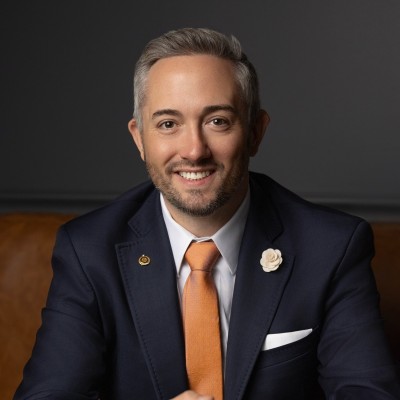
Dr. Joshua Austin runs a full-time restorative practice in San Antonio, Texas, and in early 2025 moved from a solo operatory into an eight-op, three-doctor office. He writes the "Pearls for Your Practice" column for Dental Economics, serves as global faculty for Align Technology and resident faculty at Spear Education, and in 2024 won the American Academy of Cosmetic Dentistry and Seattle Study Club "Case of the Year."
A graduate of the UT Health San Antonio School of Dentistry, he lectures across the country on dental technology, ortho-restorative treatment, and mental health, including his signature talk, "The Mental Dental Connection: The Secret to Being a Better Clinician and Better Leader."
Learn more or book Josh to speak: https://www.austindentalseminars.com/
Connect with Josh on LinkedIn: https://www.linkedin.com/in/joshua-austin-757065177/