Special List #20: How Saying No to Endo, Ortho, and Implants Builds a Better Practice with Dr. Andrew Skasko


Andrew Skasko spent a full year working shoulder-to-shoulder with his associate on every procedure, paying him the whole time, before they opened a second location together. That associate is now his partner across multiple practices, with three to four more sites in the pipeline.
Skasko is a restorative dentist in New Albany, Ohio, a clinical assistant professor at Ohio State, and a two-decade Seattle Study Club member who's competed on the mainstage at the annual symposium. He joins Cameron, Souyias, and Seda to lay out how he built a restorative-only practice in a profession that pushes every clinician to do everything.
The throughline is what Skasko calls the "super dentist trap": clinicians who haven't mastered the basics taking on endo, ortho, and implants because the procedures are sexy and the margins are good. He explains how he built his brand on the opposite premise — stay out of network with insurance, refuse procedures he can't master, and earn the referral network's trust by handing teed-up cases back to the specialists instead of trying to keep them in-house.
Mentorship runs through every part of the story. Skasko names the dentists who shaped him (Michael Cohen, Tal Moore, Greg Kinzer, Pat Allen, Ward Smalley) and explains how Seattle Study Club, the American Academy of Esthetic Dentistry, the American Academy of Restorative Dentistry, and Pat Allen's IIDC each pushed him to a different level. He's also direct about what he thinks is broken: academies and corporate models that mentor for bonuses and daily numbers instead of for the patient and the profession.
The practice-development thread is where the model gets concrete. Skasko walks through how he turned Dr. Nick Molnar (left-handed, like him) into a clinical partner over a year of supervised reps, then bought into Molnar's father's oral surgery practice and partnered with Dr. Lee, his former assistant turned oral surgeon. The group is now eyeing three to four more sites built on the same template.
Plus the closing story about a high-school classmate who thought he was a jerk in math class, then 30 years later came in to have him restore her smile.
Guest
Dr. Andrew Skasko is the founder of Elite Dental and Skasko Smile Design Studio in New Albany, Ohio. He earned his DDS from The Ohio State University College of Dentistry in 2004, opened his comprehensive interdisciplinary practice the following year, and currently serves as a clinical assistant professor in the restorative and prosthodontics division at Ohio State. He is a member of the American Academy of Esthetic Dentistry, the American Academy of Restorative Dentistry, and the American Academy of Cosmetic Dentistry, and has been a member of Seattle Study Club for over 20 years. In January 2023, he was named team lead for Team North America in a treatment planning square-off against Spain at the Seattle Study Club Symposium. Through his mentorship work, he co-founded Molnar and Skasko Family and Cosmetic Dentistry to bring advanced interdisciplinary care to underserved communities.
Learn more about Elite Dental and Skasko Smile Design Studio: newalbanyelitedental.com.
Follow Andrew on Instagram @drandrewskasko
Questions answered by this episode:
1. How do I build a restorative-only dental practice without taking on endo, ortho, and implants?
2. Why should a dental practice stay out of network with insurance?
3. How do I turn an associate dentist into a partner?
4. What is the role of the restorative dentist in interdisciplinary treatment planning?
5. How do I find the right mentors as a dentist?
6. What is Seattle Study Club and is it worth joining?
7. How do I get into the American Academy of Esthetic Dentistry or the American Academy of Restorative Dentistry?
8. Should a general dentist place implants or refer them out?
9. How do I quarterback a complex restorative case across multiple specialists?
10. How do I build a multi-practice dental group through mentorship?
About The Special Lists
The Special Lists, presented by Referral Lab, is the podcast for dentists and dental specialists. Running a dental practice isn't easy, and if you're in private practice, it can sometimes feel like you're on an island. That's why finding your people—those who've been in your shoes and can share real, lived experience—changes the game.
Referral Lab was built specifically for dental specialists, helping you track, manage, and convert every referral. It's about improving case acceptance, boosting team performance, and strengthening relationships with referring providers so your whole practice runs smarter.
This spirit of connection fuels The Special Lists podcast. Hosted by the team behind Referral Lab, we bring you wisdom from practice owners and dental professionals, sharing the wins, mistakes, and lessons that shape how they run their businesses today.
Got a question for us? Send us a message at speciallists.com (with two L's)
Transform your referral workflow with Referral Lab, the purpose-built platform for dental specialists to track, manage and convert every referral. Request a demo at referrallab.io
Hosts
Cameron Full
Co-Founder of Referral Lab
Cameron Full, co-founder of Referral Lab, is a strategic problem-solver with expertise in business management and digital solutions. He combines leadership, creativity, and technology to drive success across various industries.
Connect with Cameron on LinkedIn
Jason Souyias, DDS
Periodontist and Co-Founder of Referral Lab
Dr. Jason Souyias is a periodontist, educator, and co-founder of Referral Lab software. He teaches dentists and hygienists, including as a Pikos Institute faculty member. In his Port Huron private practice, he's known for excellent patient communication and experience. He's passionate about his work and dedicated to helping other dentists.
More about Port Huron, Michigan periodontist Dr. Jason Souyias
Michael Seda, DMD, MS
Periodontist and Co-Developer of Referral Lab
A clinician and entrepreneur, Dr. Seda brings 19 years of private practice experience to his periodontal and implant surgery practice in the San Francisco Bay Area. Dr. Seda's education spans several disciplines, including a degree in Psychobiology from the University of California, Los Angeles, a Doctorate degree from Harvard University (DMD), and a Master's degree in Periodontics and Oral Medicine from Columbia University.
More about Bay Area periodontist Dr. Michael Seda
Follow Dr. Seda on Instagram @sedaperio
Co-hosts: Cameron Full, Jason Souyias, DDS & Michael Seda, DDS
Producer: Eva Sheie @ The Axis
Assistant Producer: Mary Ellen Clarkson
Engineering: Cameron Laird
Theme music: Papa Funk, spring gang
Cover Art: Dan Childs
The Special Lists is a production of The Axis.
Dr. Souyias (00:00):
Thanks for listening to The Special Lists presented by Referral Lab, the podcast for dentists and dental specialists.
Dr. Seda (00:10):
And we are back. This is Dr. Michael Seda joined by my co-host, Jason Souyias.
Dr. Souyias (00:15):
Hello.
Dr. Seda (00:17):
And Cameron Full.
Cameron Full (00:18):
I am here.
Dr. Seda (00:20):
And we have an action packed episode this afternoon. We have a very special guest reigning in from Ohio. Dr. Andrew Skasko. Dr. Skasko, welcome.
Dr. Souyias (00:34):
Thanks, Andrew.
Dr. Seda (00:37):
Not only is-
Dr. Skasko (00:38):
Thanks for having me, guys.
Dr. Seda (00:39):
Dr. Skasko, an elite restorative dentist in the Columbus, Ohio area. He also, quite frankly, might have single-handedly coiffed the best head of hair on this side of the Mississippi.
Cameron Full (00:56):
On this side of the Mississippi.
Dr. Skasko (00:58):
He's very jealous about this. I hear about it all the time. He's just pissed off. It's not my mom.
Dr. Souyias (01:03):
He's angry.
Dr. Seda (01:04):
Yeah, he's like jealousy. No matter what I do. I'll never have a head of hair like that.
Dr. Skasko (01:09):
He's very good looking.
Dr. Seda (01:10):
No. Well, you're making me blush.
Dr. Skasko (01:12):
You're very good looking.
Dr. Seda (01:13):
Enough about my handsome looks and let's make this about you. So Andrew, it's really an honor to have you on. Those of us that know you.
Dr. Skasko (01:26):
Thank you.
Dr. Seda (01:28):
Know, you really are one of the most high functioning restorative dentists in the country. We can get into what that actually means a litle bit later on. But before we give you some time to speak, let's just give our listeners a little bit of your background. So you're the founder of Elite Dental and Scasco Smile Design Studio in New Albany, Ohio. You graduated from the Ohio State University College of Dentistry and you've got a comprehensive interdisciplinary practice with a strong focus on restorative and reconstructive dentistry. You've been committed to the Seattle Study Club for 20 years. You're a past clinical assistant professor in the Restorative and Prosthetics Division at Ohio State and a nationally and internationally recognized successful interdisciplinary dentist. Notable achievements is somewhat impressive here. Member of the American Academy of Aesthetic Dentistry and the American Academy of Restorative Dentistry. We had the honor of attending that meeting together in Chicago earlier this year.
(02:40):
And quite frankly, I've never had the opportunity to work with you professionally, but those that have kind of look at you or look to you as a kind of a leader in many ways. So Scasko, maybe it might be just neat for you to describe what you've set up for yourself in terms of your practice and your professional life. Just tell us a little bit about you.
Dr. Skasko (03:01):
Sure. Again, great to be here with you guys. It's always great to see your faces and yeah, not making it about hair. So three of us do dentistry and the other does many more elaborate and exciting things than us. Cameron, obviously. Honestly, so for me, I think a simple way to discuss has to do a little bit with evolution, right? And it has to do with evolution and has to do with commitment to my original goals, the foundation that I built, my practice, my image, my brands. It was all about that. And I think the last thing that I would tie into that is being relentless in not wavering in any way as to what let's say I set up to feel like that was the best thing to do for my patients early on. So this is 2005, 2004 and five. And it's kind of interesting because I had practiced for a year and a great practice and he really wanted me to join him.
(04:17):
He thought I was going to be the man, the guy that was going to be with him and take his practice to another level. But I just kind of had different opinions. I told him from the beginning, "I want to get out and do my own thing. It's really important to me, but I will always be honorable with you about where I'm going to go and what I'm going to do and when that might happen." So fast forward, there were a lot of conflicts that I had to overcome because it was not common for a 28-year-old clinician to go. Now we have even more debt with the students that I work with. I mean, it's unbelievable what's happening in dentistry actually. That's a whole nother discussion for even another time to talk about what we could be doing in the profession. But truthfully, I said, "Okay, these are the things that I think it needs to be. This is how I think a practice needs to be".
Dr. Seda (05:05):
And what were those things?
Dr. Skasko (05:07):
I knew that I wanted to be very interdisciplinary and what that meant was I had no interest in purchasing even endodontic files and endodontic system. I wasn't going to be placing implants. I was going to be a hyper-restorative dentist and really, really advance myself in every way of interdisciplinary dentistry, but focus on the restorative aspect of interdisciplinary dentistry. And what that meant was I needed to know what each of you did and I needed to know it almost as well as you, but never and that's not possible with you two, by the way, but let's say I wanted to try to be like you. I know I can't be like you. My hair is getting better, but I can't be like you. And no, Cameron, there's no way in hell can I be like you. But I have mentors and I aspire to see what I thought could be better in our profession.
(06:01):
I felt that there were too many super dentists out there. Now it's even worse guys. We know this. We know everybody thinks that they can just do everything for everybody and I didn't believe in that. So I didn't want to look at my patients in the eye in a short answer and say, "I can do that root canal just as good as Steve Smith or some other endodontist that's phenomenal." I can't do that. And if I had to come home at night and look at my kids and talk to them about what it's like to be honorable and how good I did on my patients and I realized that I'm putting implants in and doing sinus elevations and sedating a patient and doing all these things, maybe I wasn't really qualified to do. And even if I trained myself, I still couldn't look them in the eyes and tell them that I was a master.
(06:50):
So it was really about quality and service early on and it still remains to be quality and service. I feel like you can't have quality service and price. You can't waiver with that. So that meant that I wasn't going to be all about getting involved in networks and falling subject to dental insurance doesn't mean I don't accept them, but I do still stay out of network with all insurances. So I think it was just relentless commitment to what I felt like was right for my patients and everyone was against me. My accounting team, they were with me, but my father helped me early on in the business world and he's like, "Son, how can you do this? How can you do this? You're not going to have money. How are you going to pay your bills? How are you going to do this? You got to do root canals." And I said, "I don't believe that.
(07:37):
I think that I can just really commit to my patients." And even when I was early on, I went to the bank and a gentleman that our friend, Jason Soner, is very involved in. And then weirdly enough, I ended up somewhat getting involved in his bank with him, but I was so hesitant because when I was 28 years old, damn it, I came to him and he was at Park National Bank back in the day and I asked him to buy the building and buy a practice and set it up and do all these things and he fucking denied me, excuse me, for the F bomb, but I'm still pissed about it, but not really. I don't care. But honestly, then he calls on me and says, "Hey, Skasko." I'm tangenting now, but, "Hey, Skasko, we really want you to invest in our bank." And I'm like, "You mean like how you invested in me?
Dr. Seda (08:25):
The balls. The balls. I love it.
Dr. Skasko (08:28):
Yeah. Now you need me.
Cameron Full (08:30):
Let's just shit on Stoner for the next hour.
Dr. Skasko (08:33):
Interestingly enough, the bank is going across the street from my office, one of our branches. And I did invest, but probably not as much as I should have because I was kind of like, "Man." And you know what he says to me when he called me, and this isn't about him, I'm not really begging on him really, I'm just kind of joking. But he says to me, "Man, you were the one that got away, Skasko." And I'm like, "No shit, bro." And so that's kind of what it is, is I think that when I commit to something, I'm going to do what it takes to try and become a master at it from masters that I see that make me want to be better in every single thing that I do.
Dr. Seda (09:14):
So let's frame this. Let's frame this because the show's about your list and you essentially just segued us right into your first item on the list, which is mentorship. But before we do, what I'd love for you to do is just outline for us because you essentially are, you're one of the people that I think very effectively has established a brand. You've got a brand, your practice, your workflow, your systems, your team, all of it is under the Skasko brand and it's just beautiful how you've done it. Can you just outline for us what exactly that means to you? Because a lot of times when you talk about a brand, it can come off as kind of off-putting or whatever, but really it's an identity. And so before we get into how you developed it, what is that identity?
Dr. Skasko (10:03):
Brand was so important. Every single thing that we touch, however we interacted with a patient from the second my team member answered the phone to when they were greeted, everything was concierge based. From the very, very beginning, everything was catered care. They knew that we were there to create an experience for them. And what I wanted them to experience also was dentistry that wasn't normal. Dentistry that was something that they could have many people have low expectations for, but when we can do it really well, we can really blow them away. We can surprise them with the gifts that we all might share in the ability to treatment plan number one, right? Because if you can't treatment plan a case, then how are you going to take it from A to Z and how do you know what specialty team members you need in that case?
(11:03):
So I really am a big believer in the restorative docs as the quarterbacks. What's happened really is that too often the specialty colleagues, especially periodontists, no offense to you two, but your training is to mentor or teach up the dentist, right? But that's really not your job. Your job is to support us and help get the patients the most idealized treatment. It's our job to tee you up. It's not your job to treatment plan the entire case. So I was very relentless about that and working with Jason for 21 years, we've developed that. And I think that that's another thing about brand is the awareness of it. First of all, and I really want restorative dentists to hear this because I think it's super important. Even when I was teaching at Ohio State, the students, "I'm doing an implant residency or I'm going to go on a weekend and do some implant stuff." And I'm not poo-pooing people doing that.
(12:11):
Listen, there are many people that are very capable. My problem is what I'm seeing is that people don't learn how to master the basics and then they think that they can get involved in advancements in our profession and that becomes very disruptive. I'm afraid of disruptive dentistry and disruptive clinicians and I think that we need to help the younger colleagues not disrupt our profession. And so that's kind of what I'm seeing where they're not really even mastering simple procedures and then they want to go and place implants and do all these advanced surgical procedures and it's all sexy, but is it really? Is it really sexy when you have to redo it or you have to end up getting in over your head and you're so stressed and you're sweating and you're just practicing so uncomfortably, right? So that's kind of a big thing. I think creating a team early on was a part of my brand.
(13:15):
So though they were subsets of my brand like Jason Stoner or my orthodontic colleagues, once they start seeing your commitment and, oh, by the way, seeing that I'm not trying to take from them. So I'm a big believer in give and take relationships, right? I'm a big giver. And so I really care about that. But then once they saw, number one, what I was capable of, my ability to treatment plan and tee these cases up and set them up for success, how enrolled the patients were, some of which with Dr. Stoner and I, he has never even met the patient and they're already paying me for his treatment. That's more advanced and that's a future discussion if you guys want to talk about that sometime.
Dr. Seda (14:02):
But just something to highlight though, that is kind of next level, right? Removing barriers to path of treatment for patients for them to get the care that they need. And when you hear Andrew talk like that, I mean, it's something I'd love to come back to. Keep going. And one thing I want to underline, you're in your flow. I don't want to disrupt it, but- I thought you just did. I've had the privilege of being next to you during lectures in high level interdisciplinary courses. And it's amazing to me Andrew knows the surgical stuff as well as the specialists in the room. But what he's telling us is he's taken the time to learn it, but he's spent most of his time also trying to just get better at the restorative dentistry. You can choose what you're going to invest your time in and then you focus and allocate your time and resources accordingly. Keep going, but I've seen it firsthand.
Dr. Skasko (14:57):
Thanks. Yeah. But what it ended up becoming was other people helped me build the brand because they believed in what I was doing. So we think that we have to be in our own little shell and all of a sudden everybody should want to send to us because we're good. Most patients don't know whether you're good or not until they see the results, until they se what you're actually doing. But if you're with a phenomenal technician, right, I work with Pinhas Adar, he's a very talented master ceramist. Many people know him, very famous guy. I'm gifted to work with him, but he's not going to work with me if I'm not giving him great work. It's just not going to happen. It's not going to happen. And so I think that many patients don't know what our preps look like restoratively. They don't know. They know if we hurt them, they know what our outcomes are, but they don't know a lot of things, but your colleagues do, for instance, you guys see the people you're working with and you know.
(15:59):
So it's actually a referral engine in the reverse because number one, the specialists realize that no, Skasko's not going to be doing Invisalign. You're not seeing aligners coming out of his office because he's not looking at his patients and saying, "Oh, by the way, I can move your teeth just as well as my orthodontist can that I just sent my family to. " "Oh, why didn't I do my kids Invisalign? "Well, I'm not saying that it's wrong that people choose that and that could be a conflict, right? Yo asked me what I did and this is what I did. I think that many things come with that. There are many gifts that can come with that when you stay committed to one thing. It's just like my lawyer friend, he's like, " Man, he's my age. He's 50 years old now. "He's like, " I'm kind of trying to find myself.
(16:53):
I'm bouncing around a lot. He's been to five different law firms. He's an incredible guy. He's so talented, but he didn't stay the course. When you stay the course and stay committed to whatever it is that you might do, I believe those around you can win including your patients. Then you might be able to win too, whether it be financially or how you feel at the end of the day when you're talking to your kids or your family about what you accomplished and what you did for someone and how that person came up to you and said, You changed my life makes a difference.
Dr. Souyias (17:29):
Hallelujah, man. It's beautiful. So
Cameron Full (17:33):
How many free throws a day did Michael Jordan shoot? Anybody know this fun fact?
Dr. Souyias (17:37):
Don't know this fun fact.
Cameron Full (17:39):
I don't either.
Dr. Seda (17:40):
100 free throws?
Cameron Full (17:40):
It's a shitload. But the reality is that he didn't ever stop shooting those free throws and it's the most fundamental shot in basketball, and yet the best basketball player ever to play the game, arguably, but in my opinion it is. He continued to shoot those and that's no different than this conversation here. You can't get good at something without taking reps. I think knowing that that's fundamental here, it's no different. And then here versus if you want a decent sheet cake, you can go to the grocery store. If you want a wedding cake, you go to a cake baker. And so there's specialty. I'm really, really, really adamant about this. There is specialization everywhere around us and there's times to go to a generalist and there's times to go to a specialist. And so I love this topic. It's near and dear to my heart as being a non-dentist, but appreciating dentistry as well as you guys clearly appreciating where some of my specialty is. And it's a testament to your individuality, Andrew, with how you approach many aspects of your life.
(18:49):
And how you are constantly ... You thrive around specialists, not just in dentistry, but in the other aspects of people, how they specialize. They specialize in friendship. There's people that are deep friends and people that are not deep friends. And you choose to breathe around as a person that's gotten to know you really well over the last few years, you choose to spend your time around deep individuals and that comes with specialization. So I don't mean to segue. It's just a super, super near, dear to my heart topic specialization as a whole. Seda, you want to take us back?
Dr. Seda (19:29):
So Skasko, leading into then, it sounds like there was a lot of influences on you as you were coming up in terms of how you formed your vision and wanted to proceed. In terms of mentorship, I know it's one of the things you wanted to touch on. Can you just talk a little bit about who your mentors were, what mentorship has meant to you and just generally your feelings on it?
Dr. Skasko (19:52):
Absolutely. You mentioned Seattle Study Club and I've been a member since I started in practice and I think that was really instrumental for me. I think that the blanket as a whole of what Seattle Study Club is and the foundation of that really spoke to me because I realized that like, wow, these people are really smart and they're talking and they're on a stage and they're presenting beautiful work. And so I started looking at who impressed me as a young clinician and I was pretty driven. I really love dentistry. I mean, a segue back on that, I wanted to become a dentist since I was in seventh grade. Some people don't know that. And my best friend's father was a dentist and he had no interest in being a dentist, but his son, but he's like, "Hey, my dad's right across the street. Let's go hang out there." And I'm like, "Oh shit, I like this.
(20:44):
I want to do this. " So I just continued there. So I'd say Craig Wright kind of initiated kind of that love for dentistry for me. I did a sterilization, then I became an assistant there and just kind of took on different roles within the practice. But I think then Seattle Study Club was a big part of that. And then the people that I met there, so Michael Cohen being one of them, I think Michael and I, we just kind of hit it off from the very beginning. I was going through something interesting in my life, which happens and he called me on it and he just knew it. He just knew that there was something there and he says, "Andrew, you have a lot. There's something special about you, but there's also something missing." And I was like, "Whoa, what is this guy? I just met him." And so from then on out, I've been there for him, he's been there for me, but I tell you, he's really been there for me a lot.
(21:44):
And through that organization then I developed into Tal Moore who's like a brother to me now, Greg Kinser also like a brother to me. These guys were senior to me and I loved what they were doing. I loved their perspectives on things. They challenged me and it was kind of funny. I mean, Greg's a great guy and Tal too and we're all kind of argumentative in a fun way and I think that they ... I would go sit with Ward Smalley, I would go sit with who here, someone here and I would just listen and then start talking a little bit. And then they realized, "Well, this guy kind of knows what he's talking about, I think. And wow, he might be ... Wow." And so I think I became friends with a lot of people just because I was myself and I cared about our profession and I mean, I could go on and on.
(22:43):
Pat Allen then has further deepened a role in my world as a mentor. And interestingly, two of them are periodontists, two of them are prosthodontist. So I mean, Jason is definitely a mentor to me in different ways as well. He was a little bit senior to me in dental school and we just kind of connected early on and developed a really, really strong working relationship and friendship. I honestly think that people, they saw my love for dentistry, but they also saw my heart and a lot of these men and women really touched me in different ways in terms of their passion for our profession and also they allowed me to be me. And once they realized maybe who I was, I think friendships kind of bloomed from there and that's kind of how it went. And so to me, I don't feel like our profession can exist without strong mentorship roles and strong mentors.
Dr. Souyias (23:50):
That's incredible. I mean, what an awesome story. I mean, to say I started my career in the Seattle Study Club and then now you're one of the speakers on the stage What do you tell the young kid in the audience today who's like, "Man, how do I get there one day?"
Dr. Skasko (24:07):
What I would tell those individuals is what I've really been honing in on the whole time is if you have a commitment, if you have a desire, if you feel like you know what it is that you want to do for your profession and your patience, do not waiver on it. Don't waiver because some person tells you you should do ortho when you're not the best person at the ortho. Don't waiver. And when you want to meet people, go meet them, show them who you are. Don't feel like you can't. There are some people in our profession that are not going to give you the time of day to meet with them, but you know what? Those people aren't worth it then. They're not going to mentor you and you don't need them. So get around people because I can tell you there's a hell of a lot more that will give to you.
(24:58):
I think what it is though is they see people up on the stage and they think that that's so unattainable or they might see the dentistry that's done or the ceramics or the preps that we're able to do and I think I can never do that. But I think what you learn is so many of these people, myself definitely included, it's hard for me to put myself in some sort of equal dimension to what I felt like I used to watch back in the day and then yes, I have an opportunity to do it, but everyone's so approachable and I find that this is kind of an aside here, but in high school I sat behind a lady and her name's Amanda. I bring her up because after a couple weeks in math class, she leans back to me and she says, "You're so nice." And I said, "What do you mean?" She goes, "I just looked at you and I thought you were a jerk." And I'm like, "Is it because of the Redkin?What is it? "
Cameron Full (26:16):
Did you have that hair then?
Dr. Skasko (26:19):
It took me away because it made me realize that people might have a filter for me or you or you or you, right? And sometimes we kind of have a responsibility to not let that filter be true if it's not. There are a lot of us out there that maybe are assholes and that's the truth for them. It wasn't me and it still isn't me. Love that. I find that people have to take a risk and just because you look at someone that's up on a stage and dressed well and might have decent hair for the day and one of my big parts of the lecture was to kind of bring in the fact that we all struggle. We all have things and I get up there and just because I'm the one talking doesn't mean I have shit going on. I do have shit going on and we need to all be able to be vulnerable with what's happening and that does not.
(27:15):
Now you guys know my commitment in this world, a lot of you, but it doesn't happen in our profession. And so I think more often with these academies, and especially as I helped to get involved in some of them a little more like the AAED, AARD, I was really impressed with the Restorative Academy this year being able to be on some committes there. And I really got to see some of the beautiful underworkings of that academy and how caring the membership is very hard to become a member, but once you are and you learn, you understand. And so I became very passionate about that in Aesthetic Academy the same way. They want to get to know the members that come, the guests and they want everyone to feel welcome and it's a very intimidating group, but it doesn't have to be.
Dr. Seda (28:08):
I just want to transition because you're leading yourself right into the next point that you had on your list, which is academy membership. So you're going from talking about mentorship and its value and how it's underrepresented in our profession. Man, phenomenally said. And now you're kind of seguing into how it's led to academy membership and what that means to you. So keep going. Item number two, academy membership.
Dr. Skasko (28:34):
I think that these academies in Seattle Study Club and Pat's IIDC, I mean, they've made me better at every step of the way. So I think that I'm a driven guy and I really want to be involved in the academies that are shaping the future of our profession. And I would say AED, AARD, and obviously IIDC are those are the three premier in my opinion, it's biased maybe, but in the world of collaborative groups that get together to enhance our profession and invite guests and show them what's possible in our profession. And then obviously Seattle Study Club, I mean, it's always going to be, and Michael Cohen though, that he's kind of retired out from SSC, they're near and dear places to my heart and I just don't think that I would be where I was without any one of those. I really don't.
Dr. Seda (29:35):
Going to the next point on your list, I mean, just to see if we can kind of tie it together, practice development, I feel like you've touched on that to some degree. What did you mean by that in terms of the next bullet point?
Dr. Skasko (29:48):
So every step of the way and even every day in a morning huddle, I'm always looking at the great things that we do and how can we enhance Even the littlest thing. And so throughout the time I started looking at things that didn't make a lot of sense to me. So for instance, if I have a treatment plan and a patient sitting in front of me, I do consults on Wednesdays and you put together this treatment plan and then you give this to your treatment coordinator, they go put it into your software and I know Cameron, you guys are all really involved in everything that you're doing with respect to how you guys are helping others track their referral productivity with referral lab and everything. And I think that when I see things that don't make sense, like why is someone asking me, I'm putting together a treatment plan for them and then we have to wait 10 minutes to input something into a software and then come back and spit it out to them.
(30:51):
So I just do simple things like when I see the ... I'm all about, I have this word fluidity all throughout my office, literally written. And I want people to walk through my process in a very fluid way. Like you said, I don't want roadblocks. I don't want a referral to a specialist being a roadblock to treatment for me. I don't want it to take tons of time because I have to have them see Dr. Seda and he's booked out six months. It's not going to work. We got to figure out a way to flow because patients are enrolled at the time we want to help them. So I developed menus in my office where if someone comes in and we're going through a veneer plan or a reconstructing plan, I have different menus. I have an all on X menu. Why are we going to waste time?
(31:38):
It has my surgical fees for Dr. Stoner on it. So when I'm getting in and talking about treatment and they're enrolled, I'm not wasting time having someone put things into a software. So that's it on a very snippet level. But then all the different processes that we've then developed come into play like that, like the menu or how we're doing things. And so trying to make processes easier and I'm really big on that. And so where I took mentorship into practice development, which is what I mentioned there, is once these individuals ... So for instance, with Nick Molnar, he worked with me for a year literally and he happened to be left-handed, which was a golden opportunity because I'm a lefty as well. So I would literally pop up out of the chair, he would jump in, I would go check some hygiene, I would come back.
(32:30):
He didn't do anything. I would always instruct on where he was or what he had to do. As I saw him advancing each step of the way, he did more, he did more, he did more. Now he's doing reconstructions and doing beautifully. He knows the fundamentals and he also knows that he's always got me looking at things and checking with him and working with him to help develop him. He works with me on Fridays only now because he's in our other practice Monday through Thursday. So what happened was we built him up and gave him some abilities to understand interdisciplinary dentistry. And so he was kind of like in this SSC residency in a way in my practice.
(33:13):
It was a really great thing, but it was a lot for me to give up because I'm paying him for this by the way and I'm teaching the whole time I'm doing procedures. And the procedures I do are pretty intense. I'll prep 2018th at a time and buildups and this and that and lots of stuff going on at one time. So basically then what we did is then he and I developed a practice together and my name's on it, but so is his and it's Molnar Skasko. So we developed that. And now we've then taken that and we branched off and bought in and bought his father out who was an oral surgeon and bought his practice and Dr. Lee, who's an oral surgeon, who used to be my assistant and a patient of mine for 20 years, he worked as an assistant with me before he went to dental school.
(34:04):
He wanted to do restorative and he said, oh, I suck at restorative when he got there, but I'm a really good surgeon. He became an oral surgeon. We partnered in another deal and that we're going to keep doing that with now we're looking at three to four other options here in the future that we're going to kind of replicate that model. And so it's giving people opportunities. They have to work for it. Like I told Dr. Molnar, listen, I didn't come up the easy way. I didn't have this like this. I wasn't in Talmore's office working with him the whole time. I didn't get that gift, but I am going to give it to you and not like I'm the greatest, but I'll help give you tools on the things that I don't know too and people to meet with or how to get through to them, but it will not be easy.
(34:52):
I believe we can make it worth it and we have. I'm super proud of him now. He's doing really well and not just from a financial perspective. He's really become a different human. I can't take all the credit for that, but I will say part of the role to practice development was personal development, right? We can't develop as clinicians unless we work on ourselves personally. And I know you three know that probably better than many. So that's a big part of mentorship to me. You have to work on who you are personally and I think your team needs to see it. I think your patients need to know it. They need to know they can trust you when you look them in the eye. When they look you in the eye and you're giving them a treatment plan, they know. They know you're not trying to sell to them.
(35:43):
I've never tried to sell to my patients. I don't. I give them solutions and they get to choose, but I give them the recommendations and I do it in a data-driven way with a lot of knowledge about every discipline that has to do with their procedure. And I do think it's a gift. I'm proud of it. You won't hear me say a lot of things about myself all that often, but I will tell you that I've thankfully been recognized from a treatment planning perspective on a pretty large scale going up against some great international teams and things doing that and it's fun, but I'll tell you I'm passionate about it and I'm good at it and I'm proud of myself and I'm for allowing, first of all, myself to say that because it's a hard thing. I'm coming from humility. I'm not coming from a place of I'm just such a badass and everybody better want to ... No.
(36:36):
I'm coming from a place-
Dr. Seda (36:37):
I think it's just passion.
Dr. Skasko (36:38):
Sometimes like, Jason, how did you get there? What do you say to these young people that want to be you or do that what you do? And then I do. I see people come up to me and they're like, "Oh my gosh, I've been watching your stuff for so long. You've made such a difference in my practice." I never realized that I can have that impact on someone. But I'll tell you what, that person's the first person I'm going to and hugging and bringing in and going and introducing. And when I'm a part of these academies and I get to take people around and introduce them, you better know that they're going to meet all these incredible clinicians that they can't even believe they're getting a chance to meet. And how cool is that? Why are we so standoffish in our profession?
(37:20):
It's a joke to me. What do we want to do? We want to help each other, but there's too much scarcity and too much challenge, not in these groups. And that's what I'm about. I want to be surrounded by people that make me better, that I want to become better personally and professionally.
Dr. Seda (37:39):
Drop the mic right there.
Dr. Souyias (37:40):
Drop the mic and walk away,Skasko.
Dr. Seda (37:42):
Hell yeah. Bravo. We've done 20 of these. You're the 20th guest, I believe. And I will say, man, beautifully said, your passion comes through. All the messages that you've put out there today resonate with me and I think are very important for not just young practitioners to hear, but all people. Those of us that are getting to the point where mentorship is not something that we're on the younger end of, but perhaps on the other side of to start thinking about how we give back and move our industry forward. And I think preaching to the choir here, the four of us I think are all trying our best to do that, but it's an important reminder and with the passion with which you come to it is evident and really inspiring. So thank you for coming on today. I mean, we hit all your points on this list.
(38:41):
We didn't do it in order, not that we needed to, but very compelling messages and you're not just a pretty face.
Cameron Full (38:51):
Or great hair.
Dr. Seda (38:52):
Yes, exactly. Yes.
Dr. Skasko (38:56):
Oh, I just wanted to say Amanda, who used to think that I was the biggest jerk, came into me and asked me in my practice later 30 years later and asked me if I could help her with her smile. How cool is that? And I did. And she's like, "Oh my gosh, now you changed my perspective once because I thought you were a jerk and now you changed my life and what your gift was. "
Dr. Souyias (39:19):
I love that. Love that.
Dr. Seda (39:21):
You're all about gifting the world with your talents.
Cameron Full (39:27):
I think though that I really like the points on personal and professional development as we're on this journey towards being the best versions of ourselves we can be, I only want to associate with people that are on that same journey. And I think that as we decide who we spend our time with, I think that employees, I think that vendors, I think that patients, I think that clients, I think that it's magnetic. And so when you give it away freely, you introduce, you give your time, you mentor, you mentee, you do all the things freely with as much authenticity as you possibly can, knowing that you're doing it from a place of pure generosity. I think that it's magnetic. Better patients come because patients also want to be associated with that level of human because that level of human is the type of human that does great dentistry, that does have the specialization that makes the best bread, that cooks the best cakes because it's emotional, right?
(40:47):
It's not just a transactional function. And so when people are talking about like getting better patients or getting better team or getting better anything, you have to develop that magnetism and that magnetism comes with self-care and shooting 100 to 200 free throws a day and the reps. I did the search when Skasko was talking and Jordan would shoot 500 to a thousand shots a day and 100 to 200 of those were free throws. And so like you can't be the best without practice, but you also can't be the best without care. And I love this talk today. I just let him go and we just let him go. And oftentimes we're like, " Well, let's curve it. Let's take it back. "And Scasco wound it all back together on his own and that's because he's an individual. I think that again, as a dear friend of yours, has the level of care that I wish I was emotive as you were, man, and your ability to process and take things to a really personal level and to do that in the business space is remarkable. So thank you for your time today.
Dr. Seda (42:05):
Well said, Cameron. Well said.
Cameron Full (42:07):
Well said.
Dr. Seda (42:07):
Thank you, Amy. And echo his sentiments. Andrew, thank you for your time, man. Anything you want to close with?
Dr. Skasko (42:14):
No. Listen, you guys are three true gentlemens. I'm honored to be a part of this evening with you. Happy to be a part of any discussion with you three anytime or another, but yeah, honored to be here and appreciate the opportunity to share a little bit about me.
Dr. Seda (42:36):
I will say this, I'll leave this. I definitely don't think we scratched the surface of some of the things that we could dig into with you. So I have a feeling if it's okay with you that we're going to have you back again for a round two.
Dr. Skasko (42:49):
Happy to talk with you guys anytime.
Dr. Seda (42:52):
Right on. Awesome. Gentlemen, thank you for your time.
Dr. Skasko (42:54):
Thank you.
Dr. Seda (42:55):
This was a pleasure and thank you for listening.
Dr. Souyias (43:00):
Thanks for listening to The Special Lists presented by Referral Lab, the podcast for dentists and dental specialists. Featuring a special list from a specialist. Got a question for us? Send us a message at speciallists.com with two Ls. Transform your referral workflow with Referral Lab, the purpose-built platform for dental specialists to track, manage, and convert every referral. Request a demo at referrallab.io.
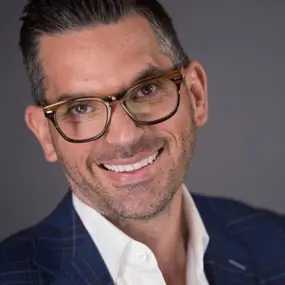
Founder, Elite Dental and Skasko Smile Design
Dr. Andrew Skasko is the founder of Elite Dental and Skasko Smile Design Studio in New Albany, Ohio. He earned his DDS from The Ohio State University College of Dentistry in 2004, opened his comprehensive interdisciplinary practice the following year, and currently serves as a clinical assistant professor in the restorative and prosthodontics division at Ohio State. He is a member of the American Academy of Esthetic Dentistry, the American Academy of Restorative Dentistry, and the American Academy of Cosmetic Dentistry, and has been a member of Seattle Study Club for over 20 years.
In January 2023, he was named team lead for Team North America in a treatment planning square-off against Spain at the Seattle Study Club Symposium. Through his mentorship work, he co-founded Molnar and Skasko Family and Cosmetic Dentistry to bring advanced interdisciplinary care to underserved communities.