Special List #19: The Airway Step Most Cosmetic Cases Are Missing with Dr. Tracey Nguyen


AACD taught Dr. Tracey Nguyen to be good with her hands. The mouth–body connection taught her how to keep that work intact for years.
Tracey is a restorative dentist, scientific advisor at the Kois Center, AACD Accredited Member, and co-founder of ASAP Pathway — the first comprehensive online education platform for pediatric airway and sleep dentistry. She joins Cameron, Dr. Seda, and Dr. Souyias to talk about why a beautiful smile won't hold up if you aren't also looking at how the person breathes — and what it takes to shift a profession that's been told for decades that "if you want to be a doctor, go to med school."
Tracey shares how she reads ENT and pulmonology journals to inform her restorative work, why she calls the airway conversation "a movement" even though her sleep-physician colleagues think it should be obvious, and what the cosmetic-to-airway pipeline looks like in real practice — from skeletal expansion in adults to airway-driven smile design.
AI as a clinical tool gets its own thread: Cameron's Google Scholar Alerts trick for tracking new published research, Dr. Seda using ChatGPT to prep for an orthopedic surgery consult, the patient who used ChatGPT to take a dentist to the board over a denied scaling and root planing claim, and the parent who showed up with an AI-drafted medical-necessity letter Tracey said was so good she'd be using it as a template.
Plus the ASAP Pathway origin story: launching in January 2020 with no product, selling 70 seats at $8,000 each, and scrambling to record forty hours of curriculum during lockdown. And LEAD — a women's mastermind in dentistry — and why "men battle to bond, women bond before they battle."
Guest
Dr. Tracey Nguyen runs a private restorative practice in Lansdowne, Virginia, 30 minutes outside Washington, DC. She is an Accredited Member of the American Academy of Cosmetic Dentistry — one of only five accredited dentists in the state — a Fellow of the Academy of General Dentistry, and a Diplomate of the American Board of Dental Sleep Medicine. In 2016, Dental Products Magazine named her one of the Top 25 Women in Dentistry, the same year she completed her training at the Kois Center, where she now serves as Scientific Advisor. She co-founded ASAP Pathway in 2020 — the first comprehensive online education platform for pediatric airway and sleep dentistry — and serves as visiting faculty at Spear Education, mentoring the Airway Workshop alongside Dr. Jeff Rouse.
Learn more about ASAP Pathway: asappathway.com.
Follow Tracey on Instagram @drtraceynguyen
Set up Google Scholar Alerts at scholar.google.com
Questions answered by this episode:
1. Why doesn't cosmetic dentistry last as long as it should?
2. What is airway dentistry and why does it matter for restorative cases?
3. How is sleep apnea connected to dental wear and bruxism?
4. How can a dentist start reading medical literature outside of dentistry?
5. What is ASAP Pathway and who is it for?
6. Can AI help me with patient education and case research?
7. Should I be using ChatGPT or Open Evidence for clinical literature review?
8. What is skeletal expansion in adults and when is it indicated?
9. How do I collaborate with sleep physicians and ENTs as a dentist?
10. How do dentists start a continuing education company?
About The Special Lists
The Special Lists, presented by Referral Lab, is the podcast for dentists and dental specialists. Running a dental practice isn't easy, and if you're in private practice, it can sometimes feel like you're on an island. That's why finding your people—those who've been in your shoes and can share real, lived experience—changes the game.
Referral Lab was built specifically for dental specialists, helping you track, manage, and convert every referral. It's about improving case acceptance, boosting team performance, and strengthening relationships with referring providers so your whole practice runs smarter.
This spirit of connection fuels The Special Lists podcast. Hosted by the team behind Referral Lab, we bring you wisdom from practice owners and dental professionals, sharing the wins, mistakes, and lessons that shape how they run their businesses today.
Got a question for us? Send us a message at speciallists.com (with two L's)
Transform your referral workflow with Referral Lab, the purpose-built platform for dental specialists to track, manage and convert every referral. Request a demo at referrallab.io
Hosts
Cameron Full
Co-Founder of Referral Lab
Cameron Full, co-founder of Referral Lab, is a strategic problem-solver with expertise in business management and digital solutions. He combines leadership, creativity, and technology to drive success across various industries.
Connect with Cameron on LinkedIn
Jason Souyias, DDS
Periodontist and Co-Founder of Referral Lab
Dr. Jason Souyias is a periodontist, educator, and co-founder of Referral Lab software. He teaches dentists and hygienists, including as a Pikos Institute faculty member. In his Port Huron private practice, he's known for excellent patient communication and experience. He's passionate about his work and dedicated to helping other dentists.
More about Port Huron, Michigan periodontist Dr. Jason Souyias
Michael Seda, DMD, MS
Periodontist and Co-Developer of Referral Lab
A clinician and entrepreneur, Dr. Seda brings 19 years of private practice experience to his periodontal and implant surgery practice in the San Francisco Bay Area. Dr. Seda's education spans several disciplines, including a degree in Psychobiology from the University of California, Los Angeles, a Doctorate degree from Harvard University (DMD), and a Master's degree in Periodontics and Oral Medicine from Columbia University.
More about Bay Area periodontist Dr. Michael Seda
Follow Dr. Seda on Instagram @sedaperio
Co-hosts: Cameron Full, Jason Souyias, DDS & Michael Seda, DDS
Producer: Eva Sheie @ The Axis
Assistant Producer: Mary Ellen Clarkson
Engineering: Cameron Laird
Theme music: Papa Funk, spring gang
Cover Art: Dan Childs
The Special Lists is a production of The Axis.
Dr. Souyias (00:00):
Thanks for listening to The Special Lists, presented by Referral Lab, the podcast for dentists and dental specialists.
Cameron Full (00:09):
And welcome to another episode of The Special List. I'm your host, Cameron Full, and I'm with my co-hosts, Dr. Michael Seda.
Dr. Seda (00:19):
Good afternoon, everyone. Welcome back.
Cameron Full (00:22):
And Dr. Jason Souyias.
Dr. Souyias (00:25):
Hey, good to see everybody.
Cameron Full (00:27):
So excited this evening clearly, Souyias. And we are with our guest this evening or day or morning, Dr. Tracey Nguyen. I've known Tracey for almost a decade.
Dr. Nguyen (00:39):
I know. We still haven't seen each other in person.
Cameron Full (00:41):
I know. I know. Long time.
Dr. Nguyen (00:42):
Well, now we can see each other.
Dr. Seda (00:44):
It's better kept that way. It's better kept up.
Dr. Souyias (00:47):
Have you seen Cameron? Have you seen pictures of Cameron? You want to see him in person?
Cameron Full (00:51):
What are we doing here? So Seda's like you can see me in person. But the thing is, and Trace, we typically jump on Jason. He's easy to make fun of. And Seda, we frequently give a hard time to him because he's just a gorgeous man. And so here on The Special List with Tracey, when we were putting together kind of the curated group of people that I wanted to, from my side, invite on, you were quick on the list. You do a lot of unique stuff. And with that, you get the opportunity to talk a lot. You have your own teaching facility function with ASAP. And I thought some of the cool stuff you could bring to the mix, I think would be of value to our listeners. And so Tracey is, Dr. Tracey is a restorative dentist and educator at airway-driven dentistry. She is a scientific advisor for the renowned Cois Center.
(01:50):
She's at the forefront of dental education, particularly in the area of airway management, cosmetic dentistry. She's one of the co-founders of ASAP Pathway, an online education platform for airway dentistry. She combines her extensive expertise to create smiles that not only look beautiful, but also enhance breathing and overall health. Welcome, Dr. Tracey.
Dr. Nguyen (02:12):
Hi.
Dr. Souyias (02:13):
So good to have you.
Dr. Nguyen (02:15):
Thank you.
Cameron Full (02:16):
She doesn't have her Game of Thrones background.
Dr. Nguyen (02:17):
I know. I don't feel like I'm in my element. I would be like, "Bend the knee." Oh y'all bend the knee.
Dr. Souyias (02:29):
When you do other things, do you play the theme song music? The theme song movie music always makes me want to gallop.
Dr. Nguyen (02:35):
I should add it.
Dr. Souyias (02:37):
You should add that. That would be a great touch.
Cameron Full (02:40):
That's actually a good idea.
Dr. Nguyen (02:42):
My ASAP partners said, "You have to have a different background when we're on the podcast." I was like, "No. I love my gamus." But yeah, I'll send you guys a picture of it. It's pretty funny.
Dr. Seda (02:55):
Well, we can refer to you as Calice if you'd like.
Cameron Full (02:59):
It kind of rhymes with ... I mean, it's close enough.
Dr. Nguyen (03:01):
Close enough.
Dr. Souyias (03:02):
Tracey? Calice?
Dr. Nguyen (03:03):
Close enough.
Cameron Full (03:04):
Right. Yeah. Notable highlights for Dr. Tracey. Top 25 Women in Dentistry Dental Products Magazine, accredited member of the American Academy of Cosmetic Dentistry, fellow American Academy of General Dentistry, Diplomat American Board of Dental Sleep Medicine, co-founder of the Airway Sleep Pediatric Pathway, Scientific Advisor for Course, which we mentioned before.
Dr. Nguyen (03:28):
And I don't know how to stop.
Cameron Full (03:30):
I know. Well, I think that's something that we should probably talk about is your necessity to keep stacking the list here. Visiting faculty, SPEAR education. And I think you just didn't ... Weren't you just mainstage of AACD this weekend?
Dr. Nguyen (03:43):
Yeah, I was main stageat AACD and main stage for the SPEAR Summit.
Cameron Full (03:48):
Nice. Nice.
Dr. Nguyen (03:48):
Yeah. So this year- Good. Very cool.
Dr. Seda (03:50):
What were you talking on?
Dr. Nguyen (03:51):
SPEAR Summit, I spoke on the possibilities with a skeletal adult expansion. And I did it with a good friend, Ilya Lipkin, which is an orthodontist. So it's basically, it was a conversation about the restorative doctor and the orthodontist and how we can do these cases collaboratively. So that was really nice. We're basically just talking about what we can do today that most people don't know of. And then at AACD, which is, since I'm accredited member there, my starting talk was AACD taught me how to be good with my hands, but airway dentistry taught me how to make my dentistry last. And so it was great. So basically, and I did that with Victor which is a dentist in LA. And we basically talk about airway smile designs. And our concept is about making the smile beautiful with making the face beautiful. So we're talking about skeletal changes, bite changes, things to look for, and talks about how to improve it.
Dr. Souyias (05:05):
So for people that aren't familiar, talk about ... Let's talk about that.
Cameron Full (05:09):
Yeah, let's talk about that topic.
Dr. Nguyen (05:14):
Yeah. I think we're getting into a place, which is a good place where we're starting to say, "Hey, the mouth isn't..." You can't be a healthy person with an unhealthy mouth. And a lot of times we can see signs of what's going on in the body through the mouth. Now, it used to be thought was that it was just, oh, we could just change the oral flora and just it was all perio. What we're finding out now that it's also beyond perio, because before the oral systemic connection was only perio. Now what we're finding that breathing and how breathing is also affected to the oral cavity and how the oral systemic connection. So now we're looking at, well, what affects breathing? Well, it's your face. So who manages that face? Well, a dentist. I mean, the best person to manage half of that face, that growth to life is really adendus, but for some reason we don't get involved in the table, in the medical field to discuss that.
(06:18):
And it's interesting because I just had a podcast with a sleep physician from San Francisco and I said, "What do you think about this ... " And I call it the movement, because it kind of really is. We're really pushing dentists to be more aware about the craniofacial risk factors and how it influences sleep and breathing and our early intervention in children. And he said, "I didn't even understand why it's a movement. It's obvious, makes no sense." And it's funny, but an MD says that, whereas we're fighting each other here to trying to do this. I mean, I read in one article and it was so demeaning to dentists. And it was in a published dental article. It's like, "Well, if we want to be doctors, we should go to med school." Well, that's BS. Damn, that's a slap in the face for us. I mean, we're putting ourselves down, whereas I think actually doctors want to collaborate with us.
(07:20):
And I think that the reality is they don't know what we can do and they really don't. They really don't know what we can influence. And I think that that's part of us educating them and then that's how we can work together. I mean, that's kind of how I started. I started on social media probably around-
Cameron Full (07:38):
I was curious. I was going to ask the question. I said, "What led to this? " Because I mean, I follow you on social and it'll be like a Saturday morning at 4:00 AM and all of a sudden you're going to pop up with some lit review that you're doing. And I'm like, "This girl doesn't ... I don't sleep. You really don't sleep." Where did it start? Where did that kind of function start with you?
Dr. Nguyen (08:03):
So it's funny because I've never been a big reader, but what happened was, so sleep dentistry was never my thing. I didn't like it. My thing was cosmetics and sleep dentistry, these oral appliances were just jacking all the bites. And I was like, "I just don't get it. " I am taught to dial in with shim stock. How am I not supposed to care when I put an oral appliance in? And then what happened was I met Jeff Rouse and he started introducing me to this concept of every dentistry.
Cameron Full (08:33):
Shout out, Jeff.
Dr. Nguyen (08:34):
Yeah. And then I went with it and then I started to read. It's funny because Jeff will say, "I've been trying to talk about this for 10 years and now you're getting some people to talk about it. " And I joke around and I tell him, I said, "I just made it sexy. That's all. " I was like, "You just didn't have that. "
Cameron Full (08:53):
I'm not taking the bait on that, Tracey. I'm not taking the bite.
Dr. Nguyen (08:57):
So then what I started to do is I just started to read and then reading articles in different places. And then I just started doing a blog. So I would take an ENT journal and I was like, "Oh, interesting," because then this is its correlation to dentistry. I would take a pulmonology article correlated to dentistry, and then I would look at ortho articles correlated to sleep. And so I was just kind of putting it together and then I would give my opinion. Because I think the thing is with literature is depending on your bias, myself included, that it's going to say what you want it to say. And so my goal was, let's say what it's not saying, and let's see, this could be what we are seeing. And I think I just started to do that and people, and I don't know how I got the following, but more and more people started reading it and they're like, "Okay, that makes sense. That makes sense." And that's how people started asking me to speak.
Cameron Full (09:53):
How many articles have you lit reviewed on this topic now?
Dr. Nguyen (09:55):
Oh my gosh.
Cameron Full (09:57):
You should count that. That's like a-
Dr. Nguyen (09:59):
So as a scientific advisor for John, I joke around. John was like, "That's great. Tracey, you want to be my scientific advisor?" And of course, no one says no to John. I'm like, "Yeah, of course." What does that mean again?
Cameron Full (10:11):
What am I signing up for?
Dr. Nguyen (10:12):
You're just like, "Yes. Whatever John says, yes."
Cameron Full (10:16):
Unlike, Seda. Seda likes to sign up and then he doesn't know what's coming later.
Dr. Nguyen (10:19):
So apparently, what I do is I review articles and I give him my latest articles and my opinion on it. Cool. So annually every year he presents the articles that I present to the community. I probably read- Oh, wow. Yeah. So annually, Hoist, when we have a symposium, John, it's basically three days of literature evaluation, what's in current on every topic in dentistry. I probably read about two to three articles a month and then sometimes a little bit more. So that's kind of where my lecture style is too. So that's why a lot of people kind of like my lecture style because I'm like, this is my opinion, this is the evidence, this is what we're seeing. And I think, what do they say? It takes seven years of literature to actually get change in medicine. And if we look at the first, gosh, I think I even have it somewhere.
(11:20):
The first device that was used to treat children with sleep apnea was in like the 1900s and that was for Pierre Robin. The first MMA was in the 18, 1900s. And so many things that we have, like the first literature for skeletal expansion to treat OSA was like in the 90s and we're like 30 years later and we're just embracing it. So we're slowly getting there, but ...
Dr. Souyias (11:47):
Why do you think it took us so long as a professional?
Dr. Nguyen (11:50):
Because like dentists want to be dentists and they don't want to go beyond that. I mean, if you have a dental article that says, if you want to be a doctor, go to med school, that's crazy. And I think the thing is, but I think it's changing. I do think like the oral systemic connection, the longevity factor, like dentists are actually really embracing what we put in our bodies and what we put, what's going on with our teeth. I mean, because someone that destroys their teeth, even with bruxism, someone that destroys their teeth with bruxism is not healthy. I don't know a healthy person that destroys our teeth that way. So there's something that hopefully if we think medicine and dentistry gets more connected together.
(12:35):
Yeah.
Cameron Full (12:36):
Yeah. So yes, I mean-
Dr. Souyias (12:38):
Relationships detroy your teeth. Oh
Cameron Full (12:41):
No.
Dr. Souyias (12:42):
Correlation.
Dr. Nguyen (12:43):
Some might say so.
Dr. Souyias (12:44):
Correlation, not causation. Let's leave it there.
Cameron Full (12:47):
To relationships.
Dr. Seda (12:49):
That does tie into something that I'm interested in. I come from a pretty extensive literature background myself in terms of where I was trained, where the literature was emphasized. And then you get out into practice and you're out there alone. And one of the things that we were always taught is to allow the literature to guide your decision making more than a gut feeling or just empirical experience. And when you're out there, there's so many different ways to access literature and to make use of it. Dr. Tracey is someone that's kind of involved with that so extensively. For those of people that they're out there, they're maybe thinking about needing to do more of it or just supplementing what they do already, especially with all these new AI tools like Open Evidence and some of these other platforms that allow you to be a lot more targeted and thoughtful about how you go in there and pull out information. Do you have any suggestions for people in terms of what the best approach would be to do that?
Dr. Nguyen (13:51):
It's interesting because I used to, when I'm diving into that research article, then you go into all the things that they cite, and then you go into your little rabbit hole. But now what I'm doing is I'm actually, it's interesting, I'll go into AI, I'll go into chat or cloud and I'll see what they write, but there's a lot of conjecture in the AI. You have to be really careful about that too. And I was like, "Oh, this is not accurate." So I'm careful to say that how AI reads the articles too is also conjecture. So you got to be careful what AI is doing. I think the old fashioned really just read the entire article versus just a conclusion is really where it's at. And I'll see, it's funny because I'll see people also in the lecture circuit and they'll make a statement and I was like, "Where are you basing that from?" And then they'll say something.
(14:45):
And I remember going up to a speaker and I said, "Where'd you get that from?" And there was like, "Well, it makes sense." I was like, "Well, you can't say that. " You can't be conjecture. So there's a lot of conjecture now actually in the lecture circuit right now, which I think we have to be careful about too.
Cameron Full (15:05):
Seda, I can actually comment on that during my research period with my dissertation. We forget that even though AI is shiny, it's still not the most powerful search engine and index function in the world. It's still Google. And so there's a notification system inside Google sites that you can trigger based off of keywords. And so when those keywords are indexed, it actually tells you that that particular keyword has been indexed and it gives you a link to that point. That's how I was triggering, because I have a unique topic area as well at the bricolage. And so I was very curious with anything was getting published and indexed in the bricolage space, I wanted to get notified. And so instead of having to search for this stuff, I'd just get a notification the second that it would get indexed, which as you know, like PubMed and everything in your space is all indexable material. And so all those abstracts are being indexed. Well, anything worth a shit is in the abstract. And so Tracey very easily could trigger anything airway related or any of the craniofacials, some keywords.
(16:10):
And you can use Boolean. So you'd use craniofacial and cosmetic dentistry. And anytime that's managed, obviously I'm not a clinician. I don't even know what those keys would be. But by those two things triggering together, you'd get a notification that that's something that you'd want to read. So that's what I would do.
Dr. Seda (16:27):
That's a great one, Cameron.
Dr. Souyias (16:30):
Where do you go to set that stuff up, Cam?
Cameron Full (16:32):
Uh.
Dr. Souyias (16:33):
Somebody wanted to set that up for themselves?
Cameron Full (16:35):
Show notes?
Dr. Souyias (16:38):
Show notes?
Dr. Seda (16:39):
We'll post it. No, that makes sense, right? Is you've got interest in a topic when there's something that cites it or uses it or looks into it and they tag it to be associated with their paper, you can be triggered an alarm that says, "Hey, new publication." That's basically how it would work. One of the things that I've been using, I'd be interested to hear about what your guys' experience with it is, as I mentioned before, open evidence. And for those that don't know, it's a AI platform that allows you to search and also summarize different fields that you're interested in by putting in keywords. You put in a search string, it's an AI prompt. And then based on that, it very comprehensively will summarize the literature. You can put timeframes on it, you can put keywords, et cetera. And then it also cites all the different articles. So as Dr. Tracey mentioned, you read a line and you don't want to take that as the word of God, you want to understand it better. You click on the citation, boom, it takes you to the article or at least a place where you can download it. And I've found that to be super helpful.
(17:49):
And for those, to bring it back to taking care of patients, one of the things that I've found very helpful is when I'm seeing patients and they have questions for me, oftentimes I'll excuse myself and say, "Hey, I need to look into this more and then get back to you. " And what I'll do is I'll go in, I'll do a search and then I try to explain bullet points, but a lot of times offering that information to patients and allowing them to dig in as deep as they want, I find to be such a helpful exercise for patients. People are quite appreciative of just the fact that their clinician would go get that information, pull it for them. Sometimes I'll print it on a three, four page PDF or whatever, or I'll email it to them. And it's amazing and remarkable the tools that we have at our disposal now as opposed to even five years ago, where you'd have to go to PubMed, you'd have to go to each article individually, pay to pull them. And it was such a longer, painstaking process. And for those that know me, I love things, but I love them even more quickly.
Dr. Nguyen (18:55):
Well, it's funny, I had a patient ... So he was getting an expander and aligners to treat his sleep apnea, and he didn't have sleep apnea. And he was trying to get it covered under medical insurance, and I don't do medical. So the dad sends me this long letter, and I guess he's like ... And he had an AI generated medical necessity letter with medical codes, what I'm doing, possible diagnosis. I was like, "This is very impressive. I'm actually going to kind of steal this. "
Dr. Seda (19:34):
Well, God bless him. He did all the hard work for it.
Dr. Nguyen (19:38):
And I was like, I was like, "Let me edit this a little bit." But it's amazing because he was like, "Do you mind looking this over, confirming the codes for me because this is what I would like to submit for my son?" And I was like, "Wow, it's really amazing what we have at our fingertips now with AI." And it was really good.
Dr. Seda (20:01):
And so to your point, I think what it points to is there's a huge shift happening right now in how medical care is provided and served. For example, I recently had some injuries that I needed to see an orthopedic surgeon for. And so for the four weeks leading up to the appointment, because I couldn't get an appointment immediately, I didn't want to just be left here wondering what the hell's going on. So I'd start my process of searching in ChatGPT, entering in symptoms and how things feel, et cetera, updates each day. And it was amazing how well ChatGPT guided me through the process, so much so that by the time I got to the orthopedic surgeon, I didn't want to show up as that patient that just said, "Listen, I've already done all this research and I know what it is. I pretended like I knew nothing and I just wanted the doctor to be the doctor." And it was remarkable to me how little information he actually provided me that is actually known out there about the condition.
(21:01):
So I had the MRI, I had the results, I uploaded it to ChatGPT, and I also had my orthopedic surgeon guide me on what needs to be done, what doesn't need to be done. And it was night and day difference. I was so much more well-informed by ChatGPT. So why am I mentioning this? As the providers in environment where information is so readily available, we're no longer the source of information for our patients, but in some sense, the gatekeeper to hopefully pointing them to the right information. And a lot of times they'll come in with the wrong info or they thought they've educated themselves, but they're way off tangent. And so to help make the information relevant for them, I'm just curious if any of you all have seen that or experienced it and have any thoughts on what direction things are going in.
Dr. Nguyen (21:52):
I haven't had any in the sense of with my dentistry and questioning why they need things or stuff like that. And if anything, from a patient standpoint, it's more about how to get things covered with insurance. And I think that's going to be interesting because I think a lot of insurance are going to see a lot of these sample descriptions that are all going to be the same and it's like- Sure. They'll be accepting if it's all like this. Totally. They'll probably hit a point and be like, "Hey, everybody's saying the same thing. We're going to deny this. We want additional information." Now I'm seeing a lot of that, like AI generated SOAP notes and things like that to get approval. I'm not getting a lot of stuff questioning about what they're getting treated. Now with that being said, I was on a forum and a patient didn't get insurance coverage for a procedure, and so the insurance comp denied it.
(22:55):
The patient got the records of the procedure and the documents, put it in chat, and chat basically wrote why it wasn't denied. Patient took the dentist to the boards with those notes. So it's interesting because I don't know what's happening right now, but it's like that is something I think that like, whoa, I didn't realize someone would take it to that level. And it was something as simple as not getting scaling root planning covered. And that's probably a very common procedure that's not being covered, not because it shouldn't be covered, it's just because insurance doesn't want to pay for it. Sure.
Dr. Seda (23:36):
So the patient filed a complaint to the board because ... Wow.
Dr. Souyias (23:42):
Because ChatGPT agreed with the insurance companies of why it was denied.
Dr. Nguyen (23:46):
Yeah. The patient started because the insurance denied it. And so the patient ... Now, I don't know if the patient went to the dentist was like, give me ... And I get that because it's like my relationship was not with the insurance company. If your insurance denied it and you have these pockets, this, this, and this, that, and you needed it.
Cameron Full (24:04):
To go back to ... So as you asked how you do that and why we guys were chatting, I pulled it up. It's called Google Scholar Alerts.
Dr. Souyias (24:12):
Google Scholar Alerts.
Cameron Full (24:13):
Google Scholar Alerts. And you can set up the alert system to let you know when particular keywords are flagged to indexed published material.
Dr. Seda (24:21):
Cameron, you're more than just a pretty face.
Dr. Souyias (24:23):
I had one of those instances where sometimes as a periodontist, you get those weird gingival lesions and you're like, "Man, this looks like it's probably this, but it could be this. " And it was one of those ones where I'm like, "Man, this looks like this could be an underlying systemic blood disorder, like a leukemia kind of situation or something like that. " And so I put some photos, put some of the patient's history to help me. And we knew we were doing a biopsy anyway, but the results of the biopsy came back and it was like, okay, it was in there. It was in our working diagnosis with what we thought and it was right. So I think it's going to just, it helps as a reinforcement for especially those really rare things that you don't see all the time. And I think it really does help with patients coming in more educated.
(25:20):
Like you said, your orthopedic story was fantastic. And I think that those of us that practice dentistry, the way we've been taught of following the evidence, I think it'll make it even stronger for us in the future.
Cameron Full (25:40):
And the infrastructures are only going to get more advanced. For those of us that are heavy users, everybody thinks they're using it at a pretty heavy clip and then you ask them what their token usage is.
Dr. Souyias (25:53):
Yeah. And they go, "What's a token?"
Cameron Full (25:54):
Yeah. And so when you start touching a billion to a billion and a half tokens per as a consumer per month, then you start to know where the deficiencies are in these things when you start to run them really hard. And so for users, I mean, Michael, it's just a more advanced ... I mean, everybody laughed 10 years ago about the patients that would come in and coming off WebMD, and this is just better than that right now. It's just a better WebMD. And so now 10 years later, I mean, I'll never forget in the beginning, during my undergrad, you couldn't reference Wikipedia. And now Wikipedia is an incredible resource because you'd be like, "This is garbage. It was all peer review." Well, peer review is the gift of it. It just takes a while to build. And so these LLMs are no different. It's just pulling larger infrastructure. So let's pivot quick and go to the next topic. Trace, Dr. Trace, you want to talk about ASAP? You want to talk about LEAD?
Dr. Nguyen (27:02):
Oh, whatever you want to talk about.
Cameron Full (27:04):
Let's talk about ASAP. Let's talk about ASAP. We'll finish on LEAD. So now was ASAP before your airway smile design or after?
Dr. Nguyen (27:15):
Before.
Cameron Full (27:17):
Okay.
Dr. Nguyen (27:17):
Before.
Cameron Full (27:17):
Before.
Dr. Nguyen (27:18):
Yeah.
Cameron Full (27:19):
So you can plug if you want, but ASAP's a cool teaching infrastructure. I'll let Dr. Tracey explain what it is, but she actually has some course offerings that she does. And for someone that does that, that's in that space, I have mad respect for people that can build courses. And Sada and Suyaz and I have built a course together before we deployed at the PICOS Institute we put on for a number of years. So talk a little bit about ASAP and let us know what it is and why you got into it and all that, jazz.
Dr. Nguyen (27:53):
Well, there's three of us. There's me, Dr. Michelle Weddle and Dr. Stacy Becker. And the three of us, around 2018, 2019, we connected through social media just by treating children with sleep. And so we went through a lot of these company-based programs. We did all these devices, were promised to get various types of treatments. And apparently we were always ... And then you always get gaslighted when it doesn't work for you. It's just like, "Oh, we've never seen this happen." And so have you ever guys been sold something and been like, "It doesn't work for you guys." I've never seen that happen. And I was
Dr. Souyias (28:34):
That's the company tagline. Exactly. "No, this doesn't ever happen." And you're like, "Sure.
Cameron Full (28:39):
I'm going to have to use that one
Dr. Souyias (28:42):
In Referral Lab. This doesn't ever happen.
Cameron Full (28:46):
And then we met Jameson Spencer and he has his own Spencer Study Club, which does adult sleep in TMD. And so he met the three of us and he was like, "I think you guys should do a pediatric version of it. " And so the way his curriculum is designed, it's like there's about four sections of over 50 hours of CE, and then you have this mentorship group, and it's an entirely online program. So this happened right around COVID. And so when we were planning this, it was like 2019, and then we're like, "Okay, we're going to meet. We're going to have a product. Let's pitch it to everybody." And I think this is kind of like when I started having a really big following or was around 2015 to 2018. And we launched the product on January 2020 without a product. So we're like, "Hey guys, this is what we're working on. In June, we're having an education platform."
(29:54):
But sign up now.
Dr. Nguyen (29:56):
You know who I am, so you know I'm going to deliver, but I don't have the product yet. It's coming in June.
Dr. Souyias (30:03):
Oh my gosh. Wow.
Dr. Nguyen (30:05):
But we had 70 people sign up, which is the annual rate of $8,000. And then we're like, okay.
Cameron Full (30:16):
Oh shit, I got to build something now.
Dr. Souyias (30:19):
People want this, yes.
Dr. Nguyen (30:20):
Oh crap. We got to build like 40 hours of education by June. And so what was so funny was, so we went up to Salt Lake to see Jameson to record some videos and we weren't able to record all of it, but we were recording enough to show this is the product that we're working on just to slowly start feeding people like the product. And so that was around March. And so we flew to Salt Lake and this is right during the pandemic. So Michelle, who is our procrastinator and everything, she messaged us and she goes, "You guys know there's this COVID thing going on and it's not safe. I don't think I should be traveling." And we're already in Salt Lake Lake. We're like, "Bitch doesn't have her product. She doesn't have, she's procrastinating. She eventually makes it. " And then we all get home, shut down. But it was funny because we're like, "Oh, now we have time to record."
Cameron Full (31:27):
Yeah, yeah, yeah.
Dr. Nguyen (31:28):
So I always feel like everything happens for a reason. But then our product was launched in June 2022. And it was great because there was nothing like it. Everything was about really adult sleep. So we were the first really platform that ... I mean, because there were a lot of appliance company courses, but it wasn't a course that really took a step back and look at why do these work? What's the diagnosis? Put your dental hat on. How do you treat these cases? It's just like saying like, imagine if we didn't have anybody teaching us how to use the various types of composites. And the only education was Cosmoden, Ivoklar. That was the only education, but nobody taught you how to use all the different types of composites. That's what the pediatric sleep world was. Everything was based specifically on an appliance, but no one taught the dentist how to use it. And so that's how we developed.
(32:28):
And then what happened was as we started growing, obviously kids have different various growths. So treatment modalities started changing. So the treatment that you would give a child that's later in development is actually very similar to the treatment that you would give like an adult. And so now, six years in, now we're doing it almost like all ages. So our whole curriculum now is like the first thing is understanding sleep medicine and understanding how to collaborate with our medical colleagues. Because I think a lot of these programs teach dentists to still stay in their silos and they don't know how to collaborate. And then, so then the second part is early intervention. The third part is the adult skeletal intervention strategies and then like the business side. And then from there, Victor and I developed airway smile designs because we were like, there's a big, what we started seeing in adults.
Cameron Full (33:25):
Yeah. That's the next hole. Yeah.
Dr. Nguyen (33:27):
So what we started seeing in adults is as we were giving them brighter smiles, changing their faces, even through expansion that faces were changing, people were feeling a lot healthier. So there's different ways to do the dentistry. And I think how you do it affects their health. And that's what we're learning now. That's where Airway Smile Designs comes in.
Cameron Full (33:47):
So your quick pitch though, what's your URL so our users know?
Dr. Nguyen (33:52):
Oh, so it's asappathway.com. And then what I have with Victor is like very, very new. I think we're on our third course now and it's Airway Smile Designs. And I don't even know if we have a website yet. We're just doing courses together.
Cameron Full (34:07):
Very cool.
Dr. Nguyen (34:08):
Yeah.
Cameron Full (34:09):
Again, as someone that appreciates the difficulty of building something like that over time, you're very entrepreneurial. And inherently dentistry and owning a dental practice is by its definition and entrepreneurial activity. There's a definite difference between those that are owning and operating a dental practice and those that are taking that jump to try to like ... Well, you take it, you find an interest in something and you're running with it, which is pretty cool. Where does that come from? Is that just you or does LEAD support you with that? How did that start?
Dr. Nguyen (34:54):
What I'm finding now, just as I develop as a speaker, when you first are out there, you're just about just shoving the information down your throat. And then once you do that, now you're like, okay, now you have it. Let's do things the way I'm doing it. So that's how I've evolved as a speaker. And I think for me, I feel like I just have a bigger mission to push dentistry. And so that's what drives me now. What drives me now is seeing how my patients feel and then knowing that the dentists that I educate their patients feel better. So I feel like I have a bigger reach. And I think I read a book and it was like, it's kind of morbid how you think about it. It's like, how do you want to be remembered?
Cameron Full (35:45):
Sure, sure.
Dr. Nguyen (35:45):
And you live your life like how you want to be remembered. And I took that. I was like, I hope that when it's my time to go, people will always say that I made them a little bit better. I pushed them to be better and we're just better people with me in your life. That's always it.
Dr. Souyias (36:08):
Love it. Life's better with Tracey in it.
Dr. Nguyen (36:11):
Everything's better with Tracey.
Dr. Souyias (36:14):
Seda is like, you took my line.
Dr. Nguyen (36:16):
That's going to be on my tombstone. Everything's better with Tracey. We're all going to shits now that she's dead. No, I'm just joking. Maybe that's going to be on my tombstone. You're all going to shit.
Dr. Souyias (36:30):
But what you say is so true. I mean, by teaching others, just think of how many you exponentially grow the number of patients you can affect by teaching other professionals to do what you're doing. That's incredible.
Dr. Nguyen (36:43):
Yeah. And it's great because now with ASAP, with our sixth year, my goal now is really to educate the next set of educators. And so I'm helping them like, let me see your slides, let me help you. Because I know what it was like when I first started. My first lecture was horrible. I never wanted to lecture again. So I want to give those people confidence because they're going to have the same impact to the next generation.
Cameron Full (37:11):
Well, that takes us into our next topic, and that is LEAD.
Dr. Nguyen (37:17):
Yes.
Cameron Full (37:18):
So let's talk about ... We've talked ... What's cool about your angle obviously is in our previous conversations, we've talked about mastermind groups and stuff, but they've always been men. And so what's cool about you is that you're going to bring a different perspective here than we're just not capable of understanding, obviously. Well Seda is a little closer than most and his ability to ... Yeah, he went right over his head.
Dr. Seda (37:55):
Sorry, delay on that. Just landed.
Dr. Souyias (37:57):
He shot one across his bow and he did not even flinch.
Cameron Full (38:01):
Yeah. It hit the side of the boat. So what is LEAD? How did it start? What is it? What is the secret org?
Dr. Nguyen (38:13):
So it's interesting when men mastermind and women's mastermind, and I was talking to this women's coach, he's a coach of a women's soccer team, and he said the difference between men and women teams is men, they battle to bond. Women bond before they battle. And it's like, because men are always like, showboating first. Interesting. And then they like, okay, you're my guy. You have to showboat first to prove that you're my guy. Whereas women, they're a little bit more vulnerable and they want to be like ... And I think a lot of it has to come with imposter syndrome because men don't have that. Women do. And so we connect a little bit more and we're more vulnerable. So it was interesting when I was asked to join this group, because I mean, this group is like the best of the best women in the industry.
(39:08):
And when they asked me, I was like, oh crap. And it was funny because when they all met, we all felt the same insecurities when we met. So that was kind of nice. And so basically what we do is we meet once a year. The goal is really to elevate our practices, just elevate our lives, talk about work-life balance, which there isn't any, and just things like that. But it's nice. It's funny because you think my traveling schedule's crazy. All my women in my mastermind, all of our traveling schedule's the same. And part of me thinks it's because there's just not that many women on the lecture circuit. So we're all grabbing the same people to lecture. But I also think that the more you see someone that looks like you and communicates like you, and that could be you, you want to be that person. And I think there's a similarity to that. So we hope that we can just elevate more women to really jump on the lecture circuit and teach, because I think there's a really different perspective in things. It's nice to see it.
Cameron Full (40:22):
Souyias?
Dr. Souyias (40:24):
There's power in masterminds, right? To have those groups, we've talked about it before, but to have that like- minded group of individuals and our goal is to promote other people like us and bring ... It's a wonderful thing for the profession.
Cameron Full (40:42):
So how do you deal with keeping it small?
Dr. Nguyen (40:46):
So we have, it's interesting, we have certain bylaws. And so each person, when it started with four people, they brought in two people. Got it. And then now we're at 12 and that's it because you can't really ... So our goal is really to encourage other women to develop their own mastermind group. The point of having a mastermind is having people at different stages in their career that we can all learn from each other. When you're all the same age and you're all doing the same thing, you're really not learning different things. So with us, we're like, okay, so we have people that have transitioned out of dentistry, people that are in DSOs or have sold, and then there's people that are just starting practices. So it's nice to have that really nice mix.
Dr. Souyias (41:29):
But your group is not clinically focused, it's education focused.
Dr. Nguyen (41:35):
Both. So my particular group, with the exception for one person is, but she's an amazing clinician herself. We're all accredited with American Academy of Cosmetic Dentistry. Some of us are past presidents at American Academy of Cosmetic Dentistry. Some of us has managed the Seattle Study Club. So my group, I was like, wow, I was really surprised to be a part of the group.
Cameron Full (42:00):
Awesome. Well, I think that takes us to the end of our time today. It's been wonderful engaging with you, Dr. Tracey, and seeing your face, and we will eventually get to hang out in person.
Dr. Nguyen (42:13):
Yeah. Well, I'll be back for the AARD. I'm speaking at the AARD next year.
Cameron Full (42:19):
Okay. Well, we'll connect then. We'll try this time, get coffee or something. Super grateful for you sharing your journey with us and talking about some of those things that make not only you unique, but that have drawn your interest and in turn given you the desire to share it with others, which is where this whole thing started with the podcast. So for those interested, obviously in learning more about Dr. Tracey, ASAP Pathways, I think you said.com is her online function. And I think you're about to deploy the one with the Airway Smile Design, correct?
Dr. Nguyen (42:55):
Yeah. Airway Smile Designs, we're teaching this Friday in LA. But yeah, if anyone ... I mean, all of my social media platforms are public, so it's like @drTraceyNguyen. It's super easy.
Dr. Souyias (43:08):
We'll put it in show notes too.
Cameron Full (43:10):
Yeah, we'll get the producers to throw those in the show notes.
Dr. Nguyen (43:12):
Yeah.
Cameron Full (43:13):
Dr. Tracey, thank you so much for joining us today.
Dr. Nguyen (43:15):
Thank you guys.
Dr. Souyias (43:16):
Thanks for joining us. Nice job. Great episode.
Dr. Seda (43:19):
You're a badass.
Dr. Nguyen (43:20):
Thanks. I appreciate you.
Dr. Souyias (43:24):
Thanks for listening to The Special Lists, presented by Referral Lab, the podcast for dentists and dental specialists. Featuring a special list from a specialist. Got a question for us? Send us a message at speciallists.com with two Ls. Transform your referral workflow with Referral Lab, the purpose-built platform for dental specialists to track, manage, and convert every referral. Request a demo at referrallab.io.
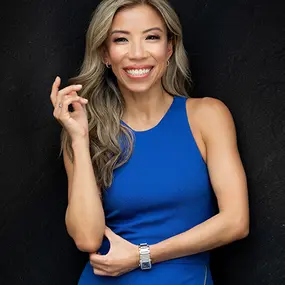
Dr. Tracey Nguyen runs a private restorative practice in Lansdowne, Virginia, 30 minutes outside Washington, DC. She is an Accredited Member of the American Academy of Cosmetic Dentistry — one of only five accredited dentists in the state — a Fellow of the Academy of General Dentistry, and a Diplomate of the American Board of Dental Sleep Medicine. In 2016, Dental Products Magazine named her one of the Top 25 Women in Dentistry, the same year she completed her training at the Kois Center, where she now serves as Scientific Advisor. She co-founded ASAP Pathway in 2020 — the first comprehensive online education platform for pediatric airway and sleep dentistry — and serves as visiting faculty at Spear Education, mentoring the Airway Workshop alongside Dr. Jeff Rouse.