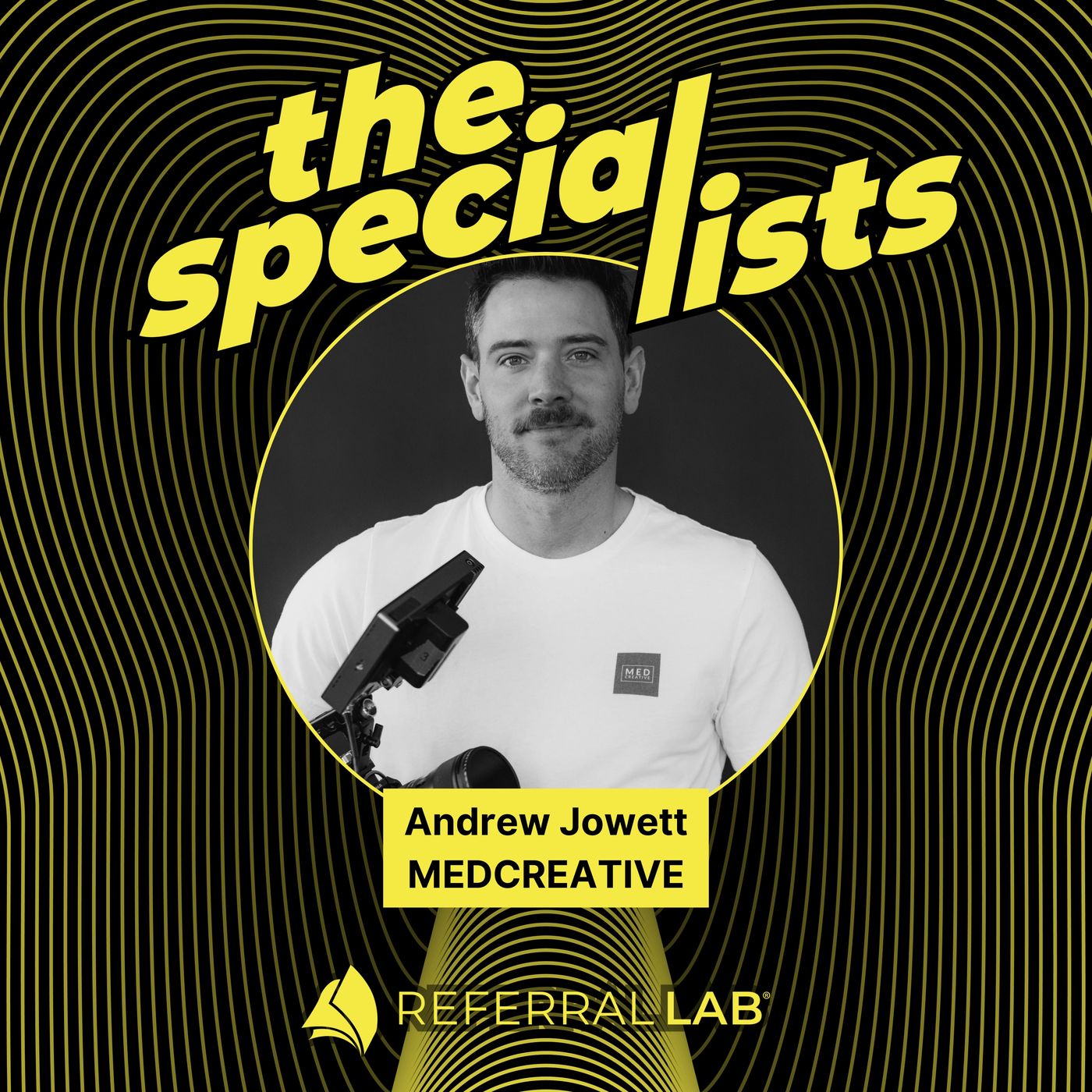
Special List #24: Why “Good Enough” Practice Photos Are Costing You Patients with Andrew Jowett


Patients decide whether they trust your practice before they ever walk in the door — and they do it from the images on your website and your social feed.
Andrew Jowett owns MedCreative and has spent more than a decade shooting photo and video for brands, moving into the dental world in 2019. He joins Cameron, Dr. Souyias, and Dr. Seda to talk about what separates a practice that looks inviting from one that looks dated, and why that gap matters more than most dentists think.
He breaks down the difference between a hobbyist with a good camera and someone with a real eye, why “good enough” visuals are a liability in a market built on differentiation, and how he fills a frame so a still photo feels like a living, working office instead of two people holding charts.
The conversation gets into the craft — reading and shaping natural light, winning over the camera-shy doctor, and learning enough clinical language to direct a shoot — plus the one line Andrew won't cross: no faking a result in Photoshop, because patients sniff it out instantly.
Guest
Andrew Jowett is the owner of MedCreative, a photography and video studio that tells brand stories for dental practices across the country, based in the Port Huron, Michigan area. He started in newspaper journalism — where he learned to put camera-shy subjects at ease — before moving into commercial and freelance work around 2016 and into the dental space in 2019.
Today he shoots practice branding and, increasingly, ongoing social-media content built to perform on video-first platforms. He grew up around two family trades that shaped his eye and his standards: dental hygiene (his mom) and funeral service (his dad).
Learn more about Andrew's work at medcreative.com
Follow Andrew on Instagram @nivenlife
Questions answered by this episode:
- How do professional photos affect a dental practice's patient trust?
- Is it worth hiring a professional photographer for a dental office?
- What's the difference between a hobbyist and a professional dental photographer?
- How do you make a dental office look inviting in photos?
- How can a dental practice get comfortable, natural-looking team photos?
- How do you photograph a camera-shy dentist?
- Should dental practices invest in video for social media?
- How much social media content does a dental practice actually need?
- How often should a dental office update its website photos?
- How do you create dental social media content that stops the scroll?
About The Special Lists
The Special Lists, presented by Referral Lab, is the podcast for dentists and dental specialists. Running a dental practice isn't easy, and if you're in private practice, it can sometimes feel like you're on an island. That's why finding your people—those who've been in your shoes and can share real, lived experience—changes the game.
Referral Lab was built specifically for dental specialists, helping you track, manage, and convert every referral. It's about improving case acceptance, boosting team performance, and strengthening relationships with referring providers so your whole practice runs smarter.This spirit of connection fuels The Special Lists podcast. Hosted by the team behind Referral Lab, we bring you wisdom from practice owners and dental professionals, sharing the wins, mistakes, and lessons that shape how they run their businesses today.
Got a question for us? Send us a message at speciallists.com (with two L's)
Transform your referral workflow with Referral Lab, the purpose-built platform for dental specialists to track, manage and convert every referral.
Request a demo at referrallab.io
Hosts
Cameron Full
Co-Founder of Referral Lab
Cameron Full, co-founder of Referral Lab, is a strategic problem-solver with expertise in business management and digital solutions. He combines leadership, creativity, and technology to drive success across various industries.
Connect with Cameron on LinkedIn
Jason Souyias, DDS
Periodontist and Co-Founder of Referral Lab
Dr. Jason Souyias is a periodontist, educator, and co-founder of Referral Lab software. He teaches dentists and hygienists, including as a Pikos Institute faculty member. In his Port Huron private practice, he's known for excellent patient communication and experience. He's passionate about his work and dedicated to helping other dentists.
More about Port Huron, Michigan periodontist Dr. Jason Souyias
Michael Seda, DMD, MS
Periodontist and Co-Developer of Referral Lab
A clinician and entrepreneur, Dr. Seda brings 19 years of private practice experience to his periodontal and implant surgery practice in the San Francisco Bay Area. Dr. Seda's education spans several disciplines, including a degree in Psychobiology from the University of California, Los Angeles, a Doctorate degree from Harvard University (DMD), and a Master's degree in Periodontics and Oral Medicine from Columbia University.
More about Bay Area periodontist Dr. Michael Seda
Follow Dr. Seda on Instagram @sedaperio
Co-hosts: Cameron Full, Jason Souyias, DDS & Michael Seda, DDS
Producer: Eva Sheie @ The Axis
Assistant Producer: Mary Ellen Clarkson
Engineering: Cameron Laird
Theme music: Papa Funk, spring gang
Cover Art: Dan Childs
The Special Lists is a production of The Axis.
Andrew Jowett (00:00):
We come in twice a year and we're shooting and these are nitty gritty, really tough days of two days of full on shooting, mostly video and leaving with six months worth of content.
Dr. Souyias (00:11):
Thanks for listening to The Special Lists presented by Referral Lab, the podcast for dentists and dental specialists.
Cameron Full (00:20):
And welcome to another episode of The Special List. I'm Cameron Full with my co-hosts, Souyias.
Dr. Souyias (00:27):
Howdy.
Cameron Full (00:29):
Did you just do Howdy?
Dr. Souyias (00:30):
I did. I did a Howdy.
Dr. Seda (00:32):
He saluted while he did it.
Cameron Full (00:33):
And Seda.
Dr. Souyias (00:34):
No, it was like a wave.
Cameron Full (00:36):
Here we are again. And here we are again. And we're bringing in, you know what? We're going a little bit off the reservation on this one with our boy Andrew Jowett, bringing in a unique guest this time. Andrew and I have known each other for boy, seven years now. About seven years. And Andrew has become a wonderful friend and is an incredible contributor towards our industry and his own unique way. Andrew, he's the owner of Med Creative. He's a photographer, videographer, and social media extraordinaire. He said workhorse, but I'm going to say extraordinaire. I remember that. For all types of industries, but mainly in the dental space. Spent a decade working freelance photo video work and moved into the dental space pre - COVID.
Andrew Jowett (01:27):
Yeah.
Dr. Souyias (01:28):
My office.
Cameron Full (01:28):
So Andrew, welcome to the show.
Andrew Jowett (01:30):
Thank you guys so much for having me. Quite the introduction. I appreciate that.
Cameron Full (01:33):
Well, he didn't give us much else to work with. Yeah.
Dr. Souyias (01:38):
We did forget to mention his amazingly, as Seda put it, coiffed hair.
Cameron Full (01:42):
Coiffed hair. When we were doing pre-show, when we were in the green room room, we were chatting. They were looking in the mirror together and they were comparing -
Dr. Souyias (01:48):
Jowett is giving me Luke Perry vibes.
Andrew Jowett (01:50):
Yeah. Our podcast listeners can't see it, but man, they should.
Dr. Souyias (01:55):
It's visible on some of them.
Dr. Seda (01:57):
But let's cut to the chase. I've known Andrew for what? At least five years, worked with him several times. Tell people what you do. I think it's just better to have it come out from you upfront so that it sets the tone for the rest of the conversation.
Cameron Full (02:10):
Yes, sir.
Andrew Jowett (02:10):
For sure. For sure. So in the simplest way, it's a creative storyteller for brands. And so I've done photography and video for a number of years and probably over a decade now, I think is where the number tracks. But I think everyone has a story to tell and doing that through visuals is a powerful thing. And so that's where I come in and whether it's photography, videography, those are my two main things that I think I'm really good at in this world. So I've been shooting for a long, long time and I actually started in journalism. I mean, that's a good thing for anyone that is sort of new to photography or wants to get a job in photography that's starting out. I think journalism taught me so much about interacting with people more than anything, not hiding behind your camera, which has served me so well throughout the years.
(03:03):
You're going sometimes to working for journalism, newspapers, whatever it is, and you're sometimes shooting people on a day that they do not want to be photographed. And so you've really got to learn that trust, trust with your subject and doing it in a creative way. And also going on that too, I was shooting everything from sports, features, breaking news. One day you're shooting awesome portraits of someone and the next day you're shooting something that sort of just happened spontaneously. And so that taught me so much and I was so lucky to cut my teeth doing that because that served me - But
Cameron Full (03:36):
Ba-dum-ching.
Andrew Jowett (03:36):
It served me so well in the future. And I sort of moved to commercial work and freelance work shortly after that in around 2016. And that was when I started to really see possibilities with what I could do and started shooting for more companies and telling their stories and what they wanted to say and doing that in a visually heavy way. And started working with an agency in Ohio content experience group, great place or award-winning agency and was able to do quite a bit of travel and traveled the world with them and did some really sort of bigger stuff. And then shortly after that, probably around 2019, Cam and Jason is when I got my first dental opportunity, which I had never done dental before. Jason, do you remember that? Do you remember?
Dr. Souyias (04:28):
I do. I absolutely remember exactly how it was. It was the first shoot. He was the first. Yeah, it was his first shoot. But what happened? Here's the story. So Cameron -
Cameron Full (04:39):
One second. Before you get into this, for those that can't see, Jowett took the label off of his drink because he didn't want to screw up any sponsorship we have.
Andrew Jowett (04:49):
No free ads. I don't know if he has a sports drink sponsorship. I don't want to ruin it for you.
Dr. Seda (04:54):
Yeah. Well, for any company out there listening, there's an opportunity right there. Yeah,
Dr. Souyias (04:59):
Particularly tequila, Seda said.
Dr. Seda (05:03):
Tequila.
Dr. Souyias (05:04):
Any tequila company looking to sponsor a podcast. We're open guys. Sponsorship. Yes. We're open. Software. All right.
Dr. Seda (05:13):
Okay. Souyias go.
Dr. Souyias (05:15):
So Cam and I just met and we were starting to, he was helping me to rebuild my website and he's like, "Man, you need a good photographer." So I pulled out my pocket knife and put my wife Paula on it and Paula has a wonderful eye for stuff like that. And she came across your site and she says, "This guy is talented."
Dr. Seda (05:36):
Nice.
Dr. Souyias (05:37):
And so she saw that right away. She showed me your work that you had done up to that point that was published on your site and I was like, "Man." And so I went back, showed Cam and Cam goes, "This guy's good."
Dr. Seda (05:49):
Yes, he is, yes.
Dr. Souyias (05:51):
And so that's it. That was our first dental experience. And you know what stands in my mind from that is like, I'm a dentist, man. I don't like having my picture taken. I don't like -
Cameron Full (06:02):
Yes, you do.
Dr. Seda (06:03):
Speak for yourselves.
Andrew Jowett (06:06):
Seda's over there like, man, I don't know. I kind of like it.
Dr. Souyias (06:09):
Seda loves his picture taken.
Cameron Full (06:13):
Seda is like manscaping before the photography.
Andrew Jowett (06:15):
Let's do some more. Andrew, let's do some more.
Dr. Souyias (06:19):
So anyway, I don't love that. And man, the way you were able to... I was so impressed with how my photos turned out because you were able to, like you talked about in the introduction, you made me relax, you made me feel comfortable and I was just able and you guided me through each step to get what we needed. And I loved our first build round of the website and the photos that we got were absolutely incredible, just incredible. Delivered exactly what I wanted it to be.
Andrew Jowett (06:49):
And so it's interesting because that was the first time I'd ever shot a dental office. And so I kind of prepared for it and was like, "Man, I think we're going to need two days. I think this is what we're doing day one. Day two is going to be this. " And since day one, that has been the system I've taken for almost every office I've shot. And it was just the preparation that goes into that. And when you go to a place and you mention feeling comfortable, you're sort of on stage. Everyone there knows each other. And so you're the newcomer. And so you've really got to break that ice and make everyone feel comfortable to get what you want. Going in there and sort of being the kind of weird photographer guy that's just sort of shooting photos.
Cameron Full (07:26):
Dashing.
Andrew Jowett (07:27):
Dashing photographer guy. Breaking that ice and making sure that people feel comfortable, you're going to get the best out of your subjects. You're going to get the best out of whatever you came to do and tell their story as accurately as possible because they're going to feel comfortable and just like they would with a patient, right? They're going to give themselves in that comfortable space. And yeah, it was a fun time.
Cameron Full (07:48):
I mean, I've lost track of how many projects we've done together now, Andrew. And so what happened and what Souyias didn't know and what most people don't know is that Andrew and I early, we had a lot of conversations about like, because I come from a creative family as well. And one of the things I tell creatives right away is like, "Hey, I learned to shoot on a medium format Hasselblad." And they go, "Oh, okay."
Andrew Jowett (08:14):
He gets it.
Cameron Full (08:17):
But I don't shoot as well as Andrew does. There's hobbyists, there's people with good equipment and then there's people that have a natural eye. And from someone that knows how to shoot good pictures with a good camera, it's a different bucket and you're taking something that is effectively mundane. I mean, look at, let's be real, Souyias, what are the color of your scrubs in your office?
Dr. Souyias (08:41):
Black. Back then they were gray, like charcoal gray.
Cameron Full (08:46):
And your office is clean, but it's not like modern, it's not fancy. And for a creative storyteller to be able to capture that in a way that makes it inviting Is the secret, right?
Dr. Souyias (09:02):
Let me share this with you. So what was so interesting to me is you'd have the main subject of the shot, but the way you would fill in the background to show animation and life of a dental office.
Andrew Jowett (09:17):
Yes.
Dr. Souyias (09:17):
These people were not in focus, but they're in the background doing something and it fills the photo so incredibly well. Instead of a dead photo of two people standing there holding charts, there's also stuff going on in the background and then there's stuff over here in the other side of the background. And man, when I got those photos back, I was like, holy cow, you could feel the life of the dental office. And you did that so incredibly well.
Andrew Jowett (09:45):
Thank you.
Dr. Seda (09:45):
Well said.
Andrew Jowett (09:47):
Yeah, I remember that. I think that anytime you're sort of creating, crafting the whole frame, your eye just wants to travel around and wants to see those things. And if you can look at that and visualize that ahead of time and plant those people there, maybe they're holding this or they're doing this all that just comes in the planning of making sure that, okay, we want to leave with an image that someone can feel something out of it. So I'm glad we were able to do that, man. I still love that photo. It's one of my favorites.
Dr. Souyias (10:16):
I love those.
Andrew Jowett (10:17):
I know exactly what you're talking about.
Dr. Souyias (10:19):
Yeah. It was up at the front desk area of our practice and you just had people going in the background and it turned out so be it's still on our website today, I think.
Cameron Full (10:28):
So when did you know you were ready to transition to... Because there's a big switch as a person that's done this as well, it's like this is going to be the space that I'm going to own. I think I can contribute to this space better than anyone else and make it my own. When did you know that you could do that in dentistry?
Andrew Jowett (10:51):
Yeah, that's a great question. I've never been asked that before.
Dr. Seda (10:54):
And what a great feeling. And that's exactly what you guys, all three of you do when Cameron says that. What a great question, bro. Great question. Yeah, please.
Andrew Jowett (11:04):
When did I know? Well, just to backtrack a little bit, so we did that shoot with Souyias and then I think right after that, you were like, "Hey, I want to introduce you to my website guy. I think he likes your stuff. He'd like to send you maybe to other places." I'm like, "Okay. Yeah. " And so I got contacted with Cam. And so he's like, "Man, I love what you do. I think that you do it in a really unique way. I mean, no one else is doing it quite to that style or level or whatever it was that you said was very complimentary at the time. And you're like, I want to send you to this place and this place where you go to South Carolina, going to Virginia, all these places." And in the back of my head, I'm like, "Okay, guy, sure, I'll believe it when I see it."
(11:44):
And I think the next month I was on a plane to two different states and so he delivered. And so I saw that there was an opportunity there to help places like Jason's office and they were really excited about that. And I think a lot of places will just hire the momtographer or they'll do it and it just stays very dated for a long time. You don't want to do it again because maybe you did have a bad experience. Maybe he or she didn't make you feel comfortable. And so it was probably, man, a couple offices in where I was like, "Man, I actually really like doing this. It's a challenge. It's a fun creative challenge." The art of dentistry, whether it's capturing lighting in a unique way, filling frames with maybe ideas that offices wouldn't have thought of. And so that art of dentistry of this unique challenge of making something that typically isn't the sexiest looking thing and doing it in a way that people feel something from an image that's just from a dental office.
Dr. Souyias (12:44):
We can't all be Seda.
Andrew Jowett (12:47):
Yeah, we can't all be Seda. A couple offices in, I was like, "Man, this is really cool." And the traveling, I was a little bit younger at the time and the traveling was fun and every office was... This is another thing too. Every office is so unique, so vastly unique.
Dr. Seda (12:58):
So you're getting a window into a whole new family every time.
Andrew Jowett (13:02):
Whole new family. Exactly. Whole new family and what they value, what they're looking for, what their expectations are. Every office, every doctor is so different. And so going in there and meeting those challenges and leaving with something that's like, "Hey, we've never seen our practice look like this before. We've never even dreamed of it to look the way that did." And there's so much that goes into that. And we talked about filling the frame too, Jason, right? Man, one of the things I love to do is we'll set up a strobe light outside a window if it's a first story office building and you get this beautiful sun that comes in and it's like, oh man, you never really imagine that what's possible until you have someone hopefully like me that's a little more creative that can do that. And so it's a fun challenge and it still is, right?
(13:51):
Even so many years on and so many different practices, like I said, I don't know how many I've shot in our cam, the list is long, but they're always fun and they always present just a little different challenge every time, which is for someone who wants to solve those challenges, it's fun.
Cameron Full (14:05):
Well, I think it's a differentiating factor. So when you're looking at redoing your creative, whether it's your web or your still stuff or a standard or even your socials, obviously everybody's got a patient that's got a husband's best friend. I mean, it's like standard fair and then you get the hobbyist who's got some entry level DSLR with a battery pack and a strobe and you're going to get good enough. But in the age of competitive advantage, in the age of differentiation for a nominal difference, good enough versus best in market is a substantial lift, especially I think in specialty when you're trying to exhibit every reason why you should come to me or have your experience of whatever done here, that type of effort and engagement builds trust right out of the gate. The creativity, the creative supplement as long as you can have all the accolades in the world, but if your office looks drab and you haven't done anything to support that it's the place to come, it becomes difficult. It's not as inviting.
Andrew Jowett (15:32):
And we're so used to seeing, I mean, if you go on social media, we're so used to seeing visuals that are so not necessarily polished, but we're so used to seeing visuals. And so you're inundated with all these images, "Man, this place looks cool. Lake Como, man, that looks really cool." And so if you go and see something that is actually reality for you and you go to this place, you're like, "Oh man, just subconsciously, man, it doesn't click." And so you want to have really engaging emotional connections with what you see. You want to feel something, all the little details, the subtleties, and they all go into your decision making. I do it because I love being creative. I love telling stories. For me, that's the biggest thing is every office has a unique story, what they want to communicate to their current patients, their potential patients.
(16:20):
It's all storytelling at the end of the day and to do it with really good visuals and making people feel something and hopefully act on it is always the goal.
Cameron Full (16:30):
So without giving away your secret sauce and you got a practice down the road that knows he wants to commit or she wants to commit to this level of creative but isn't ready to bite you off and wants to give away some of some pointers. Let's take this special list a litle bit differently. So when you're building your set list and you're walking into that practice, what's one of the first things that you give attention to?
Andrew Jowett (16:59):
Yeah, that's a really good question. So I'm always looking at light, right?That's always the biggest thing is like, how can I utilize light or how can I manipulate it into a way that man looks really good? Because a lot of the times you might go to some practices, rarely are you going to have two corner windows that bring in this beautiful morning light or afternoon light, everything hits really good, or there's not like a 7-Eleven down the window, right? How can we manipulate light and are seen to make it the most inviting that it is? So I'm always looking at light and how that affects what I'm going to do for the rest of my time there. The next is I'm always trying to making sure everyone feels comfortable. I'm trying to find the team members that I know are going to help me out down the chute like, "Hey, I want someone to hold this.
(17:47):
I want someone to hold this instrument. Go up to the 3D X-ray. I want you to do this for me real quick and we're going to... " Because the biggest thing is you don't want to be disruptive at an office. I try and do one day where it's a litle bit more directed. We have dedicated time with the doctors because it's so tough to nail some of them down to the floor and like, "Hey, we're going to shoot this. " But the first day is typically always candid and I do that A, to be able to just get my bearings. I want to be able to have an office in its normal working environment. We're not shooting any patients. It's mostly just team members doing their things, but I'm also feeling people out and making sure that, "Hey, if I need someone to do this, I know that they're going to be on board for it.
(18:26):
Maybe it's a little judgmental. I don't want to say it like that, but every office sort of has their stock characters to a certain extent. There's always the really chipper team member. There's always the one that's a little sassy. There's always someone who doesn't want their photo taken. So you've got to find the team members who are going to help communicate the story of this place and the ones that can do that, they typically help me and we'll shoot certain things, we'll set them up in certain places. So it's lighting, it is the team. Those are the two biggest things I sort of really try and figure out as soon as I end up somewhere.
Cameron Full (19:05):
How about the awkward doctor?
Andrew Jowett (19:07):
Yeah, that's the thing, man.That's the thing.
Dr. Seda (19:10):
What are you trying to say?
Cameron Full (19:16):
Singular Seda.
Andrew Jowett (19:20):
Again,
Cameron Full (19:20):
That's a real thing. You've got charismatic guys like... Listen, Seda's a charismatic guy. We love to hassle with them on the show. Souyias is also pretty charismatic. There's a reason that we have fun talking to each other. The reality is that not all people are this way and especially when you've got a figurehead that it's built around that you're like, "Oh, this frigging people told me I got to get my picture taken and now you've got the awkward doctor."
Andrew Jowett (19:47):
It depends on the deliverables are too. If we're just doing photos, then you can sort of approach it a certain way. If you're doing photos and video, you sort of approach it a different way because then you have to really communicate with them and get them comfortable on camera because even if anyone, if I was to shove this lens right at you, that gets everyone a little uncomfortable. And so you've really got to find ways to do that and that's letting them know that you're on their side, we're going to create really good things, giving them an update throughout like, "Hey, this is the cool stuff we're shooting." So they can sort of have a litle bit of that buy-in as we're sort of there, but also just finding common ground like, "Hey, what do you do outside of dentistry?" And getting them talking about things that they're really confident about is super important because then you can sort of hit them with a question of like, "Hey, tell me why dental implants are better than this, or tell me why we do this process and why we think we're really good at it for potential patients." And so yeah, there's always he or she, that doctor out there that's a little maybe all uncomfortable on camera, it's always a barrier you got to break, whether they're charismatic or not because they don't know you and they don't trust you completely yet.
(20:55):
They know of your work and you've just showed up at their new place and I think everyone, believe it or not, all dentists I think do have some degree of they can be on stage. They do. You have to make your patients feel comfortable to a certain extent anyways. And so there's always that there. And so I think that you just tapping into that by making them feel comfortable is the goal.
Cameron Full (21:18):
Because you've shot so much dentistry as a whole, do you think that it's helped you really come in and be able to win the confidence of the doctor and the team? You know what's happening, you know what the instruments are, you know about procedures.
Andrew Jowett (21:34):
Yeah, but you're constantly learning too, right? Every single time I go somewhere, I'm learning something new and I want to be able to talk their language is important, right? Because you say like, "Hey, this patient looks like they have an altered passive eruption."
Cameron Full (21:49):
What?
Andrew Jowett (21:49):
And then do you not know what that is? Yeah, I'll tell you, buddy. It's a gummy smile.
Dr. Seda (21:57):
No, my shock is not -
Andrew Jowett (21:58):
Am I saying that right?
Dr. Seda (22:00):
My shock is not that Andrew knows it, it's that Cameron doesn't know. Doesn't.
Andrew Jowett (22:05):
Exactly.
Dr. Seda (22:07):
I'm sorry. Let the pause be clarified.
Andrew Jowett (22:11):
That's right, buddy. So
Dr. Seda (22:13):
Don't let him try to strong arm you into feeling weird for knowing it.
Andrew Jowett (22:17):
Well, first of all, I'm like, man, did I say it right? Did I say it right?
Dr. Souyias (22:21):
100%. You did great.
Andrew Jowett (22:22):
So I said that to a doctor where it was -
Dr. Seda (22:25):
We'll address this later, Cameron.
Andrew Jowett (22:27):
Just recently I sent it to a doctor and I think I could not... her head swiveled so quick. I'm like, "What did you say?" I'm like, "Yeah, I know this. I really try and know as much as I can because I want to... When you communicate something to me, I need to be able to show that visually. And if I don't know what that is or if I'm slow on it or if I'm not up on the upkeep, I need to be quite a bit of an expert in what you do so I can communicate to people that don't know, that aren't an expert. And that's mostly through video too. If we have some talking head series, how can we communicate what you're saying to like, Hey, I know what you're saying. And I also know what people that don't know what you're saying, how they would receive that.
(23:10):
And so that's all part of the translation process and then making it look visually compelling. Yeah, that's what this is all about.
Dr. Seda (23:20):
Given that you have a journalism background, kind of feel like people that get into journalism, the essence of journalism maybe in one of its most pure forms is truth, revealing truth. And then you get into this age that we're in now with social media and the internet and all of it, even AI. And there's this heavy dose of what is truth in what I'm seeing. People portray their lives, the pictures we see on Instagram, all of it. And when I see you do what you do, I feel like you're really bringing it back to the essence of what am I seeing? How can I show it to others? What is the essence of this place as we talked about? And there's a truth to that. Do you ever think about that? The truth versus the disguise behind me.
Andrew Jowett (24:11):
Yeah. We can't fake anything. We all know it's so easy to sniff out something that's fake, something that's AI or something that just doesn't feel right. Six fingers. Six fingers, exactly. And so anytime you're shooting something, you want to bring it out to its best version of itself. When you go to a place like your offices, we're not painting the walls different color in Photoshop. It is what it is, but we're doing every single possible thing we can with lighting, with framing, with composition to make it look as good as it possibly can. And yeah, if we do throw a light out and like, "Hey, maybe if you know that office really well and the sun doesn't set right there, but the light coming in, that's an emotion and a feeling that you get more so than maybe it being like, hey, we just AI to sun out there." But no, this is the emotion and feeling you get when you get this warmth coming into a place, that warm fake sun out there, which you really can't tell.
(25:04):
You throw some gel, orange gel on a strobe and it just creates this beautiful light.That's a feeling that you're trying to evoke more so than tricking someone into like, "Hey, this place doesn't really look like that when you show up." You can't do that. And people are really, really adept about sniffing that stuff out and even more so now than ever on social media like, "Hey, that's just not real." And so you don't want to be ever in a position where you've got to explain yourself to like, "Hey, no, we just did that in Photoshop." No, you can't do that. So truth-seeking and making sure that you do something that's authentic is absolutely important.
Dr. Souyias (25:39):
Well, and sometimes the perceived truth of dental practices is the harshness, the pain, the... So many people are so afraid to come to the dentist and when you can present, like you just said, warmth of a sun coming in through the wind, it creates a different feeling and puts that person at ease before they even get to your practice.
Andrew Jowett (26:05):
Yeah. It's also conscious too, right? You see things, the images that you see, maybe you don't know what it is, why it looks like that, why you feel that way, but it's all about the trust and the confidence that you're going to have before you even get there. You want to see the doctor. You want to see him or her smiling and interacting with someone that is real and a real person.
Cameron Full (26:26):
Smoking.
Dr. Souyias (26:27):
Smoking. Back in the day.
Cameron Full (26:30):
Smoking cigarettes.
Andrew Jowett (26:31):
Did they do that back in the day?
Dr. Souyias (26:32):
Oh my God. There's a doc up in Yale. He's passed away a long time ago. He had an office the size of a closet and he had a smoke eater in one corner and a smoke eater back in the other up high and he'd sit there and chain smoke cigarettes in between patients in his closet of an office. Yeah. It was crazy.
Cameron Full (26:52):
I read this thing on this. They were doing the... Who's the Tommy Shelley, the Peaky Blinders guy? Is that right? He smoked
Dr. Seda (27:00):
Tommy Shelby.
Cameron Full (27:00):
He smoked 18,000 rose cigarettes, rose petal cigarettes. He said it was the most challenging... Yeah, you should do that. That'd be good. That'd bring your life to the film Andrew as doctors smoking rose cigarettes.
Dr. Seda (27:13):
Yeah. We're going to do a total new reshoot at my office with Peaky Blinders attire.
Dr. Souyias (27:19):
Peaky Blinders attire.
Dr. Seda (27:20):
The costumes in that show are epic, by the way.
Dr. Souyias (27:23):
They are really good.
Dr. Seda (27:24):
I should start doing some sort of stylized shoots. Hey, we're going to do a 1930s. What do you think, Jason? We're going to do a bootleggers prohibition era where you're treating patients with a -
Cameron Full (27:36):
The amusement park sets that you buy shots in with your kids or whatever. We're just going to do it to Souyias's practice.
Dr. Souyias (27:43):
We'll just go like barber chair era.
Andrew Jowett (27:45):
Exactly. That's awesome.
Dr. Seda (27:48):
Seriously. I think it used to be that the dentist was the barber also. The barber.
Dr. Souyias (27:52):
The barber and the barber was the dentist, right? Let's take out teeth and cut your hair.
Dr. Seda (27:57):
Oh yeah. Oh yeah.
Cameron Full (28:00):
What's your favorite shot from a dental practice so far, shot?
Andrew Jowett (28:04):
Man, that's a really good question.
Cameron Full (28:06):
You got it. You know you do. A couple. A couple is fine.
Andrew Jowett (28:09):
This is me stalling for time here.
Dr. Seda (28:13):
Take your time. Take your time.
Andrew Jowett (28:14):
Man, I think that maybe what someone else would see is like, Hey, this is your best shot. For me, I know what goes into a shot. I know all the timing and the details and like, hey, the preparation or the composing and making sure that, hey, this light goes this way. And so I know, man that shot was really tough to capture or tough to make and create. And so what I value is maybe different than like, oh, that's a really pretty photo with good lighting. And so with that said, I think Jason, let me look at my website real quick. Jason, that photo that's -
Cameron Full (28:45):
Oh, you can't do that.
Andrew Jowett (28:47):
What? I can't look at my portfolio.
Cameron Full (28:49):
You can't call out the host.
Andrew Jowett (28:52):
Oh yeah, you're right. I don't want to do that.
Dr. Seda (28:53):
But maybe it's almost like -
Dr. Souyias (28:55):
Maybe that is his favorite photo. Come on.
Dr. Seda (28:57):
It's his children.
Andrew Jowett (28:58):
It's a good one. It's really good.
Dr. Seda (28:59):
You can't pick a favorite of your children.
Andrew Jowett (29:02):
There's a couple places out in Indy.
Dr. Seda (29:04):
His photos are his babies.
Andrew Jowett (29:05):
A couple places out in the Dakotas. I've shot some really cool stuff there. I think that they have... Those are really fun places and any place with windows. It just allows you to be more creative and manipulate light in a cool way. So those places are really good. Man, I shot-
Dr. Seda (29:22):
What a neat thing, by the way. This guy, sorry to interrupt, but you've been everywhere from the Dakotas to Florida, California to Maine and everything in between. And the thing is there's a few things that bind all places together and the presence of a dental practice is one of them. It's ubiquitous, but so many different flavors and places and...
Andrew Jowett (29:44):
Yeah. We got to get Alaska and Hawaii.
Dr. Seda (29:47):
There we go. Have you been to Alaska and Hawaii?
Andrew Jowett (29:50):
Never been. No, never been. I've been to some really cool places, but
Dr. Seda (29:53):
Dental practices in Alaska, call the 800 number.
Cameron Full (29:57):
Yeah. Yeah. Reach out MedCreative.com, he'll give you a deal. I didn't say that, but he will if you're in Alaska or Hawaii.
Andrew Jowett (30:05):
Juno. We need a Juno office.
Dr. Seda (30:08):
Mention Special List podcast and Referral Lab.
Cameron Full (30:10):
For your discount.
Andrew Jowett (30:11):
Yeah. Love that.
Dr. Seda (30:13):
It's hilarious.
Cameron Full (30:17):
Andrew, and I don't know if this is... You can push me off here, but I think some of the reason that you're able to capture like you are is because of your background. And that's a hypothesis that I've always had that I don't think we've ever talked about. And the business that you grew up in. So talk a little bit about your family history and some of your jobs that you've done because what I think it's kind of created, it's molded that your ability to see things differently.
Andrew Jowett (30:54):
I think so. Well, I think I know where you're going with that.
Cameron Full (30:56):
Oh yeah.
Andrew Jowett (30:57):
But before that, I think this is another good -
Dr. Seda (31:00):
Let's get some background story.
Andrew Jowett (31:02):
Well, first I'm like -
Dr. Seda (31:03):
For those of us that don't know.
Andrew Jowett (31:04):
My mom is a dental hygienist. And so that is an amazing icebreaker too when I go to an office and I talk to the hygiene team. I was like, yeah, my mom is also a hygienist and they typically ask, "Oh, which practice is she working?" "Oh, well, I'm not from here. She works where I'm from. "And they're like, " Oh, that's nice. Yeah, I think that I'm the only patient that's ever sat on her lap, or at least I like to think so. "And so they always get a good kick out of the hot. Are we
Cameron Full (31:25):
Supposed to joke right now? Are we supposed to laugh?
Andrew Jowett (31:28):
Yeah, that was a good one. That was a good one. Otherwise, I think she's the only person that's ever cleaned my teeth. And then they're like, I'm like, oh yeah, someday I'm going to go to a new place. And like, yeah, you're the first person to clean my teeth other than my mom. And they'll think I escaped from the Amish community or something. Come on, man. When you go to the dental office, you're the new guy. I get way more laughs when I show up with that
Cameron Full (31:50):
One.
Andrew Jowett (31:51):
Are these jokes? All right, man. Come on. I'm trying my best. So the family business that I -
Cameron Full (31:57):
What you get for hanging me out to dry with that whatever.
Andrew Jowett (32:01):
Altered passive eruption, man. My family business that I grew up in is funeral homes.
Cameron Full (32:08):
Yeah, man.
Andrew Jowett (32:09):
So my dad is a funeral director and owns a couple of funeral homes and I grew up around that. And I think you have to be a very specific person to be able to go into that business, not only sort of deal with the emotional side of that with families and you're talking about someone's most important person, or I'm sorry, important possession that they possibly have as someone that they love. And then dealing with the business side of that, it takes a really unique person. And my dad is that unique person. And for me growing up, that wasn't necessarily what I wanted to do, but I got so many really good values from him and also my mom, but certainly values from my dad of what it took to even to just run your own business.That's a huge thing for me too where it's, yeah, I am sort of my own business owner and being a sole proprietor, whatever it is, it takes a lot to do that.
(33:02):
What do you want to know about the funeral home business? Any questions?
Cameron Full (33:05):
Man, the gift of taking someone that's passed away and making them look alive is one of the most difficult things I think. The expectation that you must meet is almost completely untouchable.
Andrew Jowett (33:23):
Yeah, it is.
Cameron Full (33:24):
And whether or not that was your path, which it wasn't, the reality is that you spent a lot of time around that expectation. And I think that's contributed so much to how you approach your shooting.
Dr. Seda (33:39):
Sound familiar, Souyias. We're waiting. As a dentist, sometimes we also feel like -
Cameron Full (33:46):
I'm like, where are you going with this?
Dr. Seda (33:47):
To meet the expectations of people that have very high expectations. It's a very high pressure situation and it takes a certain type of personality to help keep it even keel and have people come out on the other hand satisfied with what you've done for them. Photography especially. People have such high expectations.
Cameron Full (34:11):
Yeah. And even now more than ever, because we're in the Instagram era where everybody with a phone with filters thinks that they're capable of doing what Andrew does. And the reality is that's not the case.
Dr. Souyias (34:24):
That's not the case.
Andrew Jowett (34:26):
If you ever been to a funeral, you'll notice above the casket there's red lights. That helps with skin tones, softens a little bit. So if you ever notice, look up above a casket, you'll notice those. All those small little visual things.
Cameron Full (34:43):
So do you use red lights in your shoots?
Andrew Jowett (34:45):
It's all red lights. Yeah. We make everyone look really... Mostly for Jason and Seda, we had to bring those in.
Dr. Seda (34:50):
I was looking very pasty that day.
Andrew Jowett (34:54):
Yeah.
Dr. Seda (34:55):
Yeah. I was
Andrew Jowett (34:56):
Bring the red lights in.
Cameron Full (34:57):
Try to not look dead Souyias.
Dr. Seda (34:58):
Three shades of bronze.
Andrew Jowett (35:05):
What do you guys... I mean, you know me, but I guess from a doctor's perspective, what's it like when you're like, "Hey, we have to do a photo shoot." What does your team say? From that side of it, what do you guys think or what's your perspective?
Dr. Seda (35:21):
I'll go first on that one. I feel like there's two ways to do it. You can stop the office and then everyone's just focused on the shoot and let's go through what we think we want to do. Or you can do it where the office is running and you're kind of seamlessly, as you do, weave in and out and pull people out individually, whatnot. And so the only way I feel like we've done it in my office was the latter of those two options. The office is humming, patients are coming and going. Andrew is so tactfully... And we have a smaller office, it's more confined. There's not a lot of space, but you never feel like Andrew's in the way or interfering with the natural process of the office. And so it just lets me shine. I love just letting you do your thing and it works well.
(36:11):
So for me, it's always kind of a fun thing. I never dread it knowing that... And also, Andrew's fun to hang out with, so it's easy. And before you know it, the two days are up and it's like, "Wow, we did this. " That's how it feels on my end anyway.
Andrew Jowett (36:25):
Good.
Cameron Full (36:26):
So Andrew, when did you - We've done it. Oh, go ahead Souyias, sorry.
Dr. Souyias (36:28):
We've done it. I had a couple office photographers in here before I met you, and that was part of where the dread came from. Just no guidance, bright lights, sitting in a corner taking pictures. And that's not at all what it's like when you come in to take photographs. And that's the cool thing now too. The team, because we've worked with you since 2019, every time we redo photo shoots, the team's never like, "Oh gosh, photo shoot." I mean, they get a little like, "Oh, I've got to really make my hair look good that day," or something like that. But that's about it. There's no dread. We did it the opposite way, Sada. We actually stopped the practice when Andrew comes in and we set things up for both days. Well, usually we're able to do it in one because you're local.
Cameron Full (37:21):
Seda is like when Andrew comes into his practice, he's like, "Fuck it, we're going live.
Dr. Seda (37:26):
"We're going live."
Andrew Jowett (37:29):
The beautiful thing is, man, I do feel like both ways are... I can do both ways. I can do where it's like, "Hey man, see out of the way, Andrew, and get what you need to get, but do it in the way that we can leave with the shots that we really want. " Or we do it in a way that Jason mentioned is where you stop it. You have a little bit more time, you can plan a little bit better. But I do think that they both have their... We can still leave with really good stuff either way. It's just about how much do I need to get skinny and get out of the way a little bit to get those?
Dr. Souyias (37:57):
You make it so easy. You put people at ease and the ladies on the team too, again, a lot of them aren't looking forward to having their photos taken all the time, but man, you do. You put people at ease, you make them relax, you make them feel good, you get natural, nice-looking smiles and it's amazing how the photographs have turned out for us.
Andrew Jowett (38:18):
Well, it's the experience too. As a doctor, it's more so than just like, "Hey, we can't have them just... We want them to have a healthy and beautiful smile, but did they feel good throughout the process?"
Dr. Souyias (38:29):
And you nailed that. You nailed that part
Andrew Jowett (38:32):
Thank you.
Cameron Full (38:32):
So about a couple of years ago, Andrew, you started to change up your offering a little bit.
Andrew Jowett (38:41):
Yeah.
Cameron Full (38:41):
You started to get a litle bit more involved with social. I did. Talk a little bit about the difference between shooting for traditional brand and traditional content versus participating with the practice in a social context.
Andrew Jowett (38:58):
Sure. So doing this for a number of years, and this is the genesis of it, is that doing these office shoots, these sort of brand shoots, two days on site, leave with a bunch of photos, leave with a bunch of videos and coming into that and like, okay, so we're just handing the assets off. And so that worked really good. And then, hey, you ask an office here and there, "Hey, you guys on social? You guys use Facebook? Oh yeah, for sure." And so I'm like, "Okay, well, I'm shooting video. We're going to cut this hero video or this doctor interview video. I'll just cut some stuff vertically for you guys for social. I'll add some subtitles and just make it a little bit more user-friendly when they have videos that are made typically geared for social." It's a little bit different. And so I'm like, "Oh, I'll drop off 10 of those for you guys in the inbox and you guys can use those." And it's just a little bit of a fun ad-on because if they're using social, I want them to be able to get the most maximizing the most use out of the imagery.
(39:50):
You want to be able to send this not just on the website, you want to put it on Google. There's so many different avenues to get the life cycle out of these more so than just like, "Hey, we're just going to slap them on a brochure. We'll put them on the website." And so I always want to make sure we're providing the most amount of value. And so I would ask in place, we would do that and then a month would go by and like, "Okay, hey, how'd those do? " Or, "Oh, we haven't got to posting them yet and we've just been busy." And so I realized there's a little bit of a gap there. And as far as like, man, we really need to be putting this imagery and this storytelling to work as opposed to just hoping. And so yeah, it was something that had been on my mind for quite a bit.
(40:31):
And Cam, we've talked about this. There's a need for it because the team member at the front office, she's got so much on her plate and she's not an expert in it. And so she needs to be doing what she does really good and the doctor needs to be doing, he or she needs to be doing what they do really good. And so offering a sort of a full turnkey solution for putting this imagery to work, putting these videos to work in a social form just certainly felt like a no-brainer. And so yeah, it's a little bit different when you go to a place. And so we as Med Creative, we do it a little bit differently where we do it on a monthly basis to a certain extent. We come in twice a year and we're shooting, and these are nitty-gritty, really tough days of two days of full-on shooting, mostly video and leaving with six months' worth of content and doing it in a way that's geared for social.
(41:24):
There's not necessarily a lot of the headshots, it's not necessarily a lot of the office stuff. It's video that's going to perform really well on social media, that's going to get that brand loyalty, that's going to create a connection, that's going to have someone that's like, "Okay, I'm going to stop scrolling." And even this is dental office. You've really got to even work harder to get a dental office, someone to stop on a dental office video, that can be challenging. And so you want to provide really good assets and we do that I think really well.
Cameron Full (41:51):
Without doing aTyler Durden.
Andrew Jowett (41:54):
Flight club. you want to talk about it. What's the Tyler Durden? What is the Tyler Durden?
Cameron Full (42:01):
Go back and reference what they did with the video, what they spliced in. We'll let you do the research on that one.
Andrew Jowett (42:07):
Oh yeah no, I know what you're talking about. Yeah, we don't do that. Yeah. That's not a hook that typically performs really well. But we stay away from TikTok dances too. It's interesting because every dental office is unique and you want to showcase their best attributes, whether it's a doctor who's just incredibly smart and articulated and can really talk to a patient about this. Or it's like, "Hey, your team is really good." And the number one reason people really come in here is because man, they just love our team. They feel really welcomed. And so you've got to lean into certain things in different places. And so every office, and more so than even just going to shoot photos, every office is so vastly unique. They're social, the messaging they want to put out there, what they're really good at. And so that whole thing is a very fun, unique challenge because what might work for one office doesn't necessarily work for the other.
(42:55):
And so you've got to really prepare and you're leaving with six months worth of stuff and posting that for them throughout. And so allowing them to be able to see the calendar, "Hey, we're looking at the June ends and we're looking at July. Okay, here's exactly what's going to be happening in July for you. Here's the posts that we created months ago that are going to make sense in July." All that storytelling that goes along with that.
Cameron Full (43:17):
Nice.
Andrew Jowett (43:19):
It's a lot of work, but it's so much fun because you can see the results too. You provide the analytics, you can say, "Hey, this is starting to sound really salesy," but you can show them like, "Hey, we got over the past year, 200,000 impressions, 200,000 views. All your followers grew to this. " And it's tough to really see the results because it's sort of like a digital billboard. Is someone coming in because they saw this awesome implant video we did? Well, it's tough to track that. But at the same time, why did I reach into the cooler and grab an ice cold, refreshing Coca-Cola? Well, it's because subtly I've been told that that's really good.
Dr. Seda (43:59):
Or Don Julio.
Andrew Jowett (44:01):
Tequila. Or Don Julio. Smooth, a beautiful taste of Don Julio.
Cameron Full (44:04):
Or a Referral Lab. A cold referral lab.
Andrew Jowett (44:07):
A cold referral lab.
Dr. Souyias (44:07):
A cold referral lab. Oh my God.
Dr. Seda (44:09):
I've heard it all.
Cameron Full (44:11):
Awesome. Well, man, I - Super grateful.
Dr. Seda (44:15):
Very impressive by the way.
Cameron Full (44:17):
Super grateful that you -
Andrew Jowett (44:18):
The hair, you mean the hair? Is that what you're saying?
Dr. Seda (44:19):
All of it. All of it. You clearly haven't thought about any of this. And it's just refreshing to hear a creative person like yourself get into the weeds a little bit about what you consider, what your motivations are, what you're looking at, the goals of it all. And it all tracks and aligns with my experience with you. You're the real deal, man. Grateful to have you all.
Andrew Jowett (44:41):
I appreciate that. I appreciate that. Each of you have all had a really impactful part of my process. And so I want to thank each of you for teaching me a lot and also just being good people. So thank you.
Cameron Full (44:53):
Awesome. Thanks. Thanks so much for listening to another episode of The Special lLst and we can't wait to -
Dr. Seda (45:01):
If you want to hook up with Andrew -
Cameron Full (45:02):
Oh, that's right. Sorry.
Dr. Seda (45:03):
We're going to put the contact and socials and everything on the show notes. So look down there and yeah, try to get a gander of him on YouTube. Don't just listen to this. All right. Dylan from 90210 is reincarnated.
Cameron Full (45:18):
Is it medcreative.com?
Andrew Jowett (45:19):
Medcreative.com. Correct.
Cameron Full (45:20):
Awesome.
Dr. Seda (45:21):
All right, man.
Cameron Full (45:22):
All right brother.
Andrew Jowett (45:22):
Thank you guys.
Dr. Seda (45:23):
A pleasure. Hasta Luego.
Dr. Souyias (45:25):
Thanks, Andrew. Thanks for listening to The Special Lists presented by Referral Lab, the podcast for dentists and dental specialists, featuring a special list from a specialist. Got a question for us? Send us a message at speciallists.com with two Ls. Transform your referral workflow with Referral Lab, purpose-built platform for dental specialists to track, manage, and convert every referral. Request a demo at referrallab.io.
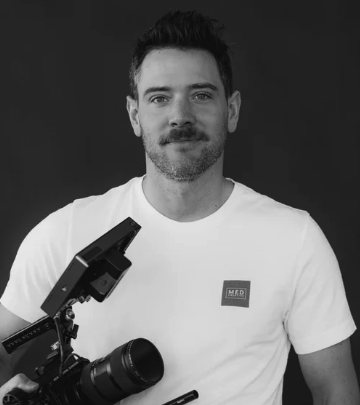
Photographer & Owner, MedCreative
Andrew Jowett is the owner of MedCreative, a photography and video studio that tells brand stories for dental practices across the country, based in the Port Huron, Michigan area. He started in newspaper journalism — where he learned to put camera-shy subjects at ease — before moving into commercial and freelance work around 2016 and into the dental space in 2019. Today he shoots practice branding and, increasingly, ongoing social-media content built to perform on video-first platforms. He grew up around two family trades that shaped his eye and his standards: dental hygiene (his mom) and funeral service (his dad).