Special List #26: Why Specialty Cases Keep Getting Harder with Dr. Hunter Dawson


A large DSO spends about $180k developing a single dentist in their first two years out of school. Almost all of it goes to three procedures — endo, aligners, and implant placement — and none of it goes to the one skill that actually fills a schedule: getting the person in the chair to say yes.
Dr. Hunter Dawson, a Charlotte prosthodontist who lectures internationally on comprehensive diagnosis, joins Cameron Full, Dr. Jason Souyias, and Dr. Michael Seda to talk through the paper he is writing — "The Death of the Specialist" — and why the people arriving at specialty practices are sicker, more complex, and harder to manage than they were a decade ago.
Dawson names the two forces behind the shift: big companies training 130,000 general dentists to do the procedures specialists used to own, and new graduates carrying school debt that pushes them into advanced treatment before they are ready. His fix is not more services. It is learning to diagnose comprehensively and communicate well enough that people accept the treatment they actually need.
Souyias and Dawson get specific about how a specialist builds a referral network that survives a retirement, why the mentor-mentee relationship that used to come with buying a practice has quietly disappeared, and why tracking your own results is the cheapest way to find out whether you are as good as you think you are.
Dawson also shares the idea behind the book he says he will write someday — "The Patient on the Ceiling," the cases that keep you up at night — and how he keeps a full practice, five kids, and a national lecture schedule from draining one another.
Guest
Dr. Hunter Dawson is a prosthodontist at Envision Dental Implant Center in Charlotte, North Carolina, where he focuses on the diagnosis and treatment planning of terminal dentition using digital technology. He earned his DMD, Advanced Education in Prosthodontics, and Master of Science in Dentistry at the University of Louisville School of Dentistry, and has practiced in North Carolina since 2017. A published author and Spear Digest contributor, he lectures internationally on comprehensive diagnosis, digital implant workflows, and full arch reconstruction for organizations including Straumann, the ITI, Spear, and Seattle Study Club. His research has centered on implant abutment materials and design, and his work has earned the Private Practice Prosthodontist Award.
Learn more about Dr. Hunter Dawson: envisiondentalimplants.com/providers/dr-hunter-dawson
Follow Hunter on Instagram @hunter_dawson_dmd
Questions answered by this episode:
- Why are dental specialists seeing more complex cases than they used to?
- How do I raise my case acceptance rate without spending more on marketing?
- Do I really need more new patients, or a better acceptance rate?
- Why is the mentor-mentee relationship disappearing in dentistry?
- How does a specialist build a referral network from scratch?
- How many referring dentists does a specialty practice need to stay busy?
- What happens to a referral network when the referring dentists retire?
- Should a general dentist do procedures they learned in a weekend course?
- How do I know if my implants are actually successful long term?
- How do I balance a clinical practice, family, and a national lecture schedule?
The Special Lists, presented by Referral Lab, is the podcast for dentists and dental specialists. Running a dental practice isn't easy, and if you're in private practice, it can sometimes feel like you're on an island. That's why finding your people—those who've been in your shoes and can share real, lived experience—changes the game.
Referral Lab was built specifically for dental specialists, helping you track, manage, and convert every referral. It's about improving case acceptance, boosting team performance, and strengthening relationships with referring providers so your whole practice runs smarter.
This spirit of connection fuels The Special Lists podcast. Hosted by the team behind Referral Lab, we bring you wisdom from practice owners and dental professionals, sharing the wins, mistakes, and lessons that shape how they run their businesses today.
Got a question for us? Send us a message at speciallists.com (with two L's)
Transform your referral workflow with Referral Lab, the purpose-built platform for dental specialists to track, manage and convert every referral. Request a demo at referrallab.io
Hosts
Cameron Full
Co-Founder of Referral Lab
Cameron Full, co-founder of Referral Lab, is a strategic problem-solver with expertise in business management and digital solutions. He combines leadership, creativity, and technology to drive success across various industries.
Connect with Cameron on LinkedIn
Jason Souyias, DDS
Periodontist and Co-Founder of Referral Lab
Dr. Jason Souyias is a periodontist, educator, and co-founder of Referral Lab software. He teaches dentists and hygienists, including as a Pikos Institute faculty member. In his Port Huron private practice, he's known for excellent patient communication and experience. He's passionate about his work and dedicated to helping other dentists.
More about Port Huron, Michigan periodontist Dr. Jason Souyias
Michael Seda, DMD, MS
Periodontist and Co-Developer of Referral Lab
A clinician and entrepreneur, Dr. Seda brings 19 years of private practice experience to his periodontal and implant surgery practice in the San Francisco Bay Area. Dr. Seda's education spans several disciplines, including a degree in Psychobiology from the University of California, Los Angeles, a Doctorate degree from Harvard University (DMD), and a Master's degree in Periodontics and Oral Medicine from Columbia University.
More about Bay Area periodontist Dr. Michael Seda
Follow Dr. Seda on Instagram @sedaperio
Co-hosts: Cameron Full, Jason Souyias, DDS & Michael Seda, DDS
Producer: Eva Sheie @ The Axis
Assistant Producer: Mary Ellen Clarkson
Engineering: Chris Mann
Theme music: Papa Funk, spring gang
Cover Art: Dan Childs
The Special Lists is a production of The Axis.
Dr. Dawson (00:00):
And the reason I say patient on the ceiling is when you're laying in bed at night and your eyes aren't shut yet, you're replaying that procedure in your head constantly like, dang it, I should have done that. And it doesn't even have to be something you did wrong. It could just be something that you wish you would have done better.
Dr. Souyias (00:18):
Thanks for listening to The Special Lists presented by Referral Lab, the podcast for dentists and dental specialists.
Dr. Seda (00:27):
All right. And we are back with another episode of The Special List. Joining me this afternoon, no one other than the infamous Cameron Full.
Cameron Full (00:41):
Infamous.
Dr. Seda (00:42):
Infamous on purpose. Infamous. And the famous Jason Souyias.
Dr. Souyias (00:48):
How did you get to be infamous and I'm famous? That's a good question. Well, take it. It's all right. I'd rather be infamous maybe than famous. Who knows?
Dr. Seda (00:56):
And our guest today is Dr. Hunter Dawson. Hunter, welcome to the podcast.
Dr. Dawson (01:02):
Thanks for having me guys.
Dr. Seda (01:05):
It's a pleasure to have you.
Cameron Full (01:06):
Before we get going here, how does one get a name like Hunter Dawson?
Dr. Dawson (01:10):
It's a middle name. So Hunter's a middle name and I guess my parents didn't like my first name. Not sure.
Cameron Full (01:16):
It is striking. It's like a gunslinger in a wild west. You know what I mean?
Dr. Dawson (01:21):
Well, that would check. I do plenty of hunting.
Dr. Seda (01:23):
For those of you that don't know Hunter, Dr. Dawson is a prosthodontist trained at the University of Louisville where he completed his DMD advanced education program in prost and his research focused on implant abutment materials and design. He's a published author, a spear digest contributor, a digital restorative workflow and guided implant surgery specialist. He lectures internationally on comprehensive diagnosis, digital implant workflows, a full arch reconstruction for organizations such as Straumann, ITI, Spear, Seattle Study Club. And at his practice, Envision Dental Implant Center, he specializes in diagnosis and treatment planning of terminal dentition using cutting edge digital technology. All right, man. So Souyias and I met Hunter, I'd say what, about two months ago? Yes. We were at a meeting in South Carolina and Hunter was the lecturer, one of the lecturers at the meeting that we were at. And we were both so pleasantly surprised and really enjoyed the message that he had to bring.
(02:37):
And we said, "You know what? We got to bring this to our listeners." And so here we are. I'm glad we got the opportunity to make it happen so fast.
Dr. Dawson (02:46):
Yeah. I'm glad you both enjoyed the content. It's always a special privilege to get to lecture to a group of specialists. So I was really humbled to be invited to speak for your group.
Cameron Full (02:56):
Yeah. They out voted me, Hunter. I don't know who you are.
Dr. Dawson (03:02):
Well, that's okay. Some people have that privilege of luck.
Dr. Souyias (03:06):
Yeah. Privilege of luck. That defines the infamous Cameron Full, huh? Geez. So Hunter, yeah, when Seda and I were there watching you lecture, we were blown away by what you were talking about, specifically the paper you were working on at the time, right? You want to tell us a little bit about that paper you were working on?
Dr. Dawson (03:27):
Yeah. I think it's something that's really been on my mind for several years. I'm really heavily involved in organized dentistry, study clubs and local and state organizations. And because I'm involved with so many local study clubs and state organizations, I get to spend a lot of time with other dentists, but also notably other specialists. And it's really an undertone in the industry right now, which is that there's a very strong tide change occurring in dentistry where you're seeing the difficulty of the patient that the specialist is managing is increasing. And the article or the paper, op-ed, whatever you want to call it, that I've been working on is essentially the death of the specialist and what that means in the industry. It's not meant to paint a picture that all dentists are bad, but it's more of that the way patients get to specialists is changing and the condition in which patients get to specialists is much more challenging at this point. I think we can all agree, right?
Dr. Souyias (04:41):
Yep.
Dr. Dawson (04:41):
So that's been the focus. And it's across the board. I talk to endodontists, periodontists, orthodontists, oral surgeons, prosthodontists, pediatric dentists. Across the board, every specialist I talk to, the way they get referrals, how difficult the referrals are in terms of treatment and patient management, everything's more difficult for the specialists today.
Dr. Souyias (05:08):
What do the people you talk to attribute that change in tide to?
Dr. Dawson (05:16):
Depending on who you talk to, it's very different. And so you can attribute some of it, I think, to industry, which is, and I'm not throwing a dart at anybody, but there are big companies with a lot of dollars that want to sell product. And they sell more product, not by selling to specialists only, but they sell more product by selling to all of the dentists. And dentistry is the inverse of medicine is how I like to describe it in that the restricted practitioners are actually the specialist in dentistry. And the open practice are the general dentist. And so if I'm a aligner company and I wanted to sell the most aligners, do I restrict myself to only promoting, selling and training orthodontists? Or do I try to get 130,000 general dentists to do aligners?
(06:14):
If I'm an aligner company, I want to sell to 130,000 people. And you can apply that same methodology to implant companies, bone companies, technology companies across the board. So there's that aspect that industry, so big companies, big business is driving that. And then there's also what really no one wants to talk about because no one knows how to fix it or wants to address it, but it's dental schools and the debt that students are getting burdened with, and they need to get out and make really big payments day one. And so how do you do that? You do more treatment, you do more advanced treatment. You do treatment that you might not be proficient or competent at yet, but you went to a weekend course and they said you can charge a lot of money for it. So I think those are the two big categories of the wave behind pushing this trend.
Dr. Souyias (07:10):
It makes sense. And I think the hardest thing is coming out of school with those kind of bills and feeling that pressure. It's got to be incredibly overwhelming. I mean, we all remember it wasn't that long ago for us old guys, Seda. And it's even worse today for people coming out of school. And I've always been of the opinion that I think the problem is general dentists in school, like when we graduate after four years before we go on to a. None of us are taught, and even in our specialty programs, none of us are taught how to get patients to say yes to treatment. We're really not. And so what do we do is we increase our product line by offering more services and catching the low hanging fruit of like, "Oh, well, by the way, I do this. Would you be interested?" And the ones that say yes, now because you offer more services, the ones that say yes are the ones that you just put through and now you've expanded and filled your schedule and filling some holes and doing bigger procedures. Whereas I really feel if we were able to teach nationally in the dental schools, there's an appropriate way to communicate with patients to find out what they want and how we can offer, what do they want, what do they need, and how do we offer the solution that fits that for those patients?
(08:43):
And there's techniques and methods. I've spent 20 years of my career studying this stuff that once you get patients to say yes to more things, you don't have to offer all these different product lines. You can do the dentistry that you want to do that you feel comfortable with, that you're good at. You don't have to be a jack of all trades. And I think it really comes from the fact that so many people graduate from dental school and specialists included and don't know how to get patients to say yes to treatment appropriately.
Dr. Dawson (09:23):
Yeah. I mean, we're very focused as an industry on the technical aspect of -
Dr. Souyias (09:27):
Correct.
Dr. Dawson (09:29):
We're creating a lot of technicians that can do things, but we're not creating a lot of dental providers that can educate patients, comprehensively diagnose and logistically go through, how do I get a patient to go through periodontal treatment, orthodontics, and restorative dentistry? How do I have that conversation? And as you said in my bio, I'm very heavily invested in Spear and things like that and thinking comprehensively about patients. That's something that's missed in dental school, quite frankly, because of how we learn a treatment plan. And if you look at any dental EMR on the market right now, it forces you to think like a dental student. Chart the caries, chart the perio. It doesn't force you to go, "What's the occlusion? How do I address the bigger picture?" And so you never break out of that system unless you have a mentor or just fall into the right education course postgraduate.
Dr. Souyias (10:27):
Yeah. And it begs the question too. I mean, when you first come out of school, you're so, I mean, honestly, I feel like for me, it was the first five years was still just mastering the techniques in my own hands. I struggled with the clinical side for the first five years. After five years, you start to find your groove, I think, and you feel pretty confident in what you're doing clinically. And then you start to realize like, "Oh my God, I got to run a business. I have employees. I have patients to communicate with." Then you start to pay attention to all that other stuff. So part of me wonders if dental school's the right place to educate about those because I don't know if people are ready for it yet.
Dr. Dawson (11:07):
Yeah. I mean, they're drinking from a fire hydrant. I mean, we've all been there. You're drinking from a fire hydrant. Dental schools are cutting to three years, but it's almost like you need an extra year of like, "Hey, let me teach you how to treatment plan and let me teach you how to comprehensively take care of a patient." As you're talking about patients wanting to go into treatment and comprehensive treatment and say yes, I will say that the consumerism side of dentistry, so the actual patient is a little bit of the problem. Because a patient's going to walk into an office and be like, "I don't want you to refer me to Cameron's practice. Can't you do it here? I just want to come here." And that's tough, especially for a young doctor because it's like, "Oh yeah, I'll do it. I placed one implant in a course last weekend. I can do it."
Dr. Souyias (11:58):
Yeah. Yep. It's an interesting thing that's hitting the profession. And I think there are solutions to it, but you've got to want to find that solution. And where do you go to find some of these? But the comprehensive diagnosis is a little easier. There's some wonderful groups like Spear, Seattle Study Club's also been one. And I know there's others out there that when you're ready, you can find those. Panky Institute, Dawson, all of those are all great places for learning those kind of things. But I still think that it's rare where you find a place that teaches that communication. And that's something that I really do think can make a really big difference in people's careers.
Cameron Full (12:44):
I wonder if too, when you look at the traditional mentor-mentee relationships that happen in all industry, you're an apprentice craftsman and you decide that you want to build cabinets and you go work with a mill worker. There's a long period of time that it takes you to become an expert working in a facility no different than plumbing, no different than anything technical. And I just wonder if, as a non-clinician here, I wonder some of the organized corporatization of dentistry, does that longstanding mentor-mentee relationship hold true still? So that's a big question. Organized and corporate dentistry is wonderful for a lot of people and not great for others. And so as those orgs as a whole are developing, I think they're trying to figure out the best way to do that too. I mean, not only is it best for them to figure that out, but it's also best for the clinicians inside the space too.
(13:57):
And so I think there's a large gap there with deciding how we're going to continue to do that. And also too, Hunter, I wonder, and this is an interesting topic. I wonder, you look back 20 years or 30 years, I mean, look at Souyias, look at how you were adopted into this space. You did your own thing, it didn't work. Then you ended up working underneath Sutter who did a masterful job of educating you on a lot of things. A lot of that happened in. And that happens -
Dr. Souyias (14:30):
Organically. Yeah.
Cameron Full (14:31):
That happens in every industry. And so I wonder if some of that's changing too a little bit, Hunter, with dentistry from a clinical side, trying to figure out the next generation of that mentor-mentee relationship.
Dr. Dawson (14:47):
Yeah. I think there's a lack of appreciation for the art that goes into dentistry. And anybody that practices understands what I'm saying. There's an art to the technical skill that we have. Whether you're doing surgery or endo or whatever, there's an art to it. And because it's an art, because there's the craftsmanship nature of it, the difference between someone that can technically prep a crown or place an implant and someone that does it at a very high level is they've learned from their mistakes, they've been mentored, they've seen follow up for a couple of years on what happens if I do this. If I do this graft and this membrane, this is the result. I'll use an example. I'm in an oral surgery practice. I've got this great luxury of being in a multi-specialty practice, and we get to spend a lot of time with residents.
(15:50):
And so you'll talk to resident oral surgeons and you're like, "Well, how do you feel about placing implants? I'm amazing at placing implants. I have very few failures." And I'm like, "Well, how many have you placed? A couple hundred in residency. What's your mean follow-up?"
Dr. Souyias (16:07):
Six months probably.
Dr. Dawson (16:08):
Four months. Because they placed them their sixth year in residency.
Dr. Souyias (16:10):
Exactly.
Dr. Dawson (16:11):
And that's not a knock against. I mean, they could be very good, but until you've seen an implant three, four, five, six, seven years out, you don't really know how good you are. Because everybody can be good for three months. And you can apply that to every aspect of dentistry. So I do think there's a lack of the mentor-mentee development that used to happen when you would just go buy Dr. John practice. You'd go buy the practice, he'd mentor you and then retire.
(16:42):
That's not there anymore. And so you're walking into this world where, "Hey, you're the boss. I'm going to go do everything myself. I can do everything myself," but no one's correcting you or no one's saying, "Hey, have you tried it this way?" And so that's where we're at. I won't use any names, but there's a very large DSO that has hundreds and hundreds of practices. And the data on that DSO is in the first 24 months of a new associate, a dentist out of dental school, their net spend on development on that dentist is around $180,000. So the investment in that dentist is $180,000. The three things they're focused on teaching that dentist, endo, aligners, and implant placement. And I think that's so misdirected in order to grow the practice. But that's where they're focused because those are the high dollar. If you need a root canal, you need a root canal. Patients want aligners and implants. And so that's the focus.
Dr. Souyias (17:50):
Yeah. And again, it goes back to our first conversation of picking the low-hanging fruit of people that say yes. So instead of learning how to get 80% of your patients to say yes, you are happy with 35% of your patients that say yes, but you offer six more services than you did before. And that's how they fill their schedules.
Dr. Dawson (18:15):
And I'm sure you all track your acceptance of treatment, right? You presume a treatment plan, you get an acceptance, right?
Dr. Souyias (18:23):
I've heard there's this great software out there for doing that.
Dr. Dawson (18:29):
There you go. I was waiting for it. I was waiting for it.
Cameron Full (18:32):
Thanks, Hunter.
Dr. Souyias (18:33):
Yeah. Thanks.
Dr. Dawson (18:35):
But if you are tracking that, which you should, because it tells you a lot about yourself and your staff. You hear a lot of dentists say, "I need more new patients. I need to spend money on marketing. I need to spend money on direct consumer. I need to spend money on Google Ads." If you tell me you have a 20% acceptance rate on your 30 new patients a month, you just need to grow your acceptance rate.
Dr. Souyias (18:59):
Correct.
Dr. Dawson (19:00):
You don't need more new patients. So to your point, Jason, I think just patient management that falls in that category. We're really lacking in that in doctor development.
Dr. Souyias (19:12):
Yeah, It's true.
Dr. Dawson (19:12):
Come with me guys on this. There's another concept with most complex things, I think it's multifactorial. And we're talking about the flow of procedures and who's doing more of what. And the idea of information. I had a patient this morning come in and she mentioned to me upfront as we were just getting to know each other.
Cameron Full (19:36):
Why am I here?
Dr. Souyias (19:39):
Oh, he couldn't hold on. He had to drop it.
Cameron Full (19:44):
Sorry. Yeah.
Dr. Souyias (19:46):
That goes back to a little joke before we started recording today. Sorry.
Dr. Seda (19:53):
And she mentioned to me that she hadn't looked up anything with respect to her procedure. And that she had worked in a plastic surgery practice for many years and has been witness to people coming in, having done research. And now all of a sudden, because of the access to certain types of information, everyone's an expert. And she said that she saw it as a huge problem where there's a lack of humility with respect to most people and the information that they think they have access to, and then the way they process it and make decisions based on it. And I thought that was a really, really deep statement that she made.
Dr. Souyias (20:37):
Yeah, that's good.
Dr. Seda (20:38):
A lot of times I have patients come in that have researched whatever their problem is, what the treatment options are. And so as we're having a conversation about what I think and what I recommend, they almost keep stopping the conversation and interjecting information that may not even be relevant or it's just tangentially relevant.
(20:58):
But it's almost as if they're getting in their own way, thinking that they understand the entirety of a situation where the reality is they've just had little snapshots or sound bites of certain parts of the story. And I see that happening in dentistry with practitioners as well. There's a lot more information out there. It's a lot easier to get the information, but it's another thing to then apply information and use it in a way that's comprehensive and thoughtful. And so a lot of people unknowingly are victim to this idea of an abundance of information and how empowering it can be, but also how problematic it can be. And so I think the word humility is something that I think we also need to kind of inject here in that, yes, we are legally allowed to do many things, but where do we draw the line on understanding where our expertise ends and other begins?
(22:08):
I had a patient again this morning, different patient. She came in, I had done an implant for her years before, 13 years ago. And her doctor had taken out a tooth and recommended that she needed an implant. And the experience she had had with the extraction and the whole process, she stopped him and she said, "I want to go to Dr. Seda." So she came to my office and we're sitting there talking. And she says to me, "Dr. Seda, it was such a different experience. My general dentist, he took out the tooth, he said he can do this implant. It was so different start to finish. I want you to do it, but now I don't know how to face my dentist." And it was a very interesting predicament for the two of us to be in. This woman, by the way, she's a physician, she's a surgeon herself.
(22:57):
And she felt like she was between a rock and a hard place. And I said to her, "At some point, we all have to have humility about what our skillset is, what our knowledge is, and accept that there's going to be people that might do something at a different level, just like I'm going to send you back to him for the crown after. There's no way I'm going to do it to the same level of expertise that he's going to do it." And I just find it interesting. And hopefully over time, I think oftentimes it's through mistakes and learning the hard way that people will regress back to the mean. But without mentorship, which is again what you guys talked about, oftentimes it takes longer for people to learn. And so it's the cycle that happens.
Cameron Full (23:45):
I mean, I'm sure somebody along the way, Hunter, with having a thousand clinicians in your back pocket and the math you can run against that, is it easier? And when I say easy, easy is a measurement in this case of resource deployment. Financial, it's easier for those orgs to deploy money and have a weekend course taken and get in the state-of-the-art Itero or whatever than it is to find a willing. There has to be two people involved in the mentorship process. You have to have -
Dr. Souyias (24:29):
Mentor and mentee.
Cameron Full (24:29):
The teacher that's willing to give the time. And what does that mean in those situations? Time away from production. And number two, you have to have the student that's ready to get better. And that feedback loop is so necessary in all this. And whether you're plumbing, whether you're sprinkling. And Hunter, I think there's an art in all technical things, all of it.
Dr. Dawson (24:59):
Well, you hit the nail on the head, not to interrupt you.
Cameron Full (25:03):
You're fine. You're here, by the way.
Dr. Dawson (25:06):
Yeah, because the mentor part of this feedback loop is what's missing now in dentistry. Because it used to be I'm selling my practice to Dr. B. I want my practice to thrive when I retire. I want him to be or her to be successful when I retire because I want them to be able to take care of my patients that I've taken care of for 30 years. And I want them to be able to take care of my staff who have worked for me for 15, 20 years. That is done.
Dr. Souyias (25:48):
It's going away. Yep. Yeah.
Dr. Dawson (25:49):
And so without that, without that heart, without that care about the continuation of the practice, there's not a desire for this person, the mentor, to develop the mentee anymore. And that's what we're really talking about is now, let's say you're in a big practice, hundreds of practices, why does the guy that's 60 have any reason to mentor the new grad? They don't. There's zero reason to do it.
Dr. Souyias (26:23):
Yeah. It's also, I think too, self-introspective, paying attention to your results. There's people that will learn just because they're like, "Oh man, look, that didn't last as long as it should have." And there's other people out there that they don't see when things aren't right. They just aren't seeing it. They're not paying attention to those things. They're not looking for like, "Oh, well, I shouldn't have a 10% failure rate with my implants over the course of a two-year timeframe afterward." They're not paying attention to that. And so if you have that introspection on top of that, even without the mentorship, at least you have the introspection saying like, "Oh, maybe I need to seek out some help." That's a great starting point. But for those people that aren't seeing it or don't care, I mean, it blows my mind when I run into some people that forget that there's a patient on the other.
(27:25):
There's a living, breathing human being on the other end of what we do. And just being like, "Well, I screwed that up and blah, blah, blah." I lose sleep when I do things wrong. I mean, I'm not perfect. Nobody is. But it bothers me.
Cameron Full (27:42):
That's your commitment to your craft, man.
Dr. Souyias (27:44):
That's it. That's what I'm saying. Not everybody has that same level.
Dr. Dawson (27:51):
But I think that. Oh, that's interesting. There we go.
Cameron Full (27:56):
There we go. Motion.
Dr. Dawson (27:57):
The office is shutting down, but I'm not -
Dr. Seda (27:58):
You look better when we couldn't see you, Hunter.
Dr. Souyias (28:01):
I mean, we're talking the death of the specialist, but for real.
Dr. Seda (28:04):
Yeah. I mean,
Dr. Dawson (28:04):
The lights went off.
Dr. Souyias (28:05):
Somebody shut his lights off. That's right.
Cameron Full (28:07):
For those are listening.
Dr. Dawson (28:08):
Jason, to your point, we have a saying for that. And one day when I retire, I tease that this is going to be the book that I write. And it's called The Patient on the Ceiling. So as specialists, and I know a lot of dentists think this way too, but if you really care about your craft and you really care about your patient, if you do one thing, not even wrong, but just not to your standard throughout the day, you remember that. And the reason I say patient on the ceiling is when you're laying in bed at night and your eyes aren't shut yet, you're replaying that procedure in your head constantly like, dang it, I should have done that. And it doesn't even have to be something you did wrong. It could just be something that you wish you would've done better.
(28:55):
And that's something that's in you that a lot of doctors either have to find, or unfortunately, I think some just don't have. They sleep really good.
Dr. Souyias (29:04):
And they probably shouldn't. Yeah. Oh man.
Dr. Seda (29:12):
Yeah. All right. This is a conversation that we could keep going on, but let's try to get to some of the other items on Hunter's list here. Okay. How about building trust within a referral network?
Dr. Dawson (29:27):
Yeah, that's a long conversation too. Yeah. So out of curiosity, you have a perio practice. How many doctors do you have to have in your inner circle to feel like you have a successful practice?
Dr. Souyias (29:46):
It's different for every practice, but I would say if I had 20 guys that sent me absolutely everything, I probably wouldn't need to mess with too many else.
Dr. Seda (29:59):
That's number I was going to throw out there too. 20.
Dr. Dawson (30:02):
Yeah. So most oral surgeons are periodontists. If I ask that question, they're going to say 15 to 20. Sometimes if it's an oral surgeon that takes out a lot of wisdom teeth, they're going to say one orthodontist and 14 dentists. So building trust in a referral network I think is something that is also super important that we've lost sight of because it takes everything you just said, but from a specialty position of being the person that people trust because you think the way that you just described and being able to outwardly portray that to that network. Now, does that mean you're going to be able to open a practice in San Diego tomorrow and write a letter to everybody and say, "Hey, this is me. I'm going to be that guy." No, because they probably have preexisting relationships and you have to break out of that circle.
(31:04):
And that's what young doctors I've noticed don't understand is they think, "I have beautiful before and afters. I can show you my work. I'm nice to your patients. I'll bring you cookies." They think that's enough to get someone to trust them.
Dr. Souyias (31:20):
Yeah. I find that often, I mean, I'm sure you guys would agree. I find often the most trust is built when things don't go well in a case and you take your spot on the team and be like, "No, listen, we're a team in this together. We're going to figure this out together to get through it." That's when you, to me, when I've built the strongest relationships, it's how I handle it when things don't go well, not just how I handle it when things do go well. And they know my guys know that I'm never leaving them out to dry. I'm never going to hang them out to dry and be like, "Oh, well, that's your problem to do." No, that's not how we do it. We're in this as a team.
Dr. Dawson (32:02):
And I think that also has a lot to do with access. I would be willing to bet that that top 20 that you both have, have your personal cell phone number.
Dr. Souyias (32:12):
Yeah. 100%.
Dr. Dawson (32:13):
And if they call you, it's I'm picking it up or I'm calling you right back. Access is huge. Being able to communicate is huge. If only there was a software that would allow you to keep track of that stuff and communicate really well. But the reality is it matters. I'm not saying I'm perfect at communication, but I pride myself on communication back to my referrals. I'm a referral-based practice. I'm a prosthodontist referral-based practice. And so what's really important to me is that you trust me with your patient because if you're sending them to me, they're going to be on a journey. And it's really important that the communication loop is complete. And I think as specialists, if you're trying to build that referral network, the communication loop is probably one of your best tools to prove to them that you're not only clinically competent, but you also care enough to keep them informed throughout the process.
Dr. Souyias (33:14):
Yeah. And it takes a lot to build those trust relationships. It takes knowing each other on a personal level outside of work and doing that. And I run into, and I think we all do in this field, the younger generation who's like, "Oh, I don't want to go out to dinner with people. I don't want to spend time after hours. I don't want to do lunches anymore." I don't even know how to do it without doing those things.
Dr. Dawson (33:43):
Yep. I have a lunch and learn tomorrow.
Dr. Souyias (33:46):
Yeah. And how many years have you been at this, Hunter?
Dr. Dawson (33:50):
Yeah. I finished residency in 2017. So I mean, I still do them multiple times.
Dr. Souyias (33:54):
And you still do that. It makes me happy to hear that because so many of the younger generation don't really think that they want to spend that time in doing that stuff.
Cameron Full (34:09):
I think this is also aligned with the mentor-mentee thing that we were talking about. I think there's direct correlation with. I'm going to say that maybe there is a greater propensity or proportion of that bucket of individuals that's less likely to do, but I think it's directly proportional to the fact that we don't have as much mentorship happening and they don't see the value in that engagement. I think there's a bell curve.
Dr. Souyias (34:35):
It's also ownership mentality though. Not just mentor-mentee, right?
Cameron Full (34:39):
Because there's plenty of 55 plus specialists that don't want to do lunch and learns anymore either.
Dr. Souyias (34:45):
Sure. I mean, because they're like, "I've done it for 30 years and I don't want to do this anymore."
Cameron Full (34:50):
I don't want to do it anymore. I totally get that. And then all of a sudden they have a receding tide.
Dr. Souyias (34:54):
Volume problem.
Cameron Full (34:55):
They've got a slow receding tide of referral volume. And they're like, "Oh my God, I should be able to just wave the magic wand that I'm able to do procedures that other people are able to do and they're going to mysteriously show up on my door again." Because that's what happened for the center decade.
Dr. Dawson (35:16):
Yeah. Yeah. The danger with that I think is going to be when that 55-year-old retires, people assume that practice is thriving, but that top 20 of that doctor are also retiring.
Cameron Full (35:30):
Correct.
Dr. Dawson (35:32):
And guess what? That practice can just go poof in the air because it hasn't been sustained. And so what I see from doing lunch and learns, and this is a pretty well-known statistic, the average lifespan of an associate dentist in a practice is somewhere between 18 and 24 months. And so in a cycle of a year and a half, two years, you can go back to practices that you started developing a relationship with. And if you don't go back and reintroduce yourself to that practice -
Dr. Souyias (36:04):
New people.
Dr. Dawson (36:05):
You lose the referral because it's a new doctor.
Dr. Souyias (36:08):
Yeah. Really good point.
Dr. Dawson (36:10):
There is that dynamic of this happening in the industry.
Cameron Full (36:14):
I think too, Hunter, when you look at the benefit of having referral lab and that big data warehouse that we do is we're looking at the dilution of referral patterns and how concentrated are. And even in privately owned versus corporate partner practices. And that's a very real thing is, hey, if I've got 80% of my business coming from these 20 guys and these 20 guys are, their mean age is 56 and a half years old, 60 years old. What are we doing to work those Bs, Cs or Ds into that bucket? And because ultimately the stodgy, I shouldn't say stodgy special, but the stodgy specialist is like, "Shit, I don't want to do that where I got my guys. I don't want to go do all this stuff. This is time away from my family. This is time away from this. This is time." And then all of a sudden one of those 20 leave and it's a $200,000 production hit.
(37:25):
And then they go, "Oh, there's nothing I could have done. This is the death of this space." And it's just an interesting chicken or the egg type of circumstance.
Dr. Dawson (37:39):
But in that example you described, Cameron, the reality is it's very hard for that doctor to restart that effort.
Cameron Full (37:47):
Oh yeah, for sure. Absolutely.
Dr. Dawson (37:49):
Because all of their systems scheduling around doing a lunch and learn or starting study club. I mean, that's like trying to train to run a marathon from the couch.
Cameron Full (38:00):
Oh yeah. Yeah. Great point. Wonderful point.
Dr. Souyias (38:05):
Yep. Well said.
Dr. Seda (38:08):
All right, moving on. I'm going to transition to the next point here. And that is comprehensive diagnosis and treatment planning pitfalls.
Dr. Dawson (38:16):
Seda's like, I'm not doing lunch and learns. Yeah.
Dr. Souyias (38:21):
Seda's like, I'm out.
Cameron Full (38:24):
He's like, enough of that topic.
Dr. Souyias (38:26):
Enough of that. I hope my team doesn't watch this episode. Yeah.
Dr. Seda (38:33):
You guys are crazy. Comprehensive diagnosis and treatment planning pitfalls for case acceptance.
Dr. Dawson (38:43):
I think the point on that one is a lot of people hear that and they assume what I'm saying is you need to learn how to do full mouth rehabilitation. You need to learn how to do full mouth crowns. You need to learn how to do full mouth implants. That's not what I'm saying. I'm saying you need to learn to look at a patient as a whole. And just because you look at a patient as a whole does not mean you need to be able to do everything that you see, but you do need to be able to see it and you do need to be able to treatment plan it. One of my favorite analogies when I started lecturing, it just happened to coincide perfectly with the beginning of my lecture career and when the book was published was start with why and kind of the golden circle of why, how, what.
(39:30):
And I really want dentists to learn how to think about a patient from a why lens rather than what do I need to do? How do I need to do it? Because that's how we focus. I mean, I can imagine as periodontists, supposedly there's a ton of undiagnosed perio in this country. And why is that? I would argue partly because we're not looking. Now partly probably because patients with perio don't go to the dentist. But a large part of that is we're under diagnosing, we're not looking at the patient as a whole. We're not catching it early. We're waiting until it's nine millimeter pockets.
(40:14):
We're seeing patients with five, six millimeter pockets and doing regular hygiene and hoping that solves the problem because the patient doesn't want to pay for SRP or they don't want to refer them to your practice. So the point of that topic is when I'm out lecturing, people misunderstand it. The lens that I want people to see comprehensive diagnosis and treatment planning from is I want you to see it and know how to logistically treatment planning. And as I shared with both of you in Charleston, there's a lot of really cool tools now and some that are AI that could help you with that if you struggle with it. You could just talk to the AI and be like, "Hey, this is what I'm seeing. How would you stage this out?" And for a young doctor, that's a tool I never had. It was me writing down what's next, what's next.
Cameron Full (41:04):
Hunter, on the flip side though, all the way back to the first conversation today, some of that gives a false sense of ability. It makes it more comfortable to enter into some of this comprehensive. Again, I'm a non-clinician, but I would think that, oh my gosh, the access. Oh, sure. It's telling me what steps to take with the aligner. Why wouldn't I try?
Dr. Dawson (41:34):
Yeah. Let me frame it differently. So if you had a sports injury, for example, my brother just had ACL repair Thursday. Let's assume you're a family physician and a patient walks in with a blown knee. I would assume you have the capacity to diagnose something is wrong with the knee.
Cameron Full (41:56):
Sure.
Dr. Dawson (41:57):
That there's ligament damage, that there's something going on that needs treatment. So you can diagnose that there's a problem and you know that there's treatment. Maybe PT, but probably surgery. I would say any physician can make that diagnosis and treatment recommendation. Just because you can see it and you know what to do, doesn't mean that you're also the person that has to do it.
Cameron Full (42:22):
Oh no, no. You and I are on the same page. I totally agree. I think that that's some of -
Dr. Dawson (42:28):
But that's the disconnect in dentistry.
Cameron Full (42:29):
100%.
Dr. Dawson (42:29):
Because in the general world, we're allowed to do everything. There's a great comic Instagram post about a weekend course to learn to do Le Forte 1 surgery. I mean, that's literally where the industry is now. Do you go take a weekend course to learn to do Le Forte 1? No. But with every other aspect of dentistry, it's okay if you've done one root canal on a type of dot to all of a sudden do second molar endo. And then we worry or wonder why there's eight and $10 million lawsuits for nerve injury from sodium hypochlorite. There's your answer.
Cameron Full (43:15):
Yep. Yeah.
Dr. Dawson (43:18):
So I mean, that's a rabbit hole, but I'm really passionate about comprehensive diagnosis and treatment plan. I think that's the biggest way we can help the general patient population in dentistry. And I think as specialists, periodontists and prosthodontists, oral surgeons, orthodontists, we can really drive home that point, but we have to lead the charge.
Dr. Souyias (43:39):
Yeah. And don't forget, sometimes in our practice, we've frequently made our name of the fact that, okay, we can get those big cases accepted for you. We know how to communicate with patients. We know how to talk to you. We know how to talk to the patients that they're going to be more likely to say yes if you include us as part of the plan.
Dr. Dawson (44:03):
Absolutely.
Dr. Souyias (44:04):
And I think that's really an important take for specialists to know that, that if you're trying to build that referral network, if you're trying to. One of the best ways is you can get proficient at case acceptance and sell that to your referring dentist as a reason to work with you.
Dr. Dawson (44:22):
Yeah, because ultimately that's a feedback loop that supports their practice.
Dr. Souyias (44:26):
Correct.
Dr. Dawson (44:27):
Yep. Super important.
Dr. Seda (44:29):
Jason, have you had success implementing that in your practice?
Dr. Souyias (44:37):
Oh yeah. I mean, there's been -
Dr. Seda (44:38):
What are some ways that you've done that?
Dr. Souyias (44:40):
We go back and -
Dr. Seda (44:41):
Because you're one of the best at it.
Dr. Souyias (44:43):
We tell the dentists, we're like, listen, even if you do your own implants and you got a patient and they say no to an implant, after you've tried it, send them to us and let's see. At least that way, if you get the crown out of the situation and it's the better treatment for the patient, just because they said no to the way you presented it doesn't mean they'll say no to the way we do it. And so that's one of the things we've said and we've worked with guys like, "Okay, listen, you cherry-pick the easy ones off the top, but if they say no and you still think it's the best choice, then send those patients over and let's see how many of those we can close." So it's a wonderful way to build trust and be like, man, these guys, I'm a firm believer in that closing cases builds referral networks.
Cameron Full (45:33):
Yeah.
Dr. Dawson (45:35):
I would echo that, Jason. I mean, even in the pros world, I'm a prosthodontist. I don't do any surgery. I placed implants in residency, but I don't do any surgery. I approach my referrals with, "Hey, I'm a part of the treatment. I'm not all the treatment." So if I'm doing a comprehensive maxillary treatment, whether it's on implants or teeth, and the patient has a need for four crowns on the mandible and some bonding, I'm going to send the wax up to the referral and be like, "This is what needs to be done. The patient's coming for the four crowns on Tuesday next week. Just copy this wax up." And that's been big for me in building that relationship because my referrals know I'm not going to eat the whole cake. There's still going to be something that can benefit your practice. And because I'm saying it has to be done to support the rehab, which is true for occlusion or disease or other reasons, the patient's willing to go through with the treatment without any resistance.
Dr. Souyias (46:34):
Yeah. It's true.
Dr. Seda (46:36):
Yeah.
Dr. Souyias (46:36):
It's a good builder.
Dr. Seda (46:37):
All right. We've got about five minutes left. So we're making our way through this list, which has some pretty heavy topics on it. Lessons from balancing a specialty practice, family and national lecture schedule.
Cameron Full (46:53):
In five minutes.
Dr. Souyias (46:55):
In five minutes. Go.
Dr. Dawson (46:59):
Yeah. I mean, I think it's fair to say, especially in this group here, we all have interest outside of just treating patients clinically. We all have some type of other business interest. Mine happens to be lecturing. And I think when, first of all, running a full-time practice is more than 40 hours a week. It's very easy for that to bleed into extra hours. And then you add one other thing, whatever that may be. Maybe it's a great software, maybe you have a hobby business, whatever it may be. Mine's lecturing. And then trying to balance that with family can be very challenging. And so for the young dentists out there or the young specialists out there, you kind of have to master one thing first. And that's what I realized. I didn't do it that way. It's a lesson that I learned because the schedule gets away from you.
(47:57):
And I think that's what I learned. So I don't know how you guys manage it. I'd love to hear how you manage it, but ultimately the way I manage it is clinical practice is first. Clinical practice is priority. And then outside of clinical practice, I have to truly say, okay, this is family time. Kids' sports, I got to be at the game. I got to be at this, I got to be at that. And then lectures get plugged in last, wherever I can allow them to. And so that's how I make it work. It's not perfect science. Still making mistakes, but it got to a point where you say yes a hundred times. And there was a period of time, five years or so ago, I was saying yes a lot. And I lectured from Halloween to Valentine's Day every weekend except Christmas. And that can be a hard wake up call.
Dr. Souyias (48:51):
Takes a toll on your family. Yeah.
Dr. Dawson (48:52):
Exactly. Yeah.
Dr. Souyias (48:53):
I mean, it's the basic principle of schedule. Rock, sand, water. What's your rocks? Put the biggest things in there first. And you said clinical practice, number one. Number two, time with my family. And then number three, fill in with the lecture. And so you got to set boundaries on those things.
Dr. Dawson (49:11):
Yeah. And as a, go ahead, Cameron.
Cameron Full (49:15):
Also too though, is what fulfills you? We're speaking from a couple different angles here, but as your career changes, as we age, different things fulfill us at different times. And so I think those variables change. Now, that doesn't mean that you take time away from your clinical practice. That means that you learn to manipulate and bend space and time to give yourself the ability to feel fulfilled. Because you might be at a place with your career that you've got 85% of your production coming from 20 guys, and you can compress your schedule. And those guys have direct contact with you. And you bring an associate on to support the other arm of your practice, which is not those 20. And that allows you to shoot more or to lecture more. Because you're at that point where from a financial standpoint, your financial hygiene's met. Meaning that an extra dollar doesn't bring you as much as an extra lecture because you get more from engaging with those people than you do from the money that it brings.
(50:35):
So it's a different way of looking. It's a fulfillment lens. And that's the one I struggle with personally, Hunter, is I get the gift of being able to participate in a lot of things. And it's like, what brings me joy? Well, at its core is probably not much different than yours. And that is taking comprehensive cases and helping people with them. It's just my output looks different than your output. But that brings me a tremendous amount of fulfillment is solving this case or this problem, knowing that I left this person or this business better than they were when they came and saw me to begin with. And the software is. And actually this podcast is a way to scale that too. This bends space and time allows hundreds and thousands of people into this, not hundreds of thousands, but hundreds and thousands of people into this space so that we can support them and their businesses and their, because everybody else is sitting here thinking the same thing. Holy shit, how do I make it work? This could be a whole topic in itself. A whole episode in itself.
Dr. Souyias (51:47):
It's an important one because it's a good plug for the software. Five years ago, Cam and I were sitting, we're working on the software project and I'm like, "Man, you know what? Five years from now, I want to be working three days a week. I want to keep the production that I'm at now. And how do we make that happen?"
Cameron Full (52:06):
That 's clinically.
Dr. Souyias (52:08):
Three days of work clinically, excuse me. Yeah. Work in the practice three days a week so that I could have Thursdays and Fridays to work on the software and the projects we do. I started working on this five years ago as part of the software and the software helped us look at what we had to do and change within my practice to be able to compress my schedule from four days a week to three days a week within the practice to free up time to work on those other projects.
Dr. Dawson (52:37):
It lets you make smarter decisions.
Dr. Souyias (52:38):
Smarter decisions. And it taught me, we looked at a way to compress that schedule and keep the production the same, but do it compress four days to three days. I've been doing it now for almost eight months and I'm right on pace where the plans worked perfectly, knock on wood. And it's a cool thing. It's a cool thing when you get that point.
Dr. Dawson (53:03):
I think if I were going to say anything that has been my takeaway that's a good illustration for a young doctor or for a doctor that just has a young family. I've got five kids 10 and under.
Dr. Souyias (53:15):
God Bless you.
Dr. Dawson (53:17):
So I've got three 10-year-olds, a 7-year-old today.
Cameron Full (53:19):
You're not lecturing more. You're lecturing less?
Dr. Dawson (53:24):
Yeah. And then a two-year-old is there's a time you have to work really hard on your practice. Make no mistake. There's a time you have to grind. But if you have buckets, you have your practice, you have your family and your wife, and you have your hobby or the thing that fulfills you. Adding to one doesn't fill the other. So working hard on your practice, as a young doctor, I thought if I worked hard that my family would fill that, that I'm working hard. It doesn't. It actually takes marbles from that bucket. So you have to be careful not to overtake and remember that you have to kind of keep them all equally full, otherwise one suffers.
Dr. Seda (54:08):
Well said.
Dr. Souyias (54:09):
Awesome. Well said, True.
Dr. Seda (54:11):
Wow, guys. Well, Dr. Hunter.
Cameron Full (54:15):
We ran out of time.
Dr. Seda (54:16):
You said it all. Yeah, you said it all.
Cameron Full (54:18):
No, he didn't. H didn't say it all. We just ran out of time. This is a good conversation.
Dr. Seda (54:22):
Man of many talents. And it's a pleasure kind of running through some of these big picture topics with you. Yeah, pleasure to have you on. Thanks for joining us.
Dr. Dawson (54:35):
Thanks for having me guys. Appreciate it.
Dr. Souyias (54:36):
Great. Thanks Hunter.
Dr. Seda (54:38):
Until the next time on The Special List.
Dr. Souyias (54:42):
Thanks for listening to The Special Lists, presented by Referral Lab, the podcast for dentists and dental specialists, featuring a special list from a specialist. Got a question for us? Send us a message at speciallists.com with two Ls. Transform your referral workflow with Referral Lab, purpose-built platform for dental specialists to track, manage, and convert every referral. Request a demo at referrallab.io.
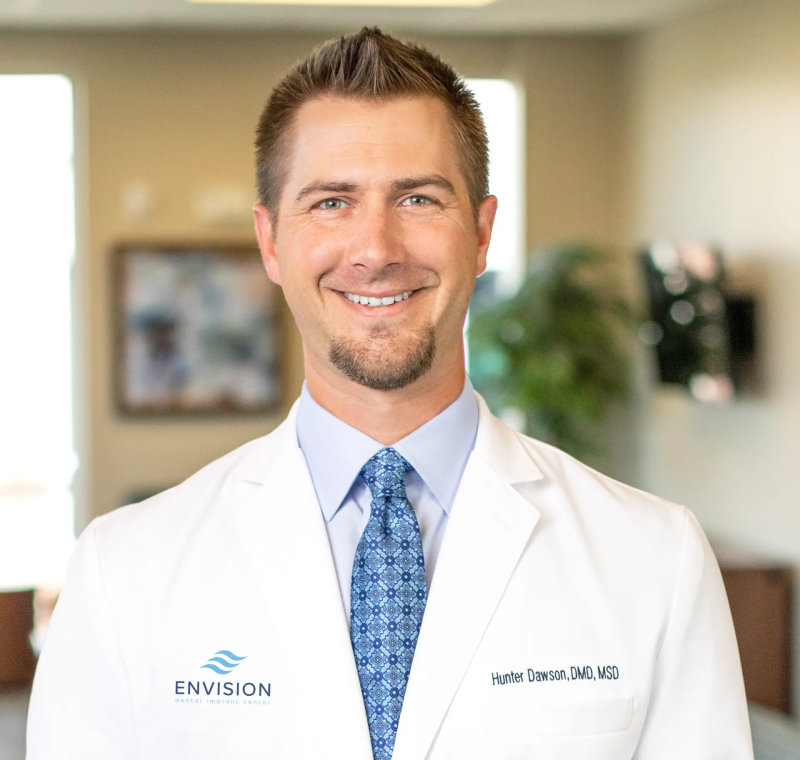
Dr. Hunter Dawson is a prosthodontist at Envision Dental Implant Center in Charlotte, North Carolina, where he focuses on the diagnosis and treatment planning of terminal dentition using digital technology. He earned his DMD, Advanced Education in Prosthodontics, and Master of Science in Dentistry at the University of Louisville School of Dentistry, and has practiced in North Carolina since 2017. A published author and Spear Digest contributor, he lectures internationally on comprehensive diagnosis, digital implant workflows, and full arch reconstruction for organizations including Straumann, the ITI, Spear, and Seattle Study Club. His research has centered on implant abutment materials and design, and his work has earned the Private Practice Prosthodontist Award.