Special List #31: Your Exit Plan Starts 4-6 Years Before You Sell with Bill Walker
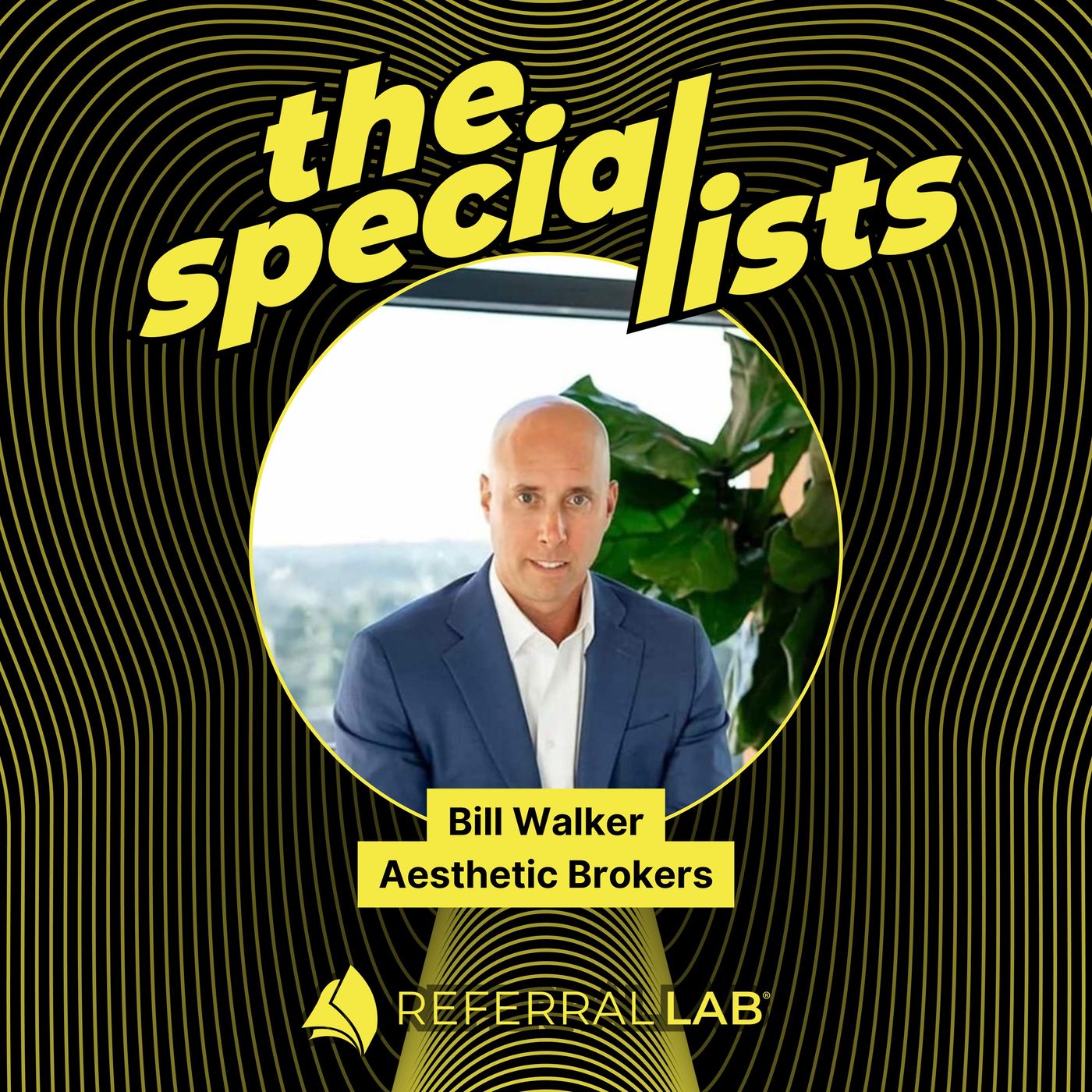


Bill Walker once negotiated against dentists for a private equity-backed buyer, closing on more than 100 practices. Now he works for the other side of the table.
Bill is the founder and CEO of Aesthetic Brokers, a sell-side M&A firm, a former Marine Corps pilot, and the reason The Special Lists exists.
He details why a premium deal usually means a three-to-five-year commitment after closing, why the deal itself takes about nine months, and why the unsolicited offer, not the buyer, is what a dentist should worry about most.
He also makes the case for adding high-leverage growth tools like Referral Lab before a sale instead of after, when the multiple works in your favor.
On consolidation, Bill's first question for any buyer is "Who's your integration team?" He compares a $7 million offer with a $6.3 million one the way he would for a client: cash, rolled equity, earnouts, marketing support, NPS scores and the strength of the financial sponsor. Sometimes an extra $300k isn't worth your sanity, your golf game or time with your family.
Plus: his advice for young dentists who want to own a group before they've spent time in the chair ("be a pilot first"), why dentists shouldn't negotiate their own deal, why private equity buyers want Mildred at the front desk to stay another 17 years, and Bill's least heroic Marine Corps story.
Guest
Bill Walker is the Founder & CEO of Aesthetic Brokers, a sell-side brokerage for founders of aesthetic, wellness, dental and SaaS businesses. He previously led M&A for a large private equity-backed healthcare services organization, transacting on more than 100 practices, and he hosts the Aesthetic Appeal podcast. Bill began his career as a Marine Corps pilot, serving at the Presidential Helicopter Squadron and commanding a squadron in combat.
Learn more about Bill's firm: Aesthetic Brokers
Connect with Bill on LinkedIn
Questions answered by this episode:
- When should a dentist start planning to sell their practice?
- How long does it take to sell a dental practice to a DSO?
- How long do you have to keep working after selling your dental practice to private equity?
- Should I accept an unsolicited offer to buy my dental practice?
- What does a sell-side broker do in a dental practice sale?
- What should I ask a DSO before selling my practice?
- How do you compare two offers for a dental practice?
- What is rolled equity in a dental practice sale?
- Should I negotiate my own dental practice sale?
- Should new dentists buy dental practices right out of school?
The Special Lists, presented by Referral Lab, is the podcast for dentists and dental specialists. Running a dental practice isn't easy, and if you're in private practice, it can sometimes feel like you're on an island. That's why finding your people—those who've been in your shoes and can share real, lived experience—changes the game.
Referral Lab was built specifically for dental specialists, helping you track, manage, and convert every referral. It's about improving case acceptance, boosting team performance, and strengthening relationships with referring providers so your whole practice runs smarter.
This spirit of connection fuels The Special Lists podcast. Hosted by the team behind Referral Lab, we bring you wisdom from practice owners and dental professionals, sharing the wins, mistakes, and lessons that shape how they run their businesses today.
Got a question for us? Send us a message at speciallists.com (with two L's)
Transform your referral workflow with Referral Lab, the purpose-built platform for dental specialists to track, manage and convert every referral. Request a demo at referrallab.io
Cameron Full
Co-Founder of Referral Lab
Cameron Full, co-founder of Referral Lab, is a strategic problem-solver with expertise in business management and digital solutions. He combines leadership, creativity, and technology to drive success across various industries.
Connect with Cameron on LinkedIn
Jason Souyias, DDS
Periodontist and Co-Founder of Referral Lab
Dr. Jason Souyias is a periodontist, educator, and co-founder of Referral Lab software. He teaches dentists and hygienists, including as a Pikos Institute faculty member. In his Port Huron private practice, he's known for excellent patient communication and experience. He's passionate about his work and dedicated to helping other dentists.
More about Port Huron, Michigan periodontist Dr. Jason Souyias
Michael Seda, DMD, MS
Periodontist and Co-Developer of Referral Lab
A clinician and entrepreneur, Dr. Seda brings 19 years of private practice experience to his periodontal and implant surgery practice in the San Francisco Bay Area. Dr. Seda's education spans several disciplines, including a degree in Psychobiology from the University of California, Los Angeles, a Doctorate degree from Harvard University (DMD), and a Master's degree in Periodontics and Oral Medicine from Columbia University.
More about Bay Area periodontist Dr. Michael Seda
Follow Dr. Seda on Instagram @sedaperio
Co-hosts: Cameron Full, Jason Souyias, DDS & Michael Seda, DDS
Producer: Eva Sheie @ The Axis
Assistant Producer: Mary Ellen Clarkson
Engineering: Chris Mann
Theme music: Papa Funk, spring gang
Cover Art: Dan Childs
The Special Lists is a production of The Axis.
Bill Walker (00:00):
And so when you think about legacy and you think about caring for people, if you're looking for a good steward of what you've created, you're probably looking for the most sophisticated buyer.
Dr. Souyias (00:14):
Thanks for listening to The Special Lists presented by Referral Lab, the podcast for dentists and dental specialists.
Cameron Full (00:23):
And welcome to another episode of The Special Lists. I'm one of your hosts, Cameron Full, with my co-host today, Jason Souyias.
Dr. Souyias (00:33):
Good evening.
Cameron Full (00:33):
And we're short of third host, Dr. Michael Seda. Unfortunately, he had more important things to do than hang out with Bill. We welcome... Bill and I became fast friends. Bill Walker's with us today. Bill and I became fast friends, what was it? Five years ago, man, now four or five years ago? What is it?
Bill Walker (00:53):
Probably.
Cameron Full (00:55):
Four or five years ago. Bill is a national speaker and though leader in the healthcare M&A space. Prior to founding Aesthetic Brokers, a leading sell side brokerage, firm focused on aesthetic wellness dental SAS. He ran an M&A for a large private equity backed healthcare organization. This is quite the intro, Bill. Bill prides AB on embodying the same core values of character, commitment, compassion of their clients today they learned early in his career as a combat pilot in the Marine Corps. Everybody welcome Bill Walker.
Bill Walker (01:29):
Thank you for having me. This is great.
Cameron Full (01:32):
Of course. The reason that we have this though is because of you.
Dr. Souyias (01:35):
That's it. You're the reason we have a podcast.
Cameron Full (01:38):
You're the reason we have a podcast. Did you know that?
Bill Walker (01:42):
I love brainstorming, I guess. This is cool. Give everybody the backdrop. Let's hear it.
Cameron Full (01:48):
So you're like, "Hey Cam, come on the podcast." And I'm like, "No, I'm not coming on your podcast." And you're like, "This is going to be great. You're coming." And I said, "Okay, I'm coming to your podcast." And then we got on the podcast and it was great.
Bill Walker (01:59):
We got a podcast.
Cameron Full (02:00):
We had a great time and you're like, "You should do this." And I'm like, "This is interesting. This is an interesting thing." So I found Eva and Axis through you and you introduced us and then Eva's the best. And so she's like, "You should do a podcast." She listened to ours and she said, "You guys are really good at this. You should just do this." And I said -
Bill Walker (02:23):
Yeah. So I have Cameron on the aesthetic appeal and he's better at doing podcasts than I am. And so he was like, "Hey Bill, why don't you just go out and check on the car? Go check on the car. Why don't you just stay out there? You go to the battle of the boat, Billy."
Dr. Souyias (02:46):
Cameron has a little way of taking things over. I wonder how that happened.
Bill Walker (02:52):
This is great. It was a great episode. It was so much fun.
Cameron Full (02:55):
We had a good time and then fast forward a year and a half later, we got our own podcast. And so it was only fitting that we have you on. I think the world of you. I know most of my friends think the world of you too. And so we try to change up about every fifth episode or so by not having a specialist specialist on, but a special list in their own right. So it is appropriate to bring on someone that knows a little bit more about the backside of this.
Dr. Souyias (03:20):
I think the better way to say that would be the non-dentist specialist, right? Yeah. Because Bill is absolutely a specialist.
Cameron Full (03:27):
Once you listen to our recording, I gave him credit for being a specialist, but I am on Alka Seltzer at the moment, a little punchier than normal warning.
Dr. Souyias (03:40):
When Cam's on cold medicine, I got to take the jabs while I can.
Bill Walker (03:42):
There's a baby teeny in there.
Cameron Full (03:46):
So Bill, Aesthetic Brokers leadership team has closed over one billion in healthcare transactions over their careers. Personally, Bill is a prior recipient of the Marine Corps Leadership Award, has won USMC Squadron of the Year twice. Not just once, but twice. And he holds a bachelor's degree from the... You missed the Ohio State University master degree from Georgetown and Harvard. I forgot you went to Harvard.
Bill Walker (04:15):
Ohio State's all that matters right now. It's football season. When it gets to March, depending on how Princeton's backdoor cut goes, maybe Harvard gets in on a wild card bid by winning the league. I still got Georgetown as a dog in the fight. I'm covered on the major sports, but right now it's all about football season.
Cameron Full (04:38):
The Ohio State University.
Bill Walker (04:40):
The.
Cameron Full (04:40):
Bill, tell us a little bit about yourself before we get rolling here. And we want to get into your list here quickly. So a little bit about you, a little bit about how you got started and a little bit how you got into perio and all this crazy stuff.
Bill Walker (04:51):
Sure. I went to Ohio State because I'm from the state of Ohio. When I got out of college, I loved team sports. I played sports in college and in high school and growing up and the Marine Corps was very much like a real cultural pair for me. It was a great pair. It was competitive. They were tough. They were great human beings. They were competitive. And so I loved all of that about the heritage and the winning team atmosphere of the Marine Corps. And so I became a pilot and it sent me on a journey that was fantastic and I couldn't ask for more. When you get a chance to do something that you're passionate about and it serves others and it serves the country, it's a triple win. When I came out of the Marines - Triple. It's a triple win. Triple win. When I came out of the Marines, I wanted to keep that same kind of fire and competitive spirit.
(06:07):
I ended up working on the buy side of healthcare consolidation and ran M&A for a PE backed shop. And the whole impetus of founding aesthetic brokers and fast forward to just three years ago, the reason why I founded the company was I really enjoyed getting to meet all of the doctors that I worked with in crafting the deals for their exit. And I was incredibly torn because I'm sitting across from all of these dentists that were incredible business people that had impacted so many thousands of people's lives, that had dozens of people that would literally take a bullet for them in their practice. They're doing one deal in their entire life and I have to negotiate against them to get the best deal possible for the group of dentists that are already in the cohort. And so I was constantly getting pulled in two emotional directions.
(07:22):
And so I just though the best way that I could continue to be a servant in that capacity was to start a firm that was focused on the founders, focused on the sell side, to create additional value for the one transaction that a doctor's probably going to do in their entire life. And so that's why I built the company that we have today. It makes me feel a lot better. I get to do the same great work. The buyers get a square deal. Our clients who are the founders get a better deal than they had before. They get better negotiated points as well. They get more money out of the deal and typically it's significantly more and I go to bed happy at night.
Dr. Souyias (08:11):
How do you feel that... I mean, have you ever heard the other... Give them a little shout out. The other podcast, there's these guys, they have a podcast called Just Say No to the DSO. Have you heard it?
Bill Walker (08:22):
I have not, but that's a great catch phrase.
Dr. Souyias (08:24):
It's a great catchphrase. They're doing pretty well. They've got some good listenership and they're obviously, one's an accountant and one's an attorney and they talk about the deals that the DSOs are offering dentists and they have a one-sided opinion of the deals are stealing from dentists and stuff like that. And that's exactly how they say it in most of their episodes. And how did that transition from going from the buy side now to representing the sell side? Tell me what that did for you.
Bill Walker (08:58):
Well, I slept better at the end of the night because I had a clear mission focus of who we are focused on helping and that manifests in a lot of different ways. The first and most easily identifiable for a dentist is the purchase price consideration is more than what they probably were quoted when somebody reached out to them cold as a buyer, unsolicited offer. I always talk to a lot of our clients about the thing to be worry about the most is not necessarily the buyer, it's the unsolicited offer because their mandate is to get the best deal possible. They want great partners. So they want to form a coalition of the strongest superheroes in the Hall of Justice.
(09:56):
And I think it's a flattering thing to be a doctor and get an unsolicited offer. I don't think that the buyers, whether they're an independent doctor or they're a couple or three or four doctors that already have kind of a small group and they want to add another practice in their area to what they currently own and manage, all the way to the super DSO that we talked about. I think all of those are great options depending on the terms and conditions and the culture fit. More than any other practice profile, I think in the healthcare space, culture I think matters so much more comparatively for dentists than any other care provider, physician type owner that I've ever come across. And we could probably spend an entire hour trying to dissect why does culture matter so much for dentists?
Dr. Souyias (11:07):
I agree with you. I think it does matter.
Cameron Full (11:09):
I'm going to jump in though. I have obviously now plenty of friends that have moved into being partners in DSOs, and I know a chunk of them that are happy, that are happy with their deals, that are happy with their ability to have an understood exit of their practice. And so I think because of obviously the space that we're in and the hot topic that is obviously the guest being in the space that he is, the reality is if you're buying a home, don't you want to get the home for the lowest possible price?
Dr. Souyias (11:48):
Absolutely.
Cameron Full (11:48):
You're buying a car, aren't you trying to buy the car for the... So this is no different than any sort of transaction. And so it's just a hot topic because we're all involved in the space and obviously the volatility of the purchasing and agreements in the space the last five years, whatever. But I don't think it's fair ultimately for the DSOs to get such a bad rap on trying to purchase for lowest deal because if you're buying a home... I mean, Jason, you just purchased a new home and what did you do?
Dr. Souyias (12:21):
Tried to get the best deal you can.
Cameron Full (12:22):
Tried to get the best deal you can. And so buy side, sell side, it carries through no matter where we are, what we do. I do love the flip though, Bill. I love that. I love the ideology of the flip of you changing sides to negotiate differently. I love that. I think that's great.
Bill Walker (12:43):
I think about it in terms of like, okay, so what is the true power of flipping the script of being a buy side private equity bro to a sell side founder fighter, you're a freedom fighter, founder fighter. The reality is I got to sit in on so many valuable board meetings. I got to see what was truly valued by a PE backed player on a national scale. I transacted on over a hundred practices. So when you see that many legal documents, a lot of times, unless you're dealing with one of a handful of firms in the United States, I've seen more, as a non-attorney, I've seen more dental legal documents. I've seen more healthcare legal documents than most lawyers who do a deal because they're the guy who did their lease. They're the guy who did the lease for the doctor, right?
Cameron Full (13:52):
Yeah.
Bill Walker (13:53):
It's stuff like that. So it's so nice because you can sit down next to the attorney who's looking to protect them from a legal perspective and weave in those important deal points like, "Wait, this is a critical portion that we fought for in the letter of intent and we want to make sure." And then they're like, "Got it. Let's incorporate this type of language to get that done." That's the partnership that I love the most with the attorneys is we get to sit down and talk through because we know the fundamentals of the financials of the practice so well. We've negotiated the deal terms so thoroughly. We know what creates value for the buyer, what protects our client, the dentist, and trying to find a happy medium. Because if you come to the table and you bring a sledgehammer and you start breaking everybody's arms, you're like, well, shit, now nobody has any arms left to sign the documents.
(14:51):
That failed. It sucks. So it's about twisting arms, but not breaking them off to get everybody to an agreeable solution.
Cameron Full (15:02):
Yeah. Let's get in this list here, Bill. Exit planning is a long-term strategy.
Bill Walker (15:10):
Exit planning is a long-term strategy.
Cameron Full (15:12):
Yeah. You wrote it.
Dr. Souyias (15:15):
Strategy begins years before you want to retire.
Bill Walker (15:19):
Is this a question you're like agree or disagree? I'm like, "I agree." I agree. Pizza. Yes.
Cameron Full (15:33):
Exit planning is a long-term strategy. Strategy begins years before you want to retire. That second part of that context was important.
Bill Walker (15:41):
There you go. There we go. So let's talk about this. Okay. So your point to bring this up, exit strategy planning. Strategy planning is a multi-year process and here's why. Three to five years is, unless you're doing a fire sale, three to five years is what you're going to commit to in a premium deal with a really, truly well-backed investor as a doctor, three to five years. Your deal process takes a year, right? I mean, it takes nine... How long does it take to make a private equity dental baby? It takes nine months to make a private equity dental baby. So the point being is it takes almost a year for the deal to transpire. So you should be planning with us. It's like you're showing up before you're totally washing your hands. You're showing up four to six years in advance if everything's great in your practice.
(16:47):
And then the big caveat that I give guys and gals is like, "Hey, it's okay. You're a perfectionist because what is a dentist? A dentist is a doctor, an engineer and an artist all in one and they're perfectionists being dentists, but you're not going to be perfect. You can strive for near perfection, but you're not going to be perfect. And it's okay because smart doctors surround themselves with really smart people in other areas to save themselves time and make themselves more money." And so the thing I always tell docs is like, "Man, I'm just glad that we're talking now because now we can shape some stuff for six months to a year and then go to market and then you do your deal and you're way happier because we fixed all the things that were fixable, that were subtle, that added a little bit of a premium to the deal for you." And that makes me super happy because it's really cost effective.
(17:53):
It doesn't cost them really anything at all extra because if I see a quality dental practice, we're along for the ride.
Dr. Souyias (18:04):
With Aesthetic Brokers, do you only represent the sell side going to private equity backed sales or do you look at all the possibilities?
Bill Walker (18:13):
So it's a great question. We'll represent sell side for the founders, sometimes to an independent doctor, sometimes to an independent small group, and sometimes it's to a PE backed, a private equity backed. We'll represent the founders on all those deals. We just don't represent buy-side because it keeps it cleaner. It just keeps it cleaner for me mentally. We don't have a question of whose team are we on? In other aspects of aesthetics, you'll see some family offices get involved, high net worth family offices want to get involved in that. I'm starting to see in the cosmetic dentistry space, an interest from high net worth family offices where there's a unique combination of aesthetics and cosmetic dentistry going on. So they like that parable.
Cameron Full (19:25):
That mix together.
Bill Walker (19:28):
But that's an example, Jason, to your point of the variance of the buyer pool that we have and that we see. The way that I think about it is if you're bigger, stronger, more successful, you're likely going to want a bigger, stronger, more successful investment firm to know that they're going to close the deal. And because there's always a little bit of a stock equity consideration that you're going to roll forward some stock, some equity, you want that to pay out for you and have a reasonable chance at true value. And so that's why it's really about vetting the buyer pool at that top end of the spectrum.
Dr. Souyias (20:15):
I think that's a great transition to our second talking point of the state of consolidation.
Bill Walker (20:20):
Make sure you read the whole thing, don't leave that out.
Dr. Souyias (20:23):
I won't give you just the first part like Cameron did. I'll give you the actual entire statement.
Cameron Full (20:27):
I can name this song in three tunes.
Dr. Souyias (20:29):
Three tunes.
Cameron Full (20:29):
The state of.
Dr. Souyias (20:30):
Yeah. The state of consolidation in dentistry. It's a mixed bag. Yes. The state of consolidation in dentistry is a mixed bag and there are truly exceptional options for taking rocks out of an owner's backpack to get a better quality of life.
Bill Walker (20:53):
So the idea of that topic, a better quality of life.
Dr. Souyias (21:00):
Sounded very Chewbacca-esque right there.
Cameron Full (21:04):
Geez.
Dr. Souyias (21:05):
Oh, that was good. That was a good one.
Bill Walker (21:09):
I've got a half Irish wolf hound, half giant German schnauzer.
Dr. Souyias (21:14):
He looks like chewbaca though.
Bill Walker (21:16):
He looks like chewbacca.
Dr. Souyias (21:17):
Oh my gosh. Wow.
Bill Walker (21:20):
So when you talk about taking rocks out of a doctor's backpack, I think the natural inclination for a lot of doctors is going to be, look, when it comes down to it, I'm going to have to put up with their craft. They're going to have to put up with my credit. I want the highest possible number. It is not until you sit down and think through what the next three to five years is really going to look like that you start to realize that, man, an extra hundred, 200, $300,000, an extra $500,000 in a multimillion dollar deal is not worth my sanity or my golf game or my fly fishing score.
Cameron Full (22:12):
Or time with family.
Bill Walker (22:14):
Or time with family.
Cameron Full (22:16):
Bill.
Bill Walker (22:17):
I mean, it's a real thing, right? I mean, it's a real thing. You're not going to get that time back from a time suck. And so it leads to open ears. You can talk four or five times on the same topic, but until somebody's truly listening, as a dentist, they're truly listening to getting good advice and it's like, "Okay, we got an offer for $7 million here and an offer for $6.3 million here." Okay, well, what are the deal terms? Okay, got it. So we boil down how much cash, how much equity, what type of earn out considerations are there, what type of bonus kicker money is there, what type of likelihood for an exit could there be? And you get through all that and then it's like, "Okay, well, what kind of marketing support do they offer that is extra support than what you're already doing that shows meaningful KPIs to assist with new patient count?
(23:30):
What type of NPS scores do they have? How happy are people in their own practice for the group that they have for all of their practices?" It's telling when you know that, "Wow, we have a lot of practices where not just the doctors are happy to be here, but everybody's happy to be here. We have a really high NPS score, right? Those things matter to me. When you look at what type of true back office support structure they have, one of the first things I lean into is I ask a buyer what's their integration team like?"
Cameron Full (24:11):
Oh yeah.
Bill Walker (24:13):
I mean, that -
Dr. Souyias (24:15):
Do you get just completely blank stares from dentists after that question? What do you mean an integration team?
Bill Walker (24:21):
Yeah. Dude, I mean, it was one of my biggest hiccups. It was one of the biggest hiccups I made when I was early stage of building the platform out for M&A. I did not realize how valuable it was to the doctor to have the woobie because when I left, I was the woobie. When I left and the transaction was over, I'm off into the woods with Hiawatha hunting for the next deal. And they're like,
Dr. Souyias (24:58):
Where'd you go?
Bill Walker (24:59):
Where'd you go, man? We're in the Camaro. I got my corsage on. Date's over. Where'd you go?" And I'm like, "Zed's dead, baby. Zed's dead." And you know what I'm saying? It's like I was doing what I was supposed to do for them because they had equity rolled in the company and my job was to go out and do the next deal for them. But man,
Cameron Full (25:25):
But the relationship was with you.
Bill Walker (25:28):
Yeah, the relationship was me. I still probably text with almost half of the guys years and years later, but for needs and necessities, that first year, they were like, "Hey, Bill, can you check on this?" And I'm like, "Yeah, sure." And you realize -
Cameron Full (25:52):
I need a stapler. Bill, I need a stapler. Bill.
Dr. Souyias (25:58):
Milton, you pulling a Milton.
Bill Walker (26:01):
It's fun to jump to conclusions. Get it?
Cameron Full (26:08):
Bill, my windows are dirty. Bill.
Bill Walker (26:10):
Yeah. We do windows. I do windows.
Cameron Full (26:14):
That's a really interesting point. I never thought about that from an acquisition standpoint. You knowing, again, the buyer side and knowing what a good organization looks like. It's very easy for you to relate to. And if they're starting up, obviously, I don't know enough about the money side, but I would assume that if you've got guys that are starting, they're a little bit more aggressive, right? And so they're more aggressive because they don't have this infrastructure in place. And so here you are trying to get a good deal at the same time on the sales side, and you're like, "Wait, what's your integration team?" And they're like, "Susan." And you're like, "So we get extra couple hundred grand in equity, but I got... And Susan's been... Oh yeah, we hired Susan six days ago. She was in..."
Dr. Souyias (27:10):
She's great.
Cameron Full (27:10):
She was in orthopedics. Okay.
Bill Walker (27:15):
No, the best one though, man, the best one is," So who's your integration team? ""Karen." And you're like, "Oh, cool. Now, if we have HR questions, who's the HR lead?" Karen. Oh, that's Karen.
Dr. Souyias (27:31):
Yeah. Yeah. Karen does everything.
Bill Walker (27:34):
Karen's really impressive. Karen does integration. She does HR. She does accounting.
Cameron Full (27:40):
We were able to cut a whole bunch of... Karen has this AI thing. Karen's got AI.
Bill Walker (27:47):
She's got three reportables to her that are all AI.
Dr. Souyias (27:51):
All AI agents, yes.
Cameron Full (27:52):
That's how we're able to give you such these good deals. Karen's got... She's got chat. She's got Claude. She knows what she's doing.
Bill Walker (28:01):
Yeah. She's great at marketing too.
Cameron Full (28:05):
So when you're representing the sell side and you've got those two or three offers and you're ask... What are some of the other questions? Because that was a really good one. What are some of the other questions that you're asking of the potential buyers that have gravity like that?
Bill Walker (28:26):
Well, I think there's an important topic that I don't know if we're going to touch on this down -
Cameron Full (28:32):
We are now.
Bill Walker (28:32):
Podcast. I think there's been a backlog of great dental companies in the space that have not had an exit where doctors had a sizable chunk of equity rolled forward. And there's some really good companies that are out there that just have not had an exit yet because they didn't want to get short sailed for no good reason when it's a quality asset for the market. And so the things that I think about is what kind of a financial sponsor do you have? Because I would flip that on its ear and say those groups that are still around, that have not perhaps had as quick of a strategic exit for the equity of the doctors like they would've liked to have maybe a year or two or three years ago perhaps, those that are still around, it's a testament to the financial sponsor for the strength of the support for the platform.
(29:42):
I have seen several in the wake of a hurricane that were not fiscally sound and got torn up from the floor up, ended up declaring bankruptcy or sold on the courthouse steps for pennies on the dollar. And so what I think we're seeing now in the space is it's easy when money's free to borrow, to go out and be a superstar. But when you're talking about how do you create organic growth, how do you create additional treatment planning case acceptance for much needed dentistry at the four wall organic level? When you talk about investments in hygienist education, when you talk about investments in associate doctor education so that they can stay on the growth trajectory career wise that they want to be on, that takes money, it takes commitment and it takes effort.
Cameron Full (30:48):
It takes time. It takes patience.
Bill Walker (30:50):
It takes time.
Cameron Full (30:51):
Patience is expensive.
Bill Walker (30:53):
Patience.
Cameron Full (30:54):
Patience with a CE is expensive.
Bill Walker (30:57):
Yes. And you don't get that if you don't have strong backing.
Cameron Full (31:03):
Or Referral Lab.
Bill Walker (31:08):
If there were only a software that could be utilized in the referral atmosphere that showed true value of the maximum partnerships.
Cameron Full (31:22):
It's actually interesting, Bill, to touch on that because Jason and I, we've talked about this before multiple times. It's like we straddle that line. We have a large section of our users are corporate practices. And then we have a large chunk of our users that are not. And so it's this really funny thing. It's like, man, I would love to be in all of the nons before they sell. But also the problem with that is that then when they sell or partner rather, there's not as much juice to squeeze out of the corporate side. So it's this really interesting thing because you can see when it's applied well on the corporate side, what type of lift it can provide, just the structure. And so I feel similarly to you, not necessarily buy and sell side, but similarly that I can see both sides of the action here.
Bill Walker (32:33):
Well, I think one of the things that you guys, when you bring that up, you guys probably experience is a little bit of a lot of practices at the corporate level is a lot. A lot of impact at the individual practice before they partner in the corporate structure. A lot of an individual practice growth is a lot of growth. And so I see it through the same set of eyes. They're still going to grow. If you have a great product, practices need it, they're going to grow. It's about, do you want to grow and be more thoughtful with your growth before you get your deal done?
Cameron Full (33:21):
100%.
Bill Walker (33:22):
My answer is yes.
Cameron Full (33:23):
100%. Yeah.
Bill Walker (33:24):
My answer is it goes back to the prep phase, right? You prep for the race. One of the ways that you prep for the race, and it's not really my space to speak to it in detail, but I advise on this all the time is, look, if you're a specialist, for example, and you know that there's a product out there, if you know the guys over at Referral Lab and you know that they get specialists a much higher revenue growth profile than their fellow colleagues that are probably competitors in the area, it's like probably should do that because you're going to get a multiple of the money that you make, you're going to get a multiple on it. So do that before you sell and partner into a corporate structure. And then they come in as the corporate structure like, "Hey, we want to incorporate Referral Lab."
Dr. Souyias (34:24):
All these other practices, right?
Bill Walker (34:26):
We're going to incorporate Referral Lab because it works really well and we're going to grow revenues. I probably should have done this before I did my deal with you guys a year ago or two years ago or three years ago.
Dr. Souyias (34:38):
You would have gotten a nice bigger multiple. Yeah, exactly.
Bill Walker (34:41):
It's a real thing. It is a real thing.
Cameron Full (34:45):
After you do... Actually this isn't on your sheet, but I want to know what it feels like after you've done right by a founder. You got he or she an appropriate deal. You allowed for them to have an exit that is tenable that they can see a way out. Because there's one thing to be committed and love your work and there's another thing to not know how... I'm not 75 years old. I'm 45. I love what I do. Jason loves what he does. But at the same time, there comes to a point where you're like, "Hey, what do I do?" And every single entity, there comes a point of what do I do? And so that's when they approach you, your expertise. Let's say you get the handoff done. And tell me about what happens after that and how you feel when you see that owner or that founder take the rocks out of their backpack.
Bill Walker (35:49):
Man, it feels like the end of a sports competition that you're in. It really does. If you go back to your childhood or to high school or to college or whatever analogy, at the end of the game, it feels like such an adrenaline drain and just almost like a runner's high when you get done at the gym lifting or you get done with a run and you have that clairvoyance, relaxed, but you're kind of like... You can feel just the vibration of the earth. It's a great feeling and it's real because it really does happen and it's real. And I've thought about this. It's real because you spend a year with somebody on a goal. That's a long time. It's longer than any single sports season out there. It's a long term goal. You can say, "I plan in what is short term, midterm, long term." A short term goal could probably be a year, but in reality, you're helping at the very last mile of a 26.2 mile run.
(37:10):
You're helping in that last mile and it's a great feeling. And I think the reason why is because it's something that's so important to a doctor in their career. Most people will never experience a successful exit of their company. For a doctor, there's this ultimate maximum do no harm. First, do no harm. And second, then it's about how can I make somebody's life better? And doctors have, I feel like there's like three prongs on the Trident that a doctor is always thinking about making better, making their patients' lives better, making their staffs, their teammates' lives better, and they're trying to make their family's life better. And so I think that when you think about what they're putting on the line for so many years, you can feel the accomplishment for them. And so that feels great. And I think that's why I feel that way is because we're with them for a significant amount of time and you see how impactful it is.
Dr. Souyias (38:37):
I know other people feel the way I do. I mean, I would literally call my practice my third child, right? It's how much care and effort and time I put into it that... Going back to the little dental baby, this is a dental baby that I've grown and raised and I guess adopted since I'm the second owner. But it is, and you put your heart and soul into it. I think it's so wonderful what you're doing of finding the right buyers for the right people because a lot of our friends are very happy with what they've done, but some of my friends, they though selling to a corporate group, they were going to get relief like, "Oh, I'm not going to have to do as much to run the practice. I'm going to be able to cut back and relieve my time." When in fact, many of them are more involved than they were before the sale.
(39:32):
And so finding the right purchaser for the right seller is such an important match to doing this. I agree. I think all of us get to that point and it's like, "Man, I'd give up $100,000 to make sure that the next three to five years of my life are easier."
Bill Walker (39:50):
And to your point, Jason, it's so funny that that nominal amount that we're talking about, whatever that number is -
Dr. Souyias (40:00):
Whatever the number is, yeah.
Bill Walker (40:01):
Whatever that number is, you're probably, if you're happier and you're with a stronger group of colleagues that you identify with more, you're probably going to see that multiplied out five, six, sevenfold because the equity story is more likely to be there as a successful exit down the road. And so it's about quality of life. And if you're really enjoying what you do, if you love being around dentistry, you're going to want to be a part of it for a pretty significant period of time, even after you stop doing dentistry. It's become part of your identity. And so I think what doesn't get highlighted enough is that one of the things that is positive about the consolidation of the industry is that there's so many more opportunities to participate in something that you love to be around as a professional with all of your colleagues and all your friends.And sometimes it doesn't have anything to do with being in the chair. Yeah.
Dr. Souyias (41:10):
I struggle though because again, if that's at the end of your career, I think it's one thing. I think there's a lot of younger dentists going through dental school these days that that's their vision from day one. I don't want to be in the chair. I want to be a group owner. I find that aspect in our profession a tiny bit frustrating that I think... I don't know. What would you say to those younger guys and gals that are coming right out of school and they're like, "I don't know if I really want to be in the chair. I want the freedom." What would your advice be to those folks?
Bill Walker (41:49):
Okay. So this would be maybe thought provoking. Oh, this may be thought provoking of a statement.
Dr. Souyias (41:59):
Controversial statement? Potentially. Ooh, I like controversial or thought provoking statement?
Bill Walker (42:05):
C word.
Dr. Souyias (42:06):
Okay.
Bill Walker (42:10):
Here's the thing.
Cameron Full (42:12):
What's the C word?
Bill Walker (42:14):
Controversial. Controversial.
Cameron Full (42:15):
Oh, okay. Okay.
Bill Walker (42:18):
C. Here's what I would say to those younger professionals. You're really smart, you're really driven, and you were clearly motivated to get into a field and you were successful at getting there because you now wear the white jacket and you carry the doctor title of being a dentist. I had a great mentor that said, "Billy, if you want to command a squadron someday, you got to be a pilot first."
Dr. Souyias (43:04):
Makes sense.
Bill Walker (43:05):
And so I would just throw it out there to say there's nothing that says you can't be the owner, the manager, the leader of multiple dozens of successful dental practices. My recommendation would be, be a pilot first and then scratch that itch to be the squadron commander.
Dr. Souyias (43:30):
I think that's a wonderful piece of advice because someone... Let's look at a non-dentistry for... You start on the ground level, you know the business better than anybody else. And it's the same thing with how could you ever manage other dentists down the road if you've never spent any time doing what they're supposed to be doing, right? So it's the respect you garner and the advice, that's super sound advice.
Cameron Full (43:57):
Absolutely.
Bill Walker (43:58):
If you think of a lot of the way communication flows for dentists from an outsider's perspective, I'm not a dentist, Jason is, but what I see a lot of is there's a lot of respect given to, "Oh wow, you're a panky, Cois, Seattle study club, spear, name pride, name the study group and the continuing education that you've done. And when you start rattling off these syllabus or you're like," Okay, wow, they really understand patient care. They really understand results. They understand dentistry. "And that creates a framework and a foundation to then layer on the business aspects. And again, it's not that you have to go through every thousand level code in the universe of continuing education and be the ninja. I think it's just saying," Get to a place where you could hold your water with a garden variety of other doctors about patient care and how operations of a dental practice should run before you go out and decide to take out a $5 million loan and buy two or three practices.
Dr. Souyias (45:28):
So true.
Cameron Full (45:29):
You don't do your own dentistry even though you are smart enough and capable enough to do so. So why would you not have a trusted advisor help you and plan and negotiate your exit?
Bill Walker (45:41):
Okay. So this is a good -
Cameron Full (45:42):
Bill.
Bill Walker (45:45):
Over you in the studio, Walter.
Cameron Full (45:48):
Bill.
Bill Walker (45:54):
Yeah.
Cameron Full (45:54):
This is a good
Bill Walker (45:54):
Point. I think there's a couple of things, right? Man, you guys, Jason, you guys are a tough, tough client sometimes because-
Dr. Souyias (46:08):
Because I know some people that actually did do their own dentistry. Let's be honest about that for a second.
Bill Walker (46:13):
Yes.
Dr. Souyias (46:14):
Sitting in a mirror.
Bill Walker (46:18):
You guys are a tough client. You guys are a tough clientele.
Dr. Souyias (46:22):
Yeah.
Bill Walker (46:23):
Because there's an enormous amount of raw processing brain power, right? And so can you understand the deal dynamics to do your own deal? Yes. May you? Can I, may I, should I? May you do your own deal? Yes, you may. Should you do your own deal?
Dr. Souyias (46:51):
Probably not.
Bill Walker (46:51):
Probably not.
Cameron Full (46:54):
I mean, you're not Lamar Jackson.
Bill Walker (46:57):
Right?
Cameron Full (46:58):
I mean, there's a couple people, but I mean, Lamar, he negotiated his own deal, right?
Bill Walker (47:04):
Yeah.
Cameron Full (47:05):
Okay. How much money did he leave on the table than getting Rosenhouse to do it? Rosenhouse, what's Rosenhouse charge? 10%?
Bill Walker (47:15):
It's worth it.
Cameron Full (47:17):
Yeah.
Bill Walker (47:17):
It's worth it. And some of the things, this goes back to human nature and psychology and you quote chapter and verse from case studies. Having an intermediary on your behalf as a buffer between you and the other team on the opposite side of the table automatically produces a higher chance of success rate.
Cameron Full (47:47):
You know what? I'm going to take an interesting stance here.
Bill Walker (47:50):
Okay. Go for it.
Cameron Full (47:51):
It. I think that
Dr. Souyias (47:52):
But is it controversial?
Cameron Full (47:55):
It's the C word. I think in some cases, I don't think this is a bad thing, but if you have someone in your back pocket that has a deep understanding of the buy side, has done over a hundred transactions himself on the buy side, and then in turn flip to... I think that's an appropriate time to then trust someone. I don't want a real estate agent that hasn't sold a house before to be my agent.
(48:41):
And so I think same thing with anything. Okay. Well, if you're going to do that, here's the tools to your brand new BMW. Have fun. Well, you wouldn't do that. Why wouldn't you do that? I'm not equipped to do that. Well, sure you are. Here's the book and here's your AI. It can take you through all the steps to dropping your block and putting on a new head gasket. It can give you all the steps, probably more definitively than you can get the steps done to sell your practice. I'm sure it's even more definitive. So shit, here's the tools. Well, I don't want to do that. Well, why in the hell do you want to negotiate with people that all they do is negotiate for a living?
Dr. Souyias (49:22):
You're at a disadvantage when you do that.
Cameron Full (49:26):
Yes, this is a significant disadvantage. Like Lamar Jackson, come on, man. Yeah. You probably left $50 million on the table.
Bill Walker (49:35):
A lot. Yeah. I probably should have said my statement in the caveat of an assumption is that if somebody's on your side of the table, their acumen and their knowledge base is high, right? Yes. Yeah.
Dr. Souyias (49:58):
Just because dentists are smart enough to understand this stuff doesn't mean we have the experience to know when it's a good deal.
Cameron Full (50:05):
It's not just dentists, man. We're putting that in this space, but the reality is that this is back to just a negotiation and a commitment to one's desire to... And everybody feels that their stuff's more valuable than it is. That's the other thing. That is a very real thing too. I've been part of some of this with my family business, right?
Dr. Souyias (50:27):
Well, what's the definition of a good deal, right?
Cameron Full (50:30):
Yes. Whatever they'll pay for it.
Dr. Souyias (50:32):
No, the definition of a good deal is one that neither side is completely happy with, but both can live with.
Cameron Full (50:38):
Oh.
Bill Walker (50:39):
Well said.
Cameron Full (50:39):
Where'd you get that at?
Dr. Souyias (50:40):
I don't know. I heard that somewhere, but I loved it. I loved it when I heard it.
Cameron Full (50:44):
It's on a Greek coin.
Dr. Souyias (50:46):
Probably is, yeah.
Bill Walker (50:48):
It washed up on the Adriatic. It was on a 75 foot yacht.
Dr. Souyias (50:52):
Yes, right.
Cameron Full (50:57):
Well, I mean, and I love that, Bill, because I think that with how technology is disrupting a lot of spaces, the reality is that as these things get more technical, it's so easy to defer to phone a friend. I got a buddy that did a deal. Why are you treating this like it's a little bakery out back? My friend sold his practice for $25 million. Hey, send me your documents. I'm going to look at your documents. And so again, giving you the appropriate amount of credit, flipping the script and going from buy to sell really puts you in a unique space. And this doesn't need to be an infomercial, but I hold Bill in the highest regard. He's an incredible human being and integrity is... Is that tattooed on your chest? It should be if it's not.
Dr. Souyias (51:57):
Thanks, man.
Cameron Full (52:00):
That's why one of the reasons I wanted you to come on the show and your commitment towards maintaining that pulse the whole way through your messaging here continues to show your commitment towards just doing what's right.
Bill Walker (52:14):
Well, I think something that's unique about dentistry too, that is not in some of the more early stage industries in healthcare that we see emerging right now, emerging healthcare verticals, and that is there's a genuine legacy that happens for several practices because it passes hands from a parent to a child and now the child is coming of age where they're like, "Okay, I'm a full-fledged adult here. I'm in my forties or fifties or whatever, and my kid isn't going to be a dentist and doesn't want to be the doctor that takes over the practice. And so what do I do?" And it's something that we didn't really talk about. However, I'll tell you that contrary to popular belief in some of the scary Instagram rabbit holes that people go down at 11:30 at night, it's like a private equity firm, they're so conservative. Those guys are so conservative about not wanting to disrupt whatever is working.
(53:28):
They do not want a shit can. They do not want to fire and slash and burn people. They want Mildred, who's been at the front desk for 17 years, to be there another 17 years that they can. Is everybody happy? Does everybody love Mildred? Can we all agree that everybody likes Mildred? Great. Please, God, just don't leave. Stay. And so when you think about legacy and you think about caring for people, if you're looking for a good steward of what you've created, you're probably looking for the most sophisticated buyer because the most sophisticated buyer, whomever that is, most of the time it's a professional investment firm. They don't want to disrupt that cashflow. And so it's a different way of looking at the legacy. Interesting. That's about preserving it.
Cameron Full (54:24):
Interesting.
Dr. Souyias (54:26):
I like that a lot. That's a not commonly thought of or discussed perspective, that sophistication of the buyer.
Cameron Full (54:34):
Yeah. Bill, that was a quick hour, man.
Bill Walker (54:38):
Wow.
Dr. Souyias (54:39):
I got to know a good story from your days in the Marine Corps before -
Cameron Full (54:43):
Are you doing that before we go?
Dr. Souyias (54:44):
Before we go. Yeah. I think that's how we got to end the episode. What's your most memorable moment from being in the Marine Corps?
Bill Walker (54:51):
I mean, I'm definitely not going to give you the John Wayne talking to my wristwatch pose. That would be a total cheese.
Dr. Souyias (54:59):
Okay.
Bill Walker (55:00):
So let's not go there. Let's end on a note that probably very few people might know is I once set fire to an outhouse because I was ordered to burn shit. Love that.
Dr. Souyias (55:23):
That's a great one.
Cameron Full (55:26):
And on that note, Bill, I look forward to seeing you again soon in Chicago for some dinner or whatever, or whenever we get hook up again. Thanks so much for joining us on tonight's episode of the Special List.
Bill Walker (55:43):
Thanks, guys.
Dr. Souyias (55:45):
Thanks for listening to The Special Lists presented by Referral Lab, the podcast for dentists and dental specialists, featuring a special list from a specialist. Got a question for us? Send us a message at specialists.com with two Ls. Transform your referral workflow with Referral Lab, the purpose-built platform for dental specialists to track, manage, and convert every referral. Request a demo at referrallab.io.
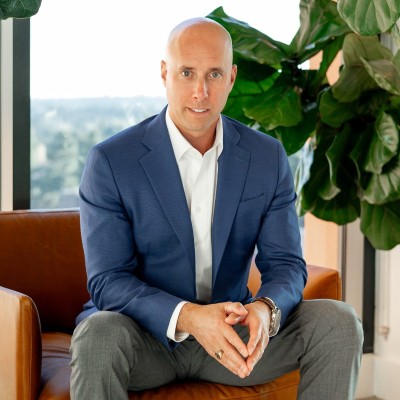
Bill Walker is the Founder & CEO of Aesthetic Brokers, a sell-side brokerage for founders of aesthetic, wellness, dental and SaaS businesses. He previously led M&A for a large private equity-backed healthcare services organization, transacting on more than 100 practices, and he hosts the Aesthetic Appeal podcast. Bill began his career as a Marine Corps pilot, serving at the Presidential Helicopter Squadron and commanding a squadron in combat.