Special List #32: 5 Things Dental School Should Have Taught Us with Dr. Anish Gupta
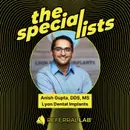


Anish is a board-certified oral and maxillofacial surgeon, a former engineer, and a scratch-startup owner in New Hudson, Michigan. He also shadowed Dr. Jason Souyias as a dental student, and he still uses the two-word habit he picked up that day with anxious patients: “tell me more.”
His list covers the five things he wishes dental school had taught him. Treat people like people and the business takes care of itself. Patients don't care about the implant, the crown or the abutment; they care about smiling at the family reunion or eating macadamia nuts again. And sales in healthcare, as Jason puts it, is simply the psychology of communicating the decision that needs to be made.
Anish calls HR the hardest part of ownership and the reason it can become a superpower. He explains how EOS and Traction helped him hire and fire on core values, why his patients now come back for his assistant, and why he still has to fight the urge to micromanage a team that can handle it.
Plus: what to do when a digital full-arch case comes back way off, Cameron's trampoline theory of practice growth, and the Referral Lab call that showed Anish that his third molar close rate was 60%. Six weeks of fixing the barriers later, it hit 75%.
Guest
Dr. Anish Gupta is a board-certified oral and maxillofacial surgeon and the owner of Lyon Dental Implants & Oral Surgery in New Hudson, Michigan, a scratch startup he opened in January 2021.
A biomedical engineer by training at the University of Michigan, he earned his DDS at the University of Detroit Mercy and completed his surgical training at the Medical College of Wisconsin. His practice focuses on full arch reconstruction, implants and bone grafting on a fully digital workflow. He holds privileges at Henry Ford Hospital and Ascension Providence and serves as a preceptor for the University of Michigan School of Dentistry.
Learn more about Dr. Anish Gupta: Lyon Dental Implants & Oral Surgery.
Follow Dr. Gupta's practice on Instagram @lyondentalimplants
Questions answered by this episode:
- Should an oral surgeon go out of network with dental insurance?
- What happens to patient volume when a dental practice drops insurance?
- How do I improve case acceptance for wisdom teeth extractions?
- What is a good case acceptance rate for an oral surgery practice?
- How do I talk to an anxious dental patient?
- Is selling treatment in dentistry ethical?
- Why do patients distrust dentists?
- How do I hire dental team members based on core values?
- Does EOS Traction work for a small dental practice?
- What should I do when a digital full-arch provisional doesn't fit?
Referral Lab was built specifically for dental specialists, helping you track, manage, and convert every referral. It's about improving case acceptance, boosting team performance, and strengthening relationships with referring providers so your whole practice runs smarter.
This spirit of connection fuels The Special Lists podcast. Hosted by the team behind Referral Lab, we bring you wisdom from practice owners and dental professionals, sharing the wins, mistakes, and lessons that shape how they run their businesses today.
Got a question for us? Send us a message at speciallists.com (with two L's)
Transform your referral workflow with Referral Lab, the purpose-built platform for dental specialists to track, manage and convert every referral. Request a demo at referrallab.io
Cameron Full
Co-Founder of Referral Lab
Cameron Full, co-founder of Referral Lab, is a strategic problem-solver with expertise in business management and digital solutions. He combines leadership, creativity, and technology to drive success across various industries.
Connect with Cameron on LinkedIn
Jason Souyias, DDS
Periodontist and Co-Founder of Referral Lab
Dr. Jason Souyias is a periodontist, educator, and co-founder of Referral Lab software. He teaches dentists and hygienists, including as a Pikos Institute faculty member. In his Port Huron private practice, he's known for excellent patient communication and experience. He's passionate about his work and dedicated to helping other dentists.
More about Port Huron, Michigan periodontist Dr. Jason Souyias
Michael Seda, DMD, MS
Periodontist and Co-Developer of Referral Lab
A clinician and entrepreneur, Dr. Seda brings 19 years of private practice experience to his periodontal and implant surgery practice in the San Francisco Bay Area. Dr. Seda's education spans several disciplines, including a degree in Psychobiology from the University of California, Los Angeles, a Doctorate degree from Harvard University (DMD), and a Master's degree in Periodontics and Oral Medicine from Columbia University.
More about Bay Area periodontist Dr. Michael Seda
Follow Dr. Seda on Instagram @sedaperio
Co-hosts: Cameron Full, Jason Souyias, DDS & Michael Seda, DDS
Producer: Eva Sheie @ The Axis
Assistant Producer: Mary Ellen Clarkson
Engineering: Chris Mann
Theme music: Papa Funk, spring gang
Cover Art: Dan Childs
The Special Lists is a production of The Axis.
Dr. Gupta (00:00):
One of the funniest parts about it is you're like, oh, this 60% is bad.
Cameron Full (00:03):
I came at you.
Dr. Gupta (00:10):
I responded to that pretty well after I lost the defensiveness. I was like, but I'm fee for service and that's why it's so low.
Cameron Full (00:16):
I'm an oral surgeon, damn it.
Dr. Souyias (00:20):
Thanks for listening to The Special Lists presented by Referral Lab, the podcast for dentists and dental specialists. Welcome to another episode of The Special Lists. I am your co-host, Jason Souyias, and I'm here with Cameron Full.
Cameron Full (00:36):
Howdy.
Dr. Souyias (00:37):
And we are pleased to introduce you to Anish Gupta.
Dr. Gupta (00:41):
Hey everybody.
Dr. Souyias (00:44):
Anish is a board certified oral and maxillofacial surgeon, diplomate of the American Board of Oral and Maxillofacial Surgery. Boy, that's struggling for me today. An owner of Lion Dental Implants and Oral Surgery in New Hudson, Michigan. What's up? His practice focuses on full arch implant reconstruction, dental implants and bone grafting is built on a fully digital workflow from CBCT and virtual planning to guided surgery. He also serves as a preceptor for the University of Michigan Dental Program, mentoring the next generation of dentists and specialists. Please welcome Dr. Anish Gupta.
Dr. Gupta (01:20):
Thank you so much for having me.
Dr. Souyias (01:21):
Man, we're so excited. So I think it's fun to tell the story. You're a user of Referral Lab.
Dr. Gupta (01:28):
Yes.
Dr. Souyias (01:28):
And the way we knew that you liked and were a fan of the podcast is we were presenting a lecture at the Society of Oral and Maxillofacial Administrators.
Cameron Full (01:40):
You were.
Dr. Souyias (01:43):
Okay, you were there too.
Cameron Full (01:44):
I was in the back.
Dr. Souyias (01:45):
You weren't in the back. We wrote like 50% of the lecture. Anyway, I delivered the message.
Cameron Full (01:51):
There you go.
Dr. Souyias (01:52):
But we were at Society of Oral and your administrator came up to us and she's like, "Dr. Gupta wants to know what has he got to do to get on the podcast."
Dr. Gupta (02:06):
That's Carrie for you. She's the best.
Cameron Full (02:08):
Carrie's great.
Dr. Souyias (02:08):
She's the best. So that was really a fun story that we had and that is how you got here. So I'm so glad she did that.
Dr. Gupta (02:17):
Well, so funny because even before, so I didn't even know that you were a part of Referral Lab. She's like, oh yeah. And she's showing me the materials and everything. I was like, oh, I know Dr. Souyias. He was one of my instructors back in the day.
Dr. Souyias (02:28):
Isn't that crazy? I know. How time flies. So please, it's Jason.
Dr. Gupta (02:33):
Okay. Well, I'd love to start with that. Jason, you probably don't remember this at all, but you remember that you were a part-time instructor at Detroit Mercy. There was probably a handful of you part-time instructors. We loved all of you, I think probably more than our full-time staff. But one of the requirements was that we had to shadow a periodontist in private practice. And so probably 2007 or 2008, I came to your practice for a day and it was wonderful. I was actually just thinking about this story before when you texted me this morning, and I was remembering that there was this one patient who was really, really anxious and we've all seen dental anxiety and it's always like, oh yeah, don't worry. We'll take care of you. That's how 99% of us say that. But you said, tell me more. And first of all, it's really nice to do that because one, it shows that you actually care.
(03:26):
But then she told the story about it and I remember we debriefed about it afterwards and you're like, sometimes you just got to listen to people. And it's so funny because I still do that today. So I still ask an anxious patient, tell me more about it. What's going on? What happened to you? And that's all it takes. It's like 15 seconds, maybe a couple minutes and take a bit of time. So without knowing it, you've been pretty instrumental in my own communication and practice.
Dr. Souyias (03:50):
I didn't even realize that.
Dr. Gupta (03:52):
Yeah.
Dr. Souyias (03:53):
Thank you. That's a wonderful thing to hear. And I still do that today. I still take that time. It's something that's so important to me and I'm glad I was able to share that with you, but just getting the background story from patients sometimes is such an important part of what we do.
Dr. Gupta (04:13):
Well, it's way more important than anything you could possibly learn in dental school. Communication is huge, but I mean referral lab, well, I guess to some degree, but referral lab's this thing where, "Hey, we're going to have these relationships. We're going to get higher case acceptance." And those are the things that actually get higher case acceptance when your patient likes you, trusts you, little things like that. I get dental students who come to my office all the time as a preceptor and those are the things I like to pass on. These are the hacks that you have that'll make people like you, get you the five-star Google reviews, get the big treatment plan closed, that 15 seconds to two minutes where you're just like, "Yeah, I'll listen to what you have to say."
Dr. Souyias (04:57):
That's so awesome. Thanks for remembering that story and for carrying that through with you because ultimately it's one of those things that if we don't get the patients to say yes to our treatment, how do we get to help them? How do we get to do the work that we've spent all these years learning and studying? And sometimes it's as simple as listening.
Dr. Gupta (05:19):
Simple as that.
Dr. Souyias (05:20):
So I love what you put in the writeup about the things that are notable about me aren't the fact that I'm an oral surgeon or surgery related. It's the fact that you're a father, a husband, you were an engineer before you became dentistry. So how has that affected your look in oral and maxillofacial surgery?
Dr. Gupta (05:40):
Yeah, I'll give you the short version so I don't take the whole hour just talking about that. So my parents, immigrants to this country, education was huge. My dad's an engineer at Ford. My mom's a teacher. Education was always really big. And I told my parents, "Hey, I want to be a physician. I want to be a surgeon." And they were like, "Okay, that's fine, but you have to do engineering in school so that if you fail and you're playing B." And so anyways, it obviously changed along the way multiple times. I did engineering with the goal to go into medicine, but dentistry seemed like a much better path. I used to shadow at the dental school as well as the hospital, and you could just tell dentists were just happier people. They made it to their kids' soccer games. It was just a much better environment.
(06:24):
And then I got into dental school and I was like, "Ah, I want to do more." I still have that drive to do something as a specialist, as a surgeon. And so that's how I got into oral maxillofacial surgery. The specific thing about engineering is that it's just problem solving. A lot of it's just critical thinking. I probably can't do a fourier transform anymore, but the fact that, hey, you give me a problem and I'm going to try to solve it. And then probably more concretely, I do a lot of digital stuff and so it helps me understand some of the toys that I'm using. For example, I do all my own surgical guides for implants in-house. And so I design it print it. And I know that's not engineering, engineering, but there's a little crossover things here and there that just make it a little bit maybe easier to understand or troubleshoot a little bit better. So that's kind of where I apply it today.
Dr. Souyias (07:10):
All right. Since you're into the digital workflow and you've got the engineering background, my frustration, this is a good little side note, Cameron's laughing, but let's get into something we almost never do. Let's get into a little clinical stuff.
Dr. Gupta (07:24):
Sure.
Dr. Souyias (07:25):
My frustration with digital full arch stuff, my experience has been when something was off, the lab hasn't able to tell me what went wrong or where the step went wrong. Have you found solutions to that? Or when you go to deliver the interim hybrid, the same day provisional that goes in initially and the occlusion's two miles off, the lab's like, "Well, we'll just scan it as it is and reprint it out." I'm a why person. What went wrong in the first place that led to that?
Dr. Gupta (08:05):
What your thoughts on that? So if something goes wrong, I force my team and my lab to have a debrief and I'll admit it, it hasn't been satisfying. Sometimes they'll be like, "Well, this is what happened." Then I'm like, "Let me see this. Let me see this thing. Let me see my data." Obviously, if I give you bad stuff, I'm going to spit out bad stuff. And so there's no question about that. And I will believe that it's my fault 90% of the time. But yeah, you're right. Half the time they can't explain it. Half the time we do find solutions so that the next time it's a little bit better. So I think thankfully by doing that, it happens less and less.
Dr. Souyias (08:40):
Good.
Dr. Gupta (08:40):
But you're absolutely right. There are times where just nobody knows what went wrong. But just like you said, who cares? I'm off. I remember, again, you've got this anterior open bite. I can stick my thumb through the patient's bite and we're like, we are way off. And literally we just scan it, send it back to them and they're like 15 minutes later, here it is, reprint it again. An hour later we're putting a new set of teeth in. Usually I'll send them home and have them come back the next day when it's that off. But you're right, but thankfully it's a much easier fix than me making a new denture and putting some cylinders back in and then re-looting it down, which you don't even want me doing that in the first place. So having to do it a second time is just terrible. But yeah, I think the digital side of it makes it easier to course correct. I guess that's my answer to that, which is probably not super satisfying to you.
Dr. Souyias (09:27):
No, I like that. It's one of those frustrations I have with the digital side that I was... Do you know an oral... I forget where Rob... Rob Naples is a guy I was chatting with. He was doing it all digital for a while.
Cameron Full (09:39):
Texas.
Dr. Souyias (09:40):
Naples is in Texas. Thank you.
Cameron Full (09:43):
Glad I can contribute.
Dr. Souyias (09:45):
Thanks. Yeah, thanks. We'll pull you in more later. Don't worry. We were having a discussion at one of the Seattle Study Club meetings and he's like, "Man, I don't know about this whole digital side. I think it's over-hyped." And so I know people like yourself -
Cameron Full (10:02):
Round Rock. Round Rock, Texas.
Dr. Souyias (10:05):
Round Rock, Texas. Thanks. Will Green, the prosthodontist in Florida, who's like, "No, we've figured out the digital side of it. There's some of us that have struggled with it." And like you said, the key is commitment. You got to be like, "I'm in it. I'm in it. I'm going all the way in on it." And then even despite problems, pushing through it.
Cameron Full (10:27):
Reps.
Dr. Souyias (10:28):
Reps.
Dr. Gupta (10:28):
Yeah, exactly. Yeah. And fall down, get back up. No, absolutely. I wouldn't say I'm the earliest adopter. There's those curves that they put up on the internet where people are like, "Oh, this is the greatest, newest thing. These are peptides. I'm going to start taking them." Whatever it's going to be. I'm probably like that second round where I see a whole bunch of other people fail a bunch of times, and then some of them make it through and I'm like, "Oh, those guys figured it out." But I think I like to jump on the train the second pass around. And so I definitely have great mentors, great courses that I took that people were doing this successfully day in, day out. And so I found out what their workflows are and copycatted them. And they're also the same people I go to when there's something that I can't figure out.
(11:09):
And thankfully, they're a great network of people. And so anything that you can do new or digital, something that may not have the greatest support, it's always good to have people in the corner.
Dr. Souyias (11:21):
Awesome. Awesome. Well, let's get into your list a little bit. I know your list is kind of surrounding some things that you wish you were taught in dental school, and you went to Detroit Mercy for pre-dental or for pre-doc, right?
Cameron Full (11:33):
Yep. AKA you did a shitty job, Souyias.
Dr. Souyias (11:36):
What?
Cameron Full (11:37):
You did a shitty job.
Dr. Souyias (11:38):
I did shit because I was instructor.
Dr. Gupta (11:41):
Hard time. Hard times. I made it. I made it through.
Dr. Souyias (11:45):
You know what? I never put those two together. I'm sorry. I didn't put that together, but that's all right.
Dr. Gupta (11:51):
It's a lot of pressure. Everything I do now. Yeah. Everything I do is going to be Jason's work, right?
Dr. Souyias (11:56):
That's all right. I can take some punches once in a while. It's good. I need it. So five things you wish you learned better in dental school. Number one, treat people like people, take care of them, and the business takes care of itself.
Dr. Gupta (12:11):
Yeah. I guess that's the tagline. That's the lesson to takeaway is that I think healthcare, especially dentistry too, is that so many people are like, "But it's a business." And so yeah, it is a business. My employees have to get paid. They need to survive. We need to make money in order for everybody to thrive. But at the end of the day, we're healthcare first and then I think business second. And I know that can be controversial to some people, but the lesson is that I don't have to think about the business side as much when I've got just good foundations, good clinical skills, good communication, trust building, a team like Carrie and the team that she manages. When they do everything right, then everything else. The business side will thrive despite the other things, I think. And so it goes back to the story.
(13:02):
You listen to your patient that data shadowed you, and that is what makes that patient go and tell five of their friends. Referral lab's all about tracking the numbers. So you could use the referral lab software in order to track these numbers, what's your case acceptance, how many people are doing that, but you can also just track where are they coming from and stuff like that too. And so one of the cool things is we're self-referred or which patients are referring other patients. And so all of that stuff goes up when, again, when you treat people like people and I guess take care of them, put simply.
Dr. Souyias (13:36):
One of my little hacks is I hate it when we use a walkie-talkie system. So when the front greeter, Jessica, in our office, I had to train her because at first she would always be like, "Your nine o'clock implant is here," because we can't say patient names because we're using over radio communication. And I'm like, "I don't have a nine o'clock implant. I have a nine o'clock patient." You know what I mean? It's little things like that. And again, she rocks it now, but it was just early on treat people... I don't treat implant. I treat people. I treat patients. That's an important part of what's behind what you're saying.
Cameron Full (14:20):
From an administrative management side, obviously that's where my sweet spot is. And when you've got a team member like Carrie to support you, it allows for you to do what you're good at, and then you've got support staff to do what they're good at. You can get a long ways without Referral Lab just having a great product and taking care of people when they come in, come out the door. I mean, foundation of America's small business is don't be a shithead, have a good product.
Dr. Gupta (14:54):
And it's absolutely the best marketing. You absolutely right about that. Yeah.
Cameron Full (14:58):
And so it's just when you want to go beyond that, that you have to start to pull different levers and have different KPIs. But before that, you don't even need to talk KPIs. And that's the benefit of being in such good industry and in specialty is that allows for that fluidity of that space. Guess what guys? We're going to do right by these people. We're not going to over-treatment plan. We're going to take our time with treatment. All of the things that make us relatable to them, especially because... Souyias, you actually helped me understand this. We've talked about it many times. I never really understood. I always knew that people didn't like going to the dentist, but I never really took it up a notch. People really don't like going to a specialist. What do you mean? I have to go to an extra dentist because my mouth is worse.
(15:55):
When you come in there and you're relatable like you are, you're a relatable human being, Jason's a relatable human being. When you focus on that extra little hack that he taught you in school, that makes you human and makes you relatable. And that brings the level of tension down and says, "Okay, listen. Yeah, your mouth, let's talk about how we solve this problem now."
Dr. Gupta (16:17):
You have talked about this on the podcast before.
Cameron Full (16:19):
It's going to get worse.
Dr. Gupta (16:21):
Yeah. Nobody wants to come to the dentist. We're in an industry where not only is it just tough to get people in the door, but they really hate getting tobacco industry where it's addictive, people are going to smoke. Going to the dentist is the opposite. Nobody wants to come in the first place. So now you've got these people here. Hospitality or chair side manner is one of our core values that we want people to be treated like they want to be treated the platinum rule. And so those are the things we do so that when people leave our office, they'll be like, "Oh, that wasn't so bad." So they're starting at the bottom. All you have to do is just be a little bit better than that. I'll even take your message a little step further, being a good person is that, I mean, there are classmates of ours who are just not good.
(17:04):
You would probably be like, "I don't want them even working on my dog." They were just the nicest people. When they sat across from you and you were just the only person that they were listening to, you're like, "Oh, this guy's going to kill it." And hopefully his hand skills are going to get better too, but he's going to do really well as a dentist just because people just gravitate toward and it's not even just charisma, it's just presence. I think that's amazing. Treating people like people is not something they teach in school, and I definitely think it should be something that we should probably have at least one lecture on, right?
Dr. Souyias (17:36):
It's hard. I've long believed four years of dental school is not enough to get people even close to where they need to be. But I remember when dental school used to be three years, my mentor, Mark Sutter, went to dental school for three years and a two-year perio residency. So he was out as a practicing periodontist by age 26. But I think in this world, there's no way you can lengthen it. There's no way you can charge another year of tuition, dear God. But at the same time, I think they've increased the class sizes in dental schools. They've upped the tuition, but yet they've cut the requirements. So you're graduating in four years having done less work than you were 20 years ago, but you're expected to go out there and be proficient. I forget who I was talking to from one of the dental schools, but they said, "Our job is to make sure you go out there and don't kill people." That's the level that they're wanting you to graduate with, is don't go out there and kill people.
(18:45):
Let's start with safety first. And then once you're out, now you got to really learn the profession and learn the skill.
Dr. Gupta (18:53):
I was reading this book on the guild system in Europe, and that was super boring the way I just said it, but it's like you do the apprenticeship, and I promise the book was much better, but it's apprenticeship and then there's the journeyman and the master. We obviously still use it for the trades in this country and stuff like that. But to me, dental school was like apprenticeship. You just did enough pocket squares to become a tailor. You get the hand skills maybe, but all of the rest of it, all the decision making, all the treatment planning, I feel like I'm 15 years out from dental school, so I'd like to think I'm kind of at the halfway point of my career. It's mind-boggling to me. It's like I've come, I think, really far, but man, I still got a long way to go. There's just so much more to get better at, to help patients, to mentor, whatever it is that you want to do, but there's no way I can consider myself a master or an expert at this point.
Dr. Souyias (19:46):
Well, you know what? It's continuous learning and continuous improvement. I hope on the last day I practice, I can say I was better today than I was yesterday. Absolutely. That's it. It's just constantly getting better and improving and paying attention to the results that you do. So let's get into the -
Cameron Full (20:08):
Nobody wants a screw.
Dr. Souyias (20:10):
Nobody wants a screw. They want the smile. I love that. They want a smile, the confidence, and the life.
Dr. Gupta (20:18):
Yeah. I think the lesson that probably didn't learn until maybe a couple years ago, four or five years ago, is that I think you come out of dental school and you're just like, "Hey, I'm going to talk about this MO and how this prep is going to look, and this is what we're going to do, and this is how much it's going to cost." And at the end of the day, my patients aren't there because of that. My patient comes in with a broken tooth. They call me at 7:00 PM. They're like, "Holy cow, what am I supposed to do?" And they're worried because, hey, they got to go face people tomorrow, or they got to go on vacation, or they got to do something or something's happening. Life is too short to have just a gap in the front, but they don't care about the implant.
(20:55):
They don't even care about the crown or the abutment. They don't care about any of that stuff. They care about what am I going to do tomorrow? And it's different for different people. Also another lesson to learn is that ask them, "What about this bothers you?" If it's terminal dentists, they need a full arch, you're like, "What is it about?" It's like, "Oh, I just want to be able to smile again. I just want to be able to go to this family reunion and be able to smile without having to cover my mouth or I want to be able to chew almonds or macadamia nuts or whatever it is." But it's different for different people. But once you know that, now you're going to say, "Hey, this is what we're going to do so that you can eat macadamia nuts again. This is what we're going to do so that when you're out hanging out with your friends, you're not going to have to turn to the left to take the picture.
(21:39):
You can look either way." These are all real stories. They're all real things that people told me. But that's what they care about. They don't care about the actual treatment or anything like that. And that was a big lesson for me to learn, because I do. We spent all this time learning that, and now it's hard to unlearn the, "Oh, I want to tell you about this cool stuff that I know how to do now," and then make it into a more human experience. The emotional sell, I think is what they call it. But if we're doing ethical selling, it's really just, "Hey, let me just listen again to what they want and then deliver."
Dr. Souyias (22:13):
Was there an event in your practice or in your career that made you realize this point?
Dr. Gupta (22:22):
So I was an associate for a while, and then I switched to my own practice. I had a rough idea.
Dr. Souyias (22:27):
You started from scratch, right?
Dr. Gupta (22:28):
I did a scratch startup 2021, so a year after COVID. It was a fun time to start a practice, but it was also just a great time because I was like during COVID there was like -
Cameron Full (22:40):
Why?
Dr. Gupta (22:41):
COVID. I feel like we still-
Cameron Full (22:43):
Whoa, whoa, whoa, whoa. You're glazing over an important detail here.
Dr. Gupta (22:48):
So COVID, for me, it's a double-edged sword. There's some people who came out the other end of it and were like, "Hey, I used that time when I was just sitting around and furloughed or off of work, and I used that time to better myself." And some people who also were just like... And I can understand why you'd be in the ruts too, if that were the case, but I was somewhere in between. And one of the things I used to do was just go and talk to people on the phone a lot more or go on social media and see what was happening in these crazy implant practices, the before and after pictures. And so at some point I realized I really liked full arch. I really like this idea that terminal dentition, somebody comes in with meth mouth and all of a sudden can walk out and have a smile that they love and trust for the world.
(23:31):
And that's what I got into dentistry, but that's what a lot of us got into dentistry for. We wanted to help people and recreate smiles and do that. And then somehow dental school beats you down and all of a sudden you're just like, "Oh, I got to learn how to do some fillings and stuff, and that's not changing lives or anything, but it's important." But anyways, I thought the full arch world was that important. I see people tearing up when they get their new smile and stuff. I was like, "I want to do that." And so I went down that pathway. I think when you go down that pathway, there's also like, "Okay, well, how do you get these patients in your office?" And then it's a huge cost for these patients. How do you tell them, "Hey, this is what you really should do.
(24:08):
This is what you're looking for." So there's that whole arm of that. I read, I think Paul Homily is the name that a lot of people talk about when they talk about getting to yes. So I've read that book and a couple of other books, and there's a whole dental arm of courses and people speaking who talk about, "Hey, this is how you can close cases or sell cases." I know it's a bad word, dentistry to sell stuff, but I think, Jason, I think I've heard you say this on another podcast, this is ethical selling. Somebody's got five millimeter pockets and they're going to turn into eight millimeter pockets and they're going to have bad barrier and then eventually lose their teeth. You're not selling anything to them. You're telling them, "Hey, let's do this for you so you can keep your smiles for the next two decades," and things like that.
(24:52):
When you start thinking of it rather than selling and thinking of it more like, "Hey, this is what's best for the patient, as long as you yourself have integrity and ethics, then it's a no-brainer. You got to do it."
Dr. Souyias (25:02):
Yeah. The way I really look at it is sales in healthcare is simply just the psychology of communicating the decision that needs to be made.
Dr. Gupta (25:13):
Slap some quotes around that.
Dr. Souyias (25:16):
Yeah. There's some wonderful things in there. I feel like I've spent the last 16 years just really learning and trying to master that side of it, of communicating in ways that resonates with each individual patient.
Cameron Full (25:35):
Why do you think though that... Let's have the conversation though. Why do you think though that it's only in dentistry that sales... In all the medical space, it's only in dentistry that is seen as they're having a stigma.
Dr. Souyias (25:50):
Well, they're not really -
Cameron Full (25:51):
You go to a plastic surgeon and people are like, "Oh yeah, let's do all this stuff."
Dr. Souyias (25:56):
I think plastic surgery is the exception, but when you look at other healthcare, the patients don't pay for it. They might have a copay. Because dentistry is still... There's no such thing as great dental insurance today. Everybody gets 1,500 bucks from their benefits towards their treatment, and that's about it. Dentistry is competing for discretionary dollars, and that's why it's different in dentistry. A medical doctor walks into a room or an orthopedic surgeon is like, "Hey, you need a new knee." The patient goes, "Great." They don't ask how much is it going to be because they know their insurance is covering it. So I think that's where... Anish, what do you think?
Dr. Gupta (26:38):
Absolutely, the insurance side of it is a big part of it. Discretionary dollars makes a lot of sense to me. The other side of it, I think is the trust issue is that in the way the stereotypical thought of lawyers being not good people, I think dentists are not far behind for better or for worse. But I mean, I think a lot of people don't trust dentists, maybe rightfully so in some sense. I mean, there's just horror stories after horror stories or this dentist did this or this dentist told me I had five fillings and another dentist told me I didn't. And so if you are the patient in that scenario, there's going to be questions that come up. It's not the whole story, obviously, but I think that's definitely part of it too.
Dr. Souyias (27:17):
But do you realize only 15 to 20 years ago, the most trusted profession was dentists?
Dr. Gupta (27:24):
I did not know that at all.
Dr. Souyias (27:26):
We topped all the lists 15 to 20 years ago of being the most trusted professionals. Topped medical doctors, lawyers, topped everybody. 15 to 20 years ago, dentists were on top of that list. What's changed in that timeframe?
Dr. Gupta (27:43):
Oh, I wouldn't know. I have one of those shirts though that says, "Trust me, I'm a dentist." And we got it in dental school. We all laughed about it to be like, "Oh, trust me, I'm a dentist." Well, that makes a lot more sense where that joke came from. I mean, people did trust dentists, I guess. They did. I don't know. I don't know. I guess this is what I'm going to be staring at the ceiling all night thinking about now.
Dr. Souyias (28:04):
Well, but I've said this before too on the pocket, but there's good and bad in every profession, right?
Dr. Gupta (28:09):
Absolutely.
Dr. Souyias (28:10):
There's honest people and there's dishonest people in all fields. The honest people in all professions far outweighs the dishonest people in all professions. And dentistry's no different. And it's the couple bad apples that create these bad experiences for these patients or that are dishonest and selling them things they don't need. Or honestly, sometimes it's just they're terrible communicators and they've never taken the time to learn the things we're talking about currently. And how often... When I do malpractice defense stuff in Michigan, almost every case I've ever worked on starts because of miscommunication. Someone at the hospital, because the patients always end up in the hospital, says, "Oh, if only they gave you antibiotics, your loved one wouldn't have died. If only they gave you antibiotics, you wouldn't have had all these crazy side effects." And it's just not true. It's someone speaking out of turn.
(29:17):
Medicine doesn't work the same way that dentistry does. And what's true in our field isn't true in the medical field always.
Dr. Gupta (29:24):
Yeah, absolutely. Go back to my point number one, treat people like people. Talk to them nicely.
Dr. Souyias (29:29):
Treat people like people. Talk to them nicely. It's so true. It's so true. It's such a powerful point. I love the next one. HR is the hardest part of the business, which is exactly why it can be your superpower. Tell more about that. That's a great one.
Dr. Gupta (29:45):
Yeah. I mean, I still consider myself a new business owner. I'm coming up on year six in January. I can tell you that this is not natural to me to be an owner, a manager, a leader. Yeah, go ahead. I'll pop some implants in here. Wisdom teeth out. I think I've gotten pretty good at that. But the people side of it still is the biggest challenge. And everybody says that. It's almost like cliche now when you're like, "Oh, you're going to start your own practice?" You know what the toughest part is, is hiring, firing, people not showing up, finding the right person. And that's why I just lived with it. I just like, oh, I took it for grant. That's just what it's going to be and it's going to be hard and I just have to get through it just like everybody else does until I got a business coach.
(30:26):
Our business runs on the EOS operating system. It's like the book Traction, if you've seen that before. And so one of the big parts of that is that you have to find the right people, which sounds so easy to say and so hard to do, but then how do you find the right people? And EOS will say, okay, well you need to find people who get it, want it, have the capacity. But also just you've got these core values. What's important to you? That's who you're hiring for. And it's hard to also find what's important to me because again, business owner, I don't know what's important, but I think I narrowed it down over a couple of years. I had the model assistant. I was like, I want everybody to be like her. She's got great empathy. Patients love her. She's positive and smiling all the time.
(31:10):
She's got a great work ethic and you build those in. And I had somebody that I absolutely couldn't stand and we had to let go. And I was like, what about them really were the deal breakers? And I'm like, oh, so let's get the opposite of that one. So anyways, you distill this down to some core values and then you literally hire and fire again. At my interviews, Kerry's going to go and say, "Hey, these are our core values." So hospitality is a big part of it. Positivity is a big part of it. Actually clinical excellence, the buck stops here is a big part of it. We want you to continue to excel. We want you to continue to learn. And so over the course, I think of the last two and a half years, I'll shut up my team because they're fantastic. They take so much off my plate.
(31:49):
Anyways, and literally people will show up to my office like, oh, another tooth broke. I'm coming back for Sean, not for me. They're coming back for my assistant. And that's so wonderful to hear. And so it's like, man, it's so awesome. Catherine made me a coffee or made my wife a coffee while I was getting my wisdom teeth out or whatever. All these little things that people do, it's not because I told them to do that. I never told Catherine to make coffee. I never told Sean to smile really nicely and tell jokes and laugh at whatever they're saying.That's what she does because that's who she is. That's also because she has these core values that we like, oh yeah, we want her. And so that's the superpowers. Okay, if you can get that team that all rows in the same direction, then I don't have to fight the person who's rowing the other way.
(32:34):
I don't have to tell them anything. They already know, oh, that's where we're going. Anyway, so that's a big plug for EOS and stuff like that. But whatever operating system you use, whatever, I know Michael's talked about this on the podcast before too, about the core values and things like that, but it sounds like fluff, but man, it's actually changed my practice personally. It's been able to sleep better at night because I don't have to worry about X, Y, or Z. So anyway, if HR really is as bad as people say it is, then make it work for you.
Cameron Full (33:02):
So did you start working with an implementer and everything?
Dr. Gupta (33:05):
I did, yeah. So I met an implementer probably about three years ago and he didn't do a hard sell. He's like, "This is what we can do." He's like, "Also, you're a dental office. We're not really geared to work with a small practice. I'm a solo practitioner. We've got seven employees. It's not a huge practice." But then we just got to know each other and he's like, "Yeah, I wasn't the one pushing, but he is like," If you want to, we can try it out for a little bit. "And again, I thought, okay, whatever, we'll try it out. And then I stuck with it for two years and now we're doing all of our own stuff ourselves, which is really nice. But he's still there. He's still available. I call him a coach, but if I've got a tricky situation that I don't know what to do, I just call him.
(33:43):
He's like, oh, you should try this tool or whatever it's going to be. But yeah, I really like that system. And again, it's not specifically that system. There's a bunch of systems out there that work. That's just the one that we chose to use and stuck with.
Cameron Full (33:55):
Well, I don't know Traction personally, but it's that framework, it's that design for managing the non-clinical portion. Absolutely. And it bleeds into clinical too because you're still using the same framework to manage some of the clinical engagement. The team itself, obviously not the placing implants, but I think the gift of that is, okay, here's a roadmap for which I should be managing my business. So I'm a believer.
Dr. Souyias (34:22):
Communication tools between you and your team.
Dr. Gupta (34:25):
Yeah. And I did not have any of that experience. So yeah, I read Traction and even after I read Traction like, oh yeah, this is really good stuff. I didn't use any of it for a year and a half. And then finally it's like, okay, well now it's one thing to know it and it's a second thing to actually do it. And so once we started doing it, it was really nice. And I mean, I'm the first person, the believer's been made out of me that I can tell you that if you have a team that's fantastic and has a great culture, it takes time to build it. But once you have it, man, it just gets the practice moving.
Dr. Souyias (34:57):
We've said this before with friends that we've worked with. Once you have the culture you want in your practice, defend it vehemently because it's not hard to change it the wrong way if you're not careful.
Dr. Gupta (35:14):
Absolutely. You let one thing slide and now everybody does something else that you don't want to have happen. As humans, I think it's really easy to let things go towards the negative. But yeah, I didn't mean to interrupt, but I totally get what you're saying.
Dr. Souyias (35:30):
Yeah, no, that's the point is it's human beings. It's easy to slide. And we tell that to the teams. It's important that the team knows, man, I like coming to work. I like this practice. It's up to me as the team member to keep it this way and not accept the behaviors and people that could change it. The minute you let somebody talk behind their back or recruit someone to their team, that's when you start to make a work environment that you don't look forward to coming to, that you don't enjoy being a part of, and that you've got fractured teams and clicks that happen within the practice. So team members, if you're listening to this podcast, stay with it. It's up to you guys to defend the good culture you've developed. And conversely, if you haven't developed it yet, you have the ability... Culture is what you're willing to accept from each other.
(36:36):
And so if you're willing to accept childish behavior or stupid antics, then that's what your culture is going to be. If you're expecting professionalism and hard work, then that's what your culture will be. So it's what you accept from each other.
Dr. Gupta (36:53):
Absolutely.
Dr. Souyias (36:58):
Speaking of HR, where do you think... So many people are like, oh, like you talked about, it's so hard. Managing staff is so hard. It's so much work. Where do you think they're missing the boat?
Dr. Gupta (37:15):
That's a good question. I think for me it was that as the surgeon and the owner, I mean, this is going to be true for any practice owner, clinician, that you are so busy focusing on the clinical side of things and then somebody will hand you a sheet of paper like, "Hey, this happened. Fire department's coming today or tomorrow." Or, "Hey, this person needs two weeks off." It turns into you do the stuff that you're supposed to do and then you're handed these fires and you just have to put the fires out. And so I think one of the biggest parts of it is that you need to actually have time to work on the business too. So you would never expect a CEO to be the employee who's doing all the work. The CEO has to do the strategy and the vision and also make decisions and things like that.
(37:57):
And so I think when you're just focusing on what's the next thing, what's the next fire in front of me that I got a fire host down, you don't get a chance to look at the culture or anything like that. And so I think at least for me, that's what it was, is that you're just focused on the wrong things just because that's what you're trained to do, that hey, there's a problem, I'm going to solve it even though something bigger should be looked at.
Dr. Souyias (38:25):
It was really funny that what you said about putting out all these fires. I just happened to have an office visiting recently, Dr. Amber Kreko from Shreveport, Louisiana was here. Shout out to Amber. And one of the funniest things to me is at the end of the day she goes, "Nobody asked you for anything." She was really blown away by that. I was like, "Well, what do you mean?" She's like, "Nobody came to you with any problems of what should I do in this situation?" I was like, "Yeah, because my team can handle it. They know what to do. They're professionals. I trust them to make their decisions, go with it." And so that was really funny to her. It's a great story to share because it's exhaust... My practice was not always this way. It was the opposite in the past where people would come and...
(39:21):
But it's a wonderful thing when you get to that point where you're like, "Man, my team is a team of trusted professionals. Make the decision and handle the problem as long as it's in line with our core values."
Cameron Full (39:36):
That's taken you a long time to curate that.
Dr. Souyias (39:39):
Oh my gosh, yes. Yes. 16 years I've been working on that.
Cameron Full (39:42):
Yeah. I mean, that's been a considerable effort the whole way through. Absolutely. People just want that result, but they want it now. They don't want to go through all the legwork to get there typically.
Dr. Souyias (39:51):
Yeah. Well, but I'm a delayed gratification kind of person, so I'm in it for the long game of I'm going to do what it takes in small incremental changes to be able to get to that point.
Dr. Gupta (40:05):
And I might talk about this, I've got it all figured out and I promise you I definitely don't. And that's actually one of my biggest problems is that I've got a team who's really capable and they'll be the first to tell you that I still unfortunately try to micromanage or be like, "Hey, let me try doing this thing that you totally can take care of on your own." And at least they feel safe enough most of the time to be like, "Back away. You don't need to do this. We got this." So I'm happy they can do that, but I'm definitely, if I need to hear it or if they need to tell it to me, then I know that I'm still overstepping a lot. But no, you're absolutely right. That's the dream is to be able to say, "Hey, we've got an office manager in place, we've got a clinical operations manager, and they're going to take care of those two lanes and you're just going to take care of the one part of it." I'm underneath the clinical operations manager, so as the person doing the clinical work, I shouldn't even be making these decisions or figuring out the tanks are low or what's going on with this thing.
(41:00):
But yeah, it's not easy for me to let go of that because I guess I've made bad habits for many years. So it's refreshing to have a team that can help, but also a struggle that I unfortunately have a hard time letting go.
Dr. Souyias (41:17):
You're no different than me and all of us dental professionals. Dentistry attracts perfectionists. It big time does. And it took my mentor telling me... I don't even remember what I was working on with Sutter, but he and I shared our office and I was working on something and he is like, "You're still working on that?" I'm like, "Yeah, I just want to get it perfect." He looks right at me and he goes, "Jason, sometimes done's better than perfect." And it was such a powerful lesson in my life, but I forgot what it was, some newsletter we were doing at the time, and he's like, "Sometimes done's better than perfect." And man, that really hit me as it has to be good. It has to be excellent, but it doesn't have to be... Perfection's unattainable and it'll drive you crazy. And so that's the thing is once I got to that point in my life where it purposefully crafted in the practice of where we have people that they don't have to ask me about every...
(42:21):
Does that mean they never ask me about stuff? No, of course there's stuff, but we have enough business meetings and every other week we have an all team meeting. And so we do these other points where they don't have to come ask me during the treatment day. If something's not working, there's other avenues where we can explore it.
Dr. Gupta (42:42):
How long do you think it took you to get to that point?
Dr. Souyias (42:47):
I want to say it was probably a year or two ago. I mean, it took a long time. This my 21st year of practice. My first five years were a lesson in what not to do. And then the last 16 years has been slowly figuring out what to do.
Cameron Full (43:08):
We talk about the different ceilings though, and I think you had hit a ceiling with your previous organizational infrastructure from a production standpoint, from a new patient management point. In this practice point. Absolutely. Yep. And so what then is required is you to reconfigure your organizational infrastructure.
Dr. Souyias (43:29):
Correct. Yeah.
Cameron Full (43:30):
Not only the personnel that's within it, but how those personnel are being managed.
Dr. Souyias (43:34):
Correct.
Cameron Full (43:34):
And so that's what Anish is doing now is if you got the framework in place with the 17 members, seven or not, it's irrelevant, Anish. You have some infrastructure in place that allows for you to get to a ceiling, and then once you get to that ceiling, you're going to have to then reconfigure again, whether it's adding another doctor. Well, guess what? The second you add another doctor, the whole thing changes. It's different than reconfiguring everything around you. Now you've got another leader in the practice who you can't decide whether or not is a leader like you or a leader not like you. Where do they fit on the chart? Do they report to the practice administrator as an associate or do they report to you? It's this weird - It's weird.
(44:16):
This weird thing that happens. And so that's what's cool is as you move up, and Jason and I lectured on this at the institute a number of years ago. I call it trampolines. You have to jump. You do a lot of work to stay on the trampoline anyway, but it takes more work to jump to the next trampoline. And so in my mind, and that's what happened with Souyias, is it was being around his practice now for eight years, I saw those shifts change what then in turn allowed for him to break the current or the existing practice and then what do we need to change so that we can continue to grow?
Dr. Gupta (45:00):
To level up. Yeah. I mean, that totally resonates with me. There's a Haitian proverb I absolutely love, and it's beyond the mountains, there are mountains. When I first heard it, I was like, "Oh no, that's depressing. We just have problems after problems all the time and life is never going to get any better." But it's not so bad if you realize, "Well, that's the challenges that come with life." Again, it's not depressing, it's just, "Hey, there's going to be something next that comes." And also just takes away this pressure that you have on yourself that like, "Oh, I'm done with college. Everything's going to be all set for me afterwards." And it's not going to be upset. And I know I'm going to be done with dental school. Everything's going to be just fine. I'm just going to coast. And you're like, "Oh, it's not going to go." And then you're like, "25."
(45:41):
But I think I believe that at one point that it's just like, "Oh yeah, I finished and now everything..." But as soon as you're like, "Oh, there's something next that's going to come." Whether it's like, "Oh, I'm done with residency. Now it's going to be practice ownership. Now it's going to be having children. Now it's going to be, I don't know, health problems with my parents or myself." There's always going to be something, but once you're like, "Oh, it's going to come beyond those mountains. There's more mountains as long as you know it's happening." And it's like, "Oh yeah, okay. I've done some mountains before. Bring the next mountains on." But I love it. I think the trampoline analogy is perfect. I think that's when I think of leveling up is at some point it's going to be like, "Okay, I've done what I could do to this point.
(46:18):
What's gotten me here is not going to get me there." And so you've got to think about... I mean, maybe that's the engineer in me, maybe that's just the problem solving side. It's like, "Yeah, well, that's what it is going to be and that's what I'm going to do."
Dr. Souyias (46:30):
Yep. Yep. It's so true. All right. This is a great one. I love how you worded this. Business ownership means being exhausted by work of your own choosing. It buys you your life and your vision.
Dr. Gupta (46:42):
Yeah. I think it's probably an Instagram quote that stuck with me, but how lucky is it to be exhausted by the decisions that you make? Again, it's that gratitude part of it. And so it's just perspective. And so two years ago I went non-par with insurances. Good for you. Insurances drive me nuts. It's not just that. I was actually more worried that everybody's going to think I'm just a greedy pig. Insurances don't pay enough. I want to make more money, get rid of insurances. And that's not it at all.
Cameron Full (47:13):
Which I might add is extremely courageous as an oral surgeon.
Dr. Souyias (47:18):
Yeah.
Dr. Gupta (47:19):
Oh, thanks.
Dr. Souyias (47:19):
Most don't do it.
Dr. Gupta (47:20):
Yeah. I mean, it's tough for anybody to do it in the dental field or the medical field for that matter.
Cameron Full (47:24):
I know, but with your guys' typical dependency on wisdom teeth as a major source of production, to be able to say it's okay, my capabilities will outshine my willingness to offer this service for whatever someone else is determining me to get reimbursed for and still maintain your referral relationships. I just think it's extra courageous as an oral surgeon to do that.
Dr. Gupta (47:52):
I mean, it is challenging, absolutely. And that was what I thought was the trampoline jump to the next level. But the bottom line was like, okay, we dropped insurances beginning of 2025, so now we're coming up on two years. But I mean, my practice today is so different than the practice in 2024. We were doing 70% wisdom teeth and 30% implants, and now that's completely flipped. Now, so we're 80% implants and implant adjacent procedures and 20% wisdom teeth for the reasons you just mentioned. We've got some space in our schedule. So the revenue's been steady, if not growing slightly, but our volume is different. So I think we dropped 20% in actual patient visits, which again, people are like, "Oh, you're working less but making the same amount. That's the win." But it's still stressful to see a day that's got an hour empty here, three hours empty or whatever that is.
(48:47):
But that's the message here is that's my choosing. Yes, I'm going to get stressed out by that, but man, that's my choice. And that's why I think business ownership is huge. No one ever told me growing up that this is what you could do, be a business owner. My parents wanted me to take the safe route, be an engineer, be a lawyer, be a physician, that you're going to reliably get a good job and live your lifestyle with two and a half kids and a white picket fence. But nobody ever told me business ownership has got all these little magic switches that you can do and things that... And it's hard as hell, and I'm not good at it either. But at the same time, man, I can go to India in December for two weeks and nobody's going to tell me, "Ah, that's too long.
(49:30):
You can't take a vacation for that long. I can cut my day off at 3:00 PM so I can go to my kid's soccer game. Oh yeah, I'll take that. I'm going to buy a $40,000 photogrammetry machine. I don't need a co-sign from anybody. Okay. Yeah, I'm going to do that. But yeah, that's expensive. Yeah, I'm not going to see the patients who get done with school at 4:00 PM. There's sacrifices to every single decision I make. There's consequences, but guess what? They're my decisions and I'll stand by them. And if I don't stand by them, I'll switch them back. What a luxury to be able to make decisions a second time around. I love that quote because I think America's turned into a place where people will complain and you're surrounded by people. Well, maybe not surrounded. I should paint all of America with a paintbrush, but there's so many people that have negative views that just like, this sucks or this thing.
(50:17):
But man, if you just take a second to look at the great things you have, you have the fact that you're just born in America and you already won the lottery. And so it's like, these are the decisions I'm making and I'm going to accept the consequences and you won't hear me whine about them.
Dr. Souyias (50:31):
It's so nice. I think you're selling yourself short. I think you're better at this than you think you are.
Cameron Full (50:38):
I agree.
Dr. Gupta (50:39):
At the very least, I'm trying. I'm trying really hard.
Cameron Full (50:41):
Absolutely agree. Yeah.
Dr. Gupta (50:42):
Well, thanks for saying that.
Dr. Souyias (50:45):
The point that you're focusing on it is absolutely the fact that you're going to continue to improve and get better at it. And there's so many people that don't pay attention to it. So the fact that it's important to you and it's on part of your vision, that's so important. Which brings us beautifully to your last point of what gets tracked gets better. We've heard that a lot. We believe that strongly on our Referral Lab side. Your practice went from 60% to 75% in six weeks in what?
Dr. Gupta (51:25):
Sorry. Yes, some context. In close rate for a third molar. So no, that actually happened because I had a conversation with Cameron who was looking. I was like, "My team's doing referral lab. I'm not really being roped in a lot of this thing. I'm playing with it a little bit, but I just love to get, I don't know what's good. I don't know what's bad. I don't know even how to do this. I'm looking for this report. Tell me how to get to it." And my team was able to walk me through most of it, but at the same time I was like, "Okay, is there someone who can properly go through it or somebody who may know faster ways of doing it?" Cameron was super gracious to get on a call with me and go through. I can't remember spending an hour of your day with me, and you showed me so many things.
(52:04):
Well, one of the funniest parts about it is you're like, "Oh, this 60% is bad."
Cameron Full (52:08):
I came at you.
Dr. Souyias (52:13):
Yeah.
Dr. Gupta (52:14):
I responded to that pretty well after I lost the defensiveness. I was like, "But I'm fee for service, and that's why it's so low."
Cameron Full (52:20):
But I'm an oral surgeon damn it.
Dr. Gupta (52:22):
Yeah. And so then afterwards you're like, "Okay, well, let me tell you what other people are doing." There's that comparison to the thief of joy, and I get it for a lot of aspects of life, but for me, you tell me somebody else did it, I'm going to be like, "Well, how can I do it too?" And so that was super helpful to me. And you were like, that's probably your lowest hanging fruit. "Hey, people are already coming to your office. They already know you're not in par with insurances. They're already in your chair. You told them that this is what they need. Their dentist told them this is what they need. Why are 40% of them saying no? "I had a conversation with Catherine, our treatment coordinator, and so I was like," What are the barriers? What are the things that people are like, oh, or not, or why are they not scheduling?
(53:01):
"And then she gave me some real concrete reasons like," Oh, sometimes people are like, "We have a policy that can pay half down. That's tough for some people. They have a lot of students. It's end of summer. They want to come in December. And so we found solutions for those. We're going to do third-party financing, which we've always done, but she's like," Let's just do third-party financing in the chair right now. "That was a big bump to that one. There's things like," Oh, hey, we want to schedule in December when he's got two weeks off or something like that. And they're like, "Okay, well, how can we do that? How can we make it?" So you're like, "Okay, how about we schedule it now because that time gets really filled up. Would you like to do that?" And so just those little things, we've got two out of those 10 people to start saying yes.
(53:37):
And you're right, it is low hanging fruit, but again, what gets tracked gets better. And so one, you had to see it like, "Hey, this is where there's a hole." And then two, we have to ask the question, "Why do you think there's holes? What are the barriers to this?" I mean, jumping two out of 10 cases in a short period of time is like, if I did the math, it's going to be a pretty big revenue boost by the end of the year. And then again, this is probably going to drop again if we find another barrier.
Cameron Full (54:04):
Compounds, right? And that's the gift of tracking is the compound interest that's associated with it. And so up until Referral Lab, when you're focusing on the team, when you're focusing on the perfect greeting, the perfect greeter, the well-groomed landscaping, the perfect logo, the perfect chair side, that's going to get you this barometer of case acceptance, which is 60%, 50%, whatever it is. To get beyond that, to get that compound interest, you have to start to track things. And then you're going to get 1% here, you're going to get 2% here, you're going to get 1% here. And that's over time ends up being a million dollars or more just with these simple little things that we compound. I love that when we had that call, it was fun. I really like doctor calls, especially with business owners as well as associates. But when they really lean into, man, how can we get better?
(55:12):
And not just that, but their willingness to change, look and see what happens. I mean, look at you're closing two out of 10 more cases with something that then take that into your medium and larger cases and it compounds even further.
Dr. Gupta (55:27):
Yeah, absolutely. Yeah, no, I couldn't agree more. I think I want to say that it's not just tracking it too, because we did track it in the past. We had an Excel sheet and Catherine was responsible for it. And the bottom line is that I'm a big believer in automation, especially when it doesn't involve humans, I guess. So if it's a touchpoint and you need to have the humanistic organic side of things, then yeah, have a person do it. But when it becomes automated, it becomes so much easier. So Catherine would have an Excel sheet and she would put things in and something would happen or she'd forget about something or it's been too long or somebody that said, "Hey, I'll touch back in two months." But you have to really scroll up that Excel sheet to find that person again, and there's no way to easily do it unless you're doing that whole list every single time.
(56:13):
As much as I love Excel spreadsheets, it was labor intensive. And so with Referral Lab having automated reminders and things like that, and then just one of the other things that I love that Referral Lab does is it tracks same day acceptance versus acceptance down the road because if somebody else called and somebody else picked up the phone and then they accepted treatment and it was Sammy who picked up the phone, Catherine doesn't know about that and Sammy's not going into the Excel sheet and updating it, but now Sammy with Referral Lab can do it super easily. And so now we can track those numbers too. Well, how many people are closing the day we have the consult? We always want that to be the highest, but okay, are we picking up these people later on? And so Referral Lab makes that super easy to see that as well.
(56:55):
So not only is tracking important, but tracking so it's easy to do is super huge too. I mean, I can't applaud you guys enough for what Referral Lab has done and what it's doing for our practice.
Cameron Full (57:08):
Awesome.
Dr. Souyias (57:08):
Well awesome. This has been an incredible... I can't believe an hour's gone by already. Yeah. Check Dr. Gupta out on Instagram @lyondentalimplants, L-Y-O-N, and we'll put that in the links at the bottom.
Cameron Full (57:24):
Show notes.
Dr. Souyias (57:25):
Show notes. Yep. You say you put all your coolest clinical stuff, including complications, which man, I'll tell you what, I love when people share complications.
Dr. Gupta (57:35):
Yeah. So the funniest thing is I'm not a big social media person generally, but I mean, you all think I'm a liar now that if you looked at my stuff, but I don't know what to put up there. And then it's like, oh, I have actually a lot of stuff to put up. I think we all have a lot of stuff that's put up there. And so it's the coolest picture of the day or this case or this diagnosis. And then again, I'm big into quality control. I'm big into self-improvement. And so when things don't go right, I want to be like, oh, that fulfill was in the wrong place. Why did that happen? Or this recession happened or what happened? If I can figure it out, then I'll be like, "Hey, this is my case that didn't go well, and this is how I should have improved it from the beginning, or this is how I can fix it moving forward." Yeah, I mean, I don't have any complications, so you'll never see that.
(58:19):
But when I do have them, you can see those too.
Dr. Souyias (58:24):
That's awesome. Well, thank you so much for joining us tonight. I can't believe it goes by so fast. It's great to see you and talk with you, and thank you for joining us tonight.
Dr. Gupta (58:34):
Yeah, this was a lot of fun. Thank you guys.
Dr. Souyias (58:36):
Our pleasure. Great to have you on The Special Lists. Thanks for listening to The Special Lists, presented by Referral Lab, the podcast for dentists and dental specialists, featuring a special list from a specialist. Got a question for us? Send us a message at speciallists.com with two Ls. Transform your referral workflow with Referral Lab, a purpose-built platform for dental specialists to track, manage, and convert every referral. Request a demo at referrallab.io.