Special List #9: Through the Eyes of Private Equity: The Power of Culture, Practice Autonomy, and Financial Literacy with Rashed Din


With a decade of experience in dental private equity and specialty group leadership, Chicago entrepreneur Rashed Din’s biggest lesson is simple: culture is the real engine. It's daily behaviors anchored in clinical quality, clear values, and leaders who actually live them. Growth only works when new partners share those fundamentals.
He keeps finance and operations just as grounded. Deals should be easy to understand, cash-on-cash reality matters more than hypothetical equity, and clinical autonomy works best when paired with a few shared expectations around diagnosis, access, and treatment planning. And in today’s market, profitability depends on transparency and giving teams targets they can genuinely influence.
Listen for a clearer sense of how to build groups that actually work—how to protect culture, simplify money conversations, lead clinicians well, and grow without losing your footing. This is your roadmap built from real wins, real mistakes, and a decade of lessons you can put to work immediately.
GUEST
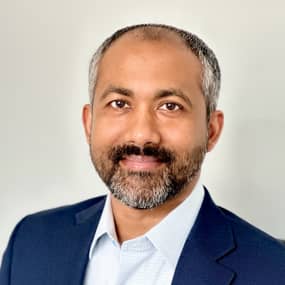
Rashed Din
Co-Founder of Maya Dental
Rashed Din is a strategy consultant–turned investor with roots in investment banking and private equity, who always approached deals like an entrepreneur at heart. Over the last 12 years, he entered dentistry as a private equity investor and ultimately fell in love with the space, dedicating the past 8+ years primarily to building in dental. In the last five years, he’s been deeply embedded in the specialist market—particularly Perio and Oral Surgery—where he partners closely with clinicians and teams. That exposure shaped his strong appreciation for the culture of “authentic specialists,” prioritizing clinical quality, integrity, and collaborative growth.
Connect with Rashed on LinkedIn
Learn more about Maya Dental
The Special Lists, presented by Referral Lab, is the podcast for dentists and dental specialists.
Running a dental practice isn’t easy, and if you’re in private practice, it can sometimes feel like you’re on an island. That’s why finding your people—those who’ve been in your shoes and can share real, lived experience—changes the game.
Referral Lab was built specifically for dental specialists, helping you track, manage, and convert every referral. It’s about improving case acceptance, boosting team performance, and strengthening relationships with referring providers so your whole practice runs smarter.
This spirit of connection fuels The Special Lists podcast. Hosted by the team behind Referral Lab, we bring you wisdom from practice owners and dental professionals, sharing the wins, mistakes, and lessons that shape how they run their businesses today.
Got a question for us? Send us a message at speciallists.com
Transform your referral workflow with Referral Lab, the purpose-built platform for dental specialists to track, manage and convert every referral. Request a demo at referrallab.io
Cameron Full
Co-Founder of Referral Lab
Cameron Full, co-founder of Referral Lab, is a strategic problem-solver with expertise in business management and digital solutions. He combines leadership, creativity, and technology to drive success across various industries.
Connect with Cameron on LinkedIn
Jason Souyias, DDS
Periodontist and Co-Founder of Referral Lab
Dr. Jason Souyias is a periodontist, educator, and co-founder of Referral Lab software. He teaches dentists and hygienists, including as a Pikos Institute faculty member. In his Port Huron private practice, he's known for excellent patient communication and experience. He's passionate about his work and dedicated to helping other dentists.
More about Port Huron, Michigan periodontist Dr. Jason Souyias
Michael Seda, DMD, MS
Periodontist and Co-Developer of Referral Lab
A clinician and entrepreneur, Dr. Seda brings 19 years of private practice experience to his periodontal and implant surgery practice in the San Francisco Bay Area.
Dr. Seda’s interests are rooted in evaluating and influencing private practice management systems in dentistry. He wants to increase practice efficiency, establish a greater sense of collaboration and trust among practice team members, and enhance quality of care and service delivered—all while maximizing and growing profitability.
Through associateship opportunities early in his career, Dr. Seda was exposed to various private practice leadership and business models. He witnessed first-hand inconsistencies in the degree of success and failure owners experienced in private practices. This ignited his passion for learning what empowers practices to thrive and grow successfully while delivering a highly satisfying patient experience.
He is particularly interested in using cutting-edge analytics platforms to measure advanced practice metrics. He leverages these to design data-driven strategies to enhance referral patterns, scheduling systems, case acceptance rates, and other key performance indicators that lead to practice growth and patient satisfaction.
His education spans several disciplines, including a degree in Psychobiology from the University of California, Los Angeles, a Doctorate degree from Harvard University (DMD), and a Master’s degree in Periodontics and Oral Medicine from Columbia University.
More about Bay Area periodontist Dr. Michael Seda
Follow Dr. Seda on Instagram @sedaperio
Co-hosts: Cameron Full, Jason Souyias, DDS & Michael Seda, DDS
Producer: Eva Sheie @ The Axis
Assistant Producers: Mary Ellen Clarkson & Hannah Burkhart
Engineering: Cameron Laird
Theme music: Papa Funk, spring gang
Cover Art: Dan Childs
The Special Lists is a production of The Axis: theaxis.io
Dr. Souyias (00:00):
Thanks for listening to The Special Lists presented by Referral Lab, the podcast for dentists and dental specialists.
Cameron Full (00:10):
And welcome to the next episode of The Special List. I'm here Cameron Full with my co-hosts doctors Michael Seda and Dr. Jason Souyias. Our host this evening is a good friend of mine. Rashed Din. Rash is co-founder of Maya Dental, DPO based in Chicago with partners in para and practices as well as GP practice background in strategic consulting, investment banking, individual banking, private equity, but was an entrepreneur at heart initially came into dental as a PE investor about 12 years ago, but has been very deeply rooted within the dental specialist market perio OS for the last five years. Gained a strong appreciation for the culture of authentic specialists, which I'm actually interested to hear what he means by that. Some notable achievements since Rash is one of the first non dentists and that's why we get along so well is two non dentists in a world of dentistry. Dentists early in his careers just strategy consulted with Accenture working. His main focus was helping a to 25 year experienced mainframe technology team members transition their careers into the worldwide web, which is actually a very interesting thing and then worked on the JP Morgan merger integration with Bank one about 20 years ago. Rash is also an executive committee member of the ADSO, which is very cool. Rash, tell us a little bit about yourself and welcome to the show.
Dr. Souyias (01:44):
Welcome.
Rashed Din (01:45):
Yeah, thanks guys.
Dr. Seda (01:46):
Welcome Rash.
Rashed Din (01:46):
Excited to be here. Thanks for having me. Yeah, so I, I'm from Chicago, kind of grew up here, spent a lot of my time across the country professionally and sometime overseas too, but for me, New York was also a second home. I kind of grew up there all through my early part of my career. I've been fortunate enough to be both Midwest based but have a lot of exposure to both coasts as well. Like you mentioned, I've been in dental for the last decade plus and I used to be a private equity guy. Now I'm more of a dental guy while I still keep a little bit of my private equity roots and we've been through a lot in the space last 10 years or so and everyone else, we're all going through it.
Dr. Seda (02:36):
Rosh, maybe for everyone that doesn't know you, what was it about dental? How did you land in dental after roaming the wild for so many years?
Rashed Din (02:47):
Honestly, I just really enjoyed every time I came to a dental conference or partner, any of the sponsored events, I found myself getting along really well with some of the practice owners and it was earlier in the ecosystem of DSOs, but Michael, I really enjoyed the people. I also saw the strong future in it in different market segments where other spaces you really have to learn a little bit more. There's a lot more closed-minded. Even today, for example at the ADSO, we have a lot of members who are really big, but we have a very sharing, giving community just like this where people actually want to help each other and there's a very collaborative environment mindset that's really drew me to the space.
Cameron Full (03:43):
I think what's also interesting, and this is one of the reasons that Rash and I over the last five years have started to, we get together regularly, whether it's lunch or a bite to eat or dental meetings, a lot of that is because we're non-dentist but professionals inside the dental space and so we often share engagement and talk about what's happening on the boots on the ground because both of us maintain a pretty boots on the ground kind of ethos with our respective organizations. So Rash, the specialist, the nature of the game is to talk about your special list. You did a wonderful job prepping. Let's talk about that first time on your list. Everyone says that culture is important, but what does that really mean?
Rashed Din (04:27):
Yeah, it's something that is always in every presentation. We believe in culture, I care about culture. It's something that prior to when I even first started Maya and we did our first offices, we all wanted to have good culture, but until you're in the middle of it, you don't really know what that means. But to me, culture is also what defines the behaviors that you want implemented and you want recognized as a common core characteristics of your organization, of your team, all of those aspects. I think it really strikes the transcend when you go back to like, Hey, what are your core values? How do you think about your core values? Four years in we finally said, okay, we have to establish very, very strong core values, so before we talk to anybody, they know what we're about and it hasn't changed since then. So for us it was start with care and say you really have to focus on patient care, you have to have compassion how you think about it and you have to have collaboration. But then right there it's like that's very complicated. It means a lot for different people, but at least you start at some realm and then you dig deeper into it. But it also then comes down to you have to have alignment with the people that you work with.
Cameron Full (05:59):
And one of the reasons I wanted you to come on was because your perspective is unique. You have more of a strategic, and I don't want to say top down, that's not right, but more of a strategic or 30,000 foot view of often some of the stuff that we're dealing with on a very regular basis. So when we talk about culture, a lot of our listeners are going to thinking about the cultures of their practices. When you think about the culture of your organization, how has that changed? Has it been harder to maintain that culture as you've grown or I'm just curious how that's changed over time.
Rashed Din (06:41):
It is always continually changing I think, but certain things stay very consistent for us. We only care about high quality care, clinical care, and we won't dip down below that, so we won't compromise on certain aspects of that. But as long as you really keep at heart what your core values are, and I think for me the list is more around if I had learned early on that I also want to focus on the opportunities that align with my own core values and culture, and I think that's, as a younger person in business, I looked at everything and it's like, okay, any opportunity, EBITDA numbers or value, it's like you looked at everything and then all of a sudden after you're in the middle of a lot of it, you say, okay, you know what? Maybe I want to focus on this particular type of characteristic learned. I'm good at that. And you don't want to go into too many other things outside of your sweet spot. Once you start doing that, that's Cameron when your culture starts to change.
Dr. Souyias (07:57):
So besides not working with someone or deciding not to partner with someone, I know every organization out there says, oh, clinical care is one of our core value and even the ones that don't really believe it, I know your practices, I know the people that work with you, you really do believe it. How do you as a leader of a large organization get that belief to filter down to an assistant in rural Indiana?
Rashed Din (08:25):
It's always hard, right? It's always hard period, but I think it gets easier as you live it yourself. And if the clinical leaders, the staff, if the people who have been there for a long time demonstrate those same qualities that you look for, I think that's the first thing that you need because we're the leaders. If we're the ones who take shortcuts or don't completely follow that, that's the first part you're going to lose fast.
Dr. Seda (08:57):
So leading by example.
Rashed Din (08:59):
Absolutely leading by example, but on top of that also showing the pathway of where you draw the line. So absolutely leading by example.
Dr. Souyias (09:08):
But it sounds like you also said in there, having a management team is an important part of that. You have to have people that distribute those ideas. You can't be everywhere all at once.
Rashed Din (09:19):
Leaders have to at some level express what they care about and then I'll be the first to tell you integrating or delivering on that is the hard part and none of us can do it. We need help to do it.
Cameron Full (09:35):
I think again, going back to what you said is aligning with yourself with practices and partners that overlap on the 80% or whatever your barometer is. I think that ultimately makes it easier to deploy culture aligning initiatives or whatever because they're in, because they see eye to eye with you out of the gate. That's an interesting point is I never thought about it that way, is aligning early so that you know you're not going to have necessarily issues in the future or at least not prohibit them from happening, but it make it a little bit more and even when there is conflict that there is a mutual alignment out of the gate that there's going to be a potential for resolution then because you do have that culture overlap. Let's move on to number two here. Let's talk about finance, and that's one of the things that we've spent a lot of time together talking about is keeping it simple, simple enough for everyone to understand because we know that oftentimes it gets real muddy and all the equity conversation and all the valuation stuff. And so let's dabble into this here a little bit and talk about your perspective on finance in the space.
Rashed Din (10:54):
As a former finance guy, it's very easy for us to,
Cameron Full (10:58):
What does that even mean?
Rashed Din (11:01):
I honestly had to force myself to forget a lot of things because it comes up in conversations and then I used to always catch myself talking about that, and I look around the room and usually even my old teammates would be like, what the hell did you just say? None of us understood that
Dr. Souyias (11:20):
People glaze over, right? Yeah.
Rashed Din (11:22):
It's like, okay, fair enough, fair enough. My experience was that no matter how you try to put something forward that you believe in, a lot of times it's really more around what others actually comprehend or value. So I think it's both of those things, right? Even if they don't comprehend it, or even if they do fully understand it and comprehend it, they have to value it.
Cameron Full (11:51):
They have to value it.
Rashed Din (11:52):
If they don't value it, then no matter how good of a deal you put in front of people
Cameron Full (11:56):
Won't matter.
Rashed Din (11:57):
The hard truth that I learned, shame on me, but at the end of the day, true cash on cash value is really what matters, and that's really what you can show people at the end of the day. And I think it's better to just keep things as simple as possible, but it's really hard. It's hard to keep. You guys know that, right? Jason, we've talked about this before in years past, it's really hard to simplify very complex things.
Dr. Souyias (12:26):
Cool, and sometimes it's effectiveness. For a long time in our practice, before I was the owner, we never gave raises. We only gave bonuses based on performance of the practice. And what happened is people stopped valuing those bonuses so it wasn't achieving the desired effect because we're like, we were like, guys, look, you made this much at the end of the year. And they're like, yeah, but I didn't get it until the end of the year, right? Paycheck to paycheck was the struggle. And so you have to be mindful of those things, even on the employee level of what do the people value that achieves its purpose and makes things actually happen the way we intend them to happen.
Cameron Full (13:14):
So as you've been investing in the dental space for quite some time, obviously this means that how you originally presented your deals probably looks a little bit different now, right?
Rashed Din (13:27):
Yeah, so I think the value ecosystem has changed in dental, right? 10 years ago it was all about consolidation as in it's a rollup strategy. You put 10 together, 20 together, and it's worth more than two are. That was enough about five years ago. You had the combination of you have to have better systems and organic growth that can result from those systems. And at the same time you had partnerships evolve where people looked at you need partnership upside and alignment.
Cameron Full (14:08):
And now you're saying culture is a value lever.
Rashed Din (14:11):
So I think culture's been that for the last several years. It's just more valued now. But I think from what we're seeing in the industry is that before everyone was motivated by equity upside, and so all of our deals were structured that way where it's the equity that you looked at, you buy in to a platform or to a group, and equity was a key driver. DSOs didn't really have cashflow be as important, and cashflow is really not something you get to keep going forward. And we're seeing the negative aspects of that now.
Cameron Full (14:52):
Sure.
Rashed Din (14:52):
Because equity transactions are not happening in the manner that we expected to be three, four years ago obviously, and it's caused a lot of stress on the equity return. So if that was the only value that we all had, it's hard to go back and revisit, but it's a harsh reality. We all have to face top down because I think alignment's the hardest part right now.
Dr. Souyias (15:19):
What's really interesting to me though is the industry as a whole is throwing these equity numbers, like a friend of mine who's a couple years older than me, everybody in our area has been getting letters from this company that will represent you in going to market to DSOs. And he sits down and he shows me this letter and he's like, man, look at this. And they showed him what, they gave him an estimation of what the equity's going to be in five years, and he's like, Jay, I never dreamed my practice could ever bring me numbers like this. And I was like, well, sit down and do the math for a second, and the equity is great, but like you said in the industry, it's not happening as commonly anymore that they're getting these big multiples. And I said, well do the math. The only thing that's guaranteed is what you get upfront plus what you're paid during, and I said, so if you got what you paid up front or you continued to work for five more years and then sold your practice at a regular sale price to an associate or another doctor, where would you be further ahead if you discount the equity for a second? And he was definitely, he's like, oh yeah, I'm further ahead if I do work for a couple more years and then sell it to a private dentist. Now if that equity lottery ticket hits, it wasn't even close, the equity alone was $10 million for this person. And it's like, man, he's like, I never dreamed things could be like this. But again, for someone who thankfully because of the things we're involved in, we know how the industry's going, but for someone like that, he has no clue. He just knows what this company's telling him that like, oh, in five years I'm going to have an extra 10 million on top of what they gave me upfront for my practice and doesn't know that that's a bit of a gamble. How do you think that, is that affecting these deals in one-on-ones or is it, tell me what you see this happening in the industry.
Rashed Din (17:21):
So I think the problem is markets change over time, right?
Dr. Souyias (17:25):
A hundred percent.
Rashed Din (17:26):
What happened or how things were put together, let's say pre or post COVID, the couple of years prior to that were based on the information we had at that point in time and deals were happening every 2, 3, 4 years and you were getting pretty substantial multiples, but where we are today is we have a significant dislocation between expectations and where the markets are, right? It's taken a lot of time for that to flush out. And so I think what's lost in all of this, the opportunity for practices are better now than ever before. Then on top of that, we have a lot of workflow innovation that's happening that is impacting everybody unilaterally. I'm not saying robots are going to take over and manage the practice, but I am saying we have opportunities that we never did before to create efficiencies in practices and just in our patient engagement, patients are evolving with AI as well with the whole aspect of it. So it's just not closely aligned to where the industry is yet. I think we're still going off of three, four years ago, numbers and data. We need to figure out how we can transition from where we are today.
Dr. Souyias (18:52):
Well, and even on the practice level, I think this spins really nicely into your next point, right? Cameron and I were just talking about this afternoon also, which is so funny timing of this stuff. How do you come in as a company, a management company or partnership organization, and you want to make changes to a practice, but you try to ballast that this open-ended autonomy versus structured autonomy. How do you get practices that you see, you come in, you see them and you're like, man, if we just changed a few things, we could do this, but how does that balance those two sides?
Rashed Din (19:35):
In my experience, having now gone through both iterations of it in a hybrid iteration of it, you really have to figure out this concept of polarity, and that's not my word. It's a word that very smart people have shared with me recently, and it's basically the aspect of dipping into the benefits of both autonomy and then also being in a position where you can follow set systems and structure on our end. For example, I get this question from doctors all the time. It's like, Hey, are you going to change the way I practice dentistry or specialty or perio or whatever? And believe me when I say most everyone will not ever want to change the way a doctor practices dentistry, I don't think doctors want to do that either. They just want to influence based on what's commonly practiced and just have people be exposed to it.
Cameron Full (20:38):
It's such a complicated thing because nobody, that's why the doctors join because they need to try to exit, right? They are looking for a way out or they're looking for managerial support they weren't able to get otherwise. And yet with that acknowledgement that I need support comes hidden in that little package is like, I still want to do what I want to do. And so it's a very complicated thing because when it comes to patient care, obviously the doctor knows best until all of a sudden the practice is losing money and then all of a sudden clinical partners or whatever from the corporate body step in and say, Hey, what's going on here? You're seeing a lot of patients, you're not diagnosing any care. And it's like, well, the for referral patterns have changed and all these types of things that come up. And I think it's like this really hard spot that this relationship that happens because of this relationship that I don't believe is easy to deal with. And that's actually what Jason and I were really talking about today was how do you manage that? Again, rash and our are non-clinicians. How do we say, Hey, data here says you're not diagnosing any treatment. What's up?
Dr. Souyias (22:08):
What's up?
Cameron Full (22:08):
What's up? And so how do you handle that in your orgs? R? Have you come across those? It's one thing to say managerial, Hey, you're not following up with patients. You're not offering third party financing the way, that's all the easy stuff. Respectful, right? Respectfully, but from the other stuff that's clinical. How do you bridge that conversation?
Rashed Din (22:30):
For us been, we rely heavily on our doctor partners to be aligned with that at the beginning, right? Hey,
Cameron Full (22:42):
Again, sort back to the culture thing. Yeah,
Rashed Din (22:46):
We believe in we're not going to overtreat anybody. What we're not going to do is we're not going to not treat people because of finances. We're still going to diagnose the way we see it, as long as everyone's on the same page as to saying, okay, there's a clinical aspect and there's a production aspect. We just have to make sure the clinical aspect we're all aligned on, which includes what you just mentioned around diagnosis and making sure that that's in place. Now, that's what you really need as organizations to have very strong clinical leaders that understand that.
Dr. Souyias (23:26):
That's a good point.
Rashed Din (23:27):
That understand that.
Cameron Full (23:28):
Well, and I think too, my own experience, obviously with the software, I get to have a lot of conversations with a lot of variety of types of practices, and there's practices that are extremely, they're not super busy practices from a new patient perspective, but they're incredibly robust in their treatment planning and presentation when they have a little bit of an off week or month or just in new patient volume or in the doctor, not treatment, planning, diagnosing. I mean, that can negatively affect the organization pretty rapidly because of the average case value coming off those patients. So it's just an interesting way when you go back to the original conversation around culture, it makes sense now where you led with that, and I didn't think of it this way and how it dramatically affects all of these things that we're talking about, the polarity, how you have to be aligned with the financials. Financials are an extension of the culture. So let's talk a little bit about your next topic here, which is the implementation of realistic budgets. So talk a little bit about how hard it is to deploy a budget into a practice that's been around for 50 years with doctors that never had a budget
Dr. Souyias (24:47):
With dental dentists and doctors? This is never a problem, I'm sure.
Rashed Din (24:52):
Ironically, as someone who does come from a finance background, I did early on focus less on financials because autonomy and not wanting to step on shoes and not wanting to make it seem as though all we care about is money and all we care about is profits. The thing we always focused on was having better schedules and higher production. So we were very growth focused, and that's where our focus was production numbers, collection numbers, and we set goals around that. We didn't set as many goals on profitability. We did not as many goals on staff productivity or even budgets when it came to saying, Hey, let's make sure we put spending budgets. Those are things that I feel like, and back to the autonomy versus the structure autonomy as we have more structure, that's some things you want to address I think upfront and say, Hey, this is a p and l that we decided on based on our cost structure, and this is how we want to maybe manage the business together. There's a lot more openness and alignment when it comes to that, right?
Cameron Full (26:08):
Which is a good opportunity for us to segue into our last bit, which is partially how I was introduced to Rosh was I was lecturing in a mastermind group about five years ago, Rosh, give or take. And so Rosh is one of the strongest networkers of anyone I know. He's got an incredible network. He's at almost every event I could ever think of being at, and he knows everybody there. And so one of the cool things is he's always like, Hey, who can I help introduce you to? Or What are you looking at? What do you need help with? Let me see who I can get to help you with that. It's one of his, not just strengths, but incredible character attributes is that he's always so giving with all of the time he's developed with his network, which as we were talking about today at lunch, that's a lot of work. It takes a lot of time, and you have to be the same person all day every day to earn the trust of such a large book of individuals. And so let's talk a little bit about that rush as our closing item is what it looks like to really dedicate yourself to developing that network.
Rashed Din (27:21):
I think too many friendships, relationships are based on expectations, and I had to learn the hard way that if you really want a successful relationship, you shouldn't have expectations, but at the same time, you really do need to value your time, so you need to value your time with people who are developing certain aspects of your life. And I've learned over time from mentors of mine that your relationships will evolve over time, but in an industry like ours or even in our personal lives, we still shouldn't be shy about continuing to build our network. You have your boys and you have your friends you hang out with, but as we grow in our lives, there's a different group of people that we can learn from, collaborate from, and everyone's more open than not to embrace that.
Cameron Full (28:27):
We had that conversation on a Zoom how many years ago, Rosh, when we were talking about anchors?
Rashed Din (28:33):
Yeah, it was back in when your thesis, right?
Cameron Full (28:36):
Yeah. It was my dissertation back in the day, and we had this conversation about relationship anchors, and we come across these individuals through expanding your network that are anchors to other people, are ports to other people. And so those individuals are individuals that not just open the doors to further relationships, but people also centralize around them because of the type of people they are. You're an anchor for sure, but I think that's cool about being, yeah, how you put it back in the day was a tremendous compliment, and the reality is that people centralize around anchors, these relationship anchors or these networking anchors. And so do you think that your network building has been a major component of your success in dentistry?
Rashed Din (29:33):
I think it's part of my identity, but it hasn't necessarily impacted the stuff I've done. And so I do think it's part of who you become in terms of where your core values again come from.
Cameron Full (29:50):
Sure.
Rashed Din (29:52):
But I feel like for me, the network you have or the position you have in the industry is not a measure of success. It's more about how that impacts you a little bit. Just perspective. I used to have a lot of FOMO when it comes to not participating in all these hundreds of offices and 50 offices and a lot of growth, and this is a word I just filed now, you guys probably already know this, but now I feel like I have jomo so joy of missing out on some of that, but I didn't know that back then. But that said, even all those experiences that you have from people, you're able to impact each other. And that's I think what really differentiates dental is that we're still at that point where no matter what, just seeing it with you guys, seeing the three of you and the networks that you have, at some point, at some level, you don't compete, but there's a lot of collaboration there. But even within the referrals that come together, right? At some level, referrals, our referrals compete with each other, but when they're in the study club, they're not competing. They're actually learning from each other.
Cameron Full (31:18):
I think I'm going to ask the producers to name the episode Jomo.
Dr. Souyias (31:21):
Jomo. Yeah. I love that. That is such a great line. It's amazing.
Cameron Full (31:28):
Oh, man. Well, that's such a wonderful, I love that. I didn't know anything about Jomo until Rash told me, and I was like, man, I never thought of it that way. Everybody's so worried about missing out of the big thing or missing out of the big equity transactions and whatever. And the reality is that there's a lot to be said about sticking to your core, doing what's you're built to do, and knowing that the right thing's going to come across at the right time, whether it's the right person, the right network, or the right deal. And so Rash, I super grateful for you to join us on the show today, and I look forward to our next conversation and our next launch. And thanks for joining us on The Special List.
Dr. Souyias (32:13):
Thanks.
Rashed Din (32:14):
Likewise. Likewise.
Dr. Seda (32:14):
Thanks Rash. Great to see you.
Dr. Souyias (32:16):
Thanks for listening to The Special Lists presented by Referral Lab, the podcast for dentists and dental specialists featuring a special list from a specialist. Got a question for us? Send us a message at speciallists.com with two Ls. Transform your referral workflow with Referral Lab, the purpose-built platform for dental specialists to track, manage, and convert every referral. Request a demo at referrallab.io.
Co-Founder of Maya Dental
Rashed Din is a strategy consultant–turned investor with roots in investment banking and private equity, who always approached deals like an entrepreneur at heart. Over the last 12 years, he entered dentistry as a private equity investor and ultimately fell in love with the space, dedicating the past 8+ years primarily to building in dental. In the last five years, he’s been deeply embedded in the specialist market—particularly Perio and Oral Surgery—where he partners closely with clinicians and teams. That exposure shaped his strong appreciation for the culture of “authentic specialists,” prioritizing clinical quality, integrity, and collaborative growth.