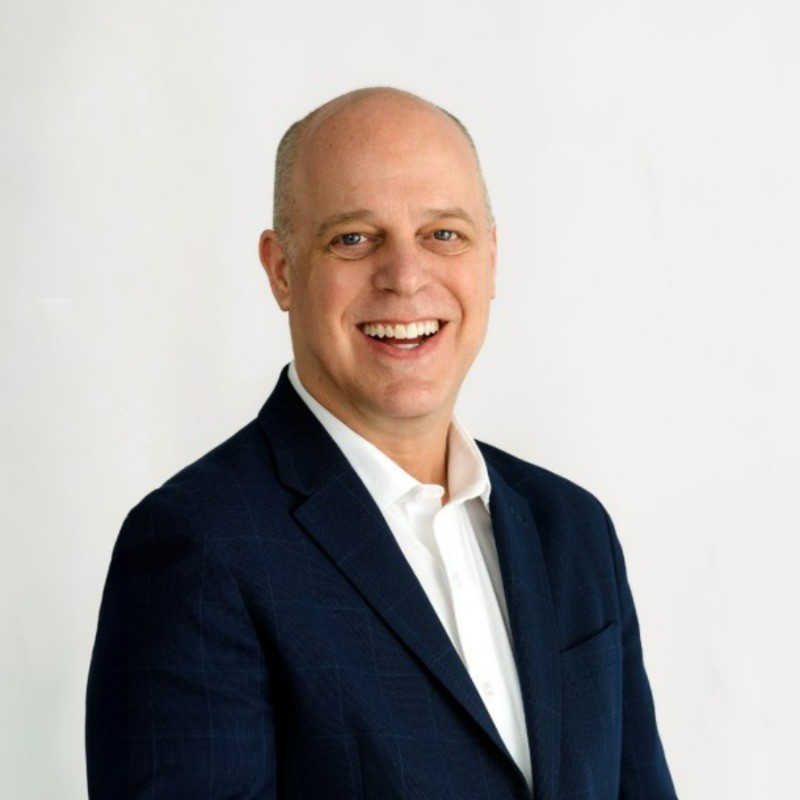
Special List #15: Business Blind Spots Dentists Don’t Learn in School with Mike Gergen



Dentistry looks polished from the outside, but behind the scenes, it’s harder, messier, and more human than most people realize.
Dental industry veteran Mike Gergen believes the key to success is lifelong education, culture that holds up under pressure, and leaders willing to admit that dentistry is both a clinical craft and a business.
Hear why “just go to the course” might be the best advice dentists get, how friction in patient experience is costing practices more than they think, and why refusing to evolve risks turning dentistry into a commodity.
Get candid insights on DSOs, leadership fatigue, patient engagement, and what it really takes to build a practice people want to be part of on both sides of the chair.
GUEST
Mike Gergen
CEO of EviDent Alliance
Mike Gergen is a seasoned dental industry executive and growth strategist known for driving transformation, culture, profitability, and strategic exits. Throughout his career, he has had the opportunity to know and work with some of the best dentists in the country.
Connect with Mike Gergen on LinkedIn
Learn more about EviDent Alliance
The Special Lists, presented by Referral Lab, is the podcast for dentists and dental specialists.
Running a dental practice isn’t easy, and if you’re in private practice, it can sometimes feel like you’re on an island. That’s why finding your people—those who’ve been in your shoes and can share real, lived experience—changes the game.
Referral Lab was built specifically for dental specialists, helping you track, manage, and convert every referral. It’s about improving case acceptance, boosting team performance, and strengthening relationships with referring providers so your whole practice runs smarter.
This spirit of connection fuels The Special Lists podcast. Hosted by the team behind Referral Lab, we bring you wisdom from practice owners and dental professionals, sharing the wins, mistakes, and lessons that shape how they run their businesses today.
Got a question for us? Send us a message at speciallists.com
Transform your referral workflow with Referral Lab, the purpose-built platform for dental specialists to track, manage and convert every referral. Request a demo at referrallab.io
Cameron Full
Co-Founder of Referral Lab
Cameron Full, co-founder of Referral Lab, is a strategic problem-solver with expertise in business management and digital solutions. He combines leadership, creativity, and technology to drive success across various industries.
Connect with Cameron on LinkedIn
Jason Souyias, DDS
Periodontist and Co-Founder of Referral Lab
Dr. Jason Souyias is a periodontist, educator, and co-founder of Referral Lab software. He teaches dentists and hygienists, including as a Pikos Institute faculty member. In his Port Huron private practice, he's known for excellent patient communication and experience. He's passionate about his work and dedicated to helping other dentists.
More about Port Huron, Michigan periodontist Dr. Jason Souyias
Michael Seda, DMD, MS
Periodontist and Co-Developer of Referral Lab
A clinician and entrepreneur, Dr. Seda brings 19 years of private practice experience to his periodontal and implant surgery practice in the San Francisco Bay Area.
Dr. Seda’s interests are rooted in evaluating and influencing private practice management systems in dentistry. He wants to increase practice efficiency, establish a greater sense of collaboration and trust among practice team members, and enhance quality of care and service delivered—all while maximizing and growing profitability.
Through associateship opportunities early in his career, Dr. Seda was exposed to various private practice leadership and business models. He witnessed first-hand inconsistencies in the degree of success and failure owners experienced in private practices. This ignited his passion for learning what empowers practices to thrive and grow successfully while delivering a highly satisfying patient experience.
He is particularly interested in using cutting-edge analytics platforms to measure advanced practice metrics. He leverages these to design data-driven strategies to enhance referral patterns, scheduling systems, case acceptance rates, and other key performance indicators that lead to practice growth and patient satisfaction.
His education spans several disciplines, including a degree in Psychobiology from the University of California, Los Angeles, a Doctorate degree from Harvard University (DMD), and a Master’s degree in Periodontics and Oral Medicine from Columbia University.
More about Bay Area periodontist Dr. Michael Seda
Follow Dr. Seda on Instagram @sedaperio
Co-hosts: Cameron Full, Jason Souyias, DDS & Michael Seda, DDS
Producer: Eva Sheie @ The Axis
Assistant Producers: Mary Ellen Clarkson & Hannah Burkhart
Engineering: Cameron Laird
Theme music: Papa Funk, spring gang
Cover Art: Dan Childs
The Special Lists is a production of The Axis: theaxis.io
Dr. Souyias (00:00):
Thanks for listening to The Special Lists presented by Referral Lab, the podcast for dentists and dental specialists. Good evening and welcome to another episode of The Special List. Tonight I'm joined with my co-host, Dr. Michael Seda.
Dr. Seda (00:17):
Present.
Dr. Souyias (00:19):
Dr. Cameron Full.
Cameron Full (00:21):
I'm here.
Dr. Souyias (00:21):
And we are pleased to have our wonderful special guest bringing his specialist to tonight's program, Mike Gergen. I'm going to introduce Mike. Mike is a seasoned dental industry executive and growth strategist, known for driving transformation, culture, profitability, and strategic exit. Throughout his career, he's had the opportunity to know and works with some of the best dentists in the country. He's passionate about helping dentists achieve their goals and be happy in practice. He's always had a weird enthusiasm for dental education the way I've gotten to know him as CEO of Seattle Study Club in the past and the impact that that education has had on dentists, some of the most happy and successful people he has known are fully immersed into CE and know how to implement new technologies. Please join me in welcoming Mike Gergen.
Cameron Full (01:14):
Come on, Mike.
Dr. Souyias (01:14):
Nice to have you. Woohoo.
Mike Gergen (01:16):
Hey, thanks for having me. Obviously, all the cool guys on this podcast are named Mike, so Dr. Seda.
Dr. Souyias (01:23):
They might be a little cooler than we are. It's okay. We'll deal with it. Mike, go ahead and tell us a little. Like I said, I got to know you when you were CEO of Seattle Study Club, fabulous organization that that is, and you ran that for many years as CEO. Tell us a little bit about your background in dentistry and elaborate a little bit on your past.
Mike Gergen (01:45):
Yeah, great. Thanks for having me. So I've been in dentistry for about 30 years now, and just luckily in Dumbly, fell into it by actually at the time following up with an ad in the newspaper. So I've always been in the commercial side, started off with the dental implant company and really had unbelievable mentors there that really helped me advance my career, understand dentistry a lot more. And Jason, kind of like you said, I have this weird affinity for dental education throughout my career. People have always been like, man, why are you in the lecture hall listening to the lectures instead of being out boozing or hanging out with everybody else? And I'm like, I just love being in here and listening to what dents are learning, understanding where the gaps are and really trying to help them bridge those things together. As I've gone throughout my career really, I've had a wonderful opportunity to meet some really great dentists and advance my career and really help them succeed as well.
Dr. Souyias (02:41):
When you were part of that implant company, you said education took a forefront. How do you live that on your daily life with your roles that you have now?
Mike Gergen (02:52):
So I'm with a company called Evident Alliance. Now we're A DSO based out of the Seattle area, 23 practices, and we're interdisciplinary. Okay, so we have perio, gp, and Endo. So we don't have all specialties, but we've got three of them. And really through what I've learned in education is that first of all, specialists are at the core of so much of the dentistry that's done right, that you've got to become really, really good. But working with your specialist and the referral is so important just in communication. So how do you make sure that when the patient is referred over to a specialist, that they're prepped, they're ready to go. So the specialist is able to say, gosh, cam sent you over. He's such a great dentist, we really enjoy him. So you're building him up as well. And really that education for me today looks like a number of things. A lot of CE we offer to our dentists, we get together on a monthly basis just for best practice. Hey Jason, what are you doing in your practice? Hey Mike, what are you doing in your practice? What's working and what's not working? So we talk about in our group about being better together. We learn from each other continually. So we learn from outside sources, continued education. We learn from internal sources each other as well.
Dr. Souyias (04:04):
That's fantastic. And that education, there's no other way. When you finish dental school, you think like, oh, I finished my education, it's completed. It's just the start guys, I joke all the time. I said, dental school taught me how not to kill someone. That's it. The rest of it was up to me. The rest of it was up to me. That's it. You're barely competent to go out there and not hurt people. And then learning how to do things better, how to do things well. We've talked a lot on this show about having mastermind organizations, which is what you're talking about, best practices and sharing that. Man, if those of you that are listening have an opportunity to start one or create one or join one, there's nothing better than a mastermind group.
Mike Gergen (04:52):
And I always think it's interesting whenever you go to these events, you see the same people and it's people on the same journey with you. Trying to always become better makes you feel good because you see people. So it's comforting. But also it's great to see so many people on the same path just learning and always be continually getting better.
Cameron Full (05:10):
The interesting thing about what you said, Mike and I didn't know was similarly when I started to get back involved with dentistry about almost about a decade ago, my first CE was at a Mike Picos course and jumping straight into some of that surgical stuff. And I was like, wow, this is incredible. And over the course of the last great number of years, I spent a lot of time not just going to events, but actually sitting in on the lectures. And I know that the employees that the team members that we have, they don't want to hear that we want them at the tables. But the reality is that when we better understand how we all work, then we know how we can better serve you as nonclinical support. I mean, ultimately what Mike, you and I are. And so when I got the great fortune of meeting you, was it about a year, year and a half ago, maybe Seattle? And you and I hadn't known each other yet, and Christina introduced us in the hallway and we ended up chatting for a couple minutes, and then we ended up spending what, an hour or two together later on.
Mike Gergen (06:17):
I was drilling you with questions.
Cameron Full (06:20):
And I was like, man, this guy gets it. And it was at that point that we were actually already thinking about a podcast, and I didn't tell you that yet, but I said, when this comes around, I'm getting this guy on. Because that type of engagement, I mean our users and our listeners really need to hear not just from our clinical friends, but also people like you and me, that our job and our day exists to streamline the whole process to make the clinical team run better. The administrative team lack and the entire function works more smoothly. And that's the world that you and I live in. Anyway, just food for that. I didn't know that you started in the CE function that we're passionate about that like I am too.
Mike Gergen (07:02):
And just along with that too, you and I don't exist if dentists don't exist. So if we're not providing value, helping them to make their lives easier, better, or with solutions, they don't need the people like us. So you're absolutely right. We go hand in hand there. We got to provide value every single day. Don't tell them that though.
Dr. Seda (07:21):
Well, I will say as one of those dentists, one thing that I think is very common, probably too common is as dentists, we get really kind of myopic about the things that we're trying to fix. And sometimes it's hard to see the big picture. And that's where nonclinical professionals can really help sharpen our blade. It's more than just how do you fix a tooth? How do you put in an implant? How do I manage a big group of people that are happy and productive and contributing in a way that they want? Or what are the long-term goals of the business? And a lot of times, those aren't things that are taught in dental education and people that come from outside of dentistry have this fresh kind of exuberance about how to approach those things. And it just makes it so much easier for us to collaborate and enjoy what we're doing because of
Dr. Souyias (08:21):
It's absolutely true. If you can be the best clinician in the world and run a terrible practice and not be able to show the world your talent and vice versa. If you're a terrible clinician, but have a wonderful business, you need both sides of it. There are two sides of the same coin. And it's so wonderful when we have incredible support people like Cameron and Mike that can actually elevate our practices and teach us things that we didn't know otherwise. And Cam and I have talked about this extensively, like cross industry support, your background. It's in dentistry, but not in clinical dentistry. It's in the business of dentistry, right? And so bringing in that support that you started with at an implant company all those years ago gives us such insight that we don't typically find just working on patients.
Mike Gergen (09:14):
I always find a lot of times dentists, they want to do analysis by paralysis. Which course should I take? And they'll have a list of 50 different courses and they're looking for someone to validate it. It's like I always tell them, just go, man, just go to a course. It's going to make you better find out if your people are there or not. But I guarantee you, no matter what you do, you're going to become a better dentist. You're going to become a better leader. You're going to become a better person. Just go. And sure enough, you'll go and find people that you like, people that you don't like, and all of a sudden that journey starts. So just start it and go.
Dr. Seda (09:49):
So are we starting on the list?
Dr. Souyias (09:50):
That that's
Dr. Seda (09:51):
Item number one.
Dr. Souyias (09:54):
So to my failure of introduction on that part, that whole topic was number one on Mike's list. So
Mike Gergen (10:01):
Thanks for the,
Dr. Souyias (10:02):
Yeah, sorry. Now we'll say that was section number one of the list.
Dr. Seda (10:10):
And to drive that point home, sorry, Souyias.
Dr. Souyias (10:11):
No, go ahead.
Dr. Seda (10:13):
To Mike's point, it's not just about what you're learning academically in these courses. It's the collaboration, the empathizing with everyone around you, the contacts that you make that lead to ongoing conversations and relationships. Dentistry can be this island, we all talk about it, right? You're in your office, you're there every day, and you've got to find ways of branching out and finding people that you can collaborate with. I mean, I look at my relationship with Jason and Cameron and it started through me. Pardon?
Cameron Full (10:46):
It's a good relationship
Dr. Seda (10:48):
At times. Times.
Cameron Full (10:49):
It works for you.
Dr. Seda (10:52):
At times.
Dr. Souyias (10:52):
It works for us more than him most of the time, right?
Dr. Seda (10:55):
But it makes things so much more dynamic and fun, and I don't feel like I'm out there alone on some planet. The galaxy becomes smaller. And so yeah, to your point, the importance of education huge.
Cameron Full (11:13):
I think that what Mike brings is an interesting perspective as the CEO of a moderate size group. Mike, a lot of times DSOs are trying to find out ways to spend less to be more efficient. And good CE isn't cheap. So how do you tackle that organizationally? You come from fundamentally knowing how valuable CE is, you've got to essentially sell that to the shareholders that this is going to positively affect your revenue. So what's the conversation? I don't mean to put you on the spot, it's just an interesting thing I just thought of.
Mike Gergen (11:57):
Yeah, it's really interesting. So there's two different points. So as CEO, you're always looking out for the financial viability of the company. So you've got to make sure that that's in there. But I was really fortunate this group that we're with is really dedicated to CE and to always becoming better. So when we have these conversations, it's easy. It's like, so-and-so wants to go do this course. What does that look like? Okay, here's financially what we're going to do. What are the deliverables? Yeah, let's invest in that. So we always look at CE as an investment in the person that they're going to become better. So we have all kinds of CE opportunities. So we have everything from our state dental association, we have CE internally. Our perio group runs these really amazing study clubs as well. And plus we offer them opportunities to go to outside to get on a plane and go see the latest and greatest and everything like that.
(12:47):
As a CEO, you just really look at it and say, okay, if we're going to send this person A, are they the right person? B, can they come back and help other people along the path? Or even better yet, can they become an expert in this area that within all of our offices, we refer to this one person. So for example, our offices are all geographically pretty close to each other. So some of our gps are really interested in sleep. So we don't send everyone to sleep. We send one or two people to sleep, and then we say, Hey, if I'm in this one location, I've a sleep patient, let's send it over to this other practice. So we allow people to be experts where their passion is as well.
Dr. Souyias (13:25):
And I'm going to bet that the flip side of that is better dentist retention within your organization.
Mike Gergen (13:33):
Correct. Correct.
Dr. Souyias (13:34):
Because like you said, they realize, wow, they're investing in me and helping me become better at what I do and not only becoming better at I do, but then supporting me with the patient load to do it.
Cameron Full (13:45):
Correct.
Dr. Souyias (13:46):
Yep. That's wonderful,
Cameron Full (13:47):
Man, that geographic element really adds to your ability to invest in ce. I mean, that's where I think maybe some of the larger groups struggle then is they can't have that. They can't bring that point.
Mike Gergen (14:02):
And the nice thing too is because we're a little bit hub and spoke with specialists in the middle and GPS around it, we get to learn together. So it's a shared journey. So typically with our ce, while there's specific CE for specialists or for gps, when we have opportunities for them to go together, we'd love that. We want specialists and the gps right there side by side.
Dr. Souyias (14:22):
Seda, have you ever done that? Have you ever taken dentists with you to a CE course to do together?
Mike Gergen (14:27):
I have.
Dr. Souyias (14:27):
How did that work out?
Dr. Seda (14:28):
On multiple fronts. First of all, it streamlines our workflow. We understand each other better. It's easier to collaborate on cases. And then on top of that, it really underlines the foundation of the relationship. You see each other as people. It helps develop mutual respect. I found that the people that I travel with for CE in terms of my restorative partners, tend to be the ones that I've had the longest relationships with, the most fulfilling relationships with. And it becomes this kind of blend of personal and professional together. The lines get blurred, and they're the most satisfying relationships, really. And there might be a confounding factor there, perhaps. Maybe you only choose people that you may think are the most fun to travel with, and those are the people you connect with. Anyway, I'm not sure, but I think it's a great thing to do. And each year I try to pick one or two partners to do it with, and I can't ever remember having a negative experience. Have you done that regularly?
Dr. Souyias (15:42):
Not regularly, but a few times through my career. And like you said, always been an incredibly positive experience.
Dr. Seda (15:50):
And a few times it hasn't even been something that we're learning related to dentistry. It could be something more on a business venture or just something totally outside of the day-to-day clinical aspects of dentistry. But just to Mike's point, just learning with people creates this environment of mutual affinity, mutual respect, common ground that seems to develop some sort of purpose along with what you you're doing as the years go by. And so, yeah, it's a great way, I think, to connect.
Dr. Souyias (16:28):
Yeah. Well, let's move on to the second point on Mike's list. Mission culture. Never give up on your vision of where you want to go, and who is on that ride to get you there? Mike, take it away.
Mike Gergen (16:41):
So I've listened to a lot of your guys' podcasts and everyone's talking about culture and mission, vision and values, but I think what nobody talks about a lot is when those get tested, what do you do? Right? It's one thing to have it. It's one thing to kind of preach it, but what is good culture? Good culture is obviously when you're not in the room, you're seeing the values carried out by other people. But what happens when people kind of keep on hitting the guardrails? What do you do? And so I recently had this where I maybe got a little bit down because the guardrails kept on getting hit. The guardrails were all beat up, the cars kept on hitting it, and I kind of went to someone else in my C-suite and I said, maybe it's time for me to give up on what we're trying to do, not the company, but what the mission is.
(17:29):
And she honestly said to me, it's time for you to double down. And I was like, what? And she goes, you're being tested, but you need to double down now. And I thought about it for a while and I was like, you are absolutely right. So we doubled down. And guess what? That guardrail got a lot better because people were saying, okay, we're testing you, we're testing you. And people are always test culture. They want to see what your parameters are. So when you allow someone to hit the guardrail, that's fine. It's there to keep you safe. You just don't let 'em go through it. So as your culture gets tested to stay true to it, you came up with that culture, you came up with that mission for a reason, stay true to it. And when people start testing it, double down, double down and keep it going.
Dr. Souyias (18:14):
It's not always easy to do that, right? I mean, whenever you're making changes or staying true to your culture, sometimes you can take the people with you, but sometimes people get left behind and it's hard. We struggle. We have friends of ours that are going through stuff like this that when you start making changes in a practice and people start bailing, it's stressful when you're like, oh my God, we went from six people at the front desk to having four people at the front office. Now what do we do? And that's where doubling down on culture is Oh, so important.
Mike Gergen (18:55):
And I also think too, look, being a leader is hard no matter what. Being a dentist leader is double hard. So you've got to do the clinical dentistry yourself. You've got to lead the team. Everyone's looking at you, and no one is ever there to say, Hey, Jason, let me let you up a little bit. You did awesome today. Very few people go to the leader and say, I appreciate you. You were awesome. But everyone wants to throw stones at the leader. And there's a lot of pressure associated with that. So I always tell my team like, Hey, thank our leaders every single day. Thank somebody. Just send 'em a note that says, thanks for being you, or thanks for something that you did. It's important because our leaders don't get lifted up as much as they should. And this is hard stuff. It's not easy.
Dr. Souyias (19:39):
Yeah, it is. It's difficult. I just recently had an interaction with my partner, Krupa, and she was like, oh, I think I just have to change my expectations. I'm frustrated with the team. And I'm like, hold up. I immediately closed the door to my office and I was like, wait a minute. What do you mean you're giving up? That's not at all what you get to do. I said, it's completely the opposite. If you're frustrated, we got to find a way to fix what's going on. And sure enough, within a couple of days, we were able to talk about it, and she's got some ideas and she's taking those ideas to the team of how to make some of those things better. And so it's like wholeheartedly agree. You got to double down on those things, and the right people will come with you. And the wrong, again, culture, weeds people out, right? It will bring the people that fit it kind of. I've had team members in the past that couldn't continue here because they were not a culture fit, and they felt the pressure not from me, but from the other members of the team. And so that kind of thing, it pushes people out sometimes.
Cameron Full (20:48):
In this space, the workshopping, the consultation workshops, we're going to bring in such and such, and we're going to work on our mission, our vision, and our values, and I think there's a space for that. And then the team works together to define what that mission statement is. And then you call your sign shop and you spend a couple thousand dollars to get it etched into a piece of glass, and then you hang it on your wall, and then nobody in the organization a week later can recite you to you what's on that piece. And then when you say double down, it's like it's a social contract. That's what a mission statemnt is, Right? It is a social contract is a group. It's an expectation set by the group of individuals there in which we're going to hold each other accountable to for the better of the group. And so when you say guardrails, I love it. And that's the function of the vision statement or the mission statement, is those guardrails. We had a mastermind, oh gosh, a couple of years ago, and there was a senior doc in the room, and he was really, really mission, and he had his associate with him really mission driven, and he went up to use the restroom and the associate's like, but this guy's always late all day,
(22:11):
Late all day. And he does everything else except for that. And so what the room decided was, because he was also very mission statement driven, the associate and the team members repositioned the mission statement as the core issue with the being late. You're not upholding this portion of our social contract. And what ultimately happened was, I think he was on time for a little while and then he fell back off again. But the reality is, is that that social contract's important and it's even more important as organization grows. So I love that we're talking about this because how many people do you have working at Evident now Mike?
Mike Gergen (22:51):
324.
Cameron Full (22:52):
Yeah. This is a real thing. This isn't a culture fit. I mean, one bad Apple can take out an entire location. So good topic.
Mike Gergen (23:05):
And we see that a lot. So if you go back, so call it like COVID, post COVID, we had so many people leave the workforce, and we all got to the point of, Hey, this person, they have a heartbeat. Let's get 'em in. And we stopped with the culture and we gave up on the culture for a little while because of that, right? Because it was like, we just need a body. Like Jason was saying earlier, instead of six people, you have four people. So we got into this thing of let's just hire people. We need bodies in there. And it became really difficult because we had the wrong bodies in there, and then we couldn't be the best that we wanted to be, and we couldn't do what we want to do clinically or patient wise or anything because we had these people that weren't the right fit. Well, the good news is that fast forward is probably about two years ago for us. We saw a shift where some of the people that weren't a good fit were weeding themselves out. We were weeding some of those people out, and we were getting new people back in that really were a fit.
Dr. Souyias (24:04):
What's one of the most interesting case studies in a profession is the Netflix Cam. We were talking about this a couple of weeks ago, where for a period of time, Netflix decided that they were going to fire people that were sufficient. People that did a good job, showed up on time, they weren't going to keep 'em anymore. And this was several years back when they were kind of innovating and becoming, was it Netflix? Am I saying the right company?
Cameron Full (24:31):
I don't know what the hell you're talking about.
Dr. Souyias (24:32):
You don't know what We talked about this. You said, we texted about it. You're like, oh, yeah, it's a case study we studied in business school.
Cameron Full (24:40):
Oh, you're talking about the unlimited PTO case study. That's a different conversation. Oh,
Dr. Souyias (24:44):
No, were they?
Dr. Seda (24:47):
Well, I'm glad we're all aligned.
Dr. Souyias (24:49):
We're all aligned on this one. Yeah. The culture of this podcast is kind of failing right now, but I believe it was Netflix. Netflix as a company, they just decided that if people were just adequate, that's not what they wanted anymore. Now they've since returned to more normal hiring practices and keeping people, but for a while they're hiring bureaucracy, right? Right. I mean like normal, right? Normal people. But for a while that's what helped drive a lot of their innovation. And it's a really interesting case study. If anybody gets a chance to ever read about it, it's pretty wild.
Cameron Full (25:24):
If you can ever find it again.
Dr. Souyias (25:26):
If I can ever find it again. Yeah. Sorry. Yes. This one thing that happened one time many years ago, good luck researching it, people. Thank you. This is why you watch the show. I give you some homework to do. Right. On that note, why don't we get into Mike's third point? The third item on Mike's list is dentistry is hard. Accept it and embrace it.
Mike Gergen (25:47):
So everyone wants to figure it all out and they want to. In five years, I'll be here. In 10 years, I'll be there. Dentistry's really hard. I don't think everybody's figured it all out and nobody ever will. And I think so many dentists struggle with this because they come out of dental school, they're in all this debt. So they start either as an associate or they buy a practice and they go in and they're isolated. So they're around five, six staff members and they're super isolated. They're not learning. It becomes really hard and really challenging. And kind of like I said before, you're now a leader, which means you've got to run the business, you've got to do the dentistry. So you're a doer as well. You've got to manage people. It's super hard. And I think when dentists look for perfection, because that's kind of what everyone's trained to do and it's not perfect, they start beating up on themselves.
(26:43):
I think you just have to admit, it is hard. I'm not going to have all the answers. And there are people that have some answers or part of the answers. You've got to find those people, but you're not going to have every single answer. And part of the equation is just admit that it's hard. No one trained you for this. There was not a class that said, you're now a business owner and you're in charge of clinical and you're in charge of this, and you're p and l and your debt and all that. Nobody told you all this stuff. So I think it's really difficult as a healthcare provider, as a business person, but it's okay to admit that is difficult.
Dr. Seda (27:21):
And to take that one step further, it's so interesting that you're touching on this. One of the things that I've realized more recently, it's something that I'm working through psychologically, I guess possibly some evidence that there is a brain in here, but is the concept of are the cases I have behind the bra as a periodontist will just take me as a periodontist. For example, I get some cases that come across my practice and I just look at them objectively, and they're just hard. And there are cases that are easier. And for some reason, I think whether it's we put this expectation on ourselves as clinicians or doctors or wherever it comes from, that nothing should be hard because we're trained for excellence and for taking care of people. And the reality is, is that's just not the case. And accepting, as you say, that some are going to be hard, some will be more straightforward, but then also sharing that with everyone so that everyone involved recognizes that can be very powerful.
(28:27):
So what do I mean? When I have cases that are of higher difficulty during the consultation process, whether it's at the initial meeting with the patient or at a follow-up consultation to review options, I will just look at the patient and tell them straight up, look, this is a hard case, and I'll sometimes put a number on it. This is a eight out of 10 difficulty, and it really helps people understand what it is we're up against, right? I didn't make it hard. It's not hard because I'm incompetent. It's the sequence of events that have led up to this. It's your anatomy. It's the challenge that goes into this biomechanically, biologically, psychologically, whatever it is. And it really helps put everyone on even ground on expectations, how they can carry themselves through the process. If this should be easy and I see you struggling, what the hell is going on?
(29:25):
What's going wrong? If he told me it's going to be a difficult case, and I see him working really hard on it, the team's working hard on it. That's just what we expect. So accepting that things can be more straightforward or more difficult, that a lot of what we do is difficult. Being able to identify what parts of it are difficult and then communicating that to those around us all leads, I think, to better support, better understanding along the way from everyone involved. And also just like yourself. This is a hard case. It didn't go perfectly as I would've hoped. It was a hard case. I get that right. It's been something that I've really started to embrace recently. It's really kind of changed my approach and made it easier, quite honestly, even in those difficult moments.
Cameron Full (30:19):
Flip this on the opposite side though, too. Seda. I think a valuable thing that Mike brings up, and again, I think the lens is a little different here, is I think too that in the age where there's more aggregation happening and more centralization, it's okay to not want to do the business side as a dentist. And I think that's where well run organizations, what Mike represents step in. It's like, Hey, maybe I just want to be a really damn good dentist, and that's okay. And that's the pathway for me. Because one thing I've found is, and Jason will agree to this, I don't think you can outproduce your way out of bad business decisions.
Dr. Souyias (31:04):
No.
Cameron Full (31:04):
A lot of your peers think that you can just work your way out of this hole of turnover, of bad training, of paying too much for it, of buying too much equipment, of overbuilding, your building of, I mean, I can go down the examples or even paying an associate too much. We had a friend that's got an associate contract. That's absurd. What does that do for your margin? And then now you have to pay hygienists more in das more, and then costs go up, and now there's no money left to actually marginalize off that individual doing the work. And so anyway, I digress. The benefit of, I think well-run organizations such as Evident allows for us to enter in people like Mike, people like me, people like some of our good corporate partners that are saying, Hey, let's take some of this off your plate and let you do what you were originally planning to do, rather than deal with all this chaos that came with it, because maybe you're just not a good business person and there's nothing wrong with that.
Dr. Souyias (32:08):
I also think there's one more facet to this is sometimes I think we as specialists, forget as a periodontist, I get to do this much dentistry and I get to do it really, really well, but the scope of dentistry since 40 years ago has gone from this to off the screen. 40 years ago, dentistry was restorative work, crown and bridge dentures and extractions, and that was about it. Nowadays, there's sleep medicine, there's implants, there's surgical sides to it, there's tissue. I mean, it's completely changed. And I think I got to imagine, I think somebody asked me like, oh, can you do a filling? I'm like, oh my God, I have no idea how to work with restorative materials. I haven't done it in 20 years. I can't imagine how it feels to be a general practitioner where your patients expect you to be an expert at the whole spectrum of it.
(33:04):
And I think that pressure is real a lot of times on our general dentist that to feel like they need to know it all, and part of that, that dentistry's heart is like, it's okay to say, listen, I don't have to be great at all of it. I don't have to do every single thing in there. I can pick and choose the things that I love, be really great at those, and the things that I don't love and don't want to focus on, I can bring in or send patients out to other people. And so it's challenging. I think what you said is it's hard to do that.
Cameron Full (33:35):
Pizzerias don't make good steaks, man, usually. Right?
Dr. Souyias (33:39):
Exactly. And you go,
Dr. Seda (33:44):
Where do you come up with this?
Dr. Souyias (33:48):
It's a Chicago thing. It's got to be a Chicago thing.
Dr. Seda (33:50):
Definitely.
Mike Gergen (33:52):
And you kind of go back to Cam's point too. When you're chasing the production, you're willing to do more things because like, oh, I need that production. I need that production. Instead of saying, what am I good at? What am I comfortable in doing? And staying within that zone.
Dr. Souyias (34:06):
And I've seen it too, is particularly I've noticed with general practitioner friends of mine that when their schedule's not busy or not full, they're willing to push the envelope because they feel that pressure of not being able to produce. But when their schedule's full with the things that they're comfortable with, they don't even bother to work on the things that they're not comfortable with because they're full. So it's a challenge of scheduling in dentistry has this huge cumulative effect. We treatment plan typically much more work in a week than we can actually do in a week. And so the longer we're in practice, our schedule just tends to stack up over time, and that's what fills it up. And when we take big long breaks or when we miss too many days, then we kind of feel like, Ooh, my schedule emptied back out again, and now I've got this inventory. And so it's this weird scheduling feeling too. Sometimes that leads to drive people to do some of those things that maybe they wouldn't always do.
Cameron Full (35:10):
That's why Seda goes to South America for a month a year.
Dr. Seda (35:15):
Not true, by the way,
Mike Gergen (35:18):
In your mind. In your mind. It's true
Dr. Seda (35:20):
Emotionally.
Dr. Souyias (35:20):
In Cam's mind, in Cam's mind. It's true.
Cameron Full (35:24):
Number four, do it.
Dr. Souyias (35:25):
Number four, let's get into it. Dentistry is a clinical profession and a business ignoring either hurts patients love that.
Mike Gergen (35:34):
Yes. So there's obviously two sides to everything. There's the clinical aspect of the patient care, but then there's the business side of run it. So kind of like what we were just talking about is you can chase the dollar because you think you can outproduce it, but you're not doing good clinical dentistry. You've got to have both sides where you're doing what you love to do, what you're passionate about. The business side will then follow that, right? Because you're doing a lot more of what you love to do. You're having a great time, your staff is happy because what always happens in every practice, the front desk runs back and the dental assistants are like, don't talk to doctors. He's having a bad day. And then you go, doctor, why are you having a bad day? Oh, because you filled my schedule and I had this tough pay.
(36:17):
It starts with the doctor. If the doctor's in a bad mood, DA's are going to be in the bad mood, front desk is going to be in a bad mood. So you got to run this business with passion, doing what you love to do for people that you love to do it for as well. And then obviously you've got to pay attention to your p and ls to what's going on within the practice. What can you invest in? What can you not invest in what makes sense? What's going to give you an ROI? And look, some things aren't going to give you an ROI and that's fine if it's going to deliver better patient care. So you've always got to look at what's going to deliver the best patient care, what's going to make you happy as the dentist, and what's the business ramifications of that as well.
Dr. Souyias (36:58):
That's awesome.
Dr. Seda (36:59):
Mike, can we double click on one part of what you just said, which is doing it for people you enjoy?
Mike Gergen (37:05):
Yes.
Dr. Seda (37:05):
Can you elaborate on that a little bit?
Mike Gergen (37:07):
Oh, yes. The story starts the same with every dentist there was the one patient I knew I never should have started working on, man, right?
Dr. Seda (37:17):
It's like that girl I shouldn't have dated.
Mike Gergen (37:19):
Yes, the story always starts the same way.
Dr. Seda (37:23):
Yes, we all have them.
Dr. Souyias (37:26):
Hey Seda I want to hear that story.
Dr. Seda (37:31):
She ruined me.
Mike Gergen (37:36):
Look, I mean, as healthcare providers, as dentists, the job is to make happy patients. You want people smiling. You want to get them to achieve optimal oral health and get them back to where they need to be, whether it's cosmetic, whether it's an implant function, whatever it is. But you also want people to appreciate what you do. So you're talking about the tough cases earlier, and those tough cases are hard, but when you tell the patient this is a really tough case that patient's like, man, that was a tough case and I appreciate what you did for me. That's so rewarding, right? So obviously you get paid, but the fulfillment and the inside of treating that really difficult case is so rewarding.
Cameron Full (38:19):
Seda are you giving me the green light to when you call? I'm like, man, you're being really tough today.
Dr. Souyias (38:27):
No, fire me. No, he's not giving you that
Dr. Seda (38:30):
Fire my ass.
Dr. Souyias (38:31):
Yeah, listen, you know what you're saying. Mike was something my mentor Mark Setter had told me a long time ago. He is like, can you imagine buying tickets to go see a Broadway show? And then one of the actors gets up on stage and just goes, guys, I just had a fight with my wife, so I'm not going to do this tonight. You would lose your fricking mind, but why is it acceptable in a dental practice for that kind of behavior, right? Both from the doctor and from the team. We expect it's like, excuse my language, but hang your shit at the door. We are here to put on a show to make sure patients have a fantastic experience. There's days where I come in and I'm not, I love what I do, but there's days where I'm like, man, something else is at the forefront of my mind, my family, something's going on or something like that. But you know what? You hang it up. You come in, you take a couple deep breaths and you move on with your day with a smile on your face. It's difficult. I understand sometimes that's hard, but man, it's what people expect of us. We are those actors on the stage. People come to us and they choose us because of the experiences we provide for them.
Mike Gergen (39:46):
I have one doctor in my group who it's so awesome every day and why I say every day, every day at morning huddle, he starts off with, Hey, we're in this office today. Leave your stuff outside today. We have the pleasure of helping people achieve optimal oral health. And I think that's so great. Every single day he starts off the morning huddle with that.
Dr. Souyias (40:05):
Amazing. It is. It's an honor and a privilege to be able to do what we do.
Mike Gergen (40:08):
Yep.
Cameron Full (40:09):
That's one of the reasons that back on this point four, that's one of the reasons that early on, obviously I'm committed to my own education, but when we started to get involved with more and more practices at the software side, we would see these remarkable clinicians that are attending incredible ce, clinical ce, big ce, really advanced surgery ce. And then we know underneath the covers, there's some fundamental conflict that's happening inside their practices. And so that's one of the reasons that we committed early to trying to support business education inside the practice. And there's a lot of business dentistry as a business type of education function out there. But in my mind, a lot of 'em are sales driven. A lot of 'em are, a lot of 'em are hokey. I'm not going to lie. And so let's talk about the stuff that actually matters. I don't necessarily care. I mean, you can go to 50 courses right now that'll teach you how to close AO fours. It's a shiny thing. But what about just selling a gum graft? And here the doctor goes all that work figuring out how to do 'em better. And yet our training by which to help support that is come shadow me for three days. And so from scheduling all of these things that are in the middle that are between, that are not shiny, that's where the business of dentistry actually is.
(41:42):
And I think that Mike, that's where group practices have a benefit. You can reinforce training at a level that we can't at the small individual practice level, there's a lot of training. Okay, so what's your options shadow? What happens if the shadow's shit?
Dr. Souyias (42:02):
Yep.
Cameron Full (42:04):
Anyway, that's a hotspot of mine. We could talk about that for an hour, but we don't have an hour. So
Dr. Souyias (42:11):
Well, let's get into Mike's fifth point. Patient engagement has changed. If you are not evolving, you'll become a commodity. Ooh, I love this.
Mike Gergen (42:22):
So I talk about friction all the time. We create friction at every single step of the way for a right. I recently read this article, which I thought was just amazing of, have you ever gone through your own new patient experience? Have you ever tried to call your office and make an appointment for yourself? So what we know today, the patient has evolved. They expect technology. The last thing people want to do is get on the phone and make an appointment. That's friction. So they want to text, they want to book online. They want to do these different things online, which is good, and it eliminates that friction. But we need to find the points that we eliminate the friction. One of the things that kills me and look, I'll say we do it within our group, is that I go into my general practitioner, they send me all these forms I've got to fill out.
(43:09):
So I fill out all these forms. Then they're like, well, you need to go see a periodontist. So I'm like, okay, what does that mean? And my heart starts pounding. So I have to go to a specialist. I've got something, I get to the period office and they're like, here, here's the same forms. Fill 'em out again. And I'm like, geez, what's going on here? We create these artificial friction points within that patient experience that doesn't give the patient a great feeling of like, wow, I'm just so lucky to be here. As we evolve and as technology evolves too, we've got to eliminate these points of friction just for a person to get to a dentist, first of all. So they've got to be online. You've got to increase the access. And I hate to tell everyone this, but just because dentists want to work Monday through Thursday doesn't mean patients don't want to be there on a Friday or a Saturday. We always limit ourselves. Well, we've always done it this way. Okay, well, it's friction. Why don't we increase access? So that engagement has really changed significantly, and the happy patients are going to choose the dentists that are happy that create the less amount of friction for them to get there.
Dr. Souyias (44:12):
A hundred percent. You nail it on the head when we've got to make it easy for people to become patients in our practices. That's the gist of what you're saying. And it can be pleasurable or it can be annoying. And when it's annoying, it's going to start to limit. It's going to start to limit people. It's going to start to limit the patients that choose your practice over a competitor,
Mike Gergen (44:38):
For sure.
Dr. Souyias (44:39):
Yeah. So I think there's so many of these friction or pain points that we go through. You got something, Cam? I see it on your face. Let's have it, man. Let's have it.
Cameron Full (44:48):
Mike, I was just on a call late last night with Christina, Jessica, and Allen. What's the doctor?
Mike Gergen (44:53):
What's Mina?
Cameron Full (44:55):
Thank you. And we were having a lengthy conversation about online referrals. And if you look at specialists online referral forms, and especially our oral surgery friends, I'm going to out them right here. The online forms are so complex. It's like 50 fields, teeth charts. And so the specialist is saying, how can I get this? If I get all this information, I know exactly what the patient needs, but they're forgetting that here's the camera. They're forgetting that Jen at the front desk, at the dental practice on this side doesn't have the interest in filling out your 75 fields. And so they just add more fields and add more fields and add more friction and add more friction, because for that one patient that it gets filled all the way out for, it's a dream referral. And instead, Jen fills out two things because she's just trying to give you the patient because her doctor doesn't know what's wrong because he's not the specialist.
(46:04):
And so we actually had this lengthy conversation last night about this. It's like the contraction of those forms, the simplification of that makes that process smoother, easier for the general to communicate that, Hey, I need help with this. I can't do this. Do your job and tell me what's wrong and take care of it for the patient rather than trying to diagnose what the hell needs to be done. Because if I could do that, I would need you. So anyway, it was just a contemporary example that, and that's the world from the digital strategy perspective. It's like, Hey guys, do you really need all this on your form? Is it really advantageous for the patient to ultimately, we're getting in the way of the patient experience here by not allowing for a efficient transfer of you just getting to them?
Mike Gergen (46:52):
Yep.
Dr. Souyias (46:52):
Yeah. People aren't going to do it unless it's easier than writing a name and a phone number and handing the patient a paper slip. That's it. And patients, when I first started in our practice, we had patients fill out three different additional pieces of paper that I've completely eliminated. Obviously there's stuff that has to be legally filled out with HIPAA and all these things these days, but try to minimize it as much as possible and ask questions of the patient when they're in the chair that are relevant to what's going on.
(47:27):
And so to me, that's that's an important part. And then when you do it conversationally, instead of being a friction point, it's a bonding point. The patient goes, oh, these people, they were really interested in me. They want to know what's going on with me. They want to do a good job. They need this information. Versus if you're filling out, I mean, how many times have you been to the doctor Mike, and you fill out all this paperwork, and then they get into the room and they're like, so do you have any allergies? And I'm like, I put it on the paperwork. And that's the nurse. And then the doctor comes into the office and they're like, do you have any allergies? It's on the paperwork. It's like, come on. He gets so frustrating. It's right here. It's, it's a sign though. But it's so true. It's true. It drives to do bananas. Why did you make me take 30 minutes to fill out paperwork if you're asking me Anyway? It's so frustrating.
Mike Gergen (48:18):
I went to the eye doctor the other day and they said, have any of your medications been updated since the last time you were here? And I'm like, I don't know. I don't know what you guys have and what you don't have.
Dr. Souyias (48:26):
Exactly. It can be so frustrating when they do that kind of stuff to it. To wrap it up, the last part of your point was talking about what happens if dentistry does become a commodity? What do you think? What does that look like for us as professionals?
Mike Gergen (48:43):
I think it's not good, by the way. I don't think that we're going there. Okay,
Dr. Souyias (48:47):
Good.
Mike Gergen (48:48):
There's always going to be a spot. So I work for A DSO. There's always going to be call it, depending on whose number you look at, 50 to 60% of people will be affiliate with DSO. There's always going to be a private practice because there's always going to be a need for both. If it becomes a commodity, nobody wins. The patient's not going to win. The doctors are not going to win. There's going to be no differentiation in this marketplace, so quality won't matter anymore.
(49:16):
And look, that's ultimately, that's what the insurance companies want to do. They want to push down quality to the lowest common denominator where they only want to cover certain things. It does not allow people to get quality care. They don't have access to quality care. We all know people will pay more for certain things if they want it, if the value is there. We can't get to the point that the consumer is like, oh, I'm going to price shop and I know I need a crown, so therefore I'm just going to go to this doctor. Well, we know with the Crown, there's different materials, there's different trainings, there's so many variables in there. So we can't make this a commodity. Dentistry is still a very skilled artistic healthcare profession that care has to be given. If we don't do that, people are going to say, oh, it's just the dentist. Oh, it's just dentistry. People aren't going to go then.
Cameron Full (50:06):
And we're going to be in Britain.
Dr. Souyias (50:08):
We're going to be in Britain.
Mike Gergen (50:09):
Yep.
Dr. Seda (50:12):
No offense to all.
Dr. Souyias (50:13):
No, no yet, no offense to the British people watching. If there are
Dr. Seda (50:16):
Viewers, excuse us, we apologize. International reach. Cameron grew up in Iowa. Let's just let that out of the bag. Yeah.
Mike Gergen (50:28):
If you look at it 10 years ago, DSOs were kind of the dirty word, and it was more of a commodity within the DSO space. But as we've seen consolidation, as we've seen practitioners not want to go out and hang up their own shingle, DSOs have gotten better and better and better. And we have a lot of DSOs out there that provide unbelievable great quality of care. So it's not even like a DSO versus private practice thing anymore. Dentistry is evolving and continues to evolve to provide better care along the path. So people used to always say, oh, you're part of A DSO. You treat the masses, not the classes. Okay. That's changed a lot. You have a lot of real high quality people working in DSOs. You may not know they are or they're not, but they're providing a very high level of care. And that's what everyone in the industry should be striving for, is like, let's all provide that high level of care.
Dr. Souyias (51:21):
Yeah. That's wonderful. That's a wonderful thing to think about. And in every profession, there's good and bad in every field, so it can be, there's good and bad DSOs, there's good and bad private practice dentists. It doesn't matter. There's good and bad in all aspects of it. And so it's just choosing which side of that line you want to be on and making sure you do what it takes to stay on that side. And I still believe wholeheartedly in our profession that I think the vast majority of people get into this field because they want to make a difference in people's lives.
Cameron Full (51:57):
Yep.
Dr. Seda (51:58):
Well said.
Dr. Souyias (51:58):
Well, with that, that's a good place to wrap up tonight's episode of The Special List. Mike, thank you for joining us. It was a pleasure to have you on.
Mike Gergen (52:08):
Yeah, good seeing you. And thanks for having me.
Dr. Seda (52:10):
Thanks for joining us, Mr. Mike.
Dr. Souyias (52:11):
Yeah, that was wonderful. Thank you.
Dr. Seda (52:13):
Really.
Dr. Souyias (52:15):
Thanks for listening to The Special Lists presented by Referral Lab, the podcast for dentists and dental specialists featuring a special list from a specialist. Got a question for us? Send us a message at speciallists.com with two L's. Transform your referral workflow with Referral Lab, the purpose-built platform for dental specialists to track, manage, and convert every referral. Request a demo at referrallab.io.