Special List #11: How I Built a Thriving Perio Practice From Nothing with Dr. Lee Cochrane


For Dr. Lee Cochrane, clarity came through doing: learning on the fly, adjusting quickly, and letting the early chaos shape better systems. He talks about what it really takes to build a periodontal practice from the ground up, and why you often have to start before you feel “ready.”
A big part of his story is culture. Lee is honest about how much a practice depends on the people inside it. He describes the power of a team that feels safe, supported, and respected—both in their internal interactions and in how they show up for patients.
Standard operating procedures, consistent communication, and clear roles create room for better patient care. When excellence is repeatable, Lee says the entire practice feels lighter and more focused.
Mentorship shaped his career, and now leadership shapes his daily life. At the end of the day, Lee sees the team as the most valuable asset he has, and building an environment where they can thrive is the real marker of a successful practice. He explains how team empowerment, positivity, and trust ripple outward into every patient experience.
GUEST
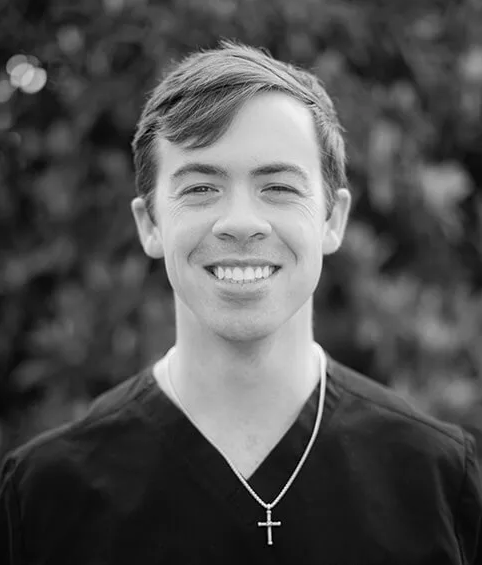
Leonard Cochrane, DMD
Periodontist + Owner of Coastal Periodontics
Lee Cochrane is a periodontist and the founder of Coastal Periodontics in Myrtle Beach, South Carolina. A native of Greenville, Lee graduated from Clemson University with a degree in Bioengineering before completing both dental school and a periodontics residency at The Medical University of South Carolina in Charleston, South Carolina. After launching his practice from scratch in 2022, Lee has grown it into one of the area’s most trusted specialty practices through a relentless focus on team culture, operational excellence, and patient experience.
Learn more about Myrtle Beach periodontist Dr. Leonard Cochrane
Follow Coastal Periodontics on Instagram @coastal.periodontics
The Special Lists, presented by Referral Lab, is the podcast for dentists and dental specialists.
Running a dental practice isn’t easy, and if you’re in private practice, it can sometimes feel like you’re on an island. That’s why finding your people—those who’ve been in your shoes and can share real, lived experience—changes the game.
Referral Lab was built specifically for dental specialists, helping you track, manage, and convert every referral. It’s about improving case acceptance, boosting team performance, and strengthening relationships with referring providers so your whole practice runs smarter.
This spirit of connection fuels The Special Lists podcast. Hosted by the team behind Referral Lab, we bring you wisdom from practice owners and dental professionals, sharing the wins, mistakes, and lessons that shape how they run their businesses today.
Got a question for us? Send us a message at speciallists.com
Transform your referral workflow with Referral Lab, the purpose-built platform for dental specialists to track, manage and convert every referral. Request a demo at referrallab.io
Cameron Full
Co-Founder of Referral Lab
Cameron Full, co-founder of Referral Lab, is a strategic problem-solver with expertise in business management and digital solutions. He combines leadership, creativity, and technology to drive success across various industries.
Connect with Cameron on LinkedIn
Jason Souyias, DDS
Periodontist and Co-Founder of Referral Lab
Dr. Jason Souyias is a periodontist, educator, and co-founder of Referral Lab software. He teaches dentists and hygienists, including as a Pikos Institute faculty member. In his Port Huron private practice, he's known for excellent patient communication and experience. He's passionate about his work and dedicated to helping other dentists.
More about Port Huron, Michigan periodontist Dr. Jason Souyias
Michael Seda, DMD, MS
Periodontist and Co-Developer of Referral Lab
A clinician and entrepreneur, Dr. Seda brings 19 years of private practice experience to his periodontal and implant surgery practice in the San Francisco Bay Area.
Dr. Seda’s interests are rooted in evaluating and influencing private practice management systems in dentistry. He wants to increase practice efficiency, establish a greater sense of collaboration and trust among practice team members, and enhance quality of care and service delivered—all while maximizing and growing profitability.
Through associateship opportunities early in his career, Dr. Seda was exposed to various private practice leadership and business models. He witnessed first-hand inconsistencies in the degree of success and failure owners experienced in private practices. This ignited his passion for learning what empowers practices to thrive and grow successfully while delivering a highly satisfying patient experience.
He is particularly interested in using cutting-edge analytics platforms to measure advanced practice metrics. He leverages these to design data-driven strategies to enhance referral patterns, scheduling systems, case acceptance rates, and other key performance indicators that lead to practice growth and patient satisfaction.
His education spans several disciplines, including a degree in Psychobiology from the University of California, Los Angeles, a Doctorate degree from Harvard University (DMD), and a Master’s degree in Periodontics and Oral Medicine from Columbia University.
More about Bay Area periodontist Dr. Michael Seda
Follow Dr. Seda on Instagram @sedaperio
Co-hosts: Cameron Full, Jason Souyias, DDS & Michael Seda, DDS
Producer: Eva Sheie @ The Axis
Assistant Producers: Mary Ellen Clarkson & Hannah Burkhart
Engineering: Cameron Laird
Theme music: Papa Funk, spring gang
Cover Art: Dan Childs
The Special Lists is a production of The Axis: theaxis.io
Dr. Souyias (00:00):
Thanks for listening to The Special Lists, presented by Referral Lab, the podcast for dentists and dental specialists.
Cameron Full (00:10):
Welcome back to another episode of The Specialist with me, Cameron Full, my co-hosts, Dr. Michael Seda and Jason Souyias, and our guests tonight. Leonard. Sorry, Lee Cochrane. Leonard the third. I couldn't help myself. Sorry Lee.
Dr. Souyias (00:28):
You're in trouble with mom again.
Dr. Lee Cochrane (00:31):
I know. I know. Starting it off right.
Cameron Full (00:32):
It was the mustache. Lee's a dear friend of mine. He's a founder of Coastal Periodontics, Myrtle Beach, South Carolina. Native of Greenville Lee graduated from Clemson University. Horrible football team with a degree in bioengineering for completing both. Did you guys get it at a bowl game this year?
Dr. Lee Cochrane (00:51):
Yeah.
Cameron Full (00:51):
Which one?
Dr. Lee Cochrane (00:52):
The Bad Boy Mowers Pinstripe Bowl.
Cameron Full (00:55):
Got it.
Dr. Lee Cochrane (00:55):
In New York. Got it. Going to the Bronx.
Cameron Full (00:58):
Lee's got a degree in bioengineering before going to dental school and having a periodontic residency in Medical University of South Carolina. Charleston. Charleston's a great city. After launching his practice from scratch in 2022, he has grown it to one of the area's most trusted specialty practices through a relentless focus on culture, operational excellence and patient experience. Lee, you have successfully started your own practice and the level by which you were able to get it to and the time that you were able to get it from has been remarkable. And so you have so much to share and I'm so grateful that you said yes to jump on the episode with us. So everybody let's welcome Lee Cochrane.
Dr. Souyias (01:46):
Woo. Welcome.
Dr. Lee Cochrane (01:47):
Thank you. Thank you.
Dr. Souyias (01:48):
Glad to have you.
Dr. Lee Cochrane (01:48):
Appreciate you all having me.
Dr. Seda (01:49):
If I may, if I may. For those that don't know Lee or anything about him, you have the opportunity to work with a entire cross section of practices all over the country, given what you do. And there's something that you see in Lee and his practice that allows you to define it the way you just did. So what is it, if you want to just summarize it for those that may just be getting to know Lee for the first time, what is it that leads you to say that?
Cameron Full (02:17):
Yeah. Well, thanks for putting on the spot, Seda.
Dr. Seda (02:21):
Other than his dapper good looks.
Dr. Souyias (02:23):
And Lee's the mustache. It's always the mustache.
Cameron Full (02:25):
The Lee stache. Most practices come to us established. And it's either the administrator that's head, "Hey, my friends used this. It would help with X, Y, and Z." Or the doctor talks to a friend and they know that this is something that'll help replace some spreadsheets. And there's a small cross section of practices that start with us in them. And that says a lot about a person like Lee. I want to start with best practices first, not necessarily being tried to stop to establish best practices two or three years or 10 or 40 or 50, even 50 years in. And so his commitment towards just the whole philosophy of best practice. I mean, the amount of calls that we've had talking about systems, about referrals, about marketing, about treatment planning, about everything under the sun is a testament that Lee is just a consummate student.
(03:24):
And Lee ultimately wants not only what's best for his practice, but what's ultimately what's best for his patients. And that's the testament said of, you could say that about a lot of people, but Lee's definitely unique in that he gets on the calls with the team. It's remarkable. And he's like, "Okay, show me what to do. Show me how to make this change. Talk to me about what I need to do to make this work better." And then Lee actually does the work. And so Seda, does that answer your question?
Dr. Seda (03:54):
Yeah. And obviously we want to give Lee an opportunity to let his word speak for himself.
Cameron Full (03:59):
Is he here?
Dr. Seda (03:59):
But I think so somewhere. And Lee, we're going to turn it over to you even in a second. But I think what's so striking for me, and I've interacted with Lee a few times. Where we're going with this is that Lee graduated not that long ago. What has it been three years now, Lee?
Dr. Lee Cochrane (04:17):
Three years. Yeah.
Dr. Seda (04:18):
And when you look at the philosophies he's adopting, the leadership by which he's leading with, and we're going to dig into that now, it's a very mature place to come from. And so for me, it's been rare to see someone that fresh, yet so mature with a lot of this. So let's dig in and then I have many questions to ask. But yeah, Lee, why don't we turn it over to you?
Cameron Full (04:46):
Let's do talking point number one, the power of starting before you're ready. Lee?
Dr. Lee Cochrane (04:52):
Yeah. Well, guys, obviously thank you all for A, having me here, but B for the kind words. It means honestly more than you know. So definitely excited to be here and I think this is a good place to start. Talking point one, first thing on my list. I think we are never really ready to make big changes in life, big decisions in life. And at some point in time, you actually have to just say, "Hey, I'm going to do this. Why wait until tomorrow?" Today's the day and we need to go with it. And I think that has really transcended into a lot of what I've done both in starting Coastal Kerreo, but in also how we have adapted and changed over time. The actual startup process, I had no idea what I was doing and ultimately just had to put one foot in front of the other and start walking.
(05:56):
And I think we've started running, but it's day by day. So a little bit about me, I am originally from Greenville, South Carolina. It's in the upstate, beautiful city. It's about three hours from Charleston. So grew up in Greenville, went to Clemson and then went to MUSC, like Cam mentioned for dental school and residency. Spent seven years there and then immediately started my practice after graduating residency. Throughout residency, I had the opportunity to meet quite a few periodontists from all over the Southeast and I guess really even the country through different organizations like SAP. And really-
Cameron Full (06:48):
That's where we originally met.
Dr. Lee Cochrane (06:49):
Should we tell the story?
Dr. Souyias (06:55):
It's a great story. This is a great story. I love this.
Dr. Lee Cochrane (07:00):
I think, I don't know what point-
Cameron Full (07:02):
Was that four years ago?
Dr. Lee Cochrane (07:03):
What point in time? I guess it had to have been four.
Cameron Full (07:07):
Was that at Seattle?
Dr. Souyias (07:07):
It was because you were still, it was at Sea Island.
Dr. Lee Cochrane (07:10):
Yeah. Yeah. So Seda, at this point had decided, I guess, to start the practice and we're kind of getting some things going, getting the renovation done. And then one of the things that I was lacking in, I guess, was my Google business profile, which is apparently pretty important. I didn't know that. But one day I walked out of lecture and I'm talking to Cam and Souyias is at the Referral Lab table. And I guess Cam decided to take upon himself to look up my Google Business Profile.
Cameron Full (07:50):
Was it a massage parlor or a body shop? What was it?
Dr. Lee Cochrane (07:54):
I'm going to be honest.
Cameron Full (07:56):
I think it was a massage parlor. And I was like, wait, this is-
Dr. Lee Cochrane (07:59):
I swear to God, I hope not.
Cameron Full (08:03):
And I was like, "Lee, we got to fix this real quick, bud.This ain't going to work."
Dr. Souyias (08:06):
This isn't happening. Yeah. You're in trouble.
Dr. Lee Cochrane (08:09):
About 10 minutes later, I walked back over to the table and Cam threw my phone back at me and said, "Lee, I fixed your shit." And I was like, "Okay. All right. Thanks."
Cameron Full (08:23):
And I guess that's the benefit of starting before you're ready, I guess, right? Point number one.
Dr. Lee Cochrane (08:30):
God. No. Literally the epitome of not ready.
Cameron Full (08:34):
I think there's a lot of power in the concept of, or the realization that I know ... What's the theory, Sades? Is it good, common direction? Have you heard that before?
Dr. Seda (08:45):
I have not.
Cameron Full (08:46):
Okay. I think it's- Do
Dr. Seda (08:47):
Tell.
Cameron Full (08:48):
Good common direction I think is what it's called. You have to double check, but it's when you know that you're pointed in the right direction and you don't know where the finish line is, but you know you need to start putting your feet in front of each other. And so you have enough confidence in yourself and in what you're about to do that it's like, "Hey, I can't wait for ... " There's another line, perfection is the enemy of progress. And so this aligns with that directly. It's like, "Hey, I know that's the right way and I know I'm going to start paddling and I know I'm going to get there and it might not be the most efficient way, but I know where it's going to end up where exactly where I'm supposed to be. " So I think that's a wonderful place to start this conversation. Souyias, thoughts on that or that's kind of how we started with referral lab, to be honest with you.
Dr. Souyias (09:37):
It's absolutely true. I love what Lee's saying of sometimes you just got to get action, get some movement going, right? Stop thinking about it, stop planning, just start doing. And Lee was really impressive with that. It's gutsy to come out of residency, open your own practice, get going. I mean, it takes a lot of gusto and you were doing it in an area that you weren't really familiar with per se. It's not where you grew up, right? Yeah. What was the reason you ended up choosing Myrtle Beach? How did you end up-
Dr. Seda (10:11):
And why you decided to start from scratch rather than associating, becoming a partner or something like that?
Dr. Lee Cochrane (10:18):
Absolutely. Honestly, some really good points. And there's a long version, a short version, we'll keep it short. But I had, I guess, the opportunity to go and travel and visit a couple practices and start that process of talking about associateship. And I'm not going to lie, I learned so much. I got to see some incredible people and see how a practice could and should be run. Throughout my final year of residency, a couple of my friends from dental school actually reached out and said, "Hey, we're up in Myrtle Beach. Is this an area that you would potentially consider working in? " And hadn't really given it much thought, but ultimately said, "I'll look into it. " And did a little bit of, I guess, Google search, started looking at some Google business profiles and-
Cameron Full (11:20):
Found a massage parlor, you're like, "This is a great spot,
Dr. Lee Cochrane (11:22):
Massage parlor.
Dr. Souyias (11:22):
This is a great spot. Look at the traffic.
Dr. Lee Cochrane (11:25):
Yeah. Busy between-
Dr. Seda (11:29):
The referrals were through the roof.
Dr. Lee Cochrane (11:36):
No, it was actually kind of wild. I think one of my common, I guess, themes has been ... I haven't done this alone. It's really been because of the help that has been afforded me or been provided to me. And I had a mentor, a faculty member actually say, "Hey, there's a specialist up in Myrtle Beach. They know of an office. He's going to give you a call later today." I said, "Okay." So I'm sitting there by my phone for the rest of the day and decide, "Hey, it's time to go to bed around 10 o'clock." And about 10:30, I got a phone call and it was a specialist in the area and said, "Hey, I know I have an office space that's becoming available. I think you could start your practice there. I'll see you tomorrow at 8:00 AM." And I was like, "Oh, all right." So I drove three hours the next morning or I guess two, two and a half and met them and it's kind of wild, but the space that I'm in now was actually a former periodontal practice that had shut down and that kind of plays in later, but that was an opportunity that just fell in my lap and I'm thankful.
Dr. Souyias (12:54):
Nice. Sometimes the universe, when you listen to those little hints and clues and follow them, the universe takes you where it wants you to go and it's good that you're listening to that voice.
Dr. Lee Cochrane (13:04):
Absolutely.
Dr. Souyias (13:05):
Man, I know a little bit about working, seeing your practice and what things are like. And man, it's incredible where you've been able to take that practice in just three, three and a half short years there. That's amazing.
Cameron Full (13:21):
So let's talk about some of those, the power of starting before you're ready before we move into the second topic. Let's talk about knowing those first buttons. Obviously, it's getting the phone to ring first. It's getting the patients in the door. It's doing the appropriate, handling them clinically. That's your priority. And so let's talk a little bit about initiatives and systems and standards and creating implemented details and workflows and some of those things that you've really started to uncover over the last couple of years at your practice.
Dr. Lee Cochrane (14:01):
Man, this is, I would say, probably one of our favorite sweet spots right now. So much of our first year was just treading water, trying to survive, trying not to drown and just navigate working with so many different people, blessing in its own right, but very challenging. So this past year specifically, I think our team has really done an incredible job in identifying, I guess, pressure points or challenges or opportunities in our practice where we can improve. It's been fantastic. We have really started standardizing a lot of our procedures, going back to SOP, standard operating procedure, and that really envelops so much our schedule, how we answer the phone, how we only provide comprehensive periodontal exams. We're doing full mouth evaluations. So many different things. We are setting the standard, ensuring that the team is buying in, and it has really created more opportunity for us than I ever envisioned.
Cameron Full (15:15):
You've been able to not only identify needs, but appropriately activate those through your team, which is not something that the industry is typically very good at as a whole. And so talk about some of the systems by which you use to identify, you've identified the actionables, but then make change in your practice and not just once, but make it stick.
Dr. Lee Cochrane (15:42):
I think y'all mentioned something earlier that has been a huge focus for us, and that's alignment. And I know that that can be this big glamour word and everyone says, "Oh, our team needs to be aligned." But ultimately, our team has really developed a sense of accountability and they are striving to not only work for the patient, but work for each other. At the end of the day, that's who they can rely on. We have the opportunity of interacting with every day. And as a result, we want to do our best. We talked earlier about our practice is a very team-centric practice. That slightly differs than a lot of people where they talk about rural referral-centric practice. And I think that by putting the team first, there's a level of respect, a level of accountability, and a true desire to help each other out.
Cameron Full (16:40):
That's an interesting spin and a way to look at it.
Dr. Souyias (16:43):
It really is. And a lot of people say, "Oh, we put our team first, we put our team first," but they don't actually accomplish. I mean, it's not always easy to motivate a team to work as a team. People get, "Oh, well, why is this person leaving early and why is that? " And there's little things that irritate people. What have you guys been able to do to keep that cohesiveness with your team?
Dr. Seda (17:05):
To motivate unity, right?
Dr. Souyias (17:07):
Yeah.
Dr. Seda (17:08):
Motivate empathy for teammates. That's really what it comes down to. Souyias, you're absolutely right.
Dr. Lee Cochrane (17:14):
Y'all are probably going to get tired of me saying this, but I read this book. It's called The Culture Code. Fantastic book, but it's actually something that-
Cameron Full (17:24):
Do you listen to books or do you read the books? Which one is it?
Dr. Lee Cochrane (17:27):
Both. So whenever I buy in an audio book-
Dr. Seda (17:30):
Lee, what's the name of the book?
Dr. Lee Cochrane (17:32):
The Culture Code. Whenever I guess use a credit to get a book on Audible, this is terrible financial advice, but I also purchase a hard copy too. So I listen to it and then I go back and reread and write a couple of notes here and there. And the Culture Code is one that has been huge for me. And it talks very early on about interaction or points of interaction and communication and how you have to be very deliberate and intentional in those actions. And it can be small things. So the sheer act of saying thank you and the impact that it has on team culture. Now, for a lot of people, that's just a second nature. Oh, they handed me something. Thank you. I appreciate that. But it talks about how teams that say thank you tend to perform better than others.
(18:33):
There needs to be a level of accountability amongst team members. Now, that's horizontal from team member to team member that is vertical, I guess, top down from boss to employee or staff member, but it's also in the opposite direction too. It's from the employees and staff back to the boss. And I think that that's something that we've created too. At the end of the day, my team knows that if there's a major decision that has to be made, the decision falls on my lap and that's my responsibility. And very rarely do I have to pull the card of, "Hey, this is what we're going to do. " We're doing it. But more often than not, it is a team decision, a collaboration amongst team members. I think that by engaging everyone at that level, they take a sense of ownership, and that's been huge for us.
(19:28):
The last thing from that book that I really like is talking about deliberate time spent together. One of the things that we do in our practice is essentially a family dinner or family lunch every week. So against the advice of my accountant, every Thursday, I actually buy lunch from my practice and we sit down and we have lunch together. It's just an opportunity to sit back and say, "Hey, what's going on in your life? Who are you as a person?" And that relationship that we develop, it snowballs. The effect grows throughout the day. It's been huge. That is a small way of saying thank you. You could argue that someone at some point could take it for granted and not appreciate it, but I would rather continue doing it and risk that than lose that opportunity to spend time with my team.
Dr. Souyias (20:24):
I want to touch on something. I think in our profession, the second point you made about from accountability being from the team to the practice owner or the boss as well, I think we struggle with that in our profession a lot. How many times do we know ... Use a really common example like a morning huddle. We're going to have a morning huddle, but the doctor never shows up for the morning huddle. What does that say of how the doctor feels? So I love what you said, and I think that's something that really needs to be highlighted in our profession. Michael or Cameron, do you guys have any other thoughts on that part too? I think that's so important.
Dr. Seda (21:02):
So it's one of the things that I think I've really put a lot of focus to myself over the last 10 years is things have to be bidirectional. I can't expect everyone to care about what I'm thinking and what I need and what my goal is if I in turn am not thinking and considering their goals, what they want in their lives.
Dr. Lee Cochrane (21:25):
Absolutely.
Dr. Seda (21:26):
We're in the people business, right? And it's not just the people business in terms of taking care of patients. For me, I always tell people, I feel like I have to be doing three things at all times to be successful. And that's have patients that are satisfied with the way I'm treating them and the care that they're getting, my team feeling fulfilled in their role in whatever it is that they're doing and my referring partners feeling like their needs and patients are being well cared for. So when I have all three of those things going, I feel satisfied. And I can always tell when one of those things goes off where I need to put my attention to. And Lee, you touch on reading that book. Reading has been such a phenomenal resource for me. I read a quote recently that I'll share with you guys in a moment, but books and just outside of dentistry, sharpening who we are as people, not just dentists, is a huge, important place to, I think, put emphasis.
(22:33):
And when we're leading our team, asking about their lives, asking about their desires. Lee, if I were to ask you how often you have one-on-ones with your team to check in, whether you call them performance reviews or one-on-ones or whatnot, how often are you having those meetings with your team?
Dr. Lee Cochrane (22:55):
Great question. And I'm going to hit on that from, I guess, a formal standpoint and then also an informal standpoint. So one of the things, I guess, Cam, this goes back to your earlier question. What are some of the things that we've implemented that have had an impact? And truly it's been structured meetings that seems like such an elementary topic, an elementary subject and kind of, okay, team Dynamics 101 is a meeting. But until this year, we didn't have a daily huddle. Earlier this year, we didn't have performance reviews, we didn't have structured one-on-ones, and that left a void. I think that that lack of communication allowed for a sense of confusion or I guess a lack of clarity. And you could tell that that transcended to other time points in the day. To get to your point specifically, so performance reviews, this year we started them and out the gate was going, "Hey, we're going to do them quarterly and this is going to be great." And I kind of had to pull back a little bit and say, "All right, twice a year." I'm happy with that. So that's our formal structure.
Cameron Full (24:06):
Once a month. Every day. For those that don't know Lee, Lee, everything is full send, like everything.
Dr. Lee Cochrane (24:15):
Boom. Done. But on an, I guess, informal basis, interacting with the team daily is huge. Like you mentioned, that's a simple, how was your weekend? What is something that you're hoping to achieve? How can I better support you? I think that we owe them that and I think anything less is just a disservice to your team.
Dr. Seda (24:43):
And to close the loop on that for me, the way I see it, it's a four-pronged approach. The first is, as you said, that daily interaction with people, gratitude, checking in with them, how can I support you as the leader here? The personal one-on-one. Then there's the personal one-on-one, but in a more professional setting of carving out the performance review or mid-year review. Because what I've learned is that the team really counts on knowing that those times are coming up and they really think hard about what it is that they want to communicate, what they need support with. They're more thoughtful about it because they know that time is carved out and that it's coming up. Then you've got the team meeting, right? Everyone together talking about the practice, and that is a totally different interaction than doing it one-on-one because now people can interact and go back and forth and things can breathe and become real systems.
(25:40):
And then finally, it's outside the practice as a team, everyone together having fun, whether it's a holiday party or some sort of team building approach. I think those are the four prongs of my tent, if you will.
Dr. Lee Cochrane (25:54):
Yeah. Love that. That's huge.
Dr. Seda (25:56):
Yeah.
Cameron Full (25:57):
Which indirectly, it took us into the second point, which was culture is the first system. And so we ended up there anyway. Before you can establish the other systems, you have to have that buy-in. You have to have the team believing in you and you believing in the team. And so Lee, talk to us a little bit about, over the last three years, we talked about meetings, we talked about your engagement, the culture code, all those things together, but talk about how you've seen that transition shift over the last three years of dedicating more ... Listen, you were culture first out of the gate, but then you saw the benefits of reinforcing that with structure. So talk a little bit about that.
Dr. Lee Cochrane (26:48):
Absolutely. So like you mentioned, out the gate, culture was definitely something that we as a practice, we as a team focused on, and I'm not going to lie, fiercely, fiercely defend it. I am very
Cameron Full (27:05):
Talk about that one star review. I mean, listen, talk about that example.
Dr. Lee Cochrane (27:10):
Yeah. Sore subject. So no, actually, this is probably a good time. So finally, getting over it, but-
Dr. Souyias (27:26):
But not really.
Dr. Lee Cochrane (27:27):
Not really.
Dr. Seda (27:28):
How many years has it been now?
Cameron Full (27:31):
Six minutes.
Dr. Lee Cochrane (27:32):
It's been a week. Yeah, six minutes. No, it was tough. So actually this is wild, but our reviews, we kind of handle them a little differently. I know a lot of people utilize things like Weave and automated services to just reach out and say, "Hey, this is a great patient. This is a great interaction. Would you mind leaving us a review?" And that's a great outreach. We have these little printed out cards in our office and occasionally team members will say, "Hey, don't feel obligated, but we would really appreciate it if you leave us a review." And something we hear almost every day, and I guess we'll get into this later, on our new patient exam days is patients telling us, "Hey, this place is different. You walk in and you feel the sense of joy, and I really see what they meant by X, Y, and Z on this review.
(28:20):
That review is what made me decide to come here." That means a lot because so often we hear the negative in life. People want to point out faults and for someone to go out of their way and say, "Hey, we realize your effort and we appreciate what you do. " There's no greater praise. So last week we got two one star reviews and-
Cameron Full (28:45):
Ex-girlfriend. Yeah.
Dr. Lee Cochrane (28:53):
One on our new patient exam day, actually we had a gentleman come in and I'm in the room adjacent. Our exam days are structured where I kind of move from room to room to room, spending X amount of time with each new patient. But I hear the hygienist and assistant pair next door beginning this conversation with the patient, just asking him about him and what are his goals of treatment and what's his history of treatment as it relates to periodontal disease, the standard protocol that we follow. And this individual became very combative. I kind of had to pause and apologize to the patient I was with and I said, "Hey, I'm so very sorry. Do you mind if I listen in? " And she said, "Absolutely." Because you could hear the voice rising and the guy started yelling unprompted. It was really inappropriate. And so I said, "Excuse me, I'm sorry.
(29:51):
I need to go take care of this. " And I walked over there and just walked into the room and basically said, "Hey, what can I help you with? What What seems to be the problem here?" And it continued escalate. At that point, asked the guy to leave. It kept going. There was some swear words that he decided to drop and that's neither here nor there. But at the end of the day, my team should not have to come to work and feel that they have to worry about being berated or yelled at by a patient. I think they have to realize that it's a safe work environment, that they have the prerogative to accommodate patients and really make a special experience for that patient. But at the same time, it needs to be that safe place. And I think the team realizes that we don't allow disrespect, and that's something that I think is crucial.
(30:46):
The second one-star review was pretty similar. Patient didn't even make it in the door. And he decided to just really use some profane language on the phone, text messages, and then go and leave a one-star review. And I'm not going to lie, it hurts because this team day in and day out, they're working hard. They are giving it their all. And I think they're doing it for the team, for the practice. And to see their efforts for each other, for their efforts to be turned on them in a negative light, that sucks. And I have no problem asking a patient to leave and dismissing. And I think the reason I do that is we have the opportunity to create something special and we have the opportunity to provide really high level care to patients, but there has to be trust, there has to be respect.
(31:43):
And if there's any notion counter to that, that's a big red flag. And I'll fiercely protect that culture. I will keep that until I retire.
Cameron Full (31:57):
I think what's interesting about that and about you is that I was told by a friend about 10, 15 years ago, the importance of trying to be the same person all day. And we can't say that we're culture first. We can't say that we're a team first. And then the moment that something happens that your team-
Dr. Souyias (32:22):
Tests it.
Cameron Full (32:22):
Yeah. ... sees you not do what you say is you're not. And they're not as important. And so I think Lee, what's unique about you is as becoming one of your ... You've become a great friend over the last few years, and you are the same person all day. And it's a remarkable thing. You never catch you being a different version of yourself. There's only one. And to think about that's how that engagement happens with that patient because you're protecting other patients. It wasn't just about that one. It was about not only your team, but it was about the other patients who were about to be told probably pretty bad news about their oral health. That's only one way they show up at your practice as if they need specialty care. So I think it's such a wonderful example and a testament to how you practice and how you engage with your team. So thanks for talking about the one stars.
Dr. Seda (33:22):
Great stuff, you guys. This is great stuff.
Dr. Lee Cochrane (33:24):
It's still an open wound.
Dr. Souyias (33:26):
Seda is like, "I don't have any one-store examples to use." If it's true, it's true, right? Actually-
Cameron Full (33:38):
He's got nothing to say.
Dr. Seda (33:40):
Little side note, and I think it's important to bring up on the side note of reviews online. Let's take a little detour for a second, right? Because there's nothing more irritating than knowing that you're doing your best to deliver a authentic, caring experience for a patient, and yet they totally miss the mark.
Dr. Lee Cochrane (34:03):
Absolutely.
Dr. Seda (34:03):
And the first thing that I think we all go to is, what could we have done differently? It's not this person's X, Y, or Z, but what could we have done differently? And sometimes the answer really is nothing. There are times where the answer is yes, we could have used different language or a different tone or whatever it is, right? But there are times where there isn't much else you could have done. And those are the ones that really sting because you're really trying.
Cameron Full (34:32):
Let's go to topic number three, which Lee, when this came through, I was like, man, I love this one. I love it. Systems make excellence repeatable.
Dr. Souyias (34:43):
Love it.
Cameron Full (34:45):
Do you get credit for that or did you take that?
Dr. Souyias (34:47):
Smoke.
Dr. Lee Cochrane (34:48):
That's an iteration or I guess my own version. So surprise, surprise, I read a book called Unreasonable Hospitality.
Dr. Souyias (34:58):
Does every section start this way?
Cameron Full (34:59):
You listen to a book, you read a book and then you watched a movie.
Dr. Lee Cochrane (35:03):
Yeah. Yeah. Yeah. Fantastic book though. But Will Gadera from 11 Madison Park talks about how he had two backgrounds.
Cameron Full (35:15):
Great duck.
Dr. Lee Cochrane (35:16):
He had one where-
Cameron Full (35:17):
The duck. The duck there's delicious. You got that from that and I actually ate the food.
Dr. Lee Cochrane (35:24):
Well, that's on my bucket list. Man, you're digging the knife in the wounds right now. But no, he talks about his two backgrounds. One is where there was absolutely no structure, no systems in place. And basically, everyone was happy to work there because there was almost no sense of responsibility and not really enough effort to go above and beyond, I guess. But his other background was a restaurant where everything was controlled and everything was monitored and it was really, really strict. And ultimately it seemed like the P&L statement was more important than the team members and how he talks about how that was negatively impacting him. And so the blend of those is actually kind of a really nice sweet spot. And I think that that's what my practice is really, I guess, discovering this year, is that in establishing structure and establishing these protocols and establishing these systems, we have something that we can revert back to.
(36:28):
We know exactly what we need to be doing at any given point in time, and that kind of allows us to be able to go above and beyond for each patient. That allows us to create a little bit of magic for each of them. And I think that is something that we continue to refine talking earlier about our daily huddles. One of the questions that gets brought up all the time, "Hey, this is a great huddle. This is a great conversation. How can we make it better?" Through a lot of the systems that we've implemented this year alone, it's allowed us to turn our focus to the patient and really provide that excellent care.
Dr. Souyias (37:04):
When a really high level customer service experience is systematized well, it doesn't feel like a system when you're experiencing it. Think about Ritz-Carlton or think about Disney or those kind of places. I remember we went to Disney with someone and it was their birthday and they had the birthday pin on. And every single employee that walks by is, "Happy birthday, happy birthday, happy..." Well, obviously that's a system, right? They're told, "You better do this. This is what we expect of you. " And yet when you're the person getting told happy birthday, it doesn't feel like a system. You're just like, "Oh my God, I'm in the most magical place on earth."That's what it feels like.
Cameron Full (37:46):
A periodontal practice.
Dr. Lee Cochrane (37:47):
Absolutely.
Dr. Souyias (37:48):
And it's a periodontal practice in Myrtle Beach, right?
Cameron Full (37:54):
Give us an example of one of these systems, just one that's allowed you to make excellence repeatable.
Dr. Lee Cochrane (38:03):
I guess I've talked about it already, but our new patient exam day. I don't know if you want me to go there or not, but that's been huge. Go there, Lee. Why not? Previously. Why not, Lee? Why not? Why not? Previously, exams were just thrown on our schedule when there was availability and very often, at least early on, I was the one doing the exam and it was a lot of dedicated time from me interacting with the patient. And there's a little bit more to that topic as well, but we've actually transitioned to essentially a consult only day once a week, and that has been fantastic. Essentially, we have a pairing of a hygienist and an assistant, and each of those pairs actually end up really being the point for every single new patient when they come in. Now, what does that look like? We have a one-page Word document where each step is spelled out.
Cameron Full (39:05):
There you go.
Dr. Lee Cochrane (39:05):
And that was crucial. That was crucial in the beginning.
Cameron Full (39:08):
Social contracts.
Dr. Lee Cochrane (39:10):
Bingo. The assistant would escort the patient from the waiting room or reception area to the operatory where they were greeted by the hygienist. They established a relationship through, I guess, cordial conversation. And then they get into the meat of why are you here? What are your goals? And then get to the technical steps, photographs, CT scan, charting, things like that. But by systemizing that and intentionally developing each step and actually walking each step, we literally as a team said, "Okay, go and get team member X from the waiting room. What does it look like when we open the door and we greet them?" Are we saying their first name? Are we saying Mr. Or Mrs. Jones, are we stopping at this point in the office or are we going to this point in the office? Each of those steps is intentional and thought out, but it's now become repeatable.
(40:10):
And each team member has been able to put a little bit of their own flare. So one of our exam teams, they take blood pressure at a different time point than another team, and they're running their own experiment on whether their vital signs are lower than the other column based on where are they taking that blood pressure reading as it relates to that patient and how comfortable they are in the office. So small things like that, they can deviate, sure, but the structure is there and that regimen allows us to really be effective in what we do.
Cameron Full (40:45):
Anything else on this topic, guys, before we flip into the next one? Sades?
Dr. Souyias (40:49):
No, let's hit the next one.
Dr. Seda (40:51):
Yeah, let's go to the next one, but I do have some questions that I'll reserve for the end Because some of it's being addressed as we're just going through.
Cameron Full (40:58):
Operational discipline frees you to focus on what matters. What does that mean?
Dr. Lee Cochrane (41:05):
I think to go back to the term earlier that we discussed, accountability, that's holding ourselves accountable. We are not always aware of our own blind spots and we have to evaluate, are we ourselves the one that's holding this team back? One of the biggest effective changes for me was realizing that patient doesn't care if it's me that they are talking to or if it is a member of the team. I'm not the center of the show. I'm not the center of the universe and accepting that was huge. But back to the accountability point, operational discipline is huge. We've started doing our own time studies. How long does it take me to do procedure X? How long does it take me to take out a tooth and throw in a socket graft? How about an implant? And ultimately, by analyzing this information, we're able to then on the backend utilize it for structuring how and when we schedule our surgery patients. And each of those steps trampolines us onto the next.
Cameron Full (42:14):
Builds on it.
Dr. Lee Cochrane (42:14):
Builds on it.
Cameron Full (42:14):
Exactly. I really like the point that you made that you weren't the star of the show. I think that I've visited a lot of practices and talked to a lot of docs and I'm not going to point fingers, but I think that's a human thing. I went to school and I mean, I'm the same boat. I did all this work. I went to school. I did all these things and this is my thing and you should listen to me and I'm here to help you because I'm best fit to take care of you. And the reality is that that's a you thing. They're being sent to your practice because they need something fixed. And when you're taking 30 or 40 or 60 minutes with a patient, and it's something that one of your incredibly capable team members can support you with, that's 30 or 40 or 50 minutes that you can't spend with another patient doing the one thing in the practice that only you can do. And that's such a huge realization is, oh my gosh. And I have this even at referral lab, I've got incredible team members that I continue to try to hand things off to so that they get an opportunity to grow. And then I can focus solely on what's the one or two things that I can do that they can't. And you're doing the same thing there. And that elevates, not only does it elevate the practice, but it elevates your team and it empowers them to, "Oh my gosh, I can participate here and I can educate the patient." And oftentimes, Lee, and this is something that I've found in my circumstances like, oh my gosh, for example, Kristy, Kristy, there's some things that she does so much better than me.
(44:01):
It's remarkable. I'm like, "You go do that because you connect in a way that I can't." And so I know it's a little bit different than clinically, but maybe not so much.
Dr. Souyias (44:12):
It's not that different though, Cam. It is the team when done well and I mean, look at the first three points that we talked about tonight were really you building your team and having faith in your team and creating systems that make your team high functioning. Now when you get to this one about operational discipline, what frees you, your team is an extension of you because you've spent three and a half, four years of building them to where you want them to be. A lot of times in our profession, people don't have that focus on their team or don't have that. They don't realize that the team is the most valuable asset you have. And as you start to decrease your importance as the doctor of like, "Oh, well, I got to do that. I got to do that. " It's so freeing and it makes your practice better.
(45:05):
And it's just one of those things that they are an extension of you when you take the time like Lee has done to really put into and develop the team, that's where the missing link is sometimes. I mean, I've heard dentists who ... I had, I don't know if I said this on the podcast before or not, I had a dentist as a kid that I've had two occlusal fillings my entire life. That's it. Little tiny ones. And both of them when I was seven years old, and I never wanted to be a dentist, never grew up wanting to be a dentist. But I remember he insulted his assistant and threw the instruments down on the tray. That memory stuck with me. And I'm telling you, and like taking the time to develop your team, oh my God, your rewards pay dividends when you do that.
(46:00):
And Lee has figured that out really fast in his practice career. Your leadership is, which we're going to transition into next, but your leadership to lead the team and have that kind of vision to take your team there is really amazing.
Cameron Full (46:16):
Yeah.
Dr. Seda (46:16):
And not to be undermined or overlooked, I should say, is when to just get out of the way, right? Yeah. We put a lot of energy into setting things up, building systems, working with the team, et cetera, but then knowing when to step back and let it happen, and then also recognizing moments where I am necessary now. It's that careful balance that I think is a huge part of what defines mature leadership.
Cameron Full (46:47):
But that's the operational discipline, right? That's it. I build the team and then that allows me to then trust the team with systems. And so now I build the systems and then now we need to be disciplined towards those systems so that the machine can ... The flywheel, if you may, the fly wheel can move with and ultimately without me, which takes us into the final topic, which is the doctor's first responsibility is to practice positive leadership
Dr. Souyias (47:19):
Kumbaya. I'm loving it. Right up Seda's alley.
Dr. Seda (47:22):
I'm about to start burning some sage here.
Cameron Full (47:28):
What does that even mean? What does that even mean? The positive- I read a book. Here it comes. I read a book somewhere.
Dr. Lee Cochrane (47:34):
No.
Cameron Full (47:34):
Nope. Nope. No.This is an original.
Dr. Lee Cochrane (47:37):
This is something that I think has developed over the past. I mean, even from my time in undergrad at Clemson, so often you hear servant leadership, we're there to serve and we kind of take that and we run with it. We talk about being intentional and being deliberate and I think that's huge, but we've also discussed tonight that the team buying in, the team accepting your vision and saying, "Hey, we're going to run towards that goal." You have to provide that vision. You have to motivate them and show them that, "Hey, there is a greater good here. There is an objective we're working towards and we're excited about it. " So often the team hears me talk about what an opportunity we have. Every interaction with every person, it's an opportunity to impact them in a positive way. And that's a huge responsibility, but it's a blessing.
(48:33):
I think that's something we overlook so often is that we are blessed to be in this career. We're blessed to be in this field. And whether we realize it or not, we impact so many lives on a daily basis. So what does that look like towards a team? We are constantly asking each team member to give their all every day. They work hard from the time that they're in the morning for morning huddle to the time that they leave, they are giving 110%, but they've got their own life too. They have a family at home that someone may be sick or maybe a newborn and that can be draining to them too. So my first and foremost responsibility is to lift them up, to fill their cup up. If I'm going to ask them to fill up a patient's cup and be kind and uplifting and fill value in what we do, then I have to be able to do that for my team.
Cameron Full (49:25):
Doesn't that get tiring Lee?
Dr. Lee Cochrane (49:27):
It does. There are days, and it was huge, especially when I first started the practice where you look in the mirror and go, "Man, what am I doing? Do I belong? Should I be doing this? " And then you kind of have to go, "You know what? Shut the hell up and fix your face. You're called to do this. " What a blessing it is to have this responsibility and why not me? Why not? I think one of the really cool things that I found, and Kim, I think you've really taught me this, is when it does get tiring though, we get to go to our friends, we get to go to our community, and we get to lean on them a little bit. And that has been what's really gotten me through a lot these past three years. And again, what an opportunity. I think it's huge.
Dr. Souyias (50:20):
You strike me as the kind of person though that filling other people's cup fills your cup. I know that about you. And again, that doesn't mean sometimes our own personal cup doesn't need filling sometimes, but you feel ... And the science behind this is study ... There's that book, how full is your bucket? I've seen it on the shelf in your office. And I love that book. It's mandatory reading to work in my practice. And it's one of those, it's amazing that really when you have that attitude, when you have that energy of filling other people up, it fills you up. And we all have those days where sometimes we need to be the ones who need a little filling of our cup or bucket. It's like it's the way to go.
Dr. Lee Cochrane (51:06):
Something, I guess an elephant in the room is a huge point in my time, and I'm going to kind of throw this out of left field here, but a lot of these lessons I've actually taken really from y'all, whether you realize it or not, Cam and I talked not too long ago about actually the first time that I think I met, I will say to for sure, I think we had interacted before, but it was up in Chicago for one of those referral lab SWAT mastermind meetings, small plug, I guess, but that was-
Cameron Full (51:42):
Available in March. Go ahead, Lee.
Dr. Souyias (51:47):
That's for real. Yeah.
Dr. Lee Cochrane (51:48):
That was shameless. Yeah. That was a room I did not belong in. And I still have the original notes from that meeting. My weakness, or I guess one of my strengths was I just got a new couch in the reception area and other people's strengths were increased conversion rate from X percent to Y. And average case value has gone up by X amount of dollars, and I'm over here talking about furniture.
Cameron Full (52:19):
Seda's like, "There's nothing wrong with that either." My waiting room just got this new late light blue shade.
Dr. Seda (52:27):
Post modern French.
Cameron Full (52:32):
Art deco. And my conversion rate went up. Go ahead, Lee. Sorry, man.
Dr. Lee Cochrane (52:39):
No, you're good. So Seda, I believe, I think you were the moderator for that meeting. And one of the cool things was hearing about how you invested time in each relationship with the patient, with your team member, with your referral, and how you saw that translate to success for not only you, but for the practice and for each person. Cam, you have the metrics to back it up. You can cut to the chase and say, "Hey, that's not how it works.This is what we're actually seeing." And then Souyias, I think what was really cool was I believe Kathy was with you and I'm talking about this new patient exam day. That's an iteration that we took from actually your practice. At first, I was sitting there going, "That would never work in Myrtle Beach. That just wouldn't cut it. You don't understand. These are different type of people down here in South Carolina." And Kathy looked me in the eye and literally said, "You know what?
(53:44):
I hear that all the time. Let me know how it turns out in a year." And you know what? We are now running our new patient exam day. That exact way.
Dr. Souyias (53:54):
Love it. Thanks. Love that.
Dr. Lee Cochrane (53:56):
So a lot of these points that we've talked about today, sure, we're putting our own spin on them, but really it's what we're seeing in others. I think the community that we've been able to be a part of and really this goal to just improve each other and help each other. Awesome. And I think that's been huge. Very transformative.
Cameron Full (54:26):
Awesome.
Dr. Souyias (54:27):
That's amazing.
Cameron Full (54:28):
Well, Lee, that's a wonderful, wonderful spot to wrap it up. It's no wonder that you've had the immediate success that you've had in your practice over last few years. It's a result of you being the same person all day, focusing on your team and then supporting them with the systems necessary to make the practice successful.You're a wonderful person to know, and I'm grateful to call you a friend. Thank you so much for joining us today and listening on The Specialist.
Dr. Souyias (54:59):
Thanks Lee.
Dr. Seda (54:59):
Thanks, Lee. Bravo.
Cameron Full (55:01):
Nice work.
Dr. Lee Cochrane (55:02):
Thank you.
Dr. Souyias (55:05):
Thanks for listening to The Special Lists, presented by Referral Lab. The podcast for dentists and dental specialists, featuring a special list from a specialist. Got a question for us? Send us a message at speciallists.com with two Ls. Transform your referral workflow with Referral Lab, the purpose-built platform for dental specialists to track, manage, and convert every referral. Request a demo at referrallab.io.
Periodontist + Owner of Coastal Periodontics
Lee Cochrane is a periodontist and the founder of Coastal Periodontics in Myrtle Beach, South Carolina. A native of Greenville, Lee graduated from Clemson University with a degree in Bioengineering before completing both dental school and a periodontics residency at The Medical University of South Carolina in Charleston, South Carolina. After launching his practice from scratch in 2022, Lee has grown it into one of the area’s most trusted specialty practices through a relentless focus on team culture, operational excellence, and patient experience.