Special List #10: The Side of Dentistry No One Teaches You with Dr. Nicole Saldua


Dr. Nicole Saldua is a general dentist known for her shockingly candid Instagram takes on the human side of dentistry—the loneliness that can creep in, the challenge of calming anxious patients, and dentistry’s failures to explain care in a way real people actually understand.
For her, clarity comes from simple language, strong analogies, and frameworks that make consent feel collaborative, not scary.
She also explains the emotional rhythm of the day: the “room whiplash” of going from heavy conversations to joyful ones in minutes. Dr. Saldua, Dr. Seda, and Dr. Souyias share their practical reset strategies, from a brief pause between rooms to follow-up touchpoints that remind patients they’re seen beyond the chair.
Listen for real-world tools you can use tomorrow: how to set expectations, when to refer, what patient red flags to watch for, and how to build connection in a profession that’s about people first, teeth second.
GUEST
Nicole Saldua, DDS
General Dentist
Dr. Nicole Saldua is a general dentist who graduated from the University of Washington School of Dentistry in 2018 and started her career serving in community health before working in a mix of private practices. She recently relocated to sunny Arizona so her kids can live outside year-round and so she’s not freezing her butt off at every future soccer or T-ball game. Nicole launched her Instagram to make dentistry feel less intimidating for both dentists and patients, using real talk, practical tips, and absolutely zero fluff.
Follow Dr. Saldua on Instagram @dr.saldua and TikTok @dr.saldua
Learn more about S&C Dental
The Special Lists, presented by Referral Lab, is the podcast for dentists and dental specialists.
Running a dental practice isn’t easy, and if you’re in private practice, it can sometimes feel like you’re on an island. That’s why finding your people—those who’ve been in your shoes and can share real, lived experience—changes the game.
Referral Lab was built specifically for dental specialists, helping you track, manage, and convert every referral. It’s about improving case acceptance, boosting team performance, and strengthening relationships with referring providers so your whole practice runs smarter.
This spirit of connection fuels The Special Lists podcast. Hosted by the team behind Referral Lab, we bring you wisdom from practice owners and dental professionals, sharing the wins, mistakes, and lessons that shape how they run their businesses today.
Got a question for us? Send us a message at speciallists.com
Transform your referral workflow with Referral Lab, the purpose-built platform for dental specialists to track, manage and convert every referral. Request a demo at referrallab.io
Cameron Full
Co-Founder of Referral Lab
Cameron Full, co-founder of Referral Lab, is a strategic problem-solver with expertise in business management and digital solutions. He combines leadership, creativity, and technology to drive success across various industries.
Connect with Cameron on LinkedIn
Jason Souyias, DDS
Periodontist and Co-Founder of Referral Lab
Dr. Jason Souyias is a periodontist, educator, and co-founder of Referral Lab software. He teaches dentists and hygienists, including as a Pikos Institute faculty member. In his Port Huron private practice, he's known for excellent patient communication and experience. He's passionate about his work and dedicated to helping other dentists.
More about Port Huron, Michigan periodontist Dr. Jason Souyias
Michael Seda, DMD, MS
Periodontist and Co-Developer of Referral Lab
A clinician and entrepreneur, Dr. Seda brings 19 years of private practice experience to his periodontal and implant surgery practice in the San Francisco Bay Area.
Dr. Seda’s interests are rooted in evaluating and influencing private practice management systems in dentistry. He wants to increase practice efficiency, establish a greater sense of collaboration and trust among practice team members, and enhance quality of care and service delivered—all while maximizing and growing profitability.
Through associateship opportunities early in his career, Dr. Seda was exposed to various private practice leadership and business models. He witnessed first-hand inconsistencies in the degree of success and failure owners experienced in private practices. This ignited his passion for learning what empowers practices to thrive and grow successfully while delivering a highly satisfying patient experience.
He is particularly interested in using cutting-edge analytics platforms to measure advanced practice metrics. He leverages these to design data-driven strategies to enhance referral patterns, scheduling systems, case acceptance rates, and other key performance indicators that lead to practice growth and patient satisfaction.
His education spans several disciplines, including a degree in Psychobiology from the University of California, Los Angeles, a Doctorate degree from Harvard University (DMD), and a Master’s degree in Periodontics and Oral Medicine from Columbia University.
More about Bay Area periodontist Dr. Michael Seda
Follow Dr. Seda on Instagram @sedaperio
Co-hosts: Cameron Full, Jason Souyias, DDS & Michael Seda, DDS
Producer: Eva Sheie @ The Axis
Assistant Producers: Mary Ellen Clarkson & Hannah Burkhart
Engineering: Cameron Laird
Theme music: Papa Funk, spring gang
Cover Art: Dan Childs
The Special Lists is a production of The Axis: theaxis.io
Dr. Souyias (00:00:00):
Thanks for listening to The Special Lists presented by Referral Lab, the podcast for dentists and dental specialists.
Dr. Seda (00:00:10):
Welcome back everyone to another episode of The Special List, a podcast aimed to bring some humanity and intelligence to the world of dentistry and business around it.
Cameron Full (00:00:23):
This is what happens when Seda hosts.
Dr. Seda (00:00:27):
Today we have a special guest. We want to welcome Dr. Nicole Saldua to the show. Dr. Nicole, welcome. It's a pleasure to have you.
Dr. Saldua (00:00:35):
Thank you. I'm so excited to be here.
Dr. Seda (00:00:37):
Dr. Nicole is a general dentist that graduated from the University of Washington School of Dentistry in 2018. She started her career serving in community health before working in a mix of private practices. She recently located to sunny Arizona where she and her family, she has kids, some dogs, they live outside all year round. And the way I got to know Nicole, probably not a surprise to those that know her is through her Instagram page. Instagram has a neat way of helping us connect to those that have similar interests, similar backgrounds, et cetera. And after watching some of her content over the course of a few months, I was genuinely and deeply moved by some of the messaging and things that she touches on. And so typically on this show, we're talking about the business of dentistry, running a practice, even some of the clinical aspects of practice, but there's this whole other side to dentistry. And Nicole, I'm going to have you kind of just maybe touch a little bit on how you started down this path and what even that path is, because you'll probably do it more justice than me. So maybe you can just introduce yourself a little bit and talk a little bit on what I just introduced.
Dr. Saldua (00:02:03):
Thank you. First of all, I'm so humbled and grateful to be invited here. I know again, it's an unorthodox way to meet someone, but I mean, we live in the age of technology, so here we are.
Dr. Seda (00:02:16):
Here we are.
Dr. Souyias (00:02:17):
Here we go.
Dr. Saldua (00:02:19):
Yeah. So like you said, I just moved down to Arizona from Washington State, and I've always loved teaching and I kind of, with the change of moving, I decided, well, I'm going to just try something new. I actually originally got my degree in undergrad to be a teacher. And so I have this teaching passion. I literally have the degree, took the exit exam, could teach. I was going to do second grade. And I think that that's where a lot of the passion comes from is I love teaching. And so I needed kind of that teaching outlet, which you guys know dentistry, we do a lot of teaching every day with our patients and with our team. But I felt like I wanted to spread maybe what I am learning or what I found is working well for me on Instagram. And it's been super fun. I think that the reason that my Instagram is going the way that it is, is because I'm not a platform looking to acquire patients necessarily. So I can say what maybe a practice owner who's representing their own practice maybe can't, which sometimes the truth of dentistry isn't pretty.
Dr. Seda (00:03:37):
Dentistry can be glamorous, but there's a whole bunch of other parts of it that people don't see. And also what it's like to be a patient. Patients are often so intimidated or anxious about being at the dentist, and a lot of this stuff usually is asked to just be kind, pushed to the side, head in the sand, get it done, don't be weak, don't be afraid, don't be a wuss. Let's go. There's a lot of concepts that I think about on the daily coming home after a hard day at work with patience with my team, et cetera. And Nicole has this beautiful way of highlighting what those things are and bringing the humanity out of it for others to see and appreciate and relate to so that there can be mutual understanding, there can be connection and appreciation for just how hard it is to perform the miracle of dentistry. That's kind of the way I would summarize it if I had to. Yeah.
Dr. Saldua (00:04:38):
Thank you. That's such a nice thing to hear. That is amazing.
Dr. Seda (00:04:42):
And Nicole, as you know, the name of the show reflects the outline and approach that we take to the show, the specialist. You have an amazing list. I'm going to pop over to it now, and I say we just kick it off and go with your first item on your list. So dentistry can be lonely.
Dr. Saldua (00:05:04):
So I always say we're lone rangers. We go in there, we have all the tools in our tool belt, but really every single treatment plan, every single clinical call, every single complication that we have to explain, it's all us. And we obviously have a ton of support with our teams, amazing assistant, amazing front desk. They're obviously going to support us. But when push comes to shove, it's you and it's just you making those calls and your whole reputation, your livelihood, everything depends on you.
Dr. Seda (00:05:45):
And it's like in private practice, at least the dentist is the focus of everything. It's the focus of clinical care, the focus of running a team, the focus of all the decision making that has to happen. And all of that's kind of raining down on us at the same time. So throughout my day I joke, but there's moments where I just want to go in the office, close the door, get under the covers, and just have silence. And sure enough, within 20 seconds there's people knocking on the door, assistance hygienist, next patient's here, et cetera. Cameron calling me, right? It's like, when does the madness stop? And so I think it's important to really, first of all understand it's a very real thing and to have ways of structuring the day or outlets, people to talk to, ways of coping with that because it can be very overwhelming over a long period of time. And a lot of this is not spoken of or communicated as on the agenda when we start in dental school. And even the dentists we had as mentors, I know myself, they always talked about the neat parts of dentistry, but there's this whole underbelly of dentistry that we didn't see. And so it's so crucial to have a support network around you. Nicole, if I were to ask you who your support network is, who would you say that is?
Dr. Saldua (00:07:10):
Well, obviously the team is so important and they know me and we're all friends. So calling your specialists, sending 'em a message, be like, what do we do here? So that does definitely make it less lonely. But I always joke too, that not only is there a little bit of loneliness when you're practicing, you also feel like if you ever want to feel popular, be a dentist. Because literally it's like what you just said, Michael. Literally, you go to the bathroom, if you haven't pee all day, you go for three seconds and there's four people waiting with one of the clipboards. Someone's saying, there's someone on the phone for you. You got to go do an exam, and this patient's waiting to be numb. And you're like, what?
Dr. Souyias (00:07:55):
I've never really thought of it that way as being popular because so many people love going to the dentist, right?
Dr. Saldua (00:08:00):
Oh yeah, you're super popular.
Dr. Souyias (00:08:02):
It's that aspect of how much you're needed within the practice on a daily basis. I love that.
Cameron Full (00:08:07):
I don't have that job.
Dr. Souyias (00:08:08):
Yeah, Cameron, that's Cameron's home base. Yeah, the death star.
Dr. Seda (00:08:17):
You touch on that, having colleagues that you can lean on and trust and tap into. I mean, Jason and I have known each other for about 15 years, and we are mutually a part of several different groups, Cameron's in on them. And it's a really powerful thing, I guess you could say, to be able to have a problem or feel something and share it with people that kind of go through it themselves. And then it's a group that cares. So having outlets and groups that you can connect with is extremely important. So that island that we're out on as dentists is a lot smaller.
Cameron Full (00:08:54):
But what's interesting about this particular conversation is that, Souyias, it was you that kind of brought this to my attention a number of years ago, and that was like, man, I don't think you realize people don't want to see me. And I was like, what? And he's like, Cameron, at least a cosmetic dentist, they're doing stuff. They're excited about it, right? I, I'm going to get my veneers or whatever. And with comprehensive perio, he's like, people don't want to see me. And sometimes it's heavy. And we laughed about it. And then I've been thinking about that comment for, I don't know, five years now. And the truth of your job is, is that people often don't want to see you. And that's a very lonely thing.
Dr. Seda (00:09:47):
And it kind of segues us into the second thing on her list. But a big part of it then becomes they don't want necessarily what we do to them, but if you position yourself the right way, you find your humanity and connect with people they want you, and regardless of what it is that you're doing to them, it can be scary, it can be painful, it can be whatever. If they trust you, if they connect with you, if they can be vulnerable with you and you can process that with them, it then becomes this thing where they don't want anyone else but you. Right? And it's something that I think inherently you kind of have inside you as a person when you start out, but then it's something that you hone and you sharpen with time. So I'm not going to steal Nicole's thunder here.
Cameron Full (00:10:35):
I'm stopping from comments right now.
Dr. Seda (00:10:37):
Yeah.
Dr. Souyias (00:10:38):
I still want to ask him what kind of bed
Cameron Full (00:10:41):
Do it?
Dr. Souyias (00:10:41):
I want to ask him what kind of bed he has is an office that he can go climb under the covers. I never haven't figured that one out yet. For the first couple minutes.
Dr. Seda (00:10:48):
We have a little cuddling nook.
Dr. Saldua (00:10:51):
I think you should.
Dr. Souyias (00:10:52):
Oh no.
Cameron Full (00:10:53):
Wait, what?
Dr. Souyias (00:10:54):
That sounds like lawsuit ready to happen, brother.
Cameron Full (00:10:58):
Where's the nook at?
Dr. Seda (00:11:02):
Let's move on to the second item on the list.
Cameron Full (00:11:04):
Nicole, do you have a cuddle
Dr. Seda (00:11:05):
Before I incriminate myself.
Cameron Full (00:11:07):
Do you have a cuddle nook in your office?
Dr. Saldua (00:11:09):
Yeah, we all just climb under the desk.
Dr. Seda (00:11:10):
Okay, there you go. Okay. Alright. Yes, rock. You got to find the place and the time. Yes. But really second item on your list, Nicole. We're in the people business, not the teeth business. I love that. So tell us a little bit about that.
Dr. Saldua (00:11:28):
I would argue everyone's in the people business. I'm in the people business when I'm home with my family, when I'm at the grocery store, when I'm on the road. But in dentistry, it's weird because in dental school they focused so hard on just teeth and gums and tongue. But in order to get to that step, these people have to say yes to you. And someone posted something that was so funny. They were like, how do you know that the person working on you is a good clinician? You have no idea. Their work could be absolute garbage. But you're saying yes to the person and creating that connection is so huge. And so my biggest thing is how do we avoid someone putting those defenses up? Because everything we do in a dental office makes someone feel like shit to be honest. Like, Hey, we're going to lean you back.
(00:12:26):
We're going to take a bunch of really painful, we're going to put these dorky sunglasses on, slap a blue bib on there, and then we're going to tell you all the things you did wrong. I would be defensive. That sucks. And then on top of that, we're going to speak basically a different language to you and then ask for a bunch of money. Nothing about that is fun. And so when people are like, I hate the dentist, I'm like, dude, I get it. I get it because it's not very fun. So really trying to find that bridge so that those people can remember that I'm just a person too. And remembering that they're smart and they are an expert in maybe a different field. And if I went into their place of business and they tried to talk to me, I'd have no idea what they were saying either.
(00:13:14):
So trying to almost, again, bridge the gap, make all of us on the same page. No one's better, no one's worse. Anything I can do to avoid that defensiveness that patients are going to naturally feel. And I always think about my dad, he told me really early on in my career, he is like, yeah, it just sucks. You go into the dentist, you're a smart person. My dad's an entrepreneur, super smart, invented stuff. And he's like, they talk to me. I'm a toddler. I'm smart. I could follow, just explain it well, and I'm like, obviously.
Dr. Souyias (00:13:48):
Here comes Mr. Thirsty.
Dr. Saldua (00:13:49):
Yeah, literally like, oh, I was just talking and
Cameron Full (00:13:53):
In you're cuddled nook.
Dr. Saldua (00:13:54):
Yeah, exactly. But oh, we're going to put fluoride on. No, we were like, well, tooth vitamins, let's just not use baby words. Or we talk over them, they're like, no idea what you just said. And so now I'm really not going to say yes to what you just recommended. I don't even know what you told me to do.
Dr. Souyias (00:14:13):
Nicole. I would say it's very unusual for someone as early on in their career as you are to figure this out. Is there an event or a mentor or something that happened in your life that helped you come to this realization?
Dr. Saldua (00:14:24):
I think it's just talking to people and I guess I am a people person. Again, stuff like things that my dad will say to me or some experience that someone's had at the dentist. It's easy to understand both sides of the story.
Dr. Seda (00:14:40):
And on that note, one of the things that comes up every day with our patients is that we're to some degree speaking a totally different language. As dentist, we're taught a clinical language. There's science and anatomy and procedures and all these things. And our patients come to us with oftentimes very little knowledge about much of it. And then we're asking them to trust us to perform very intimate, oftentimes intense procedures on one of the most vulnerable places on the body. And so if we're not speaking the same language, how on earth can we expect people to feel safe and comfortable to allow us to move through this process together? So one of the things that I really appreciated, just like Nicole, you should touch on this a little bit, give us some of your examples. But a lot of it's like bridging the language barrier, using everyday metaphors and terms that aren't babying things down, but using those to explain some of the concepts that maybe otherwise people couldn't understand to help them have awareness, to help them have understanding and then to surrender to the moment. Can you talk a little bit about that? Give us some of your examples. I think they're great.
Dr. Saldua (00:16:04):
So yeah, I use analogies all day long. I mean, my team's probably rolling their eyes every time. I'm like, well, let me tell you about this. And they're probably like, oh God, here she goes again. But I just always come back to, I know you can understand this because I know that this person sitting in front of me is smart. So I think that alone, giving them that recognition in itself just disarm someone. I also do a lot of like, Hey, I'll happily place blame somewhere. If you want to say that you have plaque everywhere and gum disease and problems like that, and it's on your parents, sure, we can talk about that. If it's because your bite's messed up and you have massive recession, for sure, no one corrected your bite. If you have grinding issues, it's your airway. We can put blame elsewhere.
(00:16:57):
And I think that that's something too where it's like, oh, you're grinding your teeth and they're like rude. Oh, you have gum disease, rude. But if I can say, Hey, I can see why. I can see how you got here, let's fix it. It just makes people go, huh, okay, cool. You're not judging me. We're on the same page. And then again, then I either pull out, I'll grab the little blue. I don't know why every dentist seems to have these blue tray liners. We all have the blue ones. I don't know if you guys have the blue ones everywhere I've worked, it's always blue. Anyways, I'll grab one of those, flip it over and I'll draw on it. And I'm explaining this force here, blah, blah. People are like, oh yeah, that makes sense. Visuals are huge. We take so many photos. I take photos while I'm working.
(00:17:43):
If I'm like, oh, damn, this is a little deep in this filling, I'm taking a picture. Because if call me and they're like, Hey, this is sensitive, I can show 'em the picture. And again, it creates trust because like you said, they're leaned back in the chair. They have no idea what you're doing up there. They're completely vulnerable, they're drowning in water, blowing air in their face. They can't even ask you a question if they wanted to. And I'm sure they have a million going through their head today. I was in the middle of an extraction and the patient put his hand up and he was like, Hey, I've been thinking about this for a while. Why did you numb me way up in the back? I'm like, oh yeah, you're right. You've been thinking about that for probably, I don't know, 30 minutes, wondering why I did that and finally asked me. So patients are thinking all these things.
Cameron Full (00:18:28):
Do you have them raise their hands? Is that your signal? Is that your signal?
Dr. Saldua (00:18:33):
Yeah. I'm like, Hey,
Cameron Full (00:18:35):
That's the teacher. That's the teacher coming out.
Dr. Souyias (00:18:37):
I do that too, man.
Cameron Full (00:18:38):
I never thought about that. I just go, argh, argh, argh.
Dr. Saldua (00:18:44):
That just means they need suction, Cameron. Oh, he needs suction.
Dr. Seda (00:18:52):
It's funny, as you get to know your patients, as you start to establish relationships, you like these people, you want to interact with them. And it's very one-sided because they come in, they're starting to get a procedure done, and only you can talk. And my mom, when I was becoming a dentist, funny story, I was like, she was so proud of me getting the white coat, hugging me at the school. And she looks at me and she says, now, Michael, promise me you'll never force your patients to talk to you when you're trying to work on them because nothing's more frustrating.
Dr. Saldua (00:19:23):
Well, it's more so I find that you're saying something that they want to participate in. That's where the frustration is. I'll talk clearly, I'll talk anyone's ear off.
Dr. Seda (00:19:32):
You don't have any problems talking, Nicole,
Dr. Saldua (00:19:35):
I'm sure they're probably shhh, just do your work.
Cameron Full (00:19:38):
You're running behind.
Dr. Souyias (00:19:40):
Team's back there going, come on, come on.
Cameron Full (00:19:45):
Seda has that problem
Dr. Seda (00:19:47):
All day long.
Dr. Saldua (00:19:49):
That's the people business.
Dr. Seda (00:19:50):
They can't shut me up.
Dr. Saldua (00:19:50):
I love people. I will just sit and talk about someone's dog and my team's like Nicole. Yeah, not great.
Dr. Seda (00:19:58):
And you know, that's where the magic is today. I had so many patients and it was one of those good days where everyone came in, they were grateful we were talking and going back and forth. It wasn't always about the dentistry. And when you can kind of be at peace and as you work towards mastery and don't have to think so much about, okay, how am I going to do this procedure? How am I going to treatment plan this? As that stuff starts to flow more easily, it reserves packets of energy and soul for the human connection. And that's something that after 20 years of being a dentist I've been thinking about recently is how much less I stress about things I used to stress about and how much energy that saves me to come home with more energy, connect with my patients, whatever it is.
Dr. Saldua (00:20:41):
Yeah.
Cameron Full (00:20:42):
This is interesting though, I never thought about this until right now, is the profession. And especially with this conversation around the people business and relationship building, the reason that you guys are ultimately able to get patients to commit to treatment is because of the relationship building. However, you don't want to talk too much because you have to do work. It's a really fine line.
Dr. Seda (00:21:11):
I was thinking about that thing today. They've never thought about, they were literally going like this to me.
Cameron Full (00:21:15):
But you're like, I'm trying to build a relationship with this person and they want to talk to me and I can't shut them up because then they're not going to move forward with treatment. And so how do you know how we
Dr. Souyias (00:21:26):
How do you do that?
Cameron Full (00:21:26):
How do you know?
Dr. Souyias (00:21:27):
Efficiently? How do you do it efficiently?
Dr. Saldua (00:21:29):
My team knows that I'll get behind. So they come in and they go, Nicole, that oncologist that you've been calling for, that one patient is on phone.
Dr. Seda (00:21:37):
That's a great one actually. And
Dr. Saldua (00:21:38):
I'm like, oh my gosh, I'm so sorry. I'm having the best time, but I'm going to run out.
Dr. Souyias (00:21:42):
I'm having the best time.
Dr. Seda (00:21:46):
That's the safety word.
Dr. Souyias (00:21:47):
I love that. The oncologist,
Dr. Saldua (00:21:50):
It's always because the oncologist is probably really hard to get ahold of. So I got to go take that call for that patient I needed to connect with, so they know there's a code. I made a code because this is a regular issue with me,
Cameron Full (00:22:03):
The best time.
Dr. Saldua (00:22:04):
So hopefully none of our patients are listening to this.
Cameron Full (00:22:06):
She's like just today, she just did that to me today. She said she was having the best time.
Dr. Saldua (00:22:14):
Yeah, don't, cut this part out.
Dr. Souyias (00:22:16):
Then she's gone on this oncology call.
Dr. Seda (00:22:20):
But anything else you want to say on the analogies? I mean just a couple of, if you can come up with some concrete examples, you have some good ones.
Dr. Saldua (00:22:26):
So a lot of patients, I talk about this all the time and I'm actually sending 'em usually to you guys because they have recession, but they're like, I don't get it. I am so good at brushing my teeth. I am, I floss all the time, blah, blah, blah. I'm like, well, generally, and you guys can obviously correct me if I'm wrong, but when I see recession, it's because there's a really tight bite. So there's trauma on the tooth. And so I'll explain it as imagine a metal fence post that you put way, way, way deep down in the ground. You pour concrete around it and then you come and take a truck and you just slam the truck into that metal fence post over and over. What's going to happen? One, the fence post is going to kink at the weakest point, which is your abfraction lesion, right along the gum line. You're getting these, it's that kink. Your tooth is flexing with that heavy contact. And then number two, the concrete that's holding that fence post up is going to destabilize. That's your bone. So your bone's quitting on holding that fence post. And so that's how talk about abfraction lesions and recession when it doesn't have to do with recession due to gum disease.
Cameron Full (00:23:38):
He must have been a construction worker
Dr. Saldua (00:23:40):
And my husband's in construction.
Cameron Full (00:23:42):
Got it. There we go.
Dr. Seda (00:23:45):
But having those in your back pocket and explaining things on those terms really helps people visualize and understand their problem and understanding your problems a big part of then making a decision to do something about it. If you don't understand it, how the hell are you going to put down a lot of money and put yourself through pain to fix it? And your analogies. And by the way, Nicole, we can talk offline, but I've been thinking about publishing kind of like a dentist's pocket book of analogies to use with patients.
Dr. Saldua (00:24:17):
I have a whole PDF I can send you.
Dr. Seda (00:24:19):
Perfect. We can do a collab.
Dr. Saldua (00:24:20):
I love it. .
Dr. Seda (00:24:22):
Our first collab together.
Cameron Full (00:24:22):
Show notes. Show notes.
Dr. Saldua (00:24:23):
I love it. I have an analogy probably for everything or at least a way of explaining it that patients are like, oh, I love the light bulb moment that makes me so excited when I see that. And they're going, wow, no one's ever said it to me like that. And that makes so much sense. And again, that's just me giving them respect for them, being able to understand. I'm not going to tell them they're asking me about toothpaste, why we can talk about those. I can give you the actual breakdown that allows you to understand what you're reading on your toothpaste label. Let's not just say get this toothpaste. They don't know why.
Cameron Full (00:25:02):
This is the one I see you guys do all the time. Is sleeve the shirt sleeve?
Dr. Saldua (00:25:06):
Yep.
Cameron Full (00:25:06):
What is this? The shirt sleeve one. Souyias, as you do the shirt sleeve one,
Dr. Seda (00:25:09):
What is it? What pocket best?
Dr. Souyias (00:25:11):
I've got sleeves on.
Cameron Full (00:25:13):
Do it anyway. Show us what you mean. I can't do it. You do it.
Dr. Souyias (00:25:17):
You just keep running your wrist. Keep doing that
Dr. Saldua (00:25:18):
Yeah. So I always talk about gum. Well first I'll be like, you've got some deeper pockets and I'm sure they talk to you about a deep cleaning. And then I usually clarify deep clean is kind of our cheat word. What we're talking about is deep, not how deeply you cleaned the mouth. It's not like deep cleaning your kitchen where you really clean it really well. This is deep cleaning because we're going deep into the gums. And so you have deeper pockets. And so I'll explain, we've got the fist, that's your tooth and you've got a sleeve around it. Well, when we measure into the sleeve, that's measuring into your gums. And then I find a lot of people miss this point when they're explaining it, but you have to tell them that the numbers they're hearing is millimeters. More often than not, patients think this is some random gauge that they're hearing.
(00:26:12):
Oh, three is three is good, two is good, four is bad. I'm like, no, no, no, these are millimeters. If I say six and then I show 'em the probe, I'm like, that's how far in I'm going on that sleeve. And then I explain the toothbrush will only get in about three millimeters. So if you can't clean it yourself at home, we got to clean it here. And then my other one when I'm talking about gum disease is if you're wanting the patient or needing the patient to do more than just the cleaning, I explain it. You imagine you're cleaning your kitchen and you just go in the kitchen and you just dust off all the crumbs, that's great. But would you say that the kitchen's clean at that point? Probably not. So then what you need to do is go get your disinfectant, your spray and actually spray it down. That's the laser, that's that. Your irrigation, that's whatever. If you're putting a rustin in there, that's the things that you're doing to actually disinfect the area to get ahead of the infection that you have in your gums. So wiping it off with a dry hand or are you actually spraying the countertop and actually cleaning it because you're fighting an infection?
Dr. Seda (00:27:21):
And so as we mature as clinicians, I feel like there's so many things that we start to arm ourselves with in our toolbox. And the more of these analogies that we develop and learn and use over time, I genuinely believe the easier the job becomes because of what we're talking about. Patient's understanding, patients connecting, and just the fact that you take time to explain what the problem is and how it's fixed. A lot of people, from what I hear from patients, they come in for second appointments and a big part of the reason why is because they felt like nothing was explained. And they're trying to get patients to do something the same day that they're there without explanation and taking the time. Even if it's a 20 second analogy, it can be so powerful
Dr. Saldua (00:28:09):
And people will get it so fast. And I think that's where we are just, but I don't think it's that dentists don't want to explain. It's that they just don't have the words to bridge it. They're like, it's not ion lesion. I don't know. It's breaking. And then that's kind of it. And it's not that they're trying to be shitty and it's not that the patient, they think the patient's dumb. They just genuinely are like, it is what it is. And also I'm running behind and my team's literally staring at me giving me the eye. So let's just do it and we'll push on the schedule.
Cameron Full (00:28:40):
Most people aren't wired that way, Nicole, to be able to creatively develop those patterns because what you're doing is quickly identifying a way by which this person can understand what the heck it is that you're trying to explain. I mean, most people aren't wired to use the construction metal post in the concrete and hitting it with a truck. I was like, wow, I'm a pretty creative guy. And I was like, this is interesting. And I get what she's talking about.
Dr. Saldua (00:29:10):
I think it's just you hear enough or I've gotten some of these from other people. These aren't just completely out of my own creativeness, but you see what works for someone or you deliver one and you just are like, whoa, that did not go. They did not get that made sense in my head, but so trial and error too, but
Cameron Full (00:29:31):
Seda has that problem frequently.
Dr. Seda (00:29:33):
Yeah, I never have that problem.
Dr. Saldua (00:29:36):
Patients always like, yeah, got it. We are with you a hundred percent.
Dr. Seda (00:29:40):
I think the takeaway and what you just kind of mentioned is important is that you're trying, right? You're tinkering with this. You're constantly playing with this idea. And just imagine how many people don't even really have this as part of their repertoire, daily practice. And there are a lot of people listening to this podcast because they respond to us with notes thanking us for some of the messaging and concepts we're discussing. And I think this can be one of the most powerful things, and people don't take anything away from this podcast other than just this today. Constantly in your mind finding ways of helping patients connect with their problems. It's like we didn't create the problem, but yet because we're the messenger said the wrong way at the wrong time, we're the bad guy. We're at fault. We're the one that they're going to want to focus blame on, understand your problem, know where it comes from. All of a sudden it becomes a problem that we're going to tackle together. And so what else is there to say?
Dr. Souyias (00:30:42):
What else? What's really notable about that Nicole, is the fact that that's the energy you take to take the time to do that.
Dr. Seda (00:30:49):
Yes. That's
Dr. Souyias (00:30:50):
Incredible. And that speaks volumes on its own right?
Dr. Seda (00:30:54):
And people see that, right? They see, they feel it that you could be in the other room doing this other stuff and you're sitting there helping them, trying to explain. It builds confidence. It builds understanding and mutual respect. This person knows you're taking the time and energy to do it. Totally agree. Jay.
Dr. Saldua (00:31:11):
I feel like it just comes down to really liking people. And I think that that's something, again, that's why it's on my list is because they don't talk about people in dental school. And so you go in thinking you're just like this clinician.
Dr. Seda (00:31:26):
Jason, I am going to turn to you for a second because over the years, as I've gotten to know Jason, his communication style is so accessible and easy and kind, and you're really good at connecting with patients and you've got a lot of those up, your sleeve analogies yourself. Are there any that come to mind that you share on a daily or weekly basis that you just want to share with everyone?
Dr. Souyias (00:31:52):
Oh man. Putting me on the spot.
Dr. Seda (00:31:53):
I didn't mean to.
Dr. Souyias (00:31:54):
That's alright. That's good. I knew I was going to, of course the
Cameron Full (00:31:57):
There's the sleeve. Yeah.
Dr. Souyias (00:31:59):
No, I'm not going to go to the sleeve one. But you know what? The connection part of connecting with people some days, I remember two weeks ago on my consult day, so it was two weeks ago, then just every patient I could find something in common with something we could talk about. And I was like, man, that was an easy day. And you look at the end of the day and I'm like, holy cow. Every single one of those patients signed up for treatment and it felt easy and it was like whatever, 15 consults all in one day and everybody said yes at the end of the day that we presented treatment to. And it was because I was able to do what Nicole's talking about. Just connect at a certain level with every single patient, like finding common ground, taking the time to explain those. I always go for the perio thing. It's always for me instead of deep pockets, it's always diseased pockets. Nobody wants diseased pockets in their mouth. And the challenge of perio is always the fact that it doesn't hurt until we sit there and poke around at it, right? So that's my favorite one. It's a great one right there. Diseased pockets. Instead of being so simple,
Dr. Saldua (00:33:10):
I always just say, you have a gum infection. And they're always like,
Dr. Seda (00:33:13):
Yeah, I learned this one from Jason too, right? You're going through doing your probing and we always want to measure where there's bleeding and where there's suppuration, suppuration. Why do we call it suppuration? We should call it puss.
Dr. Saldua (00:33:27):
Puss and blood. Oh my gosh.
Dr. Seda (00:33:31):
You hear you have suppuration like that's okay, that sounds great. I want more of it.
Dr. Saldua (00:33:35):
I'm VOP, right? They don't know what VOP is.
Dr. Seda (00:33:37):
Yeah, VOP hundred percent. But if you hear you have ouss.
Dr. Saldua (00:33:40):
Puss. Blood. We're like, oh no. What does that mean?
Dr. Seda (00:33:46):
So anyway, I think this has been really helpful. I'll share one that I have been using every day and I pretty much use it with every patient, one of those connecting openers. And that is that when I come into the room and I introduce myself, one of the first things I'll say is I'm going to tell you right now, there is no one right way to handle whatever the problem is here. We're going to go through the options. And if I'm a good listener over the course of the next 15 minutes in our conversation and I listen to you and I help you identify what approach is best in your own mind for your body, we're going to land on the right approach together. And when people hear that, it's a very disarming kind of settling thing to know that he's not going to tell me what I have to do and then I have to do it. No, I have some power here. I have some of the control and yes, we're going to figure this out together.
Dr. Saldua (00:34:42):
Yeah, collaborative.
Dr. Seda (00:34:43):
Collaborative
Dr. Saldua (00:34:44):
And giving them that respect. Exactly. Yeah.
Dr. Seda (00:34:47):
I'm not feeling like I'm getting enough positive feedback here from Jason and Cameron, I'm going to need you to step it up.
Dr. Souyias (00:34:54):
Positive feedback. You're doing great.
Cameron Full (00:34:56):
Keep going. Good job. Okay.
Dr. Souyias (00:34:59):
You're doing fabulous.
Dr. Seda (00:34:59):
Okay, so I think we've touched on that enough. Yes. Nicole, anything you else you want to touch on?
Cameron Full (00:35:04):
Was that real life? Did that just happen?
Dr. Souyias (00:35:06):
I don't know. You're doing fabulous.
Dr. Seda (00:35:07):
Okay, okay.
Dr. Souyias (00:35:09):
You're fabulous.
Cameron Full (00:35:10):
You don't even want to hear about I approach my how I approach those situations. How is that as the non-dentist on the channel here,
Dr. Seda (00:35:20):
How is that?
Cameron Full (00:35:20):
I typically say to the dentist, Hey, how about you get in the chair, I grab the instruments and I start doing the dentistry and they go, what? I'm like, that's what you're doing. And they go, oh, interesting. I use that frequently, not just in dentistry. When people try to commandeer things in your space, it's like, whoa, whoa. What do you do? Okay, hey, this is what I'm going to do. Will you trust me to do that? No. Okay, well then why are you doing that to me?
Dr. Seda (00:35:50):
But I'm going to push back a little bit. And it's obviously also field specific. A lot of what you're doing is strategizing with business owners oftentimes on the tech side of things. And so there's this point at which they need to stop and trust you because there's no way you're going to be able to explain to them 20 years of experience on what you've been doing to help them understand. But as a dentist, it's different regardless of how complicated it is. If you don't find that way of them connecting and understanding, for sure it's game over. Game over. Totally agree. Yeah, it just different. And I think that highlights every profession. Every field has kind of a different line that has to draw. We have to lower that line and really make sure it lands. We can move on.
Cameron Full (00:36:42):
Nicole's like I'm still here.
Dr. Seda (00:36:43):
Next bullet point on the list.
Dr. Saldua (00:36:45):
I love it. This is a group effort here.
Dr. Seda (00:36:48):
Yeah, absolutely. Okay. Complications in dentistry. This is another one, right?
Cameron Full (00:36:54):
You missed one dentist. You skipped one. You skipped one. Yeah.
Dr. Saldua (00:36:57):
Oh yeah. Room whiplash.
Dr. Seda (00:36:58):
Oh, room whiplash. Sorry. We could have just been smooth about it and come back.
Cameron Full (00:37:03):
Positive reinforcement.
Dr. Seda (00:37:03):
Thank you.
Dr. Souyias (00:37:05):
No, we're doing it now.
Dr. Seda (00:37:06):
Tough crowd.
Dr. Saldua (00:37:08):
Positive feedback, you guys.
Cameron Full (00:37:09):
You missed one. Fair enough. Fair enough.
Dr. Seda (00:37:12):
My team is very quick to point out when I miss things. Okay. Room whiplash.
Cameron Full (00:37:19):
Oncologist. Okay.
Dr. Saldua (00:37:20):
Yeah,
Dr. Seda (00:37:22):
Someone. Okay. So Nicole, take it away. Take it away. Take it away. What is room whiplash? I relate to this one.
Dr. Saldua (00:37:30):
Again, it's something that it's so weird to dentistry and I think any probably medical type provider could agree with this too. But the emotions in dentistry are so intense. And you go from one room and they unload on you, whatever,
Dr. Seda (00:37:50):
Unload, define, unload and define who they is.
Dr. Saldua (00:37:54):
Right
Dr. Seda (00:37:54):
Now we're talking about the patients.
Dr. Saldua (00:37:56):
I got dumped, this was awful, blah, blah, blah. And then you're like, oh geez, this is horrible. You're connecting. You're feeling horrible, bad with them. You're like really in there with them. And then you go in the next room and they're like, I had cancer and I didn't brush my teeth at all, and now I'd have to have out all my teeth out. And it's like this awful, horrible story. And then you go to the next room and they're like, I'm getting married tomorrow. Oh, hell yeah, we're going to do some whitening. And then it's just wild. And then you getting cold in 1 million directions. And the mental reset that is required to go from the one that just had cancer and had this horrible thing happen to the next where they're getting married, it's pretty intense. You need to reset in 10 seconds or less.
Dr. Seda (00:38:42):
So it's your post on this concept that I connected with initially. And that idea of you leave one room from one completely intense interaction with the human, you go to another one and it's 20 minutes later, you're resetting again and resetting again. And it induces a lot of things. You're running the gamut of all the human emotions one can feel from one patient to the next. And then you've got to be up for it too. You've got to come in with energy. You've got to have a smile on your face. You can't be grumpy. Cameron, I've never seen Cameron have a grumpy moment. However, if he so ever chose to have one, all he has to do is turn off the screen and just sit with himself for a little bit before he goes. There we go.
Cameron Full (00:39:34):
Right? This mother, well, the mic's still on. Oh, this mother, the mic's still on. Oh, this motherfucker
Dr. Seda (00:39:45):
As a dentist,
Dr. Saldua (00:39:46):
That camera and audio. Yeah, yeah, yeah.
Dr. Seda (00:39:48):
Dentist, you're front and center every 20 minutes, every 30 minutes. And then what do we have to do? You go through this intense day with your patients and then you come home and the most important people in your lives are there counting on you, your family, your kids, your animals, whatever. And it's a very, very challenging thing to deal with and experience on a daily basis. And I think it doesn't get touched on enough and it should be acknowledged. And I think having ways of coping with it and dealing with it is very important. Jason, how do you cope with it?
Dr. Souyias (00:40:28):
What's interesting is I think one of my tips and tricks is I take a second to walk into the room, whether it's a surgery patient or a consult or whatever, with none of my stuff on my face every time so that I can have nothing, no loops, no mask on. That's what I hated about COVID when we had to wear masks all the time. I love coming into the room and just sitting face to face with somebody, whether it's 30 seconds or 20 minutes saying hello, greeting them, talking about our day, and then I leave, go get my gear on and then get started with what we have to do. So it's an extra interaction, but it allows me that reset time that you're talking about, right?
Dr. Seda (00:41:16):
Yeah. Interesting
Dr. Souyias (00:41:16):
I'm just saying hello and coming in and then I get to leave the room one more time before I come back into that same room.
Dr. Seda (00:41:23):
And plus the world gets graced even more with that handsome Greek chiseled face of yours. Don't chiseled
Cameron Full (00:41:31):
Nicole, every show, he compliments him for some reason.
Dr. Souyias (00:41:35):
It's cuz he's Persian and we kicked his ass all those years ago.
Dr. Saldua (00:41:39):
Still mad. Oh no.
Cameron Full (00:41:42):
It's generational.
Dr. Souyias (00:41:43):
Generational. Generational trauma.
Dr. Seda (00:41:45):
Generational trauma. But Nicole, what about you? How do you deal with that?
Dr. Saldua (00:41:50):
I think I am lucky just with personality wise being very extroverted. And I know a lot of my friends who are a little more introverted, struggle more, and again,
Dr. Seda (00:42:01):
And a lot of dentists are introverts.
Dr. Saldua (00:42:02):
I know because they wanted to do the meticulous art and they weren't told. There was so much more human interaction and the pressure of them looking at you. I mean, I actually had a friend who, she's the dentist and she had a miscarriage and the next day she had a patient, she was like, I can't move it. And she, so not only are you getting room whiplash from room to room, but you can't bring your stuff from home to work either. Your patients deserve you to show up a hundred percent,
Dr. Souyias (00:42:37):
Hundred percent.
Dr. Saldua (00:42:37):
And you know that. So she went through this really horrible thing and then still went to work the next morning. She felt that desire to be there for her patient. So it's just a very weird career. We feel so much responsibility for each patient, and I think that's maybe why I am okay going into each room. Every time I go in, I make a new connection and I can kind of put those old ones out. But I do find that yet there's certain personality types that that's really, really hard for them to do. So I don't necessarily have a ritual, it's just
Dr. Souyias (00:43:13):
Cam and I we're having this conversation. I think, I mean, we laugh at how there's leadership crises among the specialists and dentists in general, and we pick the people that are in charge of these schools and programs and stuff. Look, and so heavily emphasize academics where if I were in charge of that stuff, I would pick the one who showed better emotional intelligence and better social skills and connect and develop demonstrated leadership. Because when it's all that, this is what Nicole's saying is this is what's the most important part of what we do every day, and it's so frequently missed in our profession.
Dr. Seda (00:43:59):
Totally, totally agree.
Cameron Full (00:44:01):
I think some of it has to do with the fact that still to this day, everything that is in your mouth is for the most part seen as elective. This is psychological. I can kick it down the curb until I don't have any teeth left.
Dr. Saldua (00:44:17):
All the time.
Cameron Full (00:44:19):
And so what you're saying with that connection being so important, well otherwise they don't get care and then 10 years later their problem is significantly worse. And then how are the hell are you supposed to connect with then? I tried to tell you this 10 years ago, this was going to happen
Dr. Saldua (00:44:37):
With that.
Cameron Full (00:44:38):
This is why I don't present treatment. I know. Well,
Dr. Saldua (00:44:41):
My strategy with that, because again, a lot of people that's exactly right. They come in and they're like, well, it's in the back and I don't know, I don't have any money right now. I don't really want to deal with it. So I always lay it out really clearly, problem consequence, and then I'll talk about solution. But I think we gloss over a little bit and jumped to the solution. And so I'm like, I'm, let's look at this picture. And then I use Google images all the time and I actually learned that trick from one of my friends who's a dentist, and he'll type in tooth wear really generic words. So the patient's following, they don't think this is some kind of plant. They're like, oh, they just brought that picture up from their own thing. And they show that to every patient. No, I'm literally typing in Google images and then I show 'em like, this is where you're going and if you want to intervene later,
Cameron Full (00:45:36):
God, that's smart.
Dr. Saldua (00:45:37):
That's fine, that's really good. But I'm not making this up especially with, again, tooth wear, tooth have fractions, a fractured tooth, a root canal, all these things. I'm like, this is where you're going. It's totally your call. Shit happens. Life happens, whatever, but problem, consequence and then solution. But the solution can't come first because you lose them. They don't feel the pain, they don't see the problem. It's the consequence that's going to get them. And it's not to scare them. This is the reality of it.
Dr. Seda (00:46:15):
Well said. And what I tell people is when I'm sensing maybe someone's not committed to wanting the care that they need, I'll stop and I'll say, by the way, I don't want to want this more than you want this. Right? I mean, I want you to understand the nature of your problem and the consequences and then it's for you to decide.
Dr. Saldua (00:46:36):
I say that too in community health. I was like, I can't care more than you care.
Dr. Seda (00:46:40):
Yes, exactly. And I think that kind of frames things for people in a certain way. It gets them to realize, wait, how much do I care? Right? He's right. He shouldn't care more than me. And then something that, Jason, I don't want to steal your thunder, but something that Jason taught me too is asking people if they think they deserve the care that they need. A lot of people kind of like, oh, I don't know if I want to use the money on this, whatever, but someone's got issues and there's health on the line. Do you think you deserve this? Most people at some point haven't thought about it, but if they do, they'll say, yes, I think I do deserve this. Right? And you help them realize that it's something that they're doing for themselves, not something we're trying to get them to do for us. Next item complications in dentistry, just like anywhere else they happen. And why did you bring this to light, Nicole?
Dr. Saldua (00:47:34):
Because again, I think as dentists we tell them, Hey, you're going to get a filling, let's say, or a gum graft, and you tell 'em you don't want to, you hear this all the time. Oh, set low expectations and then deliver above them. Well, who's going to say yes to low? This is going to be horrible, but oh look, it worked. No one's going to say yes to you if you phrase it like that. So you have to set the expectations, but the concern usually is, well, maybe the expectation that I set, we might not hit that. Or maybe there's sensitivity or unforeseen complications. Again, as a general dentist, something I see is we're taking a crown off. I've already prepped him like, Hey, there might be a big mess under here. I can't see it. You take it off. I'm sure enough there's a huge mess. Or right now we're dealing with that and it throws your schedule off. You're not going to treatment plan. Someone comment, oh, you should just plan for the worst. I'm like, you're going to block three hours per patient to maybe have something go wrong. No. So I think that's just complications on our end surprising us, complications on the patient's end, surprising them, making sure we're setting the right expectations and explaining why. Which is again, why I always go back to taking a ton of photos of the patients too, so you can show them.
Dr. Seda (00:48:58):
Yes. And touching on, as a younger practitioner, it's like you think you've learned a skillset and then you go apply it and everything should go perfectly every time, and it's such a naive place to start from, but that's definitely where I started from and it's been such a humbling experience as you move through a career like dentistry to see just how many things can go wrong and you're trying your hardest and you're doing it exactly the way you were told, and there's just too many factors for us to control. And complications was definitely a part of my career that I have now surrendered to the fact that I am not perfect. And I didn't know that for a long time.
Dr. Souyias (00:49:44):
That took a while, didn't it?
Dr. Seda (00:49:45):
Yeah. It took me 49 and a half years to realize that there are some imperfections, but
Dr. Saldua (00:49:53):
It's also the patients you're working on imperfect teeth and imperfect health.
Dr. Seda (00:49:59):
Yes. It's not a laptop, it's not an engine with metal and plastic parts that can be swapped out. There's a living organism with behavior and movement. And so understanding that they happen and then coming to patients with that perspective of this was always part of the deal. What do you mean? This is surprising? And you do have to touch on it from the beginning, right? With every that we do, I always thought it was our role to explain every possible thing that could go wrong, and it takes hours to do that with any specific procedure. I realized very quickly how unrealistic that is from a time management perspective, but just touching on the fact that things can go wrong I think is very important.
Dr. Saldua (00:50:48):
Well, I think that there's a lot of assumption that, well, you have an x-ray, you have an x-ray. I'm most of the picture, some of the picture, but there's three-dimensional being that we're working on, and I always talk about how we're literally working in shades of gray. We can't just take things as they are. They are, like you said, living beings. There's a lot of biology that factors into how well they heal. And behaviorally, like you said too, I don't know what you're doing and I'm going to assume that you did everything perfectly, but it's hard. It's hard to know.
Dr. Seda (00:51:30):
Okay, bullet point 5. You do not have to be good or enjoy everything about dentistry have
Cameron Full (00:51:36):
Or your headphones.
Dr. Seda (00:51:36):
To be good and perfect at it. Yeah, that's why you create a specialist group you trust. And it would be one thing for Jason and I and Cameron to sit here and talk about that. That'd be kind of self-fulfilling. But I always love to hear about how general dentists create and then collaborate with their specialist group because that can take on so many different personalities and styles and there's different ways to do it. So maybe you can touch a little bit on what that is for you and your practice.
Dr. Saldua (00:52:10):
Yeah, what I wrote was, and I'll say this to patients, if I'm sending you somewhere, I am saying that I know they can do it better than me. If I'm keeping you here, then I'm saying I can do it just as good or better than wherever I was going to send you. And I'm taking essentially a loss. And sometimes with some patients, I actually will say that I'm like, I could easily keep the production for myself. Or I say, I don't say production. I could easily keep this money towards my office, but I care so much about you. I want you to have a great experience, and I also want a really good product back that I can work with. And usually when you say that, they kind of just feel a lot more relaxed. I also do a lot of, Hey, I'm going to refer you there, but I get a lot of, sometimes I'll get patients back and they don't do anything on, they don't think that it's necessary, whatever.
(00:53:04):
Maybe it's with endo or like, oh, we're not quite there to the gum graft, or we're not quite there for a root canal. And I also will say that to patients and that calms them down to they're just getting sent to somewhere that's going to do it. And I find that's really helpful for patients. They know I'm saying, Hey, sometimes they don't do anything. They will evaluate it and then they'll go from there. And I will say too, that's speaking from truth. I will have patients sent back to me with nothing necessarily done yet depending on obviously the case, but that builds a lot of trust on my end as the referring doctor to my specialists. They're saying, Hey, yeah, we're being also really honorable and not necessarily just also looking to make money.
Dr. Seda (00:53:52):
How about red flag patients?
Dr. Saldua (00:53:54):
Yeah.
Dr. Seda (00:53:55):
What is a red flag patient? Let's start there. Let's define it.
Dr. Saldua (00:53:59):
My biggest red flag. And again, take it or leave it. Maybe it's not a red flag for you, but it is for me. When they come in and they're like, this last doctor I saw they did this to me and that happened and oh my gosh, my favorite, they drilled too far and I ended up needing a root canal and I'm like, it was probably that you had a really big cavity and you needed a root canal, but are you going to argue with them? I don't know. Sometimes I maybe show them or whatever. If there's something I can explain and I'm always on the patient side, I don't want to say like, oh, these patients, they're the worst. But there are people that just, they give you those little red flags. And I think early in my career I was happy and just ready to just do anything.
(00:54:49):
And now I definitely proceed with caution. And I will say, if you have a red flag patient, that is when you really do need to really set super low expectations and then blow it out of the park because that's when I'm going to really undersell what I'm doing is if I am already a little nervous to work on 'em and then I document, take tons of photos and I tell them that I documented and took tons of photos and then we're all good. Usually also remembering that the red flag patient is probably a red flag for a reason. It's a coping mechanism. Something happened to them. Something did make them on guard, whether it's dentistry related or not, but not being aware of a red flag patient is a big problem waiting to happen.
Dr. Seda (00:55:40):
And so a blaming other providers, I think that's a red flag. I think not fully accepting their condition and owning it is another red flag. If I keep trying to explain to you that you have a problem, but it's not landing and you're not accepting that you have it, it's going to be tough for me to continue working with you. And then also gratitude around what we're doing for them and what our team is trying to do for them. I call it the proverbial line. I lectured once for a group that Jason was working with, and we talked about the line and how sometimes patients fall below that line of respect and gratitude. And if they're below that line, I will give them an opportunity to rise above the line. I'll help highlight their behavior, maybe what they're doing that may be inappropriate or being a barrier to us being able to help them. But if they can't get above that line, then that's a red flag, right? I'm going to do my best for you. I give my heart and soul, I know my team does too, to try to heal you. And if there isn't gratitude around that, it's probably best you get your care elsewhere.
Dr. Souyias (00:56:54):
I think that it comes at a certain point in our career finally, where we feel free to be able to do that. Early on, you feel like you got to take every patient that walks through your door and you're worried about paying student loans or practice bills and stuff like that. And so you're like, okay, well I know this one's going to be difficult, but I'm going to work with 'em anyway. And when you certainly get to a certain point in your career, you've got that freedom where you're like, I don't have to see everybody and I think it comes with taking some of those that you regret a couple times. Then you're like, oh, I'm not going to do that again. That ended up costing me more money than I did on to fix it.
Dr. Seda (00:57:36):
Well said. And then there are patients that try to control the treatment plan, right? Yeah.
Cameron Full (00:57:42):
Or serenity. Money's one thing, but losing peace of mind on this stuff is,
Dr. Seda (00:57:50):
Don't fuck with my serenity.
Cameron Full (00:57:52):
It's fucking more dangerous. Or your headphones. Yeah.
Dr. Saldua (00:57:57):
Cameron's really upset with how much you've adjusted your headphones.
Cameron Full (00:58:00):
It's driving me crazy. It's not his, he's,
Dr. Seda (00:58:01):
No, they're really uncomfortable. It's his hair. Hair.
Cameron Full (00:58:04):
Every 30 seconds. He's fucking with his headphones.
Dr. Seda (00:58:07):
They're really tight.I gave a big head. There's a lot of brain. It has compression.
Cameron Full (00:58:11):
Nicole has said.
Dr. Seda (00:58:12):
Why are you so obsessed with my video? Cameron, why are you so obsessed with my video?
Dr. Saldua (00:58:19):
Yeah. He's only watching you, Michael.
Dr. Seda (00:58:21):
Yeah. Yeah.
Cameron Full (00:58:24):
Alright, last one.
Dr. Seda (00:58:26):
Alright, last one. You'll think about your patients even when you're not in the office.
Dr. Saldua (00:58:33):
Yeah. Again, people, right? We're in the people business, so whether they haunt your dreams or you're like, oh, I wonder how they looked on their wedding day, or they text you because something hurts or whatever. But you're not, you don't just go home and not think about what you did in the office or whose life you affected, positive or negatively. You are kind of inextricably linked to these people, and they will make sure you know that.
Dr. Seda (00:59:07):
Yeah. Yeah. It's true. I mean, we're in the taking care of people business, and if you take that seriously, the person behind the mouth is right there with you every step of the way. And we do things, especially as a periodontist dentistry in general. We cause pain. We inflict pain on people. You'd think you'd work that out and how that would impact you as a person before you choose dentistry as a career. But it's just not part of the equation when you're young and you don't know.
Dr. Saldua (00:59:37):
I know.
Dr. Seda (00:59:37):
And then now you're sticking people with needles. You're cutting their bodies, you're doing all these things, and so how could you not think about them after? And so I think hopefully most of them know, and there are little ways, little cues on showing them that you do that. Whether it's a phone call at the end of the day or checking in on them two weeks later after they told you that they've had a cancer diagnosis or whatever it is. And that connection with people really grows as a result of having those little moments with people. Well, you guys listen. Nicole has, what can we say? This has been awesome. You've said it all. A rising star in dentistry. Thank, I know you're going to impact so many people with your messaging and you're doing great things. Keep it up. Thank you for joining us today.
Cameron Full (01:00:29):
Thanks, Nicole.
Dr. Saldua (01:00:30):
Yeah, it was so fun. Thank you. It felt like I was hanging out.
Dr. Seda (01:00:34):
Totally. This was awesome. A different slant on how we do this podcast.
Dr. Souyias (01:00:37):
Keep the great social media content coming too lot. A lot of people.
Cameron Full (01:00:41):
What the hashtag?
Dr. Saldua (01:00:42):
It's @dr.saldua.
Dr. Seda (01:00:45):
Perfect. @dr.Salduaa.
Cameron Full (01:00:46):
It'll be in the show notes to everybody.
Dr. Seda (01:00:49):
Yeah. Show notes and gentlemen, a pleasure, respect you. Appreciate you
Cameron Full (01:00:55):
What? What?
Dr. Seda (01:00:59):
See you soon. Thank you for joining us again on this last episode of The Special List.
Dr. Saldua (01:01:05):
Thank you guys.
Dr. Souyias (01:01:07):
Thank you. Thanks for listening to The Special Lists presented by Referral Lab, the podcast for dentists and dental specialists featuring a special list from a specialist. Got a question for us? Send us a message at speciallists.com with two Ls. Transform your referral workflow with Referral Lab, purpose-built platform for dental specialists to track, manage, and convert every referral. Request a demo at referrallab.io.
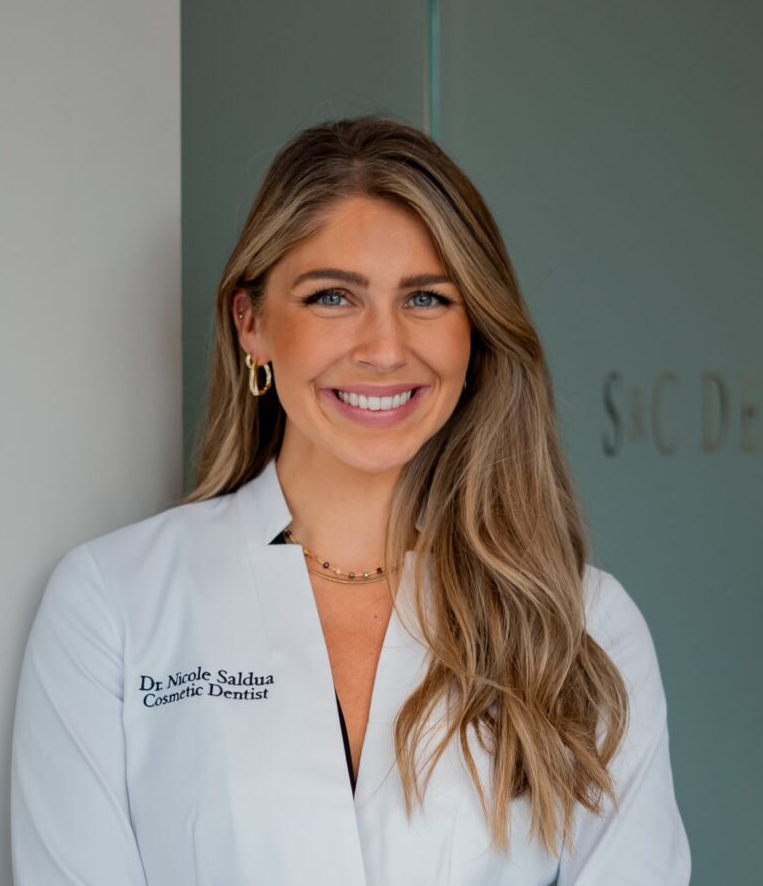
General Dentist
Dr. Nicole Saldua is a general dentist who graduated from the University of Washington School of Dentistry in 2018 and started her career serving in community health before working in a mix of private practices. She recently relocated to sunny Arizona so her kids can live outside year-round and so she’s not freezing her butt off at every future soccer or T-ball game. Nicole launched her Instagram to make dentistry feel less intimidating for both dentists and patients, using real talk, practical tips, and absolutely zero fluff.